ROOM 2 THE PONTIBUS JOURNAL 1
THE PONTIBUS JOURNAL
by Larry Lee Slot
BOOK ONE: VARIOLA’S REVENGE
BOOK TWO: LUZ-BETHEL
History contains countless examples of how small decisions in tranquil settings can spark earthquakes. Pontius Pilate’s hand washing, Luther’s theses on a doornail, Machiavelli’s Prince, etc. come to mind. Here, the teremoto could mean the salvation of the human race.
What constitutes a good story, a great tale, or a report that reverberates in the mind, long after one tables it? The PONTIBUS JOURNAL’s two books, VARIOLA’S REVENGE & LUZ, terrorize & sadden, create joy & uplift. Every value gets rigorous inquiry. Through moral dismay & searing philosophy a new religion appears.
Two main characters return from Viet Nam with burning desires to make the world “better”. Both men hope, using biotechnology, to solve large problems and institute planetary ecological sustainability.
Idealistic Lester Frye is VARIOLA’S (VR) REVENGE’s amiable and conservative protagonist. He realizes his great bridges dream but never enjoys it. Developing a genetically engineered building material, he furthers his objectives with a novel architectural design. The hapless man’s uncontrolled compassion and sense of duty inundate him. He loses his wife, their three children, and his…mind. Lester almost dies, prior to Mr. Aloirav assisting him regain his lucidity.
Rav Aloirav, renegade molecular biologist, misanthropic serial killer & pseudo-cannibal, is VARIOLA’S REVENGE’s antagonist. The Semitic Walloon octoroon is a paradigm for world domination via biological weapons. Biosustainability pulls and megalomania impels him. With beautiful Gloria Gold, and their New Society cohorts, he plunders selected homicides in global freebooting. Bioweapon assaults destroy the US government, grabbing world hegemony. They depopulate Liberia, Tokyo, Buenos Aires & South Africa. At VR’s denouement, the evil band goes to jail, having gained the planet only to realize tragic failure.
Prior to New Society’s collapse, the two scientists invest the planet with Pontibus sky communities. Neither agonist prevails without the other’s help. Each man’s ambition feeds his nemesis. Through the financial resources of his erstwhile friend, Lester conquers failure. VR ends as he steps out of his sky lab and addresses the new upper troposphere world.
Normal life spans do not accomplish such feats. Lester Frye’s obsession leads him to the Amazon and the Hesperide’s apples. They keep him and his associates forceful and alive for over 100 years. Superior will & energy conquer inertia to create the longest, largest, and highest growing structure in history. The new habitats save our species, but loneliness enervates Lester, and he is a lesser man in LUZ.
Despite his achievement, Mr. Frye is insufficiently criminal to confront all the Pontibus Company’s enemies. The utopia, once again, needs Aloirav’s wildness to save it. As LUZ begins, Lester engineers Rav’s freedom. Having met crashing defeat at his own hand in VR, Rav Aloirav now rises from his ignominy’s ashes. Two new antagonists, Ms. Mab Roth & Mr. Otorp, appear and attempt to ostracize the mega-murderer from sky government. Aloirav ruthlessness & biotechnological virtuosity circumvent hostile machinations.
He protects the Pontibus dream from avaricious marauders (OG & MMIM) and unsustainable morality. Conspiratorial aggression & political corruption from the First-Surface, allied with treacherous Company directors, threaten. Eugenic and anthropophagic issues rise and find full exposure. Biological war ensues, killing billions & reducing the First-Surface to vassalage. The book ends with the World as an Aloirav fiefdom, investing a dynasty with unique genetic material. Enemies destroy Gloria & Rav in the end, but not before he insures their co-eternity with Lester Frye.
The PONTIBUS JOURNAL is potentially the most dangerous manuscript to come out of the 21st century. The saga is metaphoric for anticipated simian plagues and despotism if Homo does not soon achieve biosustainability. The new creed launched here may yet preserve human evolution. The scenario will not prevail without a pirouette through inevitable unmitigated horror, as LUZ portrays. Read, enjoy, but be forever changed.
Book 1 Variola’s Revenge
“The World and all its peoples have won freedom from smallpox, which was a most devastating disease sweeping in epidemic form through many countries since earliest times, leaving death, blindness, and disfigurement in its wake and which only a decade ago was rampant in Africa, Asia, and South America.”
Declaration of Global Eradication of Smallpox, Thirty-third World Health Assembly, Geneva, May 8, 1980.
Prologue: Last of Lester Frye’s Journal Entries – Late 21st Century
It’s been a long time since I found the elixir. I never believed in Rav’s experiments with Amanita muscaria. I don’t know why I began looking into the mushroom carpophores myself. He was looking for a way to communicate with the dead. I don’t think I was. Perhaps…
Interest in the organism goes back well over 3500 years. From ancient to young religions trace origins back to mushroom experimentation. Vedas, Upanishads, Mayan paintings, all refer to the fly agaric. I guess I was planning a GABA receptor assault. Isomerizing the muscimol as a neurobiological tool seemed a good start.
I remember isolating some ibotenic amino acid. Decarboxylating it with other common reagents… what can I say…? I did something risky. I don’t know my motivation. I tasted some of the crude solution.
I didn’t get Rav’s total retrogression reaction but something strange did happen. Beginning to dream, I went backwards in time. I found myself flying near, what appears now as Macapa’, Brazil. Swimming in the Iriri-Amazon later, still dreaming, I discovered some small yellow apples.
They grew on underwater thorny trees. My hand stung, after picking some of the fruit and wavy leaves. I ate one of the apples. It was tasty. I left the river then and sailed to Cape Cod. Lying down to sleep on a deserted Nantucket beach, my dream ended.
I awakened in a chair in my lab the next morning. Was it coincidence or a message? Sensing something calling me to Brazil, I took a flight to Belem. The next morning, I hired a small boat to visit the Macapa’ region. It brought me near a point where I felt my dream took me.
I dived into the water to the dismay of my pilot. He felt piranhas and alligators to be unfit bathing companions. Heedless of his remonstrance, I continued diving, until I encountered the thorny herb. I picked about a peck of the apple-like fruit and smuggled it home.

Was my dream just an organophosphate-like depression from a muscarinic neurotransmitter abnormality? The fruit speaks contrary to such a hypothesis. Was it a “voice” from my intron DNA? That eternal parasite, buried within, forcing us to exist against our will. After ingesting a few of the apples, I noticed my age spots disappearing. Soon, the gout, with which I’ve suffered for years, went away too. I gave some to Rav & Otorp and a few of my other friends. They experienced similar effects.
Rav remembered reading about such a thorny herb in the Epic of Gilgamesh. The ancient Greek Anatol also speaks of the “golden apple of the Hesperides”. Gilgamesh found his fruit near where I found mine. Time acts as an exponential function for protoplasm. Was I now meddling with the Bible’s Tree of Life? A drop of the fruit’s juice, falling from my mouth, once struck an apparent dead moth. It fluttered and flew away. I realized then that the herb contained an elixir of youth. I’d found Ponce de Leon’s dream.
Those accepting great responsibility run great risks. Not the least of which is to appear irresponsible in smaller minds. Duties conflict. Choosing the greater is true accountability. Confronted by incompatible obligations, a person of superior mental, physical, and spiritual faculties accepts the higher. How it diverges from wisdom is immaterial. Complete thinking, feeling, and acting humans find few contemporary admirers.
Our appreciation for great souls (posthumous fame) is a special treasure. It gives courage to risk anonymity, martyrdom, attempting to better the world. Humankind often loses great ideas and benefits. Why? Most see mission pursuers & visionaries as suspicious subversives. Dreamers are traitors to the cause of perpetuating & wallowing in existing misery all love and respect. Macaques are entertaining & popular.
In quantum physics, matter appears as double images, moving in and out of existence. The enigmas come about due to our plane of vision’s incoherent measurement. Adapting perception and conception to such a conundrum distorts likewise. We live in the wake of illusion. The universe is cyclic, and time is false impression. The question is not why we cannot affect the past as we can the future, but why we think we can affect either, since both are wayward constructs of our minds. Too deluded or blind to see the “knowledge” cycles, we relegate what is behind us to “past” and that in front to “future”. These cycles are like time warps. Single celled organisms and inanimate matter cross their orbits. Zones get ever larger & closer until mean intervening distances disappear
Using “present” knowledge in the “past” is not obscene. It will not detract from the universe’s destiny. New is not completion of the old, but is change from a foregoing, an evolution, a re-engraving. Our duty is to look forever forward into the “past”. All have a responsibility to imagine a better “future”. Refining processes will end, and all our Utopian dreams fulfill. Quis qui quod. Everything is ready for my message.
Mission accomplished. I have regrets, but the main choices were correct. My unit’s animation has been joy & tragedy, as it must be, and I abandon it.
Where there is no vision, the people perish Holy Bible. (Proverbs 29:18)
Chapter One
September 21, 1966, 0500 hours, I Corp, Third MAF Brig, Danang, Viet Nam
Sergeant Aloirav awakened. Today would be a better day than were the last 182. It was his last in the brig. Making little rocks out of big ones would no longer be his prime function. The time was over. New orders rested on the rack (bed), his silent companion these past six months. He was off to the “Dead Man’s Zone” – DMZ (demilitarized zone). The Court’s Martial verdict allowed him to leave imprisonment, keeping his stripes (rank), but not time in grade. Still a buck sergeant, the man was now without seniority. It would be tough taking orders from a junior man or an “N.G.” (New Guy). The thought gave small immediate concern, however. The situation was better than having to rotate back to Disneyland (U.S.A.). Getting dinged (hit) was almost better than that. To him, the sentence was wrong. He’d chosen to act as a professional, accomplish the mission, and save lives. The Marine Corps gave him punishment.
“Who’d a thunkit,” Sergeant Aloirav said to himself, standing up to greet the tall Hispanic MP appearing at his cell door. “Man has come so far; he can control almost everything…except himself.”
He’d slugged the coward for pusillanimity in the face of the enemy. Causing good men to die was a secondary issue to the Marine Corps, apparently. Assaulting a craven senior NCO (non-commissioned officer) violated military courtesy. The Court’s Martial found Sergeant Aloirav guilty of insubordination. It stripped all pay, rank and seniority from him during his six-months in Danang brig. Sergeant E-5 pay, zero time-in-grade, would resume upon release. Corps´ cynicism gave just what would severely punish, yet not hamstring.
Despite the aforementioned setbacks, he was eager to go when the MP guard opened the cell door. Minutes later, the man was out on the muddy street in front of the brig. He hopped a six-by (large stake-truck) already carrying four other Marines. It took him to the mess hall. There, Sergeant Aloirav ate his first food for many months in relative freedom.
Regaining his spirit after six months institutionalization would take many hours. He thought about how to rebuild it in a pleasant place. The no-seniority-NCO wasn’t required to report to his next duty station for a week. He therefore went to China Beach to wait for nightfall. At dusk, still fairly sober, the man hitched a ride on an Army vehicle. The medical truck facilitated exiting the MP checkpoint at the enclave’s perimeter. Halfway across “Dogpatch”, en route to the hospital, he tapped on the PC cab’s top.
The vehicle stopped. Human cargo slipped off and into a nearby shack. Marine utility uniforms disappeared. Accustomed to such behavior from Marines, the driver continued on to the hospital, empty. Minutes later, Sergeant Aloirav sat before a bowl of steaming cabbage soup. The splendid refection was replete with fish, grubs and “three-days-buried-in-the-ground” chicken shavings. All the culinary enjoyment a man could want. He seasoned the repast with “nuoc muon” (sauce of rotten fish oil). Finishing his quasi-celebration, the former prisoner tried washing away the past 6 months with cool rice beer.
“Dogpatch” was off-limits to Marines because of the VD and unsettling political diseases encountered there. They wasted the proscription on him, however. Interdictions always produced a challenge and defiance in Sergeant Aloirav. That attitude was even more prevalent now. His plate empty, he picked a desirable siklo-girl and went into another room to enjoy her. She wasn’t a round-eye. The man was never one to give any particular preference to female racial-quality differences. Pakistani’s were the most beautiful women he’d seen, but Sergeant Aloirav was still young. The girl didn’t smell much different from the fresh fish she just cleaned for him. He wanted her, thinking. “If she smells like a fish – she’s a dish, if she smells like cologne – leave her alone”. His rule in that area was not rigid. The man stayed with the naked girl, until he dozed. Then, embarrassed by such an indiscretion, the NCO arose.
Laying 500 dong on the bed next to the sleeping girl, he slipped out of the room. Sergeant Aloirav emerged just before dawn from the tight collection of tin and scrap-wood shacks. Another army medical PC brought him back into the Marine enclave near the mess hall. Hours later, he manifested on a C-130 flight to Phu Bai.
The man strapped himself to the aircraft’s starboard bulkhead. He sandwiched between a black person on his right and an American Indian on his left. A long row of seats, filled with military passengers, lined each side of the plane. Just before take-off, they drove in a jeep and lashed it down in front of him. There wasn’t much of a view after that. The NCO stared at the black front wheel of the olive-drab colored vehicle. The cargo plane was in the air for about two minutes, when the Pottawatomie began speaking to him.
The mouth of the pockmarked face opened, saying. “Hey Sarge.”
“Yah, Marine.”
“You think there’s anything to that short-timer’s disease stuff?”
“Yup,” Sergeant Aloirav replied. “You short?”
“Damn straight.” The Indian replied in dead seriousness. “I could sit on a piece of toilet paper and my legs’d dangle.”
“Then stay outta’ the bush.”
“No bullshit, Sarge?” The short-timer asked, making certain the statement was consistent with the look emanating from the other’s eyes.
With seriousness born of numerous body counts, he said to the man about a year younger than himself. “If you were in my platoon man, I’d keep you burnin’ shitters till you manifested out.”
“Gee, thanks Sarge,” the trooper replied.
“Don’t thank me, turkey,” Sergeant Aloirav replied. “Didn’t say it fer yer love. You could get someone else killed, maybe me!”
About to respond, the screeching sound of jeep scraping across torn fuselage cut the Indian short. The vehicle fell away through the aircraft’s deck. The NCO watched it drop. Then he felt the effect of lost altitude on his stomach. Grabbing the webbed seat netting below him, he hung on tight. The temperature cooled as the plane plunged toward the earth. In the semi-evacuated cargo bay, wind flapping at torn webbing, Sergeant Aloirav took in the situation. Not much remained of the seats on his left. Across the devastated hold, another strapped man was also twisting webbing around his wrists. The enemy projectile struck the plane at a 60-degree angle. Tearing a huge gap in the deck, it blew away the port bulkhead.
The exploding round sucked out the short-timer. Three or four other men on Sergeant Aloirav’s left also went. Two of the men on the opposite side of the bay, along with the jeep, were gone. The pilot was having trouble maintaining altitude & attitude. The plane yawed and pitched through the sky. Somehow, he got the aircraft to land without it exploding on impact. They abandoned the ship. Survivors got to Phu Bai in choppers.
Sergeant Aloirav caught another flight to Khe Sanh from Phu Bai. He soon found himself patrolling the bush around Hill 881. His squad-leader’s name was Bazelton. Sergeant Aloirav was now under the guardianship of a man his former junior and a N.G. to boot. The ranking man held far less experience “in country”, and the unpleasantness soon became intolerable. Making matters worse, it was obvious. Twenty years old, aged and “salty”, Sergeant Aloirav distressed callow Sergeant Bazelton.
The senior man gave the “old salt” all the “shit-details” (unpleasant tasks). He ground spread-eagled the more capable man without need. Even after short day-patrols the N.G. exercised that particular prerogative. The senior man knew, as he did it, the other man’s identity. Returning from his watches, Sergeant Aloirav often experienced such abuse. The animosity grew ever deeper.
Just one Marine from Sergeant Aloirav’s old platoon, a Lance Corporal named Disinato, was with him. Somehow, they wound up in the same squad. Sergeant Bazelton soon discovered them to be close and sympathetic. He made the Lance Corporal suffer for it. Disinato, a 50-caliber gun-jeep driver, when in garrison, sported a unique hood ornament on his assigned vehicle. He spent weeks cleaning and boot waxing the escutcheon. The fellow took great pleasure driving into new villages with it. He was quite proud of the smiling bleached-white VC (Viet Cong) skull. One day, it fell prey to Bazelton’s spite. Disinato ceased enjoying those terrified stares from “indigenous personnel”, as the squad moved through the countryside.
After one particular patrol, however, Sergeant Bazelton stopped all further harassment. The squad searched the bush all that day but encountered no resistance. They expected soon to deploy for a night ambush. As usual now, when Sergeant Aloirav wasn’t covering that unenviable position, his friend was at the point. Everyone knew how unfair such treatment was. FO (Forward Observer) positions were for blacks. Sergeant Bazelton was about to set up the ambush position when Disinato fell wounded. A Malay whip flashed across the diminutive Lance Corporal‘s neck. Despite the Corpsman’s skill, the damaged carotid still lost blood. To make matters worse, Disinato soon learned more bad news. There would be no medivac helicopter until morning. At the rate of exsanguination, he wouldn’t make it. Death admits its sting, but fear denies its, even unto the very end. The Lance Corporal tried to make some last requests of his comrade, but he wasted his words.
“No way, Diz.” Sergeant Aloirav said. “Yer not gonna check-out. I’ll ge’cha back O.K.”
“Horses–t!” Disinato spat. “No chopper till light. I heard Bazelton tell the swabby (corpsman). I’m not gonna make it till then, Sarge. You know it.”
“Ya jis’ need blood,” he replied, rigging bug-netting over the fallen trooper. “I’ll get ya’ some.”
Sergeant Aloirav’s eyes met Sergeant Bazelton’s, however, and the N.G. said. “Aloirav! Take two men. Check out that little hill we just passed, before we set up for the night.”
He erupted. “What’re you talkin’ about, man? What’n the hell for?”
“Just do it!” Sergeant Bazelton replied.
“Three men are no Search and Destroy Operation, Bazelton. That hill isn’t necessary to the mission. Artillery hasn’t even softened it up yet.” Sergeant Aloirav replied, getting up from comforting his friend. “What if the “slopes” (VC) are there? What if they’re dug-in?”
“Hey! Motherfucker! Hop to it.” The senior man screamed back, intending to make him appear a coward in front of the others. “You itchin’ fer another court martial? I‘m givin’ you a Direct Order, man!”
“Look man,” he replied, stepping closer, as Bazelton recoiled. “Let the phantoms and skyhawks have a go at it first. They can make the job a lot easier for us, if we let ‘em. All I’ll do is fuck-up your ambush, maybe get us all dinged. It’s almost dark. We’ve gotta get the “L” set up! Dizzy’s hit bad, and we’re short firepower!”
“Yer, yella!” The N.G. screeched. “That’s why ya’ were in the brig? Ain-it? Hunh? Ain-it, motherfucker?”
“Look, Bazelton…”Sergeant Aloirav said, aware that Disinato listened.
“Sergeant Bazelton to you, fucker!” He shouted.
Calmly, voice dropping 3 octaves in pitch, the junior NCO replied. “Look, Sergeant Bazelton. This is dinky-dow (crazy). I know you want me outta’ yer squad. I don’t like you much either. But why kill everyone else because you’n I got a beef? If that hill’s occupied, we’re dead up there. You’ll be too, down here, if I go messing around, stirrin’ things up. We’ve got limited firepower, without Dizzy and the BAR (Browning automatic rifle), any way you cut it. Why don’t ya’ let me go up the hill alone. You keep the other guys here with you. Set up the ambush, as we planned? I’ll see ya’ in the morning, if I’m not hit.”
The N.G. thought little into his good fortune. “Aloirav’s a fool. He wants to be a fucking hero. With no one watching his ass, they could waste’m, sure’s hell. I’d be done with the bastard once and for all.”
Allowing seconds to mull the concept over for possible tricks or loopholes, he agreed. The other turned around and walked the few steps necessary. Bending over, he knelt down by his friend’s side. Squeezing the wounded man’s shoulder, the seasoned veteran said something, inaudible to others. Pausing a second to hear the weak goodbye, he entered the bush. Leaving the squad, the man now carried a K-bar, .45 Colt and his shotgun. Within two seconds, he disappeared into the jungle.
Then Sergeant Bazelton realized the error. His enemy was now “in his path”. No longer was he “in the same room with him”. The duped man understood the situation too late. Cold sweat broke out over his torso and neck. He knew all healthy young men were bloodthirsty. Aloirav was no exception. The environment, however, didn’t allow time for hypotheticals and vain philosophy. His orders included setting up an ambush and waiting for the coming action.
Sergeant Aloirav went a few hundred yards into the jungle toward the hill before changing direction. He went another thousand yards and ripped off about a kilo of bark fibers from a cord tree. Then the man set up his own ambush. It was a half-mile up the trail from where the squad was now deploying. Using his helmet as a pillow, he took a nap. Around 0100 hours the following morning, Sergeant Aloirav awakened. As he’d hoped and half-expected, sounds a few hundred yards up the trail presented. A black-pajama’d squad of enemy moved toward Sergeant Bazelton’s men. Waiting as each individual passed him by, Sergeant Aloirav took mental notes. Instead of firing on the Vietnamese force, he let them all pass his vantage point unmolested. Lingering a few seconds, making sure no stragglers would surprise him; Sergeant Aloirav followed his prey.
About 0120 hours, he took out the rear man of the enemy squad. Incapacitating the enemy soldier, Sergeant Aloirav tied and gagged him. He took the man’s carbine & ammo. The junior sergeant removed three enemy soldiers from the squad by 0140 hours. He tied the tree fibers tight enough to impair circulation. Mummified, they would no doubt lose their appendages upon release. Unconcerned about such matters, Sergeant Aloirav focused on the job at hand. Taking his own weapons and the carbines, he followed the remainder of the enemy.

Near the area of Sergeant Bazelton’s deployment, the enemy squad leader noticed his party a tad light. He began making a terrible racket right in the ambush’s line of fire. Even if asleep, after that noise there was no way Sergeant Bazelton’s men could miss their opposition. They didn’t. Seconds later, at 0216 hours, the firefight broke out in earnest. Since the enemy was surprised, they took the worst of it. By 0239 hours, action ceased. The squad relayed the body-count information back to the C.P. (Command Post). The one casualty among the N.G.’s men was Sergeant Bazelton himself. Over two magazines’ worth of enemy carbine rounds entered him alone. Sergeant Aloirav re-joined them afterward and took charge of the leaderless group.
The shaken Corpsman told the new squad leader what happened. “The gooks got the Sarge.”
“Really? Tough break. Where was he hit?”
“All over. Head and neck mainly. Full’a lead. He was at the end of the “L”, you know, the position he always wanted. I couldn’t do anything. Leakin’ all over like that. I didn’t know where to start,” Doc admitted.
“T’sa shame,” Sergeant Aloirav said.
The Corpsman continued trying to expiate the unreasonable guilt he felt at losing the man. “Like they were aiming right at him and him alone. Seemed to know right where he’d be.”
“How’s Diz?” He asked.
“Got about half-an-hour yet,” Doc replied, lowering his voice. “Three-quarters tops. Needs more blood. Gave’im everything we had.”
Disinato was near death. His face and chest were white by the starlight. There were still a couple hours yet, before the chopper would be along to get him. It appeared he would be lost. The Corpsman was sure of it.
“Not to worry, Doc. We’ll get more blood right now.”
“How? Choppers won’t be here for two, maybe three hours yet.”
“Come on. Grab yer things.”
The medical man followed into the jungle and up the trail. Encountering the first of the VC captives, however, he couldn’t hide his distress. Aware of what was happening, Doc became concerned about the other man’s thinking. Wasting no time, Sergeant Aloirav told him to check the blood type. Sure stealing blood was against the Geneva Convention, the Corpsman agonized over the situation. It appeared the new squad leader was indeed contemplating it. Doc began worrying about his own complicity in the crime.
“No, Sarge. It ain’t right,” he said.
“Don’t mess with me, Doc!”
“I… I don’t think it’s right, Sarge, n’ I don’t think Dizzy’s gonna make it, anyway.” The Corpsman argued, trying to make him abandon his friend.
“I do.” Sergeant Aloirav said, answering both objections.
“What if—-?” Doc started to say.
“What’s the guy got?” He interrupted, changing the subject.
After a few minutes, the Corpsman answered. “B, positive.”
“Rats!” Sergeant Aloirav voiced.
He led the medical man on to the next captive. Arriving there, Doc discovered a female with another non-compatible blood type. He was then horrified to see the last prisoner. The first one captured lay face down with feet and hands in the air. His extremities were already black from loss of circulation. The apparent gratuitous cruelty incensed the Corpsman.
He blurted. “Did you have to tie him so tight?”
“Yah.”
“What the fuck for?” The outraged Navy man asked.
“Wanted to make sure, even if he got loose, he couldn’t walk or crawl too far.” He growled.
“You’re one cruel son-of-a-bitch!”
“Skip the flattery, Doc. Jist give me his blood-type.”
“A, positive.”
“Bingo! Take the blood you need.”
“You know I can’t do that! It’s against the Geneva Convention.”
The muzzle of Sergeant Aloirav’s rifle began moving. As it shifted, the weapon got close to Doc. Coming to rest, it pointed at his face. While the Corpsman knelt over the enemy soldier, the other man repeated himself.
The soft slow three-octaves-lower-than-usual voice said. “Take the blood, Doc.”
Doc’s face whitened. He fumbled with his bag, looking for something to use as ex-sanguinating paraphernalia. Finding it, the Corpsman got everything ready. He leaned over the enemy soldier to prepare the skin of his arm. Surmising what was to take place, the patient tried resisting the needle.
Sergeant Aloirav shouldered his rifle to accommodate easier kneeling on the man’s neck, thinking. “Life changes so easily from one kind to another. Permanence of form is as uncertain as the exact opposite is certain.”
Minutes later, while drawing out the dark red fluid to the sergeant’s satisfaction, the Navy man said. “It ain’t right. It’s criminal.”
Observing the terror in the VC’s eyes, Sergeant Aloirav said in a voice as deep as the earth under his feet. “Screw Geneva, and screw their damn Convention.”
Doc took out about a pint of blood from the man and removed the needle, saying. “It won’t save Dizzy anyway. He’s gonna’ die, regardless. I don’t know why you made me do it!”
“What the fuck are you doin’?” The other shouted in feigned surprise.
“Whad’ya think!” The Corpsman replied, placing the container of blood in his satchel. “I took the blood! What more d’ya want, man?”
“You ain’t done yet!” He yelled, pushing the man’s shoulder.
“What’ya mean, I’m not done?” Doc answered. “Here it is! You watched me take it!”
“You drain that fucker!” Sergeant Aloirav ordered.
“No way! I know that’s against the Convention.”
Placing his rifle muzzle inches from the Corpsman’s nose, he said. “You’ll drain the motherfucker, and you’ll not spill a drop. And if you ever snitch to anyone, anyone at all, I’ll come after you. I’ll track you down and waste you wherever it is I find your sorry ass. You understand me, Doc?”
“He’ll die!” The man retorted. Nevertheless, he moved to replace the needle.
The soon-to-be conspirator made a horrible grimace at the remark, but he withdrew the rifle. Doing so, Sergeant Aloirav felt something strange and uncomfortable fill his chest. He closed his eyes to handle the experience. Finding himself envisioning the medical man in a different garb, the squad leader shook his head. The trance continued. Doc stood far away, behind a window frame, dressed strangely, holding a smoking gun.
The sergeant might have collected further details, but the Vietnamese trooper demanded attention. He resumed more vigorous futile struggling. The man soon paled and lost consciousness. Resistance weakening after the initial violent exertions, Sergeant Aloirav took his knees off the man’s neck. The Corpsman drew blood, until the pressure became very low. Before it got too low to enter the receptacle, the VC convulsed and died. Glancing at Doc’s face, seconds later, Sergeant Aloirav saw him staring at the now-shouldered weapon. It was a VC carbine and not the usual shotgun.
“You got a problem over here, Doc?” He asked.
“No,” the Corpsman replied, turning back to his dead patient.
Glimpsing in the other’s direction, moments later, he got a nod of approval before removing the needle. Packed up, under strict orders, Doc left the area. Returning to the bivouac, he introduced the enemy blood into the wounded Disinato. Sergeant Aloirav returned later. One of his first orders, upon returning, was to send out reconnaissance patrols. From experience, he knew it was never a good thing to have surprises while in charge. It happened that the enemy body count, as reported to the C.P., needed revising. Before they left the ambush site for good, patrols discovered the number was somewhat higher. They found three more enemy corpses deeper in the jungle.
“Must’ve crawled away. Hands & feet are all messed up.”
A few hours later, the squad returned to base camp. The mission was a success. Marine casualties were one KIA (killed in action) and one WIA (wounded in action). There were no prisoners. Lance Corporal Disinato lived.
The Lord is a man of war: the Lord is his name. Bible, Exodus 15:3
Chapter Two
September 7, 1978, a drainage ditch, Masaya, Managua, Nicaragua
The 7.62 rounds hit the mango tree behind him. Pieces of bark and wet sap flew over the ground. Wood chips blanketed the ditch in which he hunkered. Raw sewer water from the declivity oozed into his clothes. Sharp, short, cold sensations on his fair skin supplanted perspiration and crenulated into consciousness. The beat-up dirty white taxicab, from whence the bullets came, left as it appeared. A few more ounces of cool sewage soaked into his khaki pants and tropical shirt.
Rav Aloirav raised his pounding head from the channel. Looking around for the cab, he saw it was gone. The dripping man rose, circumspectly. Once out of the trench, he walked back to the boulevard, shoes squishing. People, who saw his run to the ditch, still stood on the dirt road next to the boulevard. Cowering behind each other, they stared at him.
“Why the Hell were they firing at me?” Mr. Aloirav wondered. “How could they have known the reason I’m here?”
Across the boulevard, the valley was deep with secondary jungle. Should the white taxicab return, he would zigzag to it and wait until dark. Venturing out under cover of night would be safer. The man waited at the side of the boulevard for a taxi. One might come along without an M-60 mounted on its hood. As soon as a vehicle answering that description flew by, he hailed it.
Wanting to get back to El Centro fast, he was complacent as the taxicab careened around 55-gallon drum roadblocks and deserted streets. Ten minutes later, they were past the Palacio Nacional’ district and in Nicaragua’s capital city proper. It was hard to distinguish between the past earthquake’s damage and the current revolution’s havoc. Looking out the dirty windows of the cab, Mr. Aloirav could see evidence of both devastations. Neither aftermath of destruction appeared to be undergoing any obfuscation. Soldiers stood at both ends of the streets. There was nothing but old worn-out tires between them to protect.
Los Ninos, (Pastoro’s people), recently achieved a great coup. They kidnapped and held for ransom, in the Palacio Nacional’, a relative of Nicaragua’s dictator, Anastasio Somoza. Sporadic violence and hatred for Americans was now prevalent. If you were a Norte Americano businessperson these days, Nicaragua was not a healthy place. Reasons, (most likely more important than mere economics), would hardly make you want to visit.
That was why he chose a hospedaje rather than a hotel, reasoning. “Hospedajes shelter few rich Americans. Who could hate a poor student, far from home?”
Mr. Aloirav exited the cab about a block away from his pension. It sped away down the street. When it was out of sight, he walked toward the quasi-hotel and was soon moving down the tile-floored hallway, leading to his cubicle. Crossing the sunken courtyard, he unlocked the padlocked door and went inside to wait.
While he paces back and forth in the room’s small space, the action slows. It becomes easier to observe the man. Although not overweight, he resembles in size and restrained violence a young bear. His friends know him to be as unsocial, obstreperous, and obnoxious as any Ursa. Attraction to solitary existence and aloof demeanor are additional in-character behaviors. Embattled, Mr. Aloirav stands taller than all. Only by killing him would he relinquish his position.
As many strong ursine men, with loved ones, Mr. Aloirav is loyal and gentle. He’s the great-grandson of a Dutch (Boer War) Marine and a black Barbary Coast pirate’s daughter. His great grandmother was a French Jew – turned Huguenot. The 31-year-old man roams the Earth, wild and free, as the cruel animal he resembles.
Mr. Aloirav didn’t know when his socialization began breaking down, and he started to invent himself. It must have been sometime after attempting to focus his thinking as a biological creature. His credo was now “Naturamque sequi” (follow Nature). Self-preservation seemed more comprehensive a code than moral restraint, and he appreciated it more. The man believed most accepted civilized values & social arts but enslaving constraints.
The human bear attempted to function just for himself and his offspring, thinking. “Such a strange equilibrium in existence. It isn’t quality of life so much as it is perspective. I shall not pretend I either understand or like it. If such be God’s wisdom, I want no part of it or him.”
Waiting for his friend now, he pondered. “What don’t I do for my friends, because they can’t obtain anyone else? It makes me wonder who the real boss of the damned outfit is! Just when ya’ think ya’ve got existence all figured out, it hands you a completely new set of rules & circumstances. Ya’ gotta’ start learning all over again. Life’s a game of incessant change, reflecting ever-decreasing options. I don’t make the rules; I don’t take the rules; I break the rules. So why am I doing this? Damn, I don’t want to go in there. It’s sheer suicide. Scares the livin’ shit outta’ me.”
He looked out his chamber window’s shutter. It opened into the central courtyard of the hospedaje. Women were hanging wet clothes on the stretched lines after the morning’s washing. There was something so comforting in the mundane tranquil chatter of women. Brown breasts swaying in one-piece cotton shifts made him randy. He closed the bamboo window cover and sat down on the edge of the bed. It was now late afternoon. The local “music” box was blaring. As with most low class Latin American tunes, it made up in decibels what it lacked in quality.
“So it’s virtual suicide. What justification exists?” He wondered. “We have a responsibility to protect our lives, until maintaining body, mind, and spirit integrity is no longer possible. Suicide is not wrong if denying it would mean disintegration of my integrity-dignity. Is that why I’m doing it? Is my integrity in question? No! Is it business or just my wanting to live on the edge?”
The Indio would soon be arriving. He would want to know how Mr. Aloirav made out with his contact. How would he explain it? Disappointment reigned. It was just natural native irresponsibility. The Consul made a habit of always being late. Yet, it was the second time he stood them up.
“Was that son of a bitch late on purpose to give those thugs time to blow me away?” He asked himself. “Or could it have been just coincidence & a few of Pastoro’s Sandinistas on a fuckin’ frolic?”
Mr. Aloirav got up off the bed and went to the window. About to look at the women again, he thought better of it. Too much beauty tempts desire, and that tempts decorum. Turning back, the man stared at the fiberboard walls opposite the window. Bending over the bed, he opened his bag. Grabbing a handful of raw “cacahuates” (peanuts), Mr. Aloirav munched on them.
A moment later, an Indio’s voice was audible at the front room asking to see “Meesta Ravo”. The woman proprietress was soon knocking at his door. She inquired if he wished to speak with a visitor named Jose’. Replying affirmatively, Mr. Aloirav admitted a small dark-skinned Indio with a crooked nose into his room.
“What the fuck is goin on, Jose’?” He growled. “I waited half the day. The bastard never shows. I start to leave, pretty god dam pissed, let me tell ya’, and a gang of yahoos nearly blow me away with a repeater. I thought I was gonna’ have ta spend the night in the monte (jungle). I am not, I repeat, not gonna’ let these monkeys jack me around! Is the guy gonna’ tell you where they’re bringin’ your kid or isn’t he?”
“Si, Meesta Ravo, he gonna’ show.” Jose replied in a Guatemalan-English accent. “He scared right now from that Army muchacho (young man). He knows eet beeg trouble fo’ heem, eef you geet my boy oun. Mucho peoples see you waiteen’ ta talk w’heem.”
“Look, Jose’. You’n I’ve been working together for some time now,” a calmer Mr. Aloirav said. “We’ve killed a lotta gooks, made a lotta money.”
“Si, Senor.”
“You know I need those coordinates,” he continued. “My regular pilot is down with the shivers. It’s falciparum. We can’t expect him, blind with fever, wantin’ ta fly for us, just so’s he can get shot up in the jungle. I don’t blame him. Flyin’ in the jungle at night is no picnic anytime. Shakin’ away with malaria and a head’a stones is sure curtains. No legit’ bush pilot we can hire is gonna’ risk his neck in the jungle at night, let alone a regular pilot. I’ll do it, but I need some fuckin’ help!”
“Si, Senor.”
“I only know a few pilots who would even venture into the Cordillera Isabella now.” Mr. Aloirav said. “Between the Sandinistas and Somoza’s boys, any one of ’em could get ya’. And who’d ask any questions nowadays, if a pilot goes down in La Mosquitia?”
“Si, Senor. Nadie, Senor.”
“Will ya’ quit givin’ me that fuckin’ step-n-fetch, ‘Si, Senor’, Jose’!”
“Si, Senor.”
“I need those coordinates, Jose’,” he said again, exasperated. “Maps around the Rio Coco are incomplete. You’d know that… if you could fuckin’ read one! How’n the hell’d you ever get otta’ Marine Boot Camp, anyway?”
Not expecting an answer, Mr. Aloirav continued. “I can’t see drums burnin’ more’n a few miles. The Pis Pis is just too long a stretch a’ water. Too damn long to be wandrin’ around it at 100 feet during the night.”
“Si, Senor,” the Indio said, losing heart fast. “My only son, not yet ten.”
“Oh, my fuckin’, god! Don’t start in on me again, Jose!” He complained. “Suppose it rains or there’s fog. I could poke my nose into a mountain. My last fuel is near Suak Suak on the Coco. I’ll be landing there on the bank to fuel up at our cache. But yer gonna’ have ta’ get me better coordinates if we’re gonna’ pull it off. I’ll fly up the river for you, four feet over the water, if necessary. But don’t expect me to kill myself for nothin’. I don’t want that god dam Somoza to have your boy anymore’n you do. Either get me those coordinates or a chart where they’re gonna’ have those fires. Entiende (Understand)?”
“Si. How long you gonna’ wait?” Jose’ asked, summoning strength.
“I’m leavin’ here manana in la mananita, cedo (early tomorrow morning),” Mr. Aloirav replied.
“O.K., the Indio said, then laughed. “You betta’ take a shower first, man, you smell like sheet.”
“Layin’ in a fuckin’ sewer for you!’ He joined the laughter. “You son of a bitch!”
“I geet those coordinates, eef I gotta’ drag ’em outta’ hees mouth along wees’ hees tongue,” Jose’ said.
“I know you will,” said Mr. Aloirav. “Now I need’a sleep for a few hours. If I’m gonna’ be pulling this thing off in two days, I gotta’ get as much as I can, tonight.”
“You need anytheen’ else fron me?” He asked.
“Is that bank grazed well enough for me to get off again?”
“Si. I tell theem you need as much pista (runway) as Sico to geet out.”
“Super. Hav’em get more combusti’ble to Suak Suak, too, if you can.”
“Si.”
The Indio left, and Mr. Aloirav crossed the courtyard to the shower. There, he washed off the smell of sewage. Upon exiting, he saw one of the maids sitting and eating green mango slices with salt. Her young, long hair, reminded him of Mai. The girl made a momentary impression. Asking for a price to wash his sewage-smelling pants and shirt, Mr. Aloirav agreed to her terms.
They went to collect the articles from his room. She offered him some of the mango, but he declined. The man didn’t care for them green. They were his favorite fruit when ripe. He didn’t know how the natives could eat them green. Paying the girl in advance, Mr. Aloirav closed the door and went to sleep.
The sounds of lovemaking going on in the adjacent room awakened him during the night. Walls seemed paper-thin. He heard the voices, as if there were no separation. The maid’s compliance answered her partner’s insistence. A few giggles preceded some grunts, and the bed next door began banging away.
The man remembered experiencing such passion long ago with his own wife. He then thought about the warm brown forbidden skin of his mistress next to the fairness of his own. Mr. Aloirav agonized. The yearning for sex and the softness of a woman was painful. It would have to wait.
“The best of the human race do not make the best of mates.” He thought, watching a firefly courting light shining through a hole in his room’s wall.
Morning came. He collected his still-damp clean clothes and was giving the maid a gratuity, as Jose’ arrived. The promised coordinates were in the Indio’s hand. Mr. Aloirav transferred the paper to his own bag.
Looking at them before tucking them in, he said. “O.K. we’re set for tomorrow morning. Right?”
“Si.”
“I’ll meet you in Brus later or Ahuas, if we’re not hit bad. Don’t forget to refuel Suak Suak.”
“Si, Senor,” Jose replied.
Checking out of the hospedaje, he was soon free of Nicaraguan airspace. Refueling in Choluteca, Honduras, Mr. Aloirav’s way was clear to Puerto Lempira. Down the Rio Coco, the trip would be unfettered. As long as he stayed west of the river, there was no reason to worry about snipers. In Puerto Lempira, the man would wait for dusk. Then he’d begin the countdown to smuggle Jose’ junior out of the mountain’s jungle fastnesses.
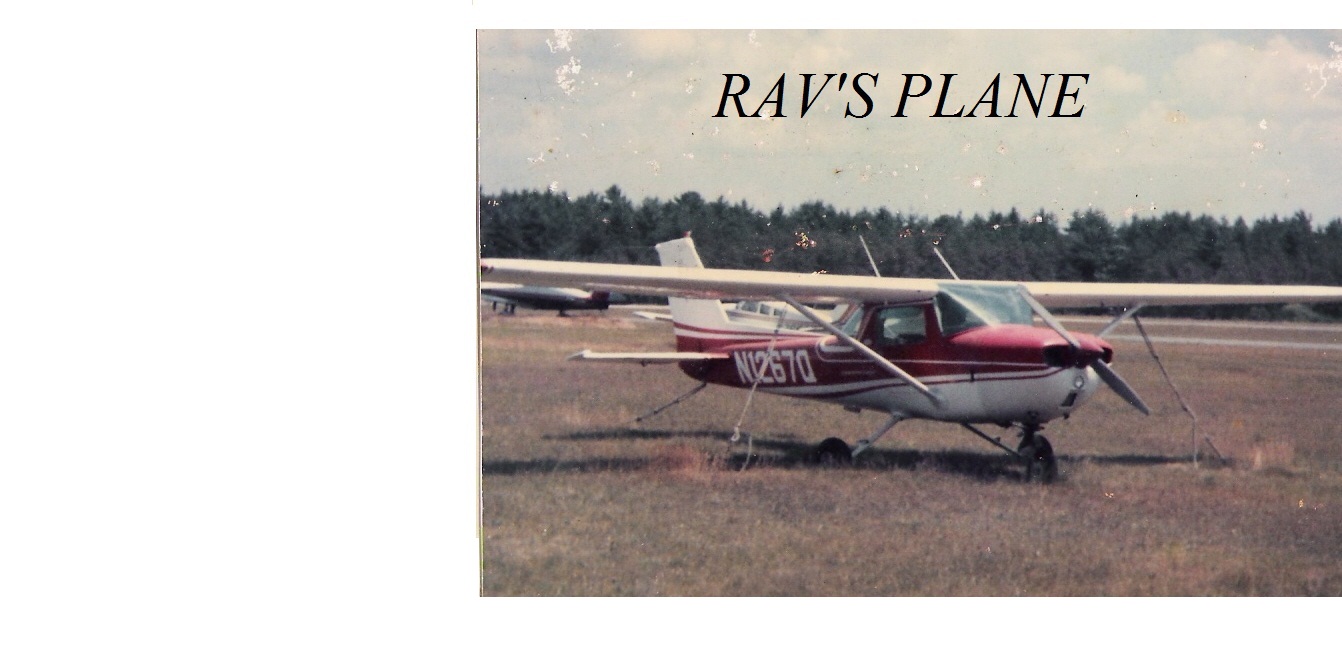
In November of 1977, Mr. Aloirav’s mistress, Gloria Gold, and the Indio accomplished a risky mission in Guatemala. They offended a counterinsurgency agent in the process. Funds, misappropriated from the man’s former employer, never made it to their intended recipients. The counterinsurgent, for good reason, felt that Mr. Aloirav’s people owed him. The residual effects of that undertaking, therefore, meant relocating Jose’ to Nicaragua. Everything would have passed without a problem except for a stroke of bad luck.
The mercenary, having lost his Guatemalan sinecure, became an employee of Anastasio Somoza. A short time later, the Nicaraguan dictator’s new employee recognized the fugitive Indio in Managua. Jose’ escaped, but the wronged man informed his present employer. Somoza’s people checked and soon learned the Indio was a father. It wasn’t long before they forced his boy into the armed forces of Nicaragua.
Samoza’s military policy impressed all ten-year-olds into service. It took some doing and considerable cost to obtain the younger Jose’s emancipation. Upon his release, other friends of the counterinsurgent kidnapped him once more. Seeking to return the child into Somoza’s employ for their friend, they sequestered the boy in Managua. Ransomed once more, the boy escaped to the mountains northeast of the capital, still at risk.
Until removed from the Sandinista-controlled mountains, the kid would remain endangered. Getting him through that gauntlet would not be easy. The night flight into hazardous airspace was the one solution. Safer options might prove even more dangerous. They wanted the boy out of Nicaragua and back with his father as soon as possible. The rescue was to deliver the child to a clandestine Honduran encampment. From there they would plan the next move at their leisure.
Without having much respect for polite society, Mr. Aloirav on occasion thrust himself into such unusual situations. Affairs always popped up, where he felt likewise compelled to skirt normal constraints. Rules, taken for granted by most people, tending to check or bridle, were to him mere opportunities. At worst, they were problems seeking solutions.
In the immediate instance, however, there was no other choice. Whether perceived as lack of courage or deficiency of concern was unimportant to the ultimate affect. If Jose’ lost his son, charisma would suffer. As chief, Mr. Aloirav couldn’t let that happen. Respect, inflated fear, was all that kept his people in line. They knew his ruthlessness and trusted his loyalty. Any show of incipient weakness might initiate scrutiny and testing. It just wasn’t worth the risk to his organization. The flight was necessary for the Indio. It required Mr. Aloirav to do it himself. The resolve did not contradict his principles. Yet, as difficult as it was to accept, the man appeared to care for Jose’ and the boy.
The airstrip at Puerto Lempira, Gracias a’ Dios, Honduras stretched long and wide. The surface was hard-packed sand-gravel. Instead of landing there, he glided over it and Laguna de Caratasca as well. The plane settled down at the short grass strip on the tiny Yahurabila peninsula. The last night in Managua made him want to see the beautiful mistress of the Mariscos Camarones‘ controller. Mr. Aloirav felt he might not enjoy another tomorrow. One last look at that beautiful creature was essential.
Entering the office building, the man greeted everyone there. Going down the hall, he leaped up the stairs and strolled into the controller’s office. The gorgeous India was sitting on the fellow’s lap. She jumped up and slipped past Rav Aloirav. He remained standing in the doorway, smiling. The proud but somewhat embarrassed controller was the first to speak.
“Hello, Aloirav,” he said. “What brings you to Yahurabila?”
“Need ya’ ta send a message for me to the doctor at Ahuas.”
“No problem.”
“Just ask, if he’s gonna’ be in the clinic tonight.” Mr. Aloirav said. “I might be bringin’ someone in to see him. I can wait for an answer.”
“O.K.” The controller answered, leaving the other man alone in the office on departing.
A few months back, a hemorrhaging Paya needed help after childbirth. She was too weak to leave her manaca palm hut near Wampusirpi, Honduras. The good doctor asked Mr. Aloirav for a favor. Would he go into the savanna, pick the woman up, and bring her to the Ahuas clinic?
In doing so, Mr. Aloirav almost ground-looped his plane. The small hillocks on the savanna did much damage to the landing gear. He also wasted his time. The patient was dead upon his arrival.
The dedicated healer, knowing someone might need him, would remain in readiness, anyway. With a personal request, it was certain.
While her lover was off in the radio room, sending a message, the beautiful India waited. She walked back and forth between the two rooms at the end of the upstairs hallway. As both waited for the controller’s return, the woman tried to appear employed. Her smile was coy, when she looked at Mr. Aloirav. He was about the same age as the other man. The India was not unaware of her charms. Nor was she oblivious to the fact that the visiting fellow owned his own plane. In these parts, that item alone was great incentive to infidelity.
“He’ll be there,” the controller said upon returning. “Sends his 2nd thanks for Wampusirpi.”
“Fine,” he replied. “Gracias, for your trouble.”
“My pleasure,” the other replied, going over to his chair and sitting down. “You don’t stop in enough. What’s goin’ on in Los Estados Unidos these days?”
“Gold’s goin’ up right along with inflation,” Mr. Aloirav replied. “Carter’s driving the Country into bankruptcy.”
“Yeah?” He queried, turning his chair around to the right and putting his feet up on his desk. “You sure couldn’t tell it by us. They’re buying shrimp and lobsters faster’n we can supply them. I send my DC3 there loaded, twice a week.”
“I don’t doubt it a bit.”
“So when’re you heading out?” The controller asked.
“Leaving right now for Puerto Lempira.” Mr. Aloirav answered, pulling out his keys.
“So long, then.” He retorted, yanking his feet off the desk and swinging his chair around to a “controlling” position.
Exiting the office, the departing man glanced back. He saw the pretty Misquita climbing, once again, onto the controller’s lap. Mr. Aloirav looked over at the older women sitting behind the typewriters near the building’s door. He shook his head and smiled. They all returned it. The door swung closed behind him. A few minutes later, he landed on the large airstrip at Puerto Lempira. From there he walked to the local seaside hotel bar to wait for dusk.
Central American bureaucrats prohibit night flying to general aviation. Mr. Aloirav could still bend that law with impunity in remote Puerto Lempira. He could get off the ground at dusk. The “authorities” wouldn’t impound or fine the aircraft upon returning, as long as the hull number remained obscured. He would take-off to the south, toward the Rio Coco, and turn southwest, upriver. As darkness fell, the man would land at his fuel cache near Suak Suak. Refueling there, he would be ready for the boy’s pickup, later that night, in the Nicaraguan jungle.
To the left of his table in the cantina now, the Laguna de Caratasca undulated. The man could hear and see the water splashing up against the deck’s pilings below the saloon. The late afternoon was quiet. He sipped a sidecar. At the bar on his right, a couple of Miskito sailors harassed an India bargirl. She insulted them each in return. All was in good fun, until one grabbed the girl’s arm and tried to steal a kiss. The other sailor, somewhat more intoxicated, thought his competitor was being inordinately successful. Unfavored & jealous feelings elicited also fueled an undue aggression. He lunged out, falling upon the other two. His attempt at obtaining a similar display of sentiment cost all any resident affection. Amused, Mr. Aloirav smiled at the three bodies picking themselves up from the floor. They extricated each other without either decorum or quiet.
Turning his eyes away from the scene, he resumed gazing out over the water. Staring over the lagoon toward Yahurabila, Mr. Aloirav thought about the Controller’s pretty mistress. Then he remembered his own mistress, Gloria Gold. The beautiful woman crossed his path just about a year ago. They learned, a few months ago, she was pregnant. Mr. Aloirav was, once again, going to be a father. Thinking about it made him also ponder on his legal wife and young son.
“Will I ever see any of them again?” He thought. “There’s no telling what those jokers are planning for me up in those hills. Gloria thinks the Guatemalan wants revenge for our taking out his employer even more than for the gold dust she lifted. We did make him look pretty bad. Hope that Kevlar vest is blessed. Shoulda’ taken another. Disasters occur in milliseconds. Residuals continue for years.”
Finishing his cognac, Mr. Aloirav walked out to the plane. He checked for anything that might have gone bad on the trip from Choluteca. Taking the .38 revolver out from behind the fuselage façade, he checked for rust and action. There was no corrosion, and the operation was smooth. Dusk approached.
The man got in the plane and started the engine, thinking. “Hope Jose’ found someone with a free pippante or cayuco (canoe) to refuel Suak Suak.”
Refueling at Yahurabila, Mr. Aloirav knew he wasn’t low. By Suak Suak, however, it would be pure conjecture. The engine is always the determining factor. A recent former landing at Suak Suak gave him the impression the combusti´ble cache was near empty. How much fuel remained was doubtful. What was there could be almost all water and rust particles. Straining gas through a chamois was wasteful but necessary near the drum’s bottom. Going down, hard and fast, in the savanna at night from unexpected fuel exhaustion could be fatal. At the very least, it would be expensive and embarrassing. Neither option was attractive.
Mr. Aloirav started his run-up, seconds later, at the end of the runway. Another minute, airborne, he remembered a nearby former flight. A bad case of diarrhea once forced him to land at a savanna dirt strip to defecate. His unexpected sortie’ surprised a white missionary woman inflagrante delicto in a compromising position with a Miskito boy. Mr. Aloirav wanted to use the adulterous servant of God’s privy. Exasperated, embarrassed, and desperately horny, she wouldn’t even lend him toilet paper.
That was history. He could now see Rus Rus below him. It was after dusk. The man strained his eyes to find the short brushless Suak Suak bank. The bush hid well the riparian sand, even while still light enough to see. How would he ever find it, when the boy was with him, in the darkness of night?
“I must be a little crazy to do these things, so pregnant with possible self-destruction. Yet, how else does one live with the constant and pervasive fear of the abyss?” Mr. Aloirav wondered. “I know it’s insane; the drive to the edge. It’s got to be. Still, if I don’t laugh at it, I just might succumb.”
He landed during the last few seconds of light. Darkness blanketed the jungle. The howler monkeys were roaring as the man started refueling the little Cessna 150. No fresh fuel arrived. As expected, that remaining in the vegetation-concealed drum was mostly water and rust. He had to shake out the chamois with every liter.
After some rice, beans, and a couple of pieces of yucca (macachera-casava rhizome) he was ready. A glance at his Seiko indicated it was early. Two more hours remained, before the men would begin bringing the boy down to Rio Pis Pis.
One sandbar out of many meanders would be marked. They would light barrels of diesel oil, to distinguish the landing site. These fires would register opposite ends of a short bank on one side of the river. Without daytime observation opportunity, Mr. Aloirav needed to find the stretch in the dark by that illumination. Even in daylight, the strip of sandy beach would be very small.
As further precaution, Miskito horses & cattle grazed it for the two preceding days. The beasts would rid it of tasty obstructing vegetation. The bigger bushes would remain. Removing small shrubs would not make much difference to visibility in the darkness. However, there was a chance a small tree or bush might hit the propeller, catch a wheel, or slow forward momentum. That might cause him to go into the river upon take-off. Approach & upwind trees were another risk.
On short riverbank strips, pilots needed as much airspeed as possible upon rotation. It was the way to stay out of the water and get over upwind jungle. Even then, a tree, leaning over the river, could block safe passage. Without an opportunity to practice or pre-inspect, tonight meant maximum risk.
Everyone counted on his ability to fly a few inches over the Pis Pis surface. He would have to do so while dodging low hanging branches in near total darkness. Hitting just one meant a fiery death. Once there was enough airspeed to rise over the trees, Mr. Aloirav would be in a better position. He could turn westward, back toward Honduras. Until then…
Sandinistas & Somozistas both wanted to capture the boy’s guide and the “boss”. Their special skills were unappreciated by the virtuous ideologues. Hired “friends” would bring the boy and his guide through the mountain jungle to the Pis Pis. Critics of the operation would be close. They might even already be there, prepared to ambush his landing. Was it a necessary chance to take?
“They won’t be gettin’ a virgin.” He thought. “But I sure wish I was back in the lab right now.”
Not wanting to think about such things, Mr. Aloirav thought instead about Gloria. Remembering her naked body pressing close to his was calming. He dozed a couple hours, until an aggressive sancoodoh (mosquito) awakened him. His Seiko read 1:30 AM.
The night was cloudy, mist close to the ground. There was no visible moon. By the time Mr. Aloirav urinated and re-adjusted to wakefulness, it was 1:45 AM on September 9, 1978. He drained the fuel sumps of water and started the engine with a flashlight’s help. Pointing the cowling down the riverbank toward the West, he gave the airplane full throttle.
When the rpm’s were at a maximum, he took his toes off the brakes. Wind was nonexistent to light & variable. He would need all the power possible. The little ship jerked and rolled forward. Accelerating, Mr. Aloirav rushed blind into blackness.
Leaning the mixture for maximum power, he held the craft on the ground to build up speed. It seemed like an eternity, but he kept the nose down for just seconds before letting it rise an inch. He estimated the river’s approach and lifted the nose another inch. The ship dropped a foot over the lower density air above the water. Flying low now over the shimmering fluid, Mr. Aloirav pulled back on the stick. The plane rose to “best angle of climb speed”.
Having scanned the immediate area the evening prior, he knew he would not confront any hidden limbs; Mr. Aloirav flew up the Rio Coco a few miles toward Sang Sang. He checked out the night’s density altitude by the “seat of his pants”. Turning back to the East, the man went downriver to look for the mouth of the Waspuk. Encountering a soft sheen, he banked to the right (South) and followed it upriver. It gained a tributary to the left.
A few miles further, a tributary arose to the right. Then the ash-gray mouth of the Pis Pis became visible. The shy moon revealed a mountain pass. Mr. Aloirav made note. If ever necessary, he might use it as a break from a storm or hurricane.
 Rio Pis Pis
He held his altitude about a hundred feet over the treetops. Following the river, he flew low and slow. “No sense alerting any conscientious sentries.” The man thought. The river was the color of tarnished silver in the occasional moonlight. Blackness and reflected glitter from the water below was all he saw for miles.
Staring into the abysmal darkness ahead, a craving for the dependency and love of a woman came over him. “It’s never so demanding,” he thought, “as it is at these times. Procreative drives get so intense on the edge. Periods when you suspect you may not have the good fortune to see the next sunrise. Maybe trying to tell me something.”
The homicidal nocturnal jungle beauty below became almost palpable, the closer his destination got. Such feral beauty Mr. Aloirav found even more treacherously exciting than a woman’s. In the blackness of the night, he crossed his fingers against clouds reforming. Tangible danger brought him ever closer to “tasting life”, an ephemeral peculiarity. The plastic yoke between his thumb and forefinger became clammy, as he searched the river ahead.
Then, they appeared. From his location, the fires were visible as one small pinpoint of light. Another minute of flight, a few hundred feet climbed, and they became visible as separate points. In the morning stillness, he knew the time for optional alternatives was ending. Decision time. Make a low pass to check for landing pitfalls or turn around and return home.
Mr. Aloirav cut the power to 100 rpm and re-descended to tree top altitude. He didn’t want to attract any unnecessary attention to himself. Hoping to see what was necessary with just one pass, the man couldn’t. Landing there appeared suicidal. The narrow bank seemed about as long as a Boston intersection. It was as curved as a Mexican traffic rotary.
“Even if I survive the landing, how the Hell will I ever get out?” He thought, turning to look again with another low pass. “Were those trees at the beginning and the end of the bank? Were they just shadows at the far end?”
It was his third “go-around”. A bright native lit another fire on the opposite shore. In the light’s reflection off the water, Mr. Aloirav could see the entire strip. On that final pass, he felt a landing possible. If he could just slip past that tall palm on approach and still recover glide slope attitude. Getting off again would be another problem. Strategies on leaving must wait until after a ground check. Mr. Aloirav came in on a slight east wind.
Full flaps and power put him just over the first fire. He aimed for and hit the desired spot on the strip. Skidding onto the moist sand, he added heavy braking. The landing passed. Bringing the airplane to a full stop, the man rested close to the eastern end. The wind, however, no longer at his nose, made rapid take-off impossible.
Popping open the door, Mr. Aloirav jumped out onto the sand. Two men carrying AK-47’s rushed up to the plane. Introductions unnecessary, they thrust a small boy at him. He helped the child into the plane. Turning again, he observed their familiar rifles. Unlike the jamming M-16’s he used in Viet Nam, the man thought. “They obviously know which rifles not to use.”
After shaking hands, all around, Mr. Aloirav contemplated a walk along the bank. The quality of upwind terrain was visible. However, he wanted to check available distance for maximum possible takeoff roll.
The Miskito on his right crumpled under the landing gear. Mr. Aloirav knew what happened. Using the man’s shirt, he dragged the body away from the tire. The other man was already out of sight, when Mr. Aloirav jumped back into the plane.
Anticipating something similar, he neglected to shut the engine off at the recent disembarking. The plane now needed turning around for the ground roll. They’d never get off the sand and stay in the air with the remaining east runway. The wind was also wrong in the current position. The aircraft couldn’t make it over the river, taking-off from that position.
How to get to the bank’s western end, while dodging incoming rounds, was a mystery. Knowing neither direction nor distance from which the shots were coming didn’t help. Even so, he turned the plane, hopped in, and hit the throttle. Seconds later, almost to the final turn around point, Mr. Aloirav thought of something. Tearing off his Kevlar vest, he threw it to the boy. Never having seen such a thing before, the child made a valiant attempt to don it.
Seeing the child fumbling, Mr. Aloirav interceded and shouted over the engine’s roar. “Sobre la silla! (On the seat!)”
The lad continued to flounder, until the man shouted. “Abajo su cola! (Under your ass!)”
The boy complied, shoving the vest under his little bottom. Their roll toward the end of the strip never slackened. Nevertheless, the short jaunt seemed eternal. Mr. Aloirav turned the plane around again and gave it full throttle. He took his right foot off the pedal and let the aircraft roll forward.
It felt like peddling a bicycle through mud. The child stared at him. They got ever closer to the river at the bank’s eastern end. In another second the landing gear would strike wet, and they’d ground loop. A round entered the windshield, missing the pilot’s right ear as it passed.
The plane rotated over the river and faced the wind but centimeters from the water. Mr. Aloirav pursued the peregrination, holding his breath in anticipation of upcoming branches. He almost felt they might escape without receiving any more gunfire. Then bullets bathed the aircraft, and he pushed to gain altitude. Up, up and up the two went. Climbing ever higher, the plane’s vital parts somehow seemed to escape fatal hits.
Struck in the wing gas tanks, for sure, the plane gave no indication of any leaks. It wouldn’t have mattered much, even if discovered. There was nothing Mr. Aloirav could do about the situation. Flying the plane, the best he knew, was required now.
The man could feel himself trying to pull the airplane up into the night sky. His naked will prompted a kind of seat-jump. Realizing it, Mr. Aloirav sat back and tried to relax. No way could he pull the aircraft up into the sky with sheer determination alone. It was ludicrous. The attempt was as futile as, long ago, trying to will himself out of juvenile imprisonment. If indeed vitally hit, then hit they were. The plane would just go down in the jungle. Nothing they could do would stop it.
Mr. Aloirav felt for the .38. Squeezing it, he knew they’d survive. The man lost engines before and walked away from the landings. He’d come through today too. His life always endured, always prevailed. Sometimes, however, it was impossible for others around him to do so. Mr. Aloirav surmounted almost certain death six times in Viet Nam. Three times he’d started into the tunnel of light only to return. That fact left him with a feeling of always living on borrowed time. Nevertheless, the envelope would form, as usual. He was certain of it. Rounds seemed to want to part company with each other, when they came near him. While leading his charmed existence, the man danced all around the edge of oblivion.
Sudden numbness betrayed his calm. “Am I hit?” He wondered. “Am I dead?”
The rounds were still coming. Of that, there was no doubt. However, they weren’t breaking plastic anymore. The pilot heard the sounds of punctured aluminum still popping around, but they felt somehow distant. “Is my life almost over?” He thought.
Trying to feel pressure, anything on his body, signifying a large wound, Mr. Aloirav felt none. According to the altimeter, the last time it indicated, 500 feet showed. He couldn’t see ground or trees, but altitude estimates at night are difficult under any conditions. The ground gang shot out the cabin lights long ago. The man hoped that last altimeter reading was reliable. The compass’ whirling revealed it still functioned.
Were they still climbing? Was that the Waspuk?
The engine began coughing, then racing. He knew it was dying. Grabbing his flashlight, Mr. Aloirav scanned remaining instruments for a possible remedy. No oil pressure or fuel showed. After the last racing roar, the engine went silent.
All they heard, now, was air rushing over fuselage and the wind-milling propeller. Stomachs went through the ceiling, as he threw the aircraft into a presumed “best glide speed” attitude. Shutting off the ignition, Mr. Aloirav pointed the nose in the Rio Coco’s most probable direction. The security of following the other river, knowing where they were, was gone. He gambled for a shorter distance into Honduras.
Cowling attitude constant, the plane descended ever closer to the now well-moonlit Earth. Mr. Aloirav expected to dip close to the trees at any moment. He prepared for an accurate and permanent stall. His plan was to abandon ship thereafter, taking the boy with him. The aircraft, however, continued riding the evening’s easterly tail-kicker.
It kept just aloft, gliding ever nearer to the trees without getting too close. Then, ahead of them, there it was … the Rio Coco. On the other side was Honduras and, even better, treeless savanna. If the tailwind continued, until over the river, they’d pass the jungle before falling out of the sky. The landing would be safer and, if at all salvageable, the plane’s easier removal obtained.
In helping the kid with the Kevlar vest, Mr. Aloirav forgot to attach his own seat belt. He connected it now and checked the boys’ harness for tightness.
The stall-warning signal screamed long, loud, and ever stronger, but they hit the savanna hard anyway. The kid started yelling as the landing gear cracked. Coming to a complete stop, Mr. Aloirav extricated them both from the wreckage. The child’s howling stopped. Walking around to see how hurt each was, they found small wounds but not much bleeding.
Mr. Aloirav surveyed the smashed aircraft and the landing area. At 3:00 AM, the ship appeared recoverable. The broken hull gave little room, even less refuge, from the hoards of garapanah (mosquitoes). They waited near the river for daybreak. The anti-mosquito breezes were steadier there. Too exhausted for sleep, the kid too frightened to talk; Mr. Aloirav was alone with his thoughts. Considering everything, things went well. It was close.
But the bravest are surely those who have the clearest vision of what is before them, glory and danger alike, and yet notwithstanding go out and meet it. Thucydides
Chapter Three
The downed plane was a few miles from Rus Rus, a local Miskito village. The populace heard the crash during the night. They made sure there was quite an entourage waiting upon Jose’s later arrival. Directing him to the site, the village presented him with what was not an altogether pretty picture. Other than the fact that the plane would never fly again, it was a happy reunion.
Mr. Aloirav and the boy were finishing some rice and red beans when the Indio appeared. Father and son spent the afternoon reacquainting. Later, the two men set to work saving what they could of the Cessna. The wings and fuselage remained on the savanna. Removing them wasn’t cost-effective.
Salvageable parts went back to Mr. Aloirav’s encampment near Palacios, Honduras. They transported these pieces down the Rio Coco. Cayucos and pippante brought them to the mouth of the river. A tramp diesel coastal vessel, christened the Maria Elena, waited there. She took them to the mouth of the Rio Sico Tinto Negro.
Morenos (Negroes) removed the parts, ensconced them into large cayucos, and brought them up-river to Laguna de Bacalar. They then entered the small secluded crocodile-infested, Laguna de Aloirav. Native Paya and Miskito legend maintains that Christopher Columbus named Laguna de Bacalar. Bacalhau means salted cod in the Portuguese language. The entire Gracias a’ Dios province of La Mosquitia, Honduras, C.A. supposedly owes that great brutal racist its name.
Freed of the area’s many confusing bayous and inlet lagoons, Columbus’s entire crew was much relieved. They were lost for months in that inland jungle. Reports maintain that the tyrant shouted, upon escaping the region, “Gracias a’ Dios”. The name stuck. Disease and snake-infested, the district was wild and inhospitable.
Major population centers in Honduras knew of La Mosquitia’s savage character. Mr. Aloirav located his extra-territorial headquarters here. It was refuge and a place to regain peace of mind after disturbing periods in more “civilized” areas of the World. The Group’s first enclave was close to the upper reaches of Rio Platano in the proximity of Telas Unta. Late in 1977, the jungle encampment moved.
They now inhabited the area near Palacios at the Rio Negro’s mouth. Having achieved some wealth, Mr. Aloirav was more inclined than ever to present gifts to local officials. The propina (gift-giving) capacity benefited his “Group” in many ways. Palacios stood closer to world commerce than did Telas Unta. His “Club” in the United States could enjoy frequent relaxation in the tropical setting.
He purchased a little land between Laguna de Bacalar and the Antilles. It suited their needs quite well. Laguna de Aloirav was a small brackish body of water in the middle of a mangrove swamp. The swamp was at the center of a sandy peninsula about 16 degrees North latitude by 85 degrees West longitude. Visitors could reach the lagoon via Bacalar or the Antilles. Local inhabitants would know about it long beforehand.
Captain Morgan and his “colleagues” used the same site. Professional interests paralleled that of the contemporary pirate, Mr. Rav Aloirav. Their obsolete cannon and shot debris still riddled the area. The location has always attracted buccaneers. Concealed, it offers a large unobstructed view of the ocean. The ideal military position abandons, if necessary, into the infinite swamp of La Mosquitia.
The main Central American headquarters of the cabal was an unpretentious-looking hut in the lagoon’s center. The manaca palm leaf roof and split bamboo walls hovered over mangele log supports. There was a jagua (palm bark) walkway leading from the large mahogany door to the mangrove-covered shore. Other amenities, on one side of the lagoon, were pineapples, mangos, gineos (small bananas) and platanos (plantain bananas). The cultivated area was small compared to the ever-encroaching monte (jungle vegetation).
Screaming animals and birds created a ubiquitous cacophony. The decibel level ceased when strangers visited. Miskito and Paya natives came to see Mr. Aloirav under emergency conditions. They might be in need of having a loved one transported to the medical unit near Brus Lagoon at Ahuas. Usually, however, the Indios came just out of curiosity.
The man felt a kinship to these half-civilized people, and warm feelings existed on both sides. He saved many lives. Locals all knew the entrance to Mr. Aloirav’s quasi-covert lagoon. Indias and Morenas selling affection and seeking trinkets from the man’s cohorts were familiar landscape features. Requesting permission of the Palacios’ headman, Morris, began the ritual. Then the natives paddled their cayucos across Bacalar. News of visitors approaching never lagged their arrival. The silence of wild parrots and monkeys indicated forced acceptance of intrusion.
The cartel’s enclave, neither feeble nor submissive, held no shortage of armaments. Visitors intent upon nefarious or hostile display should bring along ample countermeasures. When accoutering for an initial visit, anti-venom paraphernalia proved useful. The Bushmaster, (Barba Amarilla, Fer de Lance) rests on the nether side of many a fallen tree. Spiders, scorpions and other venomous insects were always where unexpected.
Mr. Aloirav and Jose’ now approached the hut from the direction of Bacalar. They heard voices around a bend in the swamp. Negotiating the final curve into the body of water surrounding the hut, the men rested their paddles. Before them swam six or seven naked brown bodies. The jagua porch on the leeward side of the building exhibited, then relinquished, its bare human embellishment. Climbing on & off were girls as young as thirteen. None appeared to be doing so in sadness.
“Hey, Aloirav!” Shouted a beautiful sultry girl in her mid-twenties.
“Hey, Gloria!” Mr. Aloirav replied, with undisguised warmth.
“Heard you got all busted up without me last week. True?”
“Sure is.” He replied laughing, as the cayuco drew beside her.
Reaching up out of the water, the woman hooked her strong brown arms over the gunwales. Doing so exposed both her breasts to the two men in the boat.
“Damn it! Gloria,” the man said. “How many times do I have to tell you not to swim naked? The crocs are gonna’ bite yer’ tits off.”
“Bernardino says that’s bullshit!” She replied, laughing. “If my tits are in any danger, it’s from some other wild animals’ teeth!”
Releasing the boat, Gloria dove back under the water. Resurfacing, she joined the other naked females swimming in the warm water of the midday sun. The Indio was still chuckling, as he moored the boat under the building after Mr. Aloirav disembarked. Both men dodged naked girls in order to get into the hut. As they entered the house, Mr. Aloirav’s eyes turned to the right.
They rested on a heavy-set young man in khaki trousers. Dressed in a tropical shirt and sun-hat, he sat with the back of his chair leaning against the bamboo wall. There was a bottle of beer on the table before him and a magazine in his right hand. The man nodded. Mr. Aloirav acknowledged it and said. “Bacon.”
“Yah, Boss.” The man replied, snapping the chair away from the wall and throwing the magazine on the table. “Heard ya’ hadda hard landing up the Rio Coco a ways.”
“Sure did. Plane’s shot, but Julio says we can use some of the parts. Maybe trade ’em for a 185 engine back in Ceiba.” He replied, moving toward the liquor cabinet.
“So I heard,” Bacon said, continuing with a laugh. “What’cha gon’na do with all the lead?”
Mr. Aloirav turned and said. “News travels fast. You heard about that?”
“Jose’s kid,” he answered. “But alla’ Mosquitia knows about it.”
“Well, it’s true,” the man replied. “Shot up pretty bad. Both tanks hit and the oil pan too. I don’t think I got over a thousand feet before the engine quit, and down I went.”
“Lucky ya’ didn’t go down on the Nicaraguan side or into a tree.”
“Yer’ tellin’ me! Thought I was in for a cool drink of the Waspuk.”
“No shit.”
“Where’s our pilot?” Mr. Aloirav asked, grabbing the bottle of cognac.
“Ahuas. Said he couldn’t take the headaches anymore.” Bacon replied. “Morris got Lansa to take him.”
“Good. The guy looked bad when I saw him last.” He said, pouring a glass of the Remy Martin. “Falcip’ is nothing to fuck with. Gets ta cookin’ yer’ brain and you’re done for. Never met anyone behaved the same after they recovered from a dose’.”
“I’ve heard. Hows come you never get the shakes, like the rest of us?”
Mr. Aloirav, as his spiritual predecessor, Adolph Hitler, was a vegetarian. Smiling along with an insult, he answered. “I do, just don’t get laid up with ‘em, like the rest of you corpse eaters.”
“What the fuck’s that got ta’ do with it?” Bacon asked, not insulted, used to his leader joking about his peculiar discipline.
“I had the falcip’ once, Bacon, in Nam.” He said. “Nearly killed me. My first wife set me straight. Said I was eatin’ too much meat.”
“You were married there?” He asked.
“Ya. Zip girl.” Mr. Aloirav answered.
“Didn’t know.” Bacon replied.
“Gooks killed her in ’67 ‘cuz’ she was carrying my kid.”
“Sorry I asked.”
“It’s okay. I’m over it. I got even.” He said. “Anyway, you’re all walkin’ around with subclinical rabbit poisoning. Yer’ not lettin’ yer’ bodies scavenge enough protein.”
“Rabbit what?” The man asked.
“Ya’ can get real sick, lost in woods or jungle.” Mr. Aloirav explained. “Not findin’ anything to eat but meat.”
“Really?”
“Yup,” he answered. “You know, when ya’ walk with sandals on, instead’a boots, in the jungle?”
“Yah?”
“Y’can’t stand still for even two seconds before the fire ants start eating ya’, right?”
“Yah.”
“That’s because, they think yer’ trash, Bacon.”
“Little bastards! I don’t like them much either.” Bacon said, and they both laughed.
“Nature knows She’s gotta’ clean up her messes.” Mr. Aloirav continued. “So She has buzzards, ants, amoebas, bacteria etc. scavenge trash. Yer’ body has a similar system, but you can swamp it.”
“How?”
“Getting the protein the meat industry’s propaganda says you need.” He answered. “I get well over my “50 grams of high-quality protein a day” by making my body scrounge for some of it. Just to keep me going, its gotta’ clean up parasites and other junk floating in my blood. I know when the malaria bugs are heavy in me. I get those weird headaches that aren’t coffee withdrawal symptoms or from needin’ ta’ take a shit. Don’t need’a get my finger pricked ta know. Ya’ eat the meat, Bacon, you pay with heat.”
The medical discussion ended. Mr. Aloirav filled Bacon in on a few particulars of the rescue. After a time, he tired of the subject. Sipping at the libation, the man turned to look out the window at the girls. They were laughing, appreciating the lagoon’s bucolic beauty. Focusing in on Gloria, he thought about his strong attachment to her. It seemed strange that in just one year, things could have progressed so far.
Perhaps it was because of his wife’s sexual withdrawal over the years. Maybe it was her attempts at curtailing his freedom. The woman was growing more abstracted and distant too. The poor girl’s father died, when she was still quite young. It left her with an inordinate fear of abandonment. Mr. Aloirav tried to understand her many emotional problems to no avail. Hatefulness and leading their son away from him was too much, however.
Now, the frequent trips to Honduras with his friend Frank Wainright were an additional source of conflict. If he wanted to cease making the trips, perhaps it would have been different. He didn’t. His self-inflicted apotheosis wouldn’t let him relinquish them. He took her down to La Mosquitia once. The plethora of bugs and marginally civilized natives drove the pathetic creature to distraction. Privacy’s virtual nonexistence, among jungle-dwelling people, made her depart the little getaway. Mr. Aloirav did try to object some. Then there was the “intervention” last year at the Rosario hacienda in Guatemala. The resulting circumstances of that were the final incentives necessary. He forsook homage forever to the concept of a happy secure home.
Sensing his leader wanted to ponder, Bacon re-leaned his chair against the wall. He went back to the periodical, while casting frequent glances at the naked girls. A 13 yr-old café au lait with nearly white breasts caught and held his attention.
Mr. Aloirav’s mind regressed almost a year to November 1977. It was on his second meeting with Ms. Gloria Gold. The encounter was a few months after arranging her release from prison. He was in Comayaguela, Honduras with Frank Wainright. They were enjoying a few drinks in a small café near the Tegucigalpa Bridge. Mr. Aloirav received a message from one of his “Club” members back in Grand Rapids, Michigan. There was a problem at the US end with arrangements for the next job.
The new female member in the “Group” caused the dilemma. Released from DeHoCo (Detroit House of Correction for Women), she came with good criminal references. Nevertheless, the “Group” found her guilty. She damaged a portion of the preparations for her first field assignment. It caused a delay in the latest introduction, already a week overdue.
The Grand Rapids informant explained the situation’s seriousness. Concerns made him chance the communication while his leader was still in Comayaguela. For security reasons, he didn’t go into detail. Mr. Aloirav always got tense over slip-ups and surprises. Returning to the USA, vacation cut short, his disposition wasn’t optimal.
Leaving the airport after the long flight, the boss dropped Frank off at the man’s apartment. He then headed toward the City’s West Side. Turning into the parking lot of the Red Lion, a local hangout, Mr. Aloirav pulled into an open spot. Killing the engine, he got out of the car and entered the café. A minute later, the hotdog counter attendant sold him a cup of black coffee.
The cafe’ was a convenient place to meet his people, even though the owner wasn’t a friend. Being a very public spot, without much daytime business, small chance existed of anyone overhearing them. Mr. Aloirav walked over to the table his “Club” occupied. The few acquaintances, sitting at tables along the way, greeted him. Acknowledging their greetings, he didn’t stop to chat. It was in character. The man was not amiable. The leaders of his “Club” could see he was steamed. No one wanted to be the first to speak. Bacon self-elected.
“This table okay, Boss?” The chunky mustached man asked.
“Fine, Bacon,” the “boss” replied. “We can see the bar’s front door. I want no trouble from that SOB Frouse. Frank can’t seem to keep the bastard in line.”
Sitting down, he sipped at his cup of unsweetened coffee. The man then listened to a full report of the situation. Explaining the matter in detail, the others waited for him to open the discussion on the question. They needed to know what he wanted to do. It was Mr. Aloirav’s mandate to decide her fate.
Having met the woman but once, he wanted to see her again before pronouncing sentence. If it was necessary to end their relationship with the woman, Mr. Aloirav wanted to be aware why. It would mean ending hers with the World. He waved the waitress over and instructed her to refill their empty cups. As she refills the containers, silence reigns.
We can look closer at the entire crew. The men, gathered around the “boss”, possess more courage and take greater risks than most. They enjoy more natural and savage nobility than typical military commanders. The “Group” also has far more spirit than average politicians either use or trust. There was too much of a “give a fuck less” attitude resident. Nevertheless, they fit the proper profile for Mr. Aloirav.
Under no illusions, the man knew the sort of persons with whom he was involved. All were former inmates of some state or federal penitentiary. They were representative creatures, not caricatures, of humanity. Unlike Mr. Aloirav, who focused the extremes of asocial characteristics, these men exemplified the pristine. Even so, classifying qualities in a weighted manner, they were better & worse than average. For these reasons, personal charisma became his management style.
Mr. Aloirav knew the ever-present risk of informer treachery existed within their midst. He often said that without snitches and substance abuse, their special class would enslave the world. Every day, the average prison inmate confronts these two perilous obstacles. The realities of co-existing with such behaviors counted among Mr. Aloirav’s greatest concerns. His own wife was a former amphetamine junkie. His “Club” did not possess a timeworn Sicilian-style code of silence. Neither were they renowned for their asceticism.
His own particular failing was worse, however, than any of his compatriots. He knew it. Therefore, the man could excuse adjusting to their limitations. His character strengths were greater by far. However, his huge weakness was also just that much graver.
A way to measure (test the meter of) a human spirit is by noting the battles it chooses. Mr. Aloirav’s struggle was large. He was one of those unfortunates, beset with ferocious ambition, burning with the fire of megalomania. Somewhat aware of his malady, he tried to accept and deal with it. It wasn’t easy.
Mr. Aloirav knew what great disappointment churned in his breast. Like Caesar, disillusionment left him inclined to make total war on the human race. An irrepressible urge craved to dominate everything on Earth. Waiting in the corners of his mind, the affliction lurked, forever ready to steal any chance for happiness. Any bliss, he might endeavor to achieve, it affected. His plans may have been a part or affect of the adversity. Quis qui quod. The sickness never impeded his grand design.
“Did you deliver those papers to that guy in Ionia?” A thin jaundiced man asked when the waitress left the table.
“Ya, it went like clockwork. You set it up real well, Carl.” Mr. Aloirav replied. “How long will it take for all the reformatories to get a copy?”
“Bout a week, if all goes well.” Carl replied, beaming with pride at having done a good job for his chief.
“My man will get back to me after he gets his copies,” said Bacon.
“Great!” Mr. Aloirav said. “Now what are we gonna’ do about this black DeHoCo broad?”
“She’ll be here in about ten minutes,” said a good-looking blond young man with an intelligent and cultured visage.
“You said you checked her out real well, Heinz?” Mr. Aloirav asked. “What went wrong?”
“I talked to at least six other inmates about her, just as you specified.” The blonde man replied. “They all told me the same thing.”
“Which was?” He asked.
“She’s cool, hungry, ambitious, and doesn’t snitch. Supposta’ve off’ed a coupla’ dykes while in the County box. Brother in Jackson. Sounded good ta me.” He said, shrugging his shoulders and looking to Mr. Aloirav for some sign of non-disapproval. “Sounded good to you, too, if you’ll remember.”
“Ya’, I remember.” Mr. Aloirav said, and then asked the other two men. “What d’you guys think?”
“Like t’hear her tell it, first,” said Bacon. “Ya’all know I was down south, when it happened.
“She’s okay, Boss,” said Carl. “I like her. She’s got a lotta’ class.”
“Really?” Mr. Aloirav asked. “I didn’t hear you mention that before, Carl. What makes you say that?”
“Something about her,” he said, becoming uncomfortable at the direct questioning. “Top shelf.”
“I hope you’re right, Carl.” Mr. Aloirav replied, trying to put him at ease. “The job, she’s got, is gonna’ require a first-class act. Fuckups, like this, are unsettling. They cost me sleep!”
While they were speaking, a car stopped in front. All the “Club’s” officers watched to see who disembarked. A female, under twenty-five-years-old, got out of the vehicle. As she stepped up the curb to enter the restaurant, the woman paused. She surveyed the building itself and then took note of the surroundings.
It was not an atypical reaction for a black in Grand Rapids West Side. The neighborhood was more open about its racism than other sections of the City. It contained more than its share of incidents. Perhaps the bigotry was just closer to the surface here. The Irish and Blacks share common histories as slaves.
“Who can ever forget being 1000 times cheaper than a nigger slave?” A West Side resident once said, explaining his racism.
“Here she comes now,” Heinz said.
Being out of the southeast end’s black ghetto must have been frightening. Therefore, before entering the cafeteria, the woman wanted to satisfy herself that it was innocuous. Convinced the sidewalk and its environs were safe, she proceeded on course. Indifferent now to the risk, the newest member of the “Club” entered the building. Tall and straight, she carried herself with a bearing affirmative and regal.
No typical dope-dealing, gangbanging cohort “front and centered” here. All eyes in the café turned to watch where she went. Carl was right; Ms. Gloria Gold was indeed “top shelf”. The men stood up, as she arrived.
When the pleasantries ended, everyone took a seat. Mr. Aloirav explained the parts of the coming action again, and what he expected of her. Carl and Heinz prepared her beforehand as to what would happen. Gloria sat still. Listening to him go over the plan, once more, was not just respect.
It was that, to be sure. However, she wanted to understand. The job was risky and very dangerous. It required all the prior explanation, if not rehearsal, possible. Where better to get it than from the top?
Gloria reflected on anything new. Finishing the instructions, he felt necessary; Mr. Aloirav changed the subject. To everyone’s surprise, the matter of her blunder didn’t surface. He wanted to end it. Yet, there just didn’t seem a way to avoid discussing it too.
It felt wrong, demeaning the woman in front of men. Nevertheless, the “boss” couldn’t vacillate. He knew it. If she screwed up again, there would be no forgiveness. Excusing her now might mean others having to finish the job.
Under such circumstances, her continued existence would be unacceptable to all. However, until Ms. Gold proved a classic incompetent, she needed full authority to discharge the task. Respect & responsibility went along as part of that authority. Mr. Aloirav wondered why he couldn’t demand the woman defend herself into achieving more complete acceptance.
“Heinz, have you got all the stuff you need for your trip to Cairo next week?” The boss asked the blond man.
“Yes, Sir,” Heinz answered. “Got a full palette. A man on one of the docks is going to bring me a blowgun when I arrive. I’d rather not arouse any suspicion by bringing one along with me.”
“Very wise,” he replied, and then asked. “Who’s going with you?”
“Two of the bisexuals,” he replied. “You said you wanted an anal introduction in part of the Marseilles’ group?”
“I do. I have to know if I’m home free with that bug.”
“When do we start the Rome portion?”
“I’ll know after the Cairo fraction is complete. What did you think of Rome?”
“The churches are as plentiful as lice.”
“Yah. A lot of rich fat pederast bishops and their purses to harvest. I’m looking forward to the day I can put that Pope on the rack.”
Turning, the boss said. “Bacon, I want you to hang loose for the next few days. Need to know when those papers reach San Quentin.”
“Right, Sir,” he replied. “Let you know the minute they arrive.”
“That leaves just you, Carl.” Mr. Aloirav said, looking at the thin man.
“Right.” Carl confirmed, throwing a look at Gloria. “Leaves just me.”
“What will you be doing while Ms. Gold’s in Guatemala?” He asked, making sure all understood their parts in the coming weeks’ operations.
“Watching TV and listening for the short-wave at the hotel.” The thin man replied with another look at Gloria. “Unless ya’ got some other job for me to do.”
“No, that’s all for now,” the boss reassured him. Then looking toward the woman, he said, with no pun intended. “She has to know we’re on top of her position as much as possible.”
Loud guffaws were the instant reaction to his statement. Mr. Aloirav and Ms. Gold both showed embarrassment at his faux pas. The statement was uncharacteristically thoughtless. For some reason, he was concerned about the impression made on the recruit. Mr. Aloirav recovered his composure with pain.
Cutting the laughter short, he said. “Should something go wrong, she has to be able to count on us. Directives should return within a few hours at most. This is going to be a tricky introduction. Jose’ can’t give her all the correct answers in advance. Problems may develop. She could need quick answers to major questions. One of us has to be here for her.”
His concern impressed Gloria. It gave her added confidence in her new “family”. She thought about her biological family, wondering. Would it ever be possible to tell them about her involvement with Mr. Aloirav and his “Club”? Gloria thought about why she was even here and not planning her own jobs.
Up until about a year ago, Ms. Gold intended on doing that. She would do her own jobs and … alone. Then, however, all plans changed. It wasn’t just that the transition meant a way to cut ten years off her sentence. Gloria wanted to work with these men.
It didn’t matter that, as far as she knew, Gloria Gold was the one black female in the “Club”. In fact, that made it even better. While still in the “joint”, the woman came to know and respect the behavior of these men. Their wanting her was an honor. Other inmates, meetings, letters, and everything else convinced her. With the “Group” was where she should be.
While still in DeHoCo, they asked her to do some jobs. Gloria knew them as tests. Out of prison for a couple of months now, the new member itched for action. The “Club” gave her the chance to do something special. The Guatemalan intervention was a big job.
Other than a quick handshake last month, tonight was the first time she talked with the “Group’s” leader. Mr. Aloirav turned out to be everything the woman expected him to be. Tall & strong, his gaze was hard. It let you know right away; no one would trifle with him. Urbane and cultured, he was a powerful builder as well as destroyer.
She thought. “This job has to be done right. The “Group” isn’t going to accept me, otherwise, as one of their own. I have to pull it off without a hitch. I know that. Nobody’s made any comments about my blunder the other night. I guess it wasn’t anything major. They appear to have forgotten all about it. God! I hope I can do this job well enough to please. To be part of them is more important than anything. The biggest thing in my life. To belong to something so invincible! What an opportunity!”
The “Club” dismissed Ms. Gold but continued to talk for another hour. They agreed to meet at their usual restaurant on Division Avenue, the Elite Café’, later that afternoon. They would discuss and adjudicate the matter of her mistake there. Mr. Aloirav told them to think hard about the situation.
He wanted their best judgment. The man needed each to invest himself in determining how they found the woman’s conduct. The party broke up. Officers went their separate ways. No one questioned why he didn’t make her defend herself.
Mr. Aloirav felt experienced judgment was invaluable. Having their advice and consensus would help. There was no need for any snap decisions. She didn’t need to leave for Guatemala that very evening. The boss didn’t want to either alarm the woman or cause her to feel any loss of dignity. Having to explain her mistake in everyone’s presence might have done both, affecting the mission’s success. There was still sufficient time, if she needed terminating.
He went across the street to spend the next hour in Frank Wainright’s BLUE BARNACLE. The man wanted to be with his friend, until the “Group” met later. The two talked about the truncated Honduran vacation just ended. Frank was excited about an antigua (artifact); he smuggled home from a Mayan ruin. Mr. Aloirav couldn’t listen well. His mind was on the woman.
He liked Gloria and didn’t want to discharge her. “Discharge” meant something very unattractive. Besides beauty and class, there was something special about her. Something Rav Aloirav couldn’t explain. It made him want to defend her.
What to do? It isn’t uncertainty that makes depression. All life is a state of uncertainty. It’s the poignant awareness of that uncertainty, causing the pain. Being aware of that awareness doesn’t do anything to alleviate it. It just augments one’s responsibility. The time passed.
The “Group” met on schedule. They got right down to business. He called for a vote. Carl was for death. Bacon would give her a second chance. Heinz didn’t care.
The boss listened, determined not to kill her, never intimating his intentions. The majority promulgated a salient point. The woman told them what happened. It would have been to her detriment, but she never tried concealing it. Such behavior took guts, they felt, and was a valuable quality. Mr. Aloirav wanted to find a way to get the cruel one to relent.
Carl pushed for the death penalty. For some reason, he felt coming down as the heavy was his responsibility. No amount of persuasion by the other two swayed him. The man accepted his former statement of admiration and respect for Gloria as a quasi-rebuke. In making a tough stand, he hoped to obviate the actual possibility of any such eventuality occurring.
Carl was bewildered but trying to appear decisive. Somehow, he acquired the impression the leader wanted her terminated. Carl wasn’t bright, but he wasn’t stupid. He didn’t want to do anything to cross his Boss. The man believed nuances existed to his chief’s silent desire.
He was determined to support the “boss”. If Mr. Aloirav wanted to do away with her, Carl was all for it. Such is the loyalty of some men. Adding greater impact to such loyalty, he was the first person Gloria told of her blunder. In part, it made the woman seem a special responsibility to him.
At that time, Carl wanted her to continue with the “Group”. When she angered the boss, however, his confusion was endless. He fell back on loyalty to end the pain. It led him to the wrong conclusion. Mr. Aloirav saw the problem.
How to get Carl out of the spotlight became his focus now. He couldn’t let the man lose face. That would be unforgivable. Something as insignificant as not taking advice, when others knew it wasn’t wanted, could build an informer.
“What makes you think she needs to be off’ed, Carl?”
“She fucked up!” The gaunt yellow-faced man exclaimed in surprise. “We can’t have that, Boss.”
“True,” Mr. Aloirav replied. “We can’t. But, you said you liked her, Carl. You said you thought she was classy?”
“I did,” he admitted, beginning to feel pressure, “and I meaned it. She’s got class, but we got no room for fuck-ups.”
“You’re right,” the boss answered. “We don’t. Let’s look at it from another point of view. People with true courage, like us, are hard to come by. Loyalty is even harder to find. You have that kind of loyalty, n’ that’s why you speak for taking her out. You’re loyal to the “Group” and me in particular. I appreciate it. And I think very highly of you for it. How could I ever replace you, Carl?”
The man’s thin jaundiced cheeks got color in them at that statement. A momentary triumphant glance fell upon the others, washing away all the adverse pressure he felt. The cadaverous man looked almost benign for a moment. He returned a gaze of adoration at his leader. Carl thrived on stroking. He mumbled. “I don’no, Boss.”
“Nor do I, Carl,” Mr. Aloirav agreed, grabbing and shaking his shoulder. Then he looked into Carl’s eyes and asked. “Who do we get to replace the broad?”
Now the man was nonplussed. The “Boss” knew how to handle him. He also knew one needed to be very careful with Carl. The man could be treacherous; if he felt wrongly treated or saw things reflecting upon him with disrespect.
Mr. Aloirav continued, squeezing the yellow-faced man’s shoulder. “See my predicament, Carl? I need good people like you. Offing them for slip-ups could get expensive. Are you quite sure this slip-up’s big enough to warrant postponing the job and losing a partner? Don’t forget, we’ve got a lot invested in the broad.”
Carl didn’t know what to do. The situation appeared to have changed. He was back in that painful state of confusion. The silence, reigning supreme in the room for a few seconds, seemed an eternity to him. Carl wanted help, but he concluded all on his own, thinking.
“Mr. Aloirav must have changed his mind.”
Carl felt it must be because of his own earlier high praise of the woman. The “Boss” was now asking him for her life. He felt the growing importance of his position. The man could do something for his leader. He could relax his strict morality regarding retribution for mistakes. It would enhance his personal standing vis a vis the others, the man believed. He also assumed his belated generosity would appear greater now than if he was never so harsh. All that was required was consenting to give Mr. Aloirav the woman’s life. Carl did so.
“I din’t wanna’ waste her my own sef’, anyways.” He said. “I was just thinkin’ about the rest a’ya’ll.”
“I know that, Carl.” The “boss” replied. “And you were right. Probably just a little bit too right. We didn’t have all the facts at our disposal, as we do now. We need a smart Spanish-speaking female with her abilities.”
“Yeah.” The yellow-faced man, never questioning what those new facts were, grinned a righteous agreement. “We din’t have all the facts.”
“That’s right!” Mr. Aloirav reassured. “So are we all to understand you’ve reconsidered all our needs? Do you feel now that, under these new constraints, she lives?”
“Yeah.” He replied. “It’s okay with me.”
Carl turned to Bacon and Heinz, saying. “We din’t have all the facts.”
“Right, Carl.” Bacon agreed, smiling. Heinz kept silent, unwilling to exhibit any patronization.
Mr. Aloirav was relieved, yet somewhat unsettled by the laconic demeanor of the morose Heinz.
Looking around the table, he replied. “It’s unanimous then. The broad lives. Do we let her continue with the job?”
“Why not?” Bacon replied, as the other three nodded.
“She’s not upset.” Heinz said.
“No. Thinks we’ve forgotten all about her fuck-up.” Bacon said. “Doesn’t even suspect we thought of maybe have’n ta “off” her.”
“That’s not good.” Mr. Aloirav replied, anticipating Heinz’ reproach. “I don’t want her thinking it’s just some lark she’s on. It took a long time to develop that vaccine. I’ve got precious little of it. Carl, you be the last one to see her off. Let her know how close she came to being discharged.”
“Right.” He replied. “We din’t have all the facts, or she’d be meat.”
“How is everything going in Marseilles?” The boss asked Heinz, changing the subject. “Any word?”
“Fine.” The man replied. “Symptoms are progressing as expected. I’m goin’ back after Cairo to finish the work. The pneumonic introduction went well. There’s one group of contractors who’ll not be building any more nuclear warheads.”
“Good.” He said. “Remember, they’re not that wealthy. Don’t waste a lot of time afterward plundering the place. I want to know the exact time of introduction and death for my records.”
“Got’cha.”
“I have nothing further. Let’s split now. Carl, have Gloria call on me, pronto.”
“Right, Sir,” said Carl.
They paid the bill, left a tip, and exited the restaurant. The next day, the “boss” received a phone call in his laboratory.
“Mr. Aloirav.” The caller said. “I accidentally dropped my bottle of vaccine, before I injected it. It broke. May I come over and get some more?”
“Certainly, Gloria,” he replied. “Just have someone in the “Group” accompany you. I’ll be waiting.”
Within two minutes, the phone rang again. It was Bacon, saying. “Gloria is here to speak with you, Boss.”
“Send her down.” Mr. Aloirav replied.
Soon there was a knock at the laboratory door. When he opened it, Ms. Gold stood there. Bacon remained standing at the head of the stairs, waiting for Mr. Aloirav’s acknowledgement. Looking upward, the “boss” nodded, and the man disappeared. The issue was between his leader and the woman. Bacon knew it was no longer his business.
“Come in, Gloria.” Mr. Aloirav said.
Never having found playing the part of the “heavy” very satisfying, he asked in a soft voice. “How did it happen?”
She answered. “I’ve never injected myself before. I’ve seen the junkies do it, but I didn’t get it right. I poked myself with the needle, unexpectedly. It made me jerk. I bumped the little bottle. When I did, it fell on the bathroom floor and broke.”
“Do you think you can do it?” Mr. Aloirav asked.
“Oh, yes,” Gloria replied. “I’d rather die than not do it right.”
“That won’t be necessary. But, please be more careful. If you break this, it will be days before I can make more,” he said, going over to the refrigerator. “That would be an unacceptable delay.”
“I will, er…I mean I won’t.” She said.
Returning with a small vial, Mr. Aloirav handed it to her and said. “Please go out the front way. Leave through the same door you used coming into the hotel. Don’t delay. The police informers will assume things if you do. Staying here too long, or them not seeing you exit, will make you appear a hooker. They’ll report it as such to their employers.”
“You think I look like a hooker?” Gloria asked, hurt.
“Not at all,” he replied, trying to explain. “But carrying what you’re carrying is not the way to get hauled downtown on suspicion. If they think I’m running hookers in the hotel, it’ll get tough here for me. Just not the kind of thing I want rubbed in my face.”
Knowing that she was getting out of line, she continued pestering him. The woman needed to discover why it appeared Mr. Aloirav was insulting her.
“You do, indeed, think I appear cheap!” She accused.
“I don’t!”
“Why else would they assume I’m a whore? Would they believe your wife was a hooker, if she delayed departing your hotel?” Gloria asked in desperation, thinking. “I’m generally not so sensitive. Why am I so concerned over what this honkey thinks I look like?”
“Probably not,” he replied to the second question, trying to answer all of them. “I think you’re beautiful. You have the demeanor of a noblewoman. But, your skin is dark. You’re in a white hotel. The gendarmes will not understand. It’s just the way it is. The color of your skin makes you automatically suspect in my building.”
“I’m sorry,” she said, back in control. “You’re right. I don’t know why it mattered so much to me.”
“Don’t worry about it,” Mr. Aloirav replied. “Chalk it up to last minute jitters. Perhaps my own personal situation makes me inappropriately sensitive. I can think of no better way, right now, to cause any more friction between my wife and me. What already exists is quite sufficient.”
“Oh, I see,” Gloria replied, understanding the dynamic. He was just trying to save them some trouble. “I’ll leave immediately. Thank-you.”
“Sure.”
Before she left, Mr. Aloirav asked. “Are there any last minute questions as to what’s expected of you in Guatemala?”
Gloria answered, smiling. “When do I get over the nervousness?”
“That, I can’t answer,” he replied, returning her smile. “But, a little isn’t bad.”
“I’ve off’ed people before.” She said. “You know that. Just never in another country. Never like this. I’m pretty uptight about it all.”
“Don’t get too worked up,” the man said. “Being nervous is healthy. You won’t let us down. Being overly concerned about your performance will reflect negatively. All the rest of us are with you. Everyone respects you. We’ve got faith in you.”
“I know all that,” Gloria replied. “I’m still tense as Hell.”
“That’s good. You’d be worthless if you weren’t,” Mr. Aloirav said, smiling. “Now get going. Your pilot is ready. We don’t want him waiting needlessly.”
“Yes sir.”
Hurrying the woman off, he couldn’t help noticing again her beauty. Perhaps too much beauty for the job expected of her. A Guatemalan maid doesn’t look so good. Five feet eight inches, she was tall too. Perhaps too tall, the man thought. Maids aren’t supposed to look stately. Those were chances they’d just have to take. Reported to be competent. That was important now.
Just then, Bacon’s voice cut Mr. Aloirav’s musing at the window short. It brought him back to the present. Breaking the stillness of his preoccupation, it forced him to give up reminiscing. He turned away from the scene on the lagoon. Looking at the chunky man, holding the magazine, the “boss” answered. “My mind was elsewhere, Bacon. Would you repeat that, please?”
I would sooner fail than not be among the greatest… Keats
Chapter Four
“Fergot ta tell ya’. Carl radioed this mornin’. Wanted you to know. Everything is all set up for the judge – that Bolger guy,” Bacon said.
“Good.” Mr. Aloirav replied. “Heinz will be glad to hear that. Julio’s bringing the new 185 in from La Ceiba in a couple of hours. I’m taking Gloria over to Guanaja in it. We’ll stay the night there. Be ready to head for the States tomorrow.”
“I’m ready now. Wanna’ go with ya’ ta Guanaja,” he replied, getting up from his seat. “If I kin?”
“You may.”
“Oh. Julio is asking if you want Kevlar under your seat, as you had in the 150. What should I tell him?”
The Cessna 150, just wrecked, was the same plane that brought Gloria to Guatemala last year. The larger aircraft meant fewer La Ceiba – La Mosquitia round trips. More could nestle into the new Cessna 185’s larger cabin. It would save time catching commercial flights back to the States. They’d get places much quicker.
“Tell him, yes,” he replied. “I’m going into the monte. I don’t want to be accompanied.”
“Right, Boss.”
Mr. Aloirav walked down the jagua gangplank and on to the mangrove-rooted shoreline. Gloria saw him leave and shouted.
“Hey, Aloirav. Where ya’ goin’?”
“Jungle. Back in a coupl’a hours,” he replied.
“Can I come?”
“No.”
She made no further entreaties. Everyone knew when the “Boss” wanted to be alone. He was serious about it. Even if not alone, Mr. Aloirav would be out of touch anyway. The jungle soon swallowed him, and he was lost to the civilized world. Bacon finished his radio conversation with the pilot-mechanic.
Jose’ entered the cabin. After dawdling around awhile, he asked. “Bacon. Did he tell you?”
“Who? Tell me what?” He asked.
“How meeny rounds went through thee fuselage,” the Indio said.
“He indicated it was a substantial number. Didn’t say exactly how many,” the beefy man answered.
Wrapping a towel around her from the stack next to the window outside, Gloria entered the cabin. She overheard the question and its answer. The woman walked closer to the men. Her curiosity aroused, she stood before them. Jose’ made no attempt to hide his knowledge from her.
He asked. “Meesta Ravo not say notheeng about holes een thee plane?”
“So what. Jose’?” Ms. Gold queried. “We’ve all been shot at before. What’s the big deal?”
“Meesta Ravo and I count huner y ninety-three holes een thee plane.”
“Wheew!” Bacon exclaimed, whistling through his teeth. “I’ve never been shot at like that! No wonder he went into the jungle. Good thing that Kevlar was under the seats.”
“He don’t got no Kevlar under thos’ seats,” he said.
“Yes he does,” the chunky fellow contradicted. “I just talked to Julio about it. He wanted to know if the boss wanted Kevlar under his seat, just like in the old plane. I asked the old-man n’ he said to tell him yes.”
“Thirty-two rounds go through seats” Jose’ said. “I count theem cuz mi nino over one oh theem. Mi nino say Meesta Ravo take hees shirt off and make heem seet on eet before mucho shoots start. Why he does that eef already got Kevlar under eet? Make no sense. Meesta Ravo need Kevlar shirt. Mi nino need Kevlar shirt. Why he tell mi nino seet on hees?”
“I donno’,” Bacon said. “Maybe he just forgot the passenger side of the old plane.”
“Meesta Ravo neva foget nothin,” the Indio said, looking at Gloria with a hunted countenance.
She said nothing, returning a grave look. The two stared at each other for a few moments, as if both read each other’s minds. Perhaps the seriousness of the two mutual looks between them weren’t for the same reasons. Nevertheless, chances were good that neither would occupy the new plane’s seats without first checking for a Kevlar lining.
A few hours later, the new plane entered the pattern. Mr. Aloirav was still in the jungle. Bacon and Gloria went over to the Palacios’ landing strip. They wanted to check it out when it first landed. Jose’ remained in the hut to monitor the radio. He wanted to think about the Kevlar issue some more, alone. As it turned out, the Indio thought about a great deal more. His mind traveled back to the circumstances under which he met the “boss”.
Jose’ left his home in Guatemala as a young man of twenty-four. The Indio crossed the river into the U.S.A via a hired “coyote”. The smuggler got him over the border at Nogales. The young wetback intended becoming an U.S. citizen. He joined the United States Marine Corps in 1965 during the Viet Nam War.
The Marines’ Phu Bai enclave was in Viet Nam’s I Corps. The C.O. (Commanding Officer) was a full-bird Colonel named Lion. They assigned the Indio an easy job as the driver of a regional fire truck. Some of the other men volunteered for more dangerous assignments to break the boredom. He saw no sense in it. While the only action Jose’ saw was an occasional mortar or rocket attack, it was sufficient. He was there to become a citizen not a hero.
Rav Aloirav was a Platoon Sergeant, guarding part of the Phu Bai perimeter. Here the Indio first met him on November 6, 1967. PFC (Private First Class) Jose’ received an order to go to the local Ammo Dump. His immediate superior, the Fire Chief – a SSgt (Staff Sergeant), accompanied him. Buck Sergeant Aloirav was senior NCOIC (non-commissioned officer in charge) of Fox-trot sector of the Ordnance Depot. The Indio recalled taking morning incoming fire. It hit Fox trot’s perimeter hard. Among other crated ordnance, the 350 & 500-pound bomb magazines caught fire.
He and his Fire Chief arrived at the Depot’s Fox-trot perimeter. There they discovered the fire-truck to be empty of water. Fox trot’s artillery shell magazines blew up as they learned that the vehicle’s transmission was also bad. They could see nothing in front of them due to the thickness of the flak and dust. Flak could not miss hitting the fire-truck.
It started burning, stopped moving, and remained at the bottom of a hill. The Depot depression was inside the now-burning small-arm-rounds magazine. Between the perimeter and a berm, the vehicle sat immovable with no glass or tires left intact. Escaping up a small incline, the Fire Chief left the driver abandoned and isolated. While Jose’ attempted to restart the engine, his SSgt chief cowered in the corner of Sergeant Aloirav’s bunker.
The junior man in the vehicle knew the sandbagged building was a short sprint away. Running tempted him. He could join his leader. Explosions now came in rapid succession. The air became thick with fire-discharged 7.62mm ammunition.
The bunker, however near, felt as distant as a thousand miles to the Indio. The destroyed fire truck’s thick metal sides were all that protected him from surrounding flak. Small-arm rounds hitting the doors made him feel very vulnerable. With the Fire Chief absconding, he was now responsible for the vehicle.
Jose’ was not about to go to the brig for leaving it unattended. Nor did he want to expose himself, and have exploding bombs blow him to hell in a truck casket. The relative safety of the bunker was still over 100 yards from him. The Indio knew he was government property. He felt it was important to protect his own person from destruction too. What the Marine Corps would consider of greater value was questionable.
Therefore, Jose’ stayed down low in the vehicle, never thinking that the truck’s fuel tanks might explode. Until receiving orders to the contrary, he would stay put. Although not aware of it, Jose’ wasn’t the sole person trapped. The same conflagration enthralled troopers in three other locations. He learned later that it also separated his future “boss” from the men in his platoon.
Each estranged locale was equidistant from the CP bunker. The blaze caught Sergeant Aloirav in a trench 1/10 mile further up the hill. One of his platoon’s squad leaders, Corporal Zutoni, was with him. Each tried to discover a safe way through the flak to rescue their men. Even if successful in that endeavor, no way appeared to avoid the same situation’s negatives while retreating.
The predicament also left no time to squander in fruitless thought or indecisiveness. Sergeant Aloirav and Corporal Zutoni wanted to evacuate everyone before the 350 and 500-pound bombs exploded. Those big ones blowing up could take out the bunker with all inhabitants. Feeling he could wait no longer for some brilliant, safe, and effective epiphany, Sergeant Aloirav acted. In the thick of the small arm barrage, he climbed out of the trench.
The man ran down the hill toward the bunker. So concentrated were the 7.62mm rounds buzzing past, he could see nothing else before his face. Tracer-lines & the buzzing around his helmet becoming ever-more deafening indicated the correct direction. Sergeant Aloirav felt as if he’d stuck his head into an angry nest of bees.
He never sought to discover where the special power came from that day. Something made the shrapnel’s death-dealing touch fail to caress him. Corporal Zutoni followed in his wake.
Testifying at the subsequent Board of Inquiry, Sergeant Aloirav explained his election to enter the inferno. He made it clear that Corporal Zutoni followed, unasked. The brave Marine saw his Platoon Sergeant willing to confront certain death. It moved him. He couldn’t bear to let the man countenance it alone.
Sergeant Aloirav shouted at him to return and stay out of danger. Corporal Zutoni disobeyed the order, following along to help bring out any wounded. The NCOs discovered an abandoned front-end-loader along the way. A former car thief, Zutoni hot-wired its engine, and they commandeered it. Raising the bucket as a shield, the two drove down into the exploding ammunition.
It was, indeed, useful protection from the small-arm rounds. The music of the 7.62mm impact’s sharp ringing staccato on the outstretched blade confirmed the fact. Men from the bunker climbed on. Corporal Zutoni threw it into reverse gear. They escaped.
Before Corporal Zutoni moved out of the area, his platoon sergeant jumped off the machine. He ran toward the bunker. The 3.5 rocket grenades & LAW’s (light anti-tank weapons) explosion greeted his arrival at the doorway. The concussion blew Sergeant Aloirav about 10 feet into the air. Upon impact with the ground once more, he found himself still near the bunker opening.
Bleeding, with breath and hearing knocked out of him, Sergeant Aloirav felt numb. He lost contact with any thoughts of self-preservation. When breath and some hearing returned, he forgot about his bleeding ears. Nevertheless, an unmistakable recklessness ensued. Ducking inside the bunker, he counted the remaining men not having escaped with Corporal Zutoni.
They informed Sergeant Aloirav of the man at the bottom of the hill with the disabled fire truck. Still where the Fire Chief left him stranded, Jose’ now became another Aloirav responsibility. The remaining men in the bunker informed Sergeant Aloirav what transpired after the first artillery shells exploded. They described the pusillanimous Fire Chief’s jumping out of the fire truck and running to them. The men explained the Indio’s brave but futile attempts to save the vehicle and remaining with it.
Meanwhile, his chief huddled, immobilized with fear, in the bunker. The career Marine’s ears were in a similar condition to Sergeant Aloirav’s. Holding his hands over them, the Fire Chief blubbered about how much he didn’t want to die. The SSgt (Staff Sergeant) was most responsible for the escalating disaster in the magazines below. He was the one in charge of the proper functioning of Phu Bai Fire Department’s equipment.
His duties were minimal. They consisted of maintaining one fire truck, managing a few driver-firemen and keeping water in the vehicle. Although responsible for the truck, the man failed to maintain it. Abandoning it, he ordered Jose’ to save it by default. Now many men were paying for the dereliction of duty of just one.
Combat Marines consider cowardice to be unacceptable behavior. Ordering someone to a task or mission, you yourself would not do, is very poor form. The Fire Chief did both, leaving the responsibility of the fire truck to one of his men. He did it to save himself, while the vehicle and a junior man were in serious danger. The cavalier attitude toward his subordinate’s life reminded Sergeant Aloirav of WWII generals’ alleged repulsive behavior.
Down in the depression, Jose’ was near the fire’s hottest part. He still, occasionally, attempted to save the government property. The Indio felt responsible for what was by now a charred mass of metal. Sergeant Aloirav considered Jose’s’ behavior to be heroic. Perhaps it was more a vignette, exhibiting the power of Marine Corps blind discipline over reason.
Whatever, the Fire Chief’s particular behavior displayed more than just poor form to Sergeant Aloirav. To the younger man, it was pure cowardice. He remembered making numerous calls that morning, attempting to avert the fire emergency that happened. The Career Marine countered all those requests for reasons of his own. Sergeant Aloirav’s prior court’s-martial and brig time rendered him ineffectual. The SSgt Fire Chief outranked him.
Faced now with the results of, what he considered, the man’s incompetence, Sergeant Aloirav was powerless. He held no legal right to order the man to do anything. In a Foxtrot platoon bunker, the paralyzed Fire-Chief presented a clear leadership problem. It seemed obvious to Sergeant Aloirav the display of blatant weakness needed immediate eradication for the good of all. Once again, he manifested his disrespect.
Upon Corporal Zutoni’s return, Sergeant Aloirav ordered the SSgt out of the bunker. He told the senior man to either get out of the firestorm area alone or with the Indio. The bunker was not safe. The sobbing Fire Chief refused to obey. Risking another court’s martial, Sergeant Aloirav kicked the man in the posterior.
It seemed to have little effect, but he continued kicking him toward the bunker’s opening anyway. The Fire Chief’s crying and ears-holding persisted. Repetitive kicking at the same target area inched the man out of the bunker. Movements increased in tempo, until the Fire Chief began to run. He clambered onto the loader.
Sergeant Aloirav then told the remainder of his men to make similar dashes for the loader. When all were near safety, he himself ran. Sergeant Aloirav, however, went in the opposite direction and down into the depression. He reached the burned and blasted vehicle, where the last man in danger remained. Sergeant Aloirav ordered him to leave the truck.
Jose’ protested, until he heard about the bomb magazines. Even then, the NCO needed to assume responsibility for the disabled vehicle before the Indio would move. Once relieved, Jose’ dashed up the hill. He caught a piece of shrapnel in the foot before reaching safety. A piece also hit Sergeant Aloirav, as he returned up the incline.
Although many men wore bandages afterward, everyone survived. Having learned that day just how immobilizing fear can be, Sergeant Aloirav felt he understood it better. It can respond to a kick in the ass. The lesson carried a stiff penalty, as the NCO received three months in the brig for the foot assault. He tried to get Corporal Zutoni a heroism medal but failed. The Marine Corps’ representative, reserving most medals for commissioned officers, said they expected similar behavior from all enlisted men.
Jose’, pondering Sergeant Aloirav’s bravery and clear-headedness in saving his life, learned special men existed. He never forgot the lesson. Jose’ learned much more about his friend over the following years. Sometimes Jose’ asked himself whether such men were above the Law. The answer was moot.
The Indio knew such to be the case. Although not in so many words, he sensed it. The “boss” recognized the Law as just another enemy, and yet he survived. To Mr. Aloirav, an authentic life and contemporary morality were incompatible. He found the western world too weak to struggle for values, a moral imperative doubtful.
Meaning, if valid, springs from within strong natures. He felt the true battlefield was not Viet Nam. The war was in the minds of individual human beings around the world. They would not decide the conflict with destructive weapons alone. Education, cooperation, and truth must enter the fray. Character, sufficient to confront the parasites, would play a role.
The new warrior, with the courage of the old, faced the problems of the planet. The bold one used determination and optimism to live as a patriot of the world, not of the province. For 30, 000 years Man chose death as his bed-partner. It bore him monstrous children.
New values would be difficult to plant and nurture. From birth, individuals faced exposure to the screen’s glorification of death. Religion, law, politics, and medicine absolved brutality. The ubiquitous threat of nuclear holocaust covered everyone with a patina of anesthesia. Where would he begin inculcating ideas into them?
Rav Aloirav asked Jose’ once, if he ever thought about what it meant to be human. The Indio equivocated. Mr. Aloirav asked him more. He asked if he even thought it was possible to know the answer. Jose’ continued tergiversating.
Mr. Aloirav said he didn’t think so without freedom to explore the farthest reaches of our capacity. The Indio admitted he didn’t know. Then the boss asked how one found the courage necessary to be free. Jose’ never before gave such questions much thought. He did believe Mr. Aloirav was human, but he didn’t know why.
The Corps stationed Jose’ and Sergeant Aloirav in the same unit near Hue after the latter’s court’s-martial and brig stretch. They helped re-take the Citadel and rotated back to the USA together on April 7, 1968. The pair re-entered US territory at Treasure Island, San Francisco. It was 1400 hours on the same day they left Southeast Asia. There was no demobilization.
Marching two abreast, toward the exit checkpoint, Jose’ was at Sergeant Aloirav’s right. The guard opened the gate, and the squad of men stepped out into “Disneyland”. Feeling fortunate to make it back alive, all were quite happy. Laughing, they poured out past the guard post and away from the base.
Their happiness soon ended, however, when a male civilian with obvious hostile intent approached. From the opposite side of the street, he ran up to the closest one in the group, Sergeant Aloirav. In front of the others, Jose’ reacted to defend. The senior man restrained his compatriot, while the civilian acted out his rancor.
The man shouted almost in Sergeant Aloirav’s face. “I’ve been all over the East. I’ve been all over the West. I’m lookin’ right at you murderin’ bastards, and I don’t see you.”
A false statement, because after finishing his watery little tirade, he expectorated at Sergeant Aloirav. Unable to see them? To the contrary, the man made them out quite well. His aim was exceptional. Jose’ went wild at the unpunished affront to the dignity of his leader and best friend.
Sergeant Aloirav spent a couple of minutes quieting the Indio down enough to reason with him. Meanwhile, the civilian walked away unmolested.
“Lemme waste ‘eem Sarge?” Jose’ begged. “Lemme please?”
“No, Jose’!” He argued. “We’re in ol’ Wahkee (Vietnamese for United States) again man… Disneyland. Ya’ just can’t be killin’ people anymore, whenever ya’ feel like it. Ya’ gotta’ be cool about it.”
The Indio endured the insult and further instances of the anti-vet mentality sweeping the country. He handled them as well as others did. When incapable of coping any longer, the man packed. He prepared to return to the mountain streams of Guatemala. Jose’ would pursue the same calling, gold prospecting, as his father.
The Indio went to see Mr. Aloirav before relocating. Explaining how he felt, Jose’ gave him his expected Central American address. He left the USA forever. Years later, Mr. Aloirav looked up the ex-patriot and asked him to join his “Club”. It was then, near Jose’s mountain environs, the “boss” met the Rosario girl, and drank from another glass.
The Guatemalan native finished reminiscing and wafted back into the present. Sudden curiosity got the best of him. Jumping up, he slipped through the trap door in the floor of the hut. Leaving the radio unattended, Jose’ went to join the others in checking out the new plane. Clambering into the remaining cayuco, he paddled across Bacalar.
A few minutes after Jose’ disembarked on the Palacios’ shore, Julio landed the new Cessna. Gloria was the first to pull the seat up, looking for Kevlar. Jose’ watched. Bacon was around the back of the plane. The pilot-mechanic noticed her intense interest.
While she searched, he asked. “What is it you’re looking for, Ms. Gold?”
Gloria looked over at the Indio and lowered her voice to say. “Kevlar.”
“Under the pilot’s seat,” Julio said, “as Mr. Aloirav wanted.”
“And the old plane?” Jose’ asked.
“Same.” The pilot-mechanic answered.
The woman and the Indio looked at each other. Then they both looked at Julio. He wondered if he’d done the right thing or perhaps said too much. The man wasn’t missing the implications either. On the way back to the hut, it was clear. Nobody needed to say anything more.
All knew then, if not earlier. Mr. Aloirav was far more ruthless and treacherous than any one of the “Group”. He was one determined man. It would be most imprudent to cross him. At least, one shouldn’t do so and expect a subsequent pleasant plane ride.
The “boss” reappeared at the casa (house) in Laguna de Aloirav later. He, Gloria, and Bacon took the cayuco back across Laguna de Bacalar. They got Julio and all four went to Guanaja Island in the new plane. Jose’ went into the deep jungle of the back hills with his son. They resumed prospecting on the Rio Paulaya, near the small village of Sico.
Gloria and Mr. Aloirav enjoyed scuba diving the beautiful island’s coral reefs. They made a day of it. The following afternoon, Julio caught a ride with a friend back to La Ceiba. The “boss” and Ms. Gold entered the 185 while Bacon refueled it. Then the three headed back to the United States.
The long flight required some fuel stops in Mexico. Mr. Aloirav didn’t care for the shorter route, Cancun to Miami, around Cuba. They slept in Vera Cruz that evening. The following day, the crew crossed into Brownsville, Texas from Matamoros, Mexico.
Life shrinks or expands in proportion to one’s courage. People living deeply have no fear of death. Nin 2>
Chapter Five
Mr. Aloirav got up from his laboratory bench chair and turned off the microscope. Locking the lab door, he went upstairs. Once out of the hotel’s basement, he also left the Division Avenue building. Moments afterward, his eyes were adjusting to the darkness inside the Blue Barnacle Bar and Grill on Bridge Street. Gloria preceded him and was talking to Frank Wainright.
The restaurant was a combination bar and grill. Management gave little attention to the “grill” aspect, however. The menu was easy-to-fix. Grinders, pickled stuff and some bulk cheddar served the hungry drinker. It was not a great dining spot.
There was no grill operator or short-order cook, just the space for one. The bulk of the owner’s income came from alcoholic beverage sales. At times, Mr. Aloirav ordered a cheese sandwich and chips with his usual glass of wine. Frank began carrying a good Cabernet Sauvignon just for him. Ms. Gold accompanied the “boss”, when she wasn’t on other “Group” business. It was a quiet spot in the daytime for a pleasant interlude.
Mr. Wainright joined them if not busy bartending. Earlier in the year 1978, Frank needed Mr. Aloirav’s help. He received it. Their friendship began when the “boss” was a newcomer to the neighborhood. The bar man eased that transition. The association started in the following manner:
Mr. Aloirav just completed the purchase of a Skid Row hotel on Grand Rapids’ Division Avenue. Ending repetitive shifting of his sinister laboratory to disparate locations, Mr. Aloirav settled into the larger building’s basement. The structure and inhabitants were true antiques. Past hotel remodeling used post WW I reconstruction crating lumber for the decorative moldings. Its former proprietors still called the second floor the 1st floor. The pseudo-Spanish structure displayed Mizner’s ornate design.
Mr. Aloirav was not familiar with local establishments on either of the city’s two Skid rows. His nescience was acute in areas catering to a walk-in trade similar to that of his hotel. He felt he needed to be better acquainted with the new surroundings. The new hotelier first experienced the Blue Barnacle Bar and Grill in 1974 while on one of his adaptation walks. Sitting down at a barstool, he looked around the establishment.
The tan brick building was about 150′ X 50′. The dark Honduran-mahogany bar, left of the foyer, was a pivotal feature of the interior. Running from the entrance to the rear end, its corners were 6’ long 90-degree rounded curves. Draft beer taps focused the center. Mirrors and bottles faced customers seated at the long section.
The cash register controlled the four-tiered back bar’s midpoint. Patrons covered the stools similar to chickens at roost. On the right of the entrance, a wooden bench and tables ran parallel and opposite the bar. A pool table stood left of the entrance. Two more graced the room’s emergency-exit rear end.
Restrooms were at the two-pool-table end. Asphalt tile covered the floor. A huge smoke vent took central position on a filthy ceiling.
“Hello.” The tall hirsute bartender said, thrusting out his hand. “Pleased to meet you. Name’s Frank. What can I get you?”
Mr. Aloirav, eyes not yet acclimatized to the dark, shook the proffered hand, returning the greeting. He saw how out of character the man’s hand was with the rest of his body. Far from being the large beefy appendage expected on someone so built, it was long & narrow. To Mr. Aloirav, it felt cultured and delicate. He thought it resembled the refined hand of an aristocrat.
“Strange finding a genteel person in this place.” Mr. Aloirav pondered.
Shod in black combat boots, gray from lack of polish, Frank’s clothing belied the impression. He wore faded blue jeans, covering what appeared to be powerful legs. An olive-drab shirt graced a medium-sized back. His eyes were similar in color and sadness to that of a Cocker Spaniel. 35 years old, the man looked an acceptable combination of Omar Sharif and Errol Flynn.
Regulars suspected him of hiding a checkered past. A former traveler in Africa, Asia, and South America, he now felt rooted. Returning to the US, Frank studied medicine for a time, married and divorced. His avocations ranged from radio repairman, writer, painter and sculptor to short-order cook. Unsuccessful at all, he tried tenements. More to his liking, Frank became a slumlord. In that venue, he made and lost a real estate fortune. His bar & grill was on the City’s other Skid row from Mr. Aloirav’s hotel.
Combined smells from stale urine & beer, cheap wine, smoke, dried blood, and bleach competed for the hotelier’s attention. Exotic flavors missed for years tweaked his memory. The affect was overwhelming. He recovered from instant blind queasiness and ordered a draft. Smiling, the bartender presented an 8-oz beer. The newcomer added thanks to the twenty-cent payment.
Instead of replying with “you’re welcome” or “at your service”, Frank said. “Everyone knows they’re welcome here. Don’t need ta introduce yerself. Wouldn’t be proper. But the rest a’ us need’a be introduced ta you.”
Without giving his new patron time to enjoy embarrassment, the bartender continued. Pointing to the derelict next to Mr. Aloirav, he said. “As I said, my name’s Frank, Frank Wainright. This bag-a-bones’s Smokey.”
The new customer nodded acknowledgement to Smokey’s raised glass. Frank went down the bar saying. “This’s Hobo Hank. Here’s Bogus Bastard. This’s Indian Ethel, (best jack-roller in the city).”
He continued introducing to Mr. Aloirav’s right, insulting each derelict in turn, all the way to the end. Each name with its damnable praise was colorful. Such sobriquets allowed a certain special identity. Reverse dignity surpassing the obvious pallor of both their physiognomy and financial condition. Upon introduction, each derelict leaned forward, looked at Mr. Aloirav, and nodded. Some smiled; some didn’t, depending on their individual need to feel alive or appear aloof.
Frank passed the curve at the far end of the bar. Here Mr. Aloirav met a large man in a black Stetson. The fellow stood, half-sitting, at the bar. Leaning perched forward, the cowboy looked as wise as a fencepost owl. The impression of sagacity made what occurred next even more bizarre. Any sense of dignity, the man may have felt, must have dissipated at the bartender’s introduction.
Frank smiled, like Puck, toward the far end of the bar. Turning to the cowboy, he said. “And this’s Stinky Pete… show ’em your leg Pete.”
Frank barked the two phrases, not stopping between them, as if it was the usual adjunct to any introduction.
Shouting back to Mr. Aloirav, in clear earshot of the cowboy, he explained. “Pete’s gross and likes to offend people. But, he spends so much money; I let him come in here. That awful stench you smell in here? That’s his leg. You’ll get used to it after a while. The VA quacks wanted to hack it off, but he wouldn’t hear of it. Right Pete?”
At such unequivocal praise, Stinky Pete puffed up, speechless with stupid pride. In a deep southern drawl, he expressed his agreement. “Shuur is, Frank.”
Unwilling to display weakness, the cowboy attempted to suppress any indication of pain. It must have been intense, as he began moving from his barstool support. Relishing the attention the bartender lavished upon him, the man stood twisted but upright. Very slowly, Pete bent forward. Then, as pompous as imaginable, supported by crutches and bar, he unveiled it. Michelangelo couldn’t have been more proud of his David. Mr. Wainright urged his new customer closer.
The cowboy pulled up his right trouser leg. A red flush of insuppressible intense pain showed on his face. Glancing at the now nearer Mr. Aloirav, Frank’s own face was triumphant and grotesque. He looked over toward his other patrons. To everyone’s obvious pleasure, excepting Mr. Aloirav, well-rehearsed gasps erupted.
The vivid sight and smell brought back memories. Far too many emerged for the new hotelier to be but mildly stimulated. During the Year of the Monkey in Khe Sanh, Viet Nam, US troops experienced scarce transport. After 1968’s Tet Offensive, abandoned bodies littered the airfield. After days in the hot sun, the smell was horrible. The current odor reminded him of that airstrip.
Stinky Pete’s leg was the color of pure death, if death has any color. There was that purplish raw-liver look to it. Full of necrotic black holes, a combination of filth, organic disease, and wine sores completed the montage. The cowboy gave all his viewers an extended look. Then, exhibition over, quite pleased with himself, he returned to the stool.
The next few minutes saw the trouser leg slide back into its former position. Small nudges with painful exertions settled the issue. Pleased at the reaction his unique possession elicited, Pete wanted to share his lofty sentiments. The owner of the putrefying appendage ordered the bar a round of “gratitude” drinks. Mr. Aloirav returned to his barstool and accepted Stinky Pete’s generosity. The cowboy basked in the warmth of acceptance and recognition his spectacle, and pension check, purchased.
The bartender knew of many ways for indigents on “Skid row” to obtain drinks. He encountered other unique and monstrous methods as the years passed. Financing libations is not an exact science, and the art continues to grow. Some exploitation is not so benign. Many bars would not serve Stinky Pete.
He was usually a welcome guest at Frank’s place. Sometimes, however, the cowboy neglected to clean the feces out of his trousers for days. The putrefaction-sewer bacteria combination made him unwelcome then, even in the Blue Barnacle.
Veteran’s Disability checks came out on the first. Pete noticed difficulties, toward the end of each month; the city’s other establishments were reluctant to serve him. During that period, he took to staying away from all bars but Mr. Wainright’s. When the pension money arrived, Stinky Pete was, once again, flush with money and friends. Loyalty to the Blue Barnacle, as his exclusive watering hole, always became weaker then.
“No other bartender will let you do that, will they Pete?” Frank shouted over to him from the beer tap, when things were back to “normal”.
His head hung in obvious shame at the cruel injustices Skid row impresarios made him suffer. He answered. “Naw, yer’ the on’y one, Frank. T’others make me leave.”
“That’s why you come here, ain’t it Pete?” Indian Ethyl volunteered.
“Yup.” Stinky Pete replied in an indignant tone, impressed with his integrity and courage of conviction cum financial power.
With that confirmation, the cowboy conveyed a veiled hint in Frank’s direction. Mr. Aloirav was ready to leave. By now, he felt the place squalid enough to end the experience. Remaining longer, without having to stay, seemed an exercise in masochism. Pushing his free beer over to Smokey, Mr. Aloirav prepared to depart. Before doing so, however, he felt a hand touch his arm.
Looking toward the front door, while removing his hand, Frank said in his Midwestern hillbilly dialect. “If ye’r plannin’ ta leave, mister, wait fer jist a minute, please. There’s a customer coming in right now that should leave before you do. Don’t want you to get hurt, while you’re sayin’ goodbye. I’d never be able to fergive myself fer not warnin’ ya’.”
Mr. Aloirav turned to see a large red and black plaid flannel shirt go past. An old Native American male in blue jeans filled it. The Indio went over to Indian Ethyl. Ordering a Pabst Blue Ribbon beer, the man began drinking. Then, speaking a few words to her in Chippewa, he turned to the derelict sitting on Ethyl’s right. The fellow he now faced was an older-than-middle-aged civil servant, a retired peace officer.
Veterans’ disability, pension, and welfare checks all arrive within 2 days of each other. Folks order hard liquor then, when one is “holding” (flush), or when someone else buys. The ex-cop was drinking “shot n’ coke”.
“Where’d ya’ get dat drink?” The Indian asked the ex-cop.
“Stinky Pete bought it fer ’em! Who wants ta know?” Indian Ethyl offered, when the white man didn’t respond.
The ex-cop was aware his dignity was at stake. He mumbled a few words while turning to look at the bartender. In response, the Indian man smashed his Pabst bottle on the bar’s edge.
He shouted. “Ethyl bought it, fer ya’, dint she, ya’ somfa’ bitch?!”
All indications told the Civil servant it was time to get up and fight. Indian Ethyl sat with her eyes riveted on Frank. The terrified ex-cop stood up and faced the sharp neck of the broken bottle. As he did so, Mr. Wainright grabbed the booze-filled glassware and moved it over to rest in front of Hobo Hank.
Frank took care to warn him. “Don’t you touch it Hank!”
“No Sir.” He said. “You kin bet I won’t, Frank.”
As Hank was speaking, the ex-cop made a pre-emptive strike and missed. The Indian didn’t. Blood flowed from the civil servant’s cheek, and Frank vaulted over the bar. It reminded Mr. Aloirav of legendary John Dillinger stories. The colorful bank robber also hopped over bank service counters to get at the cash. The bartender now landed square on the Indian’s chest. Knocking the fellow down, Frank grabbed him around the neck. In a deft maneuver, he twisted the man’s collar and dragged him out the front door. Returning to the bar, seconds later, the bartender retrieved the glassware from Hobo Hank’s protection. He slid it back in front of Indian Ethyl and the wounded civil servant.
Handing the ex-cop a bar rag for his cheek, Frank said. “It’s wet and cold. If ya’ wanna go up to the hospital n’ get it stitched, just have ’em send me the bill. I’ll get it out of Flop, myself, when he’s flush again.”
“Ya’ din’t have ta take my drink, damn you”. Indian Ethyl said. “I din’t do nuttin’.”
“Like hell you didn’t, Ethyl.” Frank shouted. “You jack-rolled ol’ Flop last night, and you know it!”
“Like hell I did!” She replied in feigned hurt pride.
“Bullshit!” He countered. “I saw ya’ leave with him, and you were back before closing.”
Ethyl knew she was beat and mumbled. “Kin I help it, if’n he can’t keep it in his pants.”
Everyone at the bar laughed, except the wounded man. Frank gave him a cleaner bar-towel after filling it with ice. He then refilled the man’s drink. Thanking Mr. Wainright, the ex-cop said something inaudible about hospitals, and resumed his drinking. The hospital could wait. Free drinks would not.
Frank turned to his new customer and said. “If you still wanna’ leave, you can do it now. The danger is over.”
Mr. Aloirav thought a moment. He could postpone moving laboratory equipment for a while. Catching up on neglected reading could also wait. The initial repulsion, he felt for the place dissipated. The hotelier now experienced an inexplicable desire to stay a bit longer. It was exciting, just to see what would happen next, even if somewhat untidy.
The bartender continued walking up and down the bar. He talked with each derelict, as his step passed their particular stool. To each one, Frank sounded as though he were talking to his best friend. Stopping in front of his new customer, the bartender stared past him. He was looking across the barroom toward another old Indio passed out on the wooden bench.
Unaware of Frank’s intentions, Mr. Aloirav felt apprehensive. Mr. Wainright leaned toward him, and the concern increased. It subsided as it developed, when the bar man said. “See that Indian over there, praying to Bacchus, with the jug in front of him?”
Mr. Aloirav turned in the direction to which Frank gestured. The scene was not attractive. Wrapped in a huge overcoat, many sizes too large for his wasted frame, the man slept stupefied. His right hand curled around a half-filled glass of white port. Covered with wine-sores, the man’s face pressed against the tabletop.
“I could get busted, lettin’ old Joe sleep there like that.” The bartender said. “But I’m chancin’ I’ll slide.”
“There, but for fortune…” His new customer said.
“Yah.” Frank agreed. “Just a small chemical imbalance could set you down there just as well. Put a jug in yer’ hand when ya’ leave too. A man’s dignity is proportional to his goals but varies inversely with his desires. The golden color of bourbon is fool’s gold.”
Mr. Aloirav was ill prepared for Mr. Wainright’s cogent philosophizing & experience. Turning back again toward the bartender, he sat at his stool without replying. Here was a common barkeep lecturing him in the recondite science of biochemistry.
Frank continued. “They cannot or will not help themselves, hell-bent on self-destruction. At least we can make their exit a little more palatable, can’t we? Everyone helped put ’em where they are, choosing to accept responsibility for it notwithstanding. These folks can’t help themselves anymore.”
Perhaps it was not the polite thing to do, but the new patron followed Frank’s lead. Mr. Aloirav glanced over again at the old man. The scene made a good example of what not to let happen to you. The old Indio was a picture of ruin. Flecks of drool and blood-flecked vomit covered his coat and face.
Shoes untied, backs broken down, his feet halfway inserted. Every so often, he would mumble some obscenity. Bloody drool appeared from between his twisted lips with each mutter. Grasped in his left hand, also on the table, was his baseball cap. The head adornment competed for the same space on the table as a fresh pool of viscous reddish liquid. The cover was gaining.
Mr. Aloirav said. “You appear to feel a lot of compassion.”
Nodding in the old man’s direction, the bartender continued. “I used to vomit compassion, wouldn’t kill a cockroach, then alternate it with homicidal passion.” Shaking his head, Frank continued. “Stoics are either sick or glorious hypocrites.”
“I agree.”
“I need these guys. They’re my friends. Even if they do have their terrible troubles, I’ll take ‘em. The place tears my guts out.”
“You can capitalize on other’s misery just so long. One day, you must exploit your own.”
“You don’t give a guy any slack, do you?”
“Try not to.”
“That scene, over there, makes me feel my life’s not all a terrible waste. They give me a sense of dignity this place takes away. I feel just like the rest of ‘em here. I’m younger and stronger, but for how long? Glad you stopped in. Hope you’ll be back.”
As he said the last two sentences, the bartender once again stuck out his hand for Mr. Aloirav to grasp. It was a parting gesture. He assumed, since his new customer ordered no more beer, Mr. Aloirav was preparing to depart. Frank wanted to be sure to be polite to him. The place might become too busy for him to notice an actual exit. An egress without a formal good-by, could result in a failure to return.
Mr. Aloirav responded to the bartender’s outstretched arm with his own hand. The new customer was unaware of the other’s mundane motives. He still wanted to believe real friendship existed. Viet Nam was not yet that distant in his mind.
Mr. Aloirav thought. “What can I say? The man showed me some of his vulnerabilities. He might, indeed, be offering his friendship without any previous knowledge of me. It may be just business, but how do I know? It can’t hurt anything to accept, I guess. Time will tell. Should I perhaps offer my own in return?”
Glad handedly, he said. “Thanks. Glad to be your friend.”
Frank pulled a twisted face, as if to say. “Are you crazy?” Then he did say. “Watch me real close…while I kill my friends.”
Smiling, he left Mr. Aloirav’s area and wandered further down the bar. Chagrined, Mr. Aloirav looked around at the dismal atmosphere of the place. His eyes were adjusted to the ambience by now. He noticed other drinkers. They lurked about the various tables like vultures. It appeared to be a way station to another life. A disheveled mass of humanity sat biding their time.
The man thought. “There’s no doubt as to his meaning, when he says these people have “their terrible troubles”.”
He watched the bartender strolling back and forth behind the bar. Finding such a man working here justified surprise. How Mr. Wainright showed so much emotion after spending time in these surroundings was curious. It wasn’t an accident that these people seemed to feel so much affection and admiration for him. Their sentiments went beyond a simple need for his wares. Mr. Aloirav himself appreciated the man’s qualities, even though the job itself appeared déclassé. Frank’s words remained in the new hotelier’s mind, as he went to use the restroom.
Returning to his barstool, Mr. Aloirav discovered the bartender waiting for him. It appeared as if Frank half-expected something wrong to have occurred. Unpleasant things often happened to new patrons in the Blue Barnacle’s rest room. Mr. Aloirav sat down without a glass of beer in front of him. Unconcerned, Mr. Wainright returned to his former disquisition as if uninterrupted.
He spoke to his new customer the way one would speak to an old friend. “Catering to and profiting from another’s vice, as I do, is vile. I know that. I’m not obtuse. I’ve often wondered what it must be like to burn with the fire of alcoholism and have a loneliness so consuming. It’s hard, though, to look through another man’s front window and see there, what he sees. We all judge, but we all do so from our own perspective. So, it’s illegitimate. We do not have the capacity.”
“Why do you stay here?” Mr. Aloirav asked. “Is the job a requirement for a psychology class or something?”
With a laugh both hard and bitter, Frank said. “No! It’s nothing so respectable. I’m here for the same old reasons human nature always gives for atavistic activity. The reasons that allow us, demand us, to treat our fellows with inhumanity. We may be as inhumane as we desire, as long as it pays the banker or is sanctioned in some other way by society.”
“You mean you like it?” The hotelier asked.
“I hate it,” he replied.
“Why continue doing it, then,” Mr. Aloirav again queried. “Aren’t you being a tad inconsistent? Didn’t I just hear you say it was desire drove you to it?”
Sweeping his arm out, gesturing in the direction of the bar’s patrons, the bartender said. “With someone else at the helm, things would be even worse for them.”
“You’re saving them from a worse fate?” He asked with a smirk of sarcasm at the man’s self-apologia. If it was altruism, Mr. Aloirav felt, it appeared profitable.
Mr. Wainright noticed the smirk and said. “You needn’t smile. I’m aware of the platitude, “if it weren’t me doing it, somebody else would”. It’s a trite “cop out” to greed. That’s not what I’m saying. I’m not trying to absolve myself from that kind of criticism. It’s a fact. I can’t say I’m not involved in their destruction, when I sell ’em a drink. I do indeed feel my profit comes from extracting their souls. Yet, I can live with myself all the same. Strange isn’t it?”
Noticing his interlocutor shrug his shoulders, Frank didn’t wait for a reply. “What must I pay for the license to destroy another’s spirit?”
Surprised by the question, he replied. “I don’t know.”
“You know what these Indians believe?” Mr. Wainright queried.
Transfixed at the depth of the man’s self-analysis, Mr. Aloirav gave a negative headshake.
Frank answered his own question. “My own soul.”
“Heavy.”
“Ain’t it, though?”
The other man nodded in agreement. It appeared the bartender’s conscience was showing. Something bothered him.
It brought him to a somewhat subdued state, asking. “Can I stand unconcerned, helping another human being destroy himself? Am I destroying part of myself in the process? Am I building up some sort of inexorable karmic debt? ”
Mr. Aloirav broke his silence to say. “Sounds to me like you’ve been in this business a long time, perhaps a little too long.”
“I know I have,” Frank agreed. “I’ll soon start drinking my own poison.”
“You don’t drink?” The hotelier asked, surprised.
The man shook his head in the negative. Then he looked over to the derelicts, saying loud enough for everyone to hear. “Only when somebody buys me a drink.”
The shout brought laughs, insults, and happy comments from the patrons. The regulars were all privy to his tea totaling. They knew he drank phony booze when a new customer insisted on buying him a drink. Some resented it, but it also contributed to the admiration his clientele felt for him.
Frank went back to talking to Mr. Aloirav and said. “From what I’ve seen here, people try drinking insanity out of their mind instead of the converse. A ghost emerges and takes control during inebriation. It’s a lot like music. Drinking makes an active throbbing worthwhile world out of a lonely, drab, and otherwise worthless existence.”
The hotelier listened to the bartender talk about his job, philosophy, and people with whom he dealt. For an hour, the conversation centered on addiction. Frank maintained there were recurring themes in the wasted lives of these alcoholics and drug addicts. Loneliness and hopelessness took center stage, he felt. Hedonism and searching for greater insights didn’t appear to him much of a factor.
Mr. Aloirav pondered Frank’s thoughts and heard him say. “Another word for “bum” is loneliness at the point of despair.”
“What a metaphor!” The hotelier thought.
Mr. Wainright said. “Never give away a drink. You’ll be sorry. Generosity belongs to the rich. 3 or 4 drinks away from sobriety are too little to share. Grab and hoard – tomorrow may be dry. Despair is the crowning glory of an alcoholic. No matter how hard he tries leaving it behind, the state always returns. All he has to do is stay on the self-pity trail.”
Looking around at the patrons, Mr. Aloirav said. “Sure appears so.”
Frank added. “Loneliness begetting loneliness, derelicts only congregate near bars and taverns. They call traveling from bar to bar “floating”. Accidental meetings happen many times a day. At each, they exchange greetings. A small spark of plastic joy keeps their bodies moving.”
The new customer said. “I’m beginning to see why you don’t leave. You seem to feel a real mental and spiritual closeness to them along with the physical proximity.”
Mr. Wainright replied. “I do. Very much. For years, I tried to find safe places to sleep for the hoboes and derelicts. I hoped to brighten their lives somewhat and prevent horrible deaths by freezing or assault. Boxcars, undersides of bridges, garbage bins, doorways, and jail seem to be their usual haunts. Both before and after life.”
“Aren’t there organizations and societies to help them?”
“Sure,” he replied. “Thank God! But the Salvation Army’s Detoxification Center caters to just the very intoxicated. It’s a good program, well managed, but not comprehensive enough. The Mission’s hours are preclusive, and inmates have to submit to an ear-beating for an hour. The available areas and programs to help these miserable masses of mankind are inadequate in the extreme. If a drunk misses the free lunch at 4:00 PM, he starves for a day. If another wino or hoodlum beats him up, the fellow will receive no medical attention. Police beat them into states of relative submission. Afterward, the cops can’t afford to render any relief. They’d be cutting their own throats. So, the bums get forgotten in the lockup.”
“How did you get so involved in their situation?” The hotelier asked. “I mean, how did you come into the picture, beyond exploitation?”
Frank grimaced, answering. “You make my job seem so mercenary. I suppose, it is. The answer to your question, though, makes it somewhat less. I frequently went for an early morning cup a’ coffee at the Pantlind Hotel. I enjoyed it, before the day’s slum-lording began. Then I bought this bar. Bars close at 2:30 AM, and I still went for my morning cup. Later, I’d return to fill the coolers for the next day’s business. The derelicts would often see me on those wintry nights. They’d be lookin’ for a place outta’ the cold. That warm alcohol-flush soon wears away, y’know? With hands and faces turning blue they’d ask, “Frank, where can we go to flop? Anywhere will do. The cops’s roustn’ us, and they locked the cars (boxcars) again.” Well, you can imagine how the classy Pantlind’s management liked that, night after night! The head waiter let me know just how much he appreciated my hoboes.”
The bartender wiped the bar rag across the wood finish in front of Mr. Aloirav, and the hotelier asked. “What’d you tell ’em?”
“The bums or the Hotel?” Frank asked with a chuckle.
“The bums.”
“Well, what was I supposed to do?” He replied with a Biblical quote, continuing to wipe the bar. “”If a man ask ye for bread, do you give him then a stone?” They’re human beings. Am I a rock, an island?”
“So what did you do?” Mr. Aloirav asked.
“Well,” the man answered. “In hindsight, the wrong thing. I owned these big apartment complexes, ya’ see. Lots of ‘em right around your hotel. Most were old but sound n’ clean buildings. The derelicts couldn’t pay any rent. The other tenants would raise hell if I let them in the reg’lar flats to sleep, gratis.”
“So?”
“Well. The boiler rooms were huge and warm in the winter. So, I asked ‘em if they wanted to sleep on the floors. I felt, if I could let ’em sleep there, it’d salve my conscience. When it got cold outside, I could perform a bit of altruism. They agreed to help me. Bless their souls. I put old Sally (Salvation Army) mattresses on the floors, and made lotsa’ happy faces. Sometimes, I’d charge them a modicum to bolster their self-esteem. Most paid nothing. It worked for a while.”
“It does sound like something the guy would do.” The hotelier thought. “That feigned harsh callousness seems to be at arm’s length. His kindness is closer.”
“You said “for a while”?” Mr. Aloirav asked.
Frank replied. “Yah. I lost a few good tenants who discovered what I was doing. Not many. After that, it was nothin’ but grief. A sanitation problem developed. Toilets, sinks, and showers needed installation. Didn’t do it. Tried to get the bums to clean up their own messes. Didn’t succeed. Put some walls up. Not for privacy, just ta assure myself who the neglectful ones were. To no avail. Booze bottles, Sterno cans, other shit, even dead winos accumulated. The trash brought the authorities in. Only weak & silly individuals can long exist without fighting with their neighbors. I was neither. Legitimate tenants and neighbors complained.”
“How was that handled?” Mr. Aloirav asked.
“Not very well, I’m afraid,” he answered. “It was a perfect example of the Sailing Vomit Law.”
“I’m not aware of that law.”
“Tsk, tsk. And, you a man of science too. Lest much shame attach to you, I’ll explain.”
“I wish you would.”
“When a child vomits, the trajectory is always in the direction which, when landing, will produce the most work or expense to remove.”
“I see. A variation on Murphy’s.”
“Sailing Vomit preceded Murphy. Murphy plagiarized.”
“Of course.”
“Of course. Relatives and friends of the Irish say the SV Law is a corollary to Murphy’s. I don’t buy it. Quis qui quod. I was too busy to stay on top of it all. The Fire Department, Housing, Zoning, Police, and half the city agencies had their say. Their damned minions were soon swarming around the scenes of my heinous illegal activity. They had a field day. Makin’ their fucking reports, takin’ their goddam pictures, the jokers worried the dickens out of my hoboes!”
“What then?” The hotelier asked, leaning forward on the edge of the barstool.
“Well, the bums were scared n’ wondrin’ if they were gonna’ be put out,” Frank answered. “What could I say? I informed the Zoning Board of my intentions and made some Appeals. It bought a little time, but the political riffraff turned me down flat. The hoboes went back out in the cold.”
“Nobody cared to help you?” Mr. Aloirav asked.
“Nope. Grand Rapids is a real religious town. Lots’a Calvinists, you know. Christian Reformed Church and all that. It didn’t affect their foreign missionary work. They said. “As long as they’re derelicts anyway, Mr. Wainright, perhaps they’re better off dead and with our Savior.”” The bartender gave a bitter laugh and continued. “Don’t ya’ jist love Christians? Religiosity, it appears, varies inversely with consanguinity and humanity. Christians are like Jews. They both worship at the feet of the great god almighty…Capital. Their one god is the dollar bill.”
“It’s interesting, isn’t it?” Mr. Aloirav said. “John Calvin was a murdering dictator, a serial killer.”
“And this is his town. All the poverty, ignorance, and superstition he could want. This city is a bulwark against Stalinism and for the Christian religion. Ignorance or hypocrisy?”
“Both.”
“Do you think there’s a value difference between Jesus Christ & Josef Stalin?”
“Never thought about it.”
“For the human race, I mean.”
“Well.” The hotelier replied. “Both were responsible for the deaths of millions. Both weakened the race by their example. Because saying one was good & one was bad is no criterion. Man killed the one they say was good and apotheosed the one they say was bad. A few years postmortem, they changed their minds. Man’s judgment is meaningless.”
“No capacity.” Frank repeated. “It sure goes double in Grand Rapids.”
“Nobody did anything to help you?” He asked again, impressed.
“Not a fuckin’ thing!” Frank replied with obvious disgust and bitterness detectable in his voice. “My business associates told me I was naive. They said “these people” have organizations of their own to help them”. Which was very true. Rockin’ the boat, while I myself was in it, wasn’t too bright. It was damn foolish.”
He stopped to look down the bar and then continued. “One of the local churches even excommunicated me.”
Revulsion crept into his opinion of the man, and Mr. Aloirav asked. “You belonged to a church?”
“Hell no!” Frank set the other straight. “It was along with some misguided effort, they initiated, to save my eternal soul.”
“Really!?”
“Yah.” He answered. “Can they do that, even if you’re not a church member?”
“I really don’t know. I never thought about it before.” The atheistic hotelier laughed. “They did it.”
“Yah, they sure did.” Frank answered, laughing in unison, adding. “Can you imagine a worse Hell than a Christian Heaven?”
“Sure can’t.” He replied.
“Spending eternity with scared purposeless superstitious people who’ve never lived.”
“Nor dreamed, nor taken personal responsibility for the world they live in. Think of it.”
“Terrible thought.” Mr. Wainright agreed, shaking his head and shrugging his shoulders. “Doesn’t matter. Didn’t hurt my business any.”
“Is that it, then?” Mr. Aloirav asked.
“Oh, no. Not by a long shot, it isn’t!” The man answered.
“Is it all over now?” He asked.
“Yes.”
“How did it all end?” Mr. Aloirav questioned.
“They killed one of my hobo friends in the city jail, a guy named White Cloud. I was pissed.” The bartender admitted. “Don’t get me wrong. I’m no faggot, but I really loved that guy. He was the one real Christian I’d met. Kinda’ my mascot. I bounced my agnosticism off his chest. His murder did more than just infuriate me. I was deeply hurt. I printed an article about the beating in THE INTERPRETER. It was a small weekly newspaper I owned. Then they really came after me. I fought the municipality with everything I had, but they drove me down. I wound up with both their feet in my chest. The last effort I made with THE INTERPRETER was to get part of the 12% alcoholism tax (on liquor licensees) allocated to the area. I wanted the State to finance a residential center for these people.”
“Were you successful?” He asked.
“Naw,” Frank answered. “Never heard a word from the bastards. I almost begged. Even wrote them, saying it didn’t have to be much. Just some cots and linen, maybe a nurse and a warm little building. A pot of hot soup would be great. It would get ‘em off the street; soften their existence a little. A nice altruistic cancer, cirrhosis, TB, emphysema, etc. would soon take ’em the rest of the way. They’d be off our hands.”
He stopped talking and just looked at the bar-full of derelicts.
Mr. Aloirav, impatient at the needless waiting, asked. “Well?”
“Apparently, the City Fathers took the ingenuousness in my letter to the State as black humor. My “cynicism” upset them. They crucified me… figuratively speaking.” Frank said, with a wry smile. “Gotta’ be careful with that word in this town.”
They both laughed, and Frank asked. “Ironic, isn’t it?”
“What?”
“All I have left, now, is this job.” Mr. Wainright said. “I’m working for wages in the bar I used to own.”
“What did they do to you?” He asked in amazement. “How could they take your bar? I never heard anything about it. I live in this City, too.”
“I’m not surprised. Politics sanctions newspapers. The rags only print what the political detritus give’m ta print or what they think’ll sell establishment-acceptable advertising. The “powers that be” made it impossible for me to make a living,” Frank replied. “All my licenses and certificates to operate were either revoked or not renewed.”
Handing Mr. Aloirav a newspaper, he opened it. Pointing to an article, the bartender said. “Some “concerned citizens” demanded action on a similar case. That’s the last thing I wrote, in response to them.”
TAKE THE ROSES, MY FRIENDS
Last year, I tried achieving humane treatment for inner-city derelicts in our city’s jail. You considered me wrong. The corrupt syndicate in power, you considered right. Now another newspaper calls for action against jailhouse beatings. It maintains that the various concerned groups have assessed the situation. It also holds that these organizations just discovered, coincident to Mr. Bensons’ death, the terrible conditions there. It’s ironic. We want the same thing. Yet the paper applauds the organizations mentioned here, while the City ruined me. My businesses are bankrupt, my properties lost or condemned, and my livelihood destroyed. Threats on my life arrive from all sides. My friends all ran away. White Cloud & Mr. Benson’s murderers, and their accomplices, roam free.
Why is it one man must always stand alone against the world’s demented onslaughts?
Are these then Hamlet’s “slings and arrows of outrageous fortune”?
I asked for your assistance last year. I needed your help against White Cloud’s assassins. I received your shocked derision and resplendent antipathy. You, Grand Rapids, took my economic resources, my credit, and the greatest loss of all…you took my friends. My back is broken. Show me a spine that wouldn’t collapse under such stress?
Now, the lockup has destroyed another life. Too late, you want some action. Notwithstanding everything, I wish you good fortune in your endeavor. My blessing goes with you. It is, indeed, a noble endeavor.
Frank Wainright
The hotelier asked. “Who’s this guy, Benson?”
“Another, more recent, police-brutality victim,” Frank answered. “A hobo from yer’ neck-a-the-woods.”
“South Division?”
“Yah.”
“So the “White Cloud” matter was all hushed-up?” Mr. Aloirav asked.
“Pretty much.” Mr. Wainright answered. “Nobody understood what the Hell I was tryin’ to do. The rest of my kin, except my father, thought I’d taken leave of my senses. People threatened me by telephone. Some took late-night pot shots at me, as I went about my business. Police lodged phony criminal charges against me. My businesses, not requiring special licenses, brought in a little. They half-supported my family and paid legal fees occasioned by the bogus indictments. Towards the end, my wife left me. I don’t blame her. They also threatened her and my kids.”
“Yet you continued to fight?” He asked.
“I did,” the bartender replied. “The battle dragged on for about six months. Then one of my attorneys, Leon Buer, told me the sad truth. The opposition made it very clear to him. If I didn’t leave town, I would be going to jail. They were preparing to indict me.”
“For what!?”
“Sam Noah’s death, a phony murder rap that would send me to Marquette (Michigan Maximum Security Prison) for thirty years.” Frank answered. “Seemed the police were fed up with my negative attitude and planned to stop me for good. So, I needed to leave town, until my attorneys worked things out with the cops. When Grand Rapids took away my due process rights, they took away my means of earning a living. They lost me. I now have valid objections to contemporary mores and values.”
“Where did you go?” Mr. Aloirav asked.
“Honduras,” Mr. Wainright replied.
“Honduras!? He exclaimed.
“Yah. Missed my family terribly, but what choice did I have?”
“But why Honduras?” Mr. Aloirav asked.
“It sounded like an exotic place to go,” he answered, smiling.
“Really. But far.” The hotelier shook his head in sympathy.
“Sure was,” Mr. Wainright agreed. “When I got back, I was a changed man.”
“How so?” Mr. Aloirav asked.
“My attorneys made a deal for me with the local political administration.”
“To what did they agree you?” He asked.
Looking hard at him, the bartender replied. “I had to sell my printing presses and not contest the revocation of my liquor license. They said I also agreed to no longer be a moral combatant of the police. In return, I could have a job and make a small Real Estate income. The clincher, though, was that the threats to my family, and of impending imprisonment, would end.”
“And you took the deal?” Mr. Aloirav asked.
“I did.” Frank replied. “What else could I do? I was nearly broke and an ex-patriot in Honduras. The important thing to me was my ex-wife n’ kids would be safe, and I could go home.”
“You didn’t fight them at all anymore?” He asked.
“Nope,” the bartender answered. “I was beat. I knew it.”
“Is that it?” Asked Mr. Aloirav. “Is that all?”
“I can still talk to the hoboes.” Frank said with a somewhat puzzling expression on his face. “I talk to the ex-cons more than I used to. Before my travail, they were just a pain. We seem to have a lot more in common, now. I respect them and some of their attitudes. That’s it.”
“What about the cops?” He asked.
“Oh, we talk. They know I’m no longer a threat.”
“I see.” Mr. Aloirav said, intimating by his tone he believed the man beaten.
“No, I don’t think you do.” The bartender replied. “I went to Honduras for more than the mere safety it offered me from corrupt vindictive police. My businesses had alienated me from the person I knew as “me”. I needed to find myself, too. I traveled around Central America, living as well as I could along the coasts. I settled down in an area called Palacios in La Mosquitia, Honduras. Mayan kings went there for winter vacations a millennium or so ago. Gracias a’ Dios Province, it’s called. I paid local natives to build me a small hut on a coastal island’s beach. I lived and meditated there a lot.”
“Sounds like it could be a Paradise,” he said. “It wasn’t hard to leave?”
“It was a Paradise,” the man agreed, “but after a while the letters from Michigan arrived. My kids, ex-wife, and some of the ex-cons I knew on the street asked me when I was gonna’ return. And, I explained to you already about the obligation I feel here.”
“Whatever did the ex-cons want you back here for?” Mr. Aloirav asked. “Didn’t they know you’d be ineffective in doing anything, even for derelicts, if you came back?”
“Yeah. They knew I’d failed,” he answered. “But the inhabitants of the Skid are varied. They grew accustomed to looking upon me as a kind of mayor. Most trusted me. My leaving created a vacuum nobody else either could or wanted to fill. You know?”
“I guess so,” the hotelier replied. “It’s not too hard to understand.”
Frank continued. “Palacios headman, Morris, was greedy, expecting me to marry his daughter. When I told him about my situation and plans in Grand Rapids, he got real disappointed. Anticipating my imminent departure, ol’ Morris prepared.”
“Why do you say that?” Mr. Aloirav asked.
“I discovered he was making noises regarding taking over my coral-marketing business,” the bartender replied. “Morris enjoyed privileged access to dope-dealers and communistas. Ere too long, they “protected” me out of my little business. Although we’re still on speaking terms, he knows I know what he did. Our relationship cooled soon after I found out who was responsible. I needed to go.”
“Sounds like you were making a go of things.”
“True enough, I was, except I needed to get back.” Frank said. “My attorneys just smoothed things over with the cops. My businesses were broke. Returning to Grand Rapids verified everything I expected.”
“What happened?” Mr. Aloirav queried.
“The State would no longer license my bar, and it sold for a quarter of its value. Other assets just withered away and died. I went belly-up…bankruptcy. I’m neither politically active nor wealthy, anymore. I talked to some of the people who wanted me to return. We discovered we could co-exist. Before I left, it was somewhat touchy at times. It’s different now. I slant likewise. Ex-cons have even more reason to be sour. We struck up a new and different kind of relationship.”
Frank walked down the bar to fill an empty beer glass. When he returned, the hotelier attenuated the conversation. Not disinterest but something the barman said made him want to think alone. Answers to some of his problems required it. Picking up his keys and money from the bar, he got up off the barstool.
Seeing the connected actions, Mr. Wainright got the message and chortled. “Something I said?”
“Perhaps,” Mr. Aloirav answered, smiling. “I’ll see you later.”
“Hope so.”
He walked out the door, went up Bridge Street and turned toward his hotel. The man ruminated on his recent conversation. He was feeling a lot of sympathy for Frank Wainright. What made him most reflective, however, wasn’t the man, himself. It was one of his thought-provoking sentences. Words rang again in Mr. Aloirav’s mind.
“Must I purchase the right to destroy a man with my own soul?”
The idea bothered him. He also found the bartender’s past interesting. Frank might be just the man necessary to coordinate some things. Here was someone of strong principles. The forces, controlling many of the contingencies, whereby we all must live, knocked him down. They beat Frank in a battle in which the powers should have served him better, Mr. Aloirav felt. He believed losing a major battle discouraged the bartender. He might want to forego relinquishing the entire war.
Mr. Aloirav spent more time talking with the man over the following days. It was difficult to adjust his schedule to accommodate new demands, but the hotelier did it. Every evening for a month after their initial conversation, he came into the bar. A cheese sandwich and a glass of cabernet became his usual fare.
“What did you do before you bought your hotel?” Frank asked, one day.
“I was kind of an artist.”
“I can’t believe that.” Frank replied. “Artists, I’ve known, don’t read. You’re too well read.”
“Why do you think that is, Frank?” Mr. Aloirav said to change the subject.
“You’ll have to answer that yourself.”
“No. I’m not asking that.”
“What? Artists don’t read?”
“Yah.”
“Don’t know. Too much effort?” He conjectured. “I think that’s why most people like poetry.”
“Why?”
“Reading a poem takes less effort than does reading a large book.”
Mr. Aloirav soon encountered some of Mr. Wainright’s ex-con acquaintances. They held frequent conversations together, late into the evenings. Then the assemblage began meeting on schedule. Discussions included philosophy, politics, world events, different Weltanschauungs, and ways of making a living. As a rule, they met at the Blue Barnacle or the Pantlind.
On a few occasions, he invited a very select few to his own hotel. Mr. Aloirav asked them to become part of a special “Group”. He called his nascent “Club” the New Society.
Frank’s separation from his ex-wife grew greater, and he saw little of his children. He, therefore, didn’t have to answer to a woman, as did his new friend. Nevertheless, as difficult as it was, Mr. Aloirav managed to find time for everything. He hated going home to his amphetamine-spiked wife. Spending an increasing number of evenings with his new “Group” just felt right.
Later, the bartender introduced his friend to some choice regions of Honduras. Mr. Aloirav enjoyed the area and built a camp deep in La Mosquitia jungle. Three years later, 1977, found him basking in the sunshine of his Guatemalan success. He then bought Frank´s camp in the Palacios region of Gracias a’ Dios. About the same time, opportunity came to Mr. Wainright.
With a little help from his friend, Mr. Aloirav, an offer materialized to regain licensed ownership in his old bar. The price was manageable with a little more of the same help. In 1978, Frank was back in his own liquor business. Once again, Mr. Wainright was the owner, instead of a hired bartender. Over the following years, he became a much closer friend to the “Club”.
He prayeth well who loveth well, both man and bird and beast. He prayeth best who loveth best, all things both great and small. For the dear God who loveth us, he made and loveth all. Coleridge
Chapter Six
On orders from the boss, Gloria was at the Pantlind Hotel. She went there before meeting him at the Blue Barnacle. He wanted Ms. Gold to see where she’d be spending a major portion of the evening. The woman took one last look at the room. Returning to the lobby, she was just about to leave the hall when her expected date entered.
Fate was not tardy in revealing the man to his companion for the evening’s festivity. The situation presented a perfect opportunity for Gloria to get him to notice her. She “accidentally” allowed herself to walk past the man and touch his suit jacket with her hair. He noticed her. Gloria waved her long hair away from her neck and left the building.
The coming meeting with Mr. Aloirav at the bar was to discuss her latest role. The Pantlind was closer to the Blue Barnacle than his South Division Avenue hotel. By leaving the respective hotels at the same time, she would get to the bar first. Ms. Gold turned left after exiting the Pantlind and continued walking down Monroe Avenue toward Bridge Street. Pulling her jacket up around her neck, she quickened her pace past the Courthouse and Police Station.
Called the “Halls of Injustice” by the hotelier, they were the last places near where the woman wanted to tarry. That wasn’t the reason for her haste, however. Not having seen Heinz since the Rosario introduction, she just learned they would meet again today. Gloria expected a pleasant reunion.
“Imagine,” she thought. “Cold weather, like this, and it isn’t even October. Wish I was back in Guanaja.”
It was but days since scuba diving off the Honduran island’s coral reefs. Not caring for Grand Rapids or even Michigan, Ms. Gold believed even Georgia was far preferable. It was warmer, slower and even friendlier she felt. Mr. Aloirav wanted to be here. As his woman, she would learn to adjust to it. He was her whole life now.
To be fair, the man wasn’t Gloria’s sole inducement for staying in Michigan. As many men put into the U.S. Prison System, her little brother, Malcolm, died there. They killed him in Jackson, a few months’ prior. She wasn’t over it yet. A convict’s life is a bloody rapport with death. Being close to where he expired somehow made it a little easier.
Gloria rounded the corner and continued down Bridge Street, thinking. “Deciding when a person must compromise their concept of Justice is just a matter of time. The ultimatum: behave less than optimum towards your fellows or have perpetrated upon yourself and yours a greater injustice. We treat associates with prejudice in little ways so no injustice comes to us. We throw justice to the winds. Where is the verdict? How great is the judge? Justice is as effective a racket for lawyers as is doctors selling hope to the dying. Rav says money, religion, law, and medicine are just swindles and can all be damned. Maybe he’s right.”
Past the Capital Lunch building and the Expressway, she strolled by the Rodriquez’ tenements for derelicts. Gloria thought about Rav Aloirav and his words to her that morning. “Purpose and honor are integrated, my love. Should an issue develop, there’s but one thing more important than honor. That’s purpose. Why we do what we do.”
Stepping into the bar beside the West Side Fire station, her eyes took a moment to adjust. In the dim lighting, before making out details in her new surroundings, another customer shouted to her. Ms. Gold returned the greeting. Being early, she learned Mr. Aloirav wasn’t yet there. Gloria sat down at a table and watched Frank serve someone. She ordered a cheese sandwich from the barmaid and went over to the jukebox. Punching in some old “Country and Western” tunes, Gloria returned to her table.
The Kingston Trio was singing, “Hang down yer’ head Tom Dooley…”
She thought about the new love in her life. For the difference in skin color, their relationship was going better than Gloria expected. She was proud of not being a dependent female. That intense fear of abandonment tended to strangle and castrate a mate, the woman felt. She might have grown up with such a nature, too.
The police killed her father in an abortive bank robbery, when Gloria was very small. The fact could have potentiated her for just that sort of eventual anxiety. Her father’s image never fixed in the child’s mind. There was no chance to either lionize or destroy memories of him. A bank robbery also killed her mother a few months later.
Unable to arrange prior childcare, Gloria’s mother didn’t want to return to her own apartment after a heist. She took little Gloria & Malcolm with her, leaving the youngsters in the getaway car during the operation. Gunfire from the bank baptized the Ford. A round hit Gloria. Although the bullet went through her torso, it hit no vital parts.
The deforming lead tore a large piece of flesh from her shoulder. Learning how it occurred, the little girl’s maternal grandmother treated the wound herself. It healed with a very visible scar. The mother survived the job. They shot her dead, nevertheless, during an apprehension attempt days later.
Gloria and her baby brother went to live with their grandmother. Ms. Gold never learned many common concepts, regarding men, most young women grow up to have. Her grandmother outlined the child’s mind with personal ideas concerning the sex. Gloria carried them for the rest of her life. The old woman’s recollection of the child’s ancestry colored these opinions.
The youngster learned how, long ago, her grandmother’s grandfather was a pirate ship’s Captain. The north coast of Africa in Tripoli was his base. According to the old woman, the man was smart, brave, and much admired by his fellow sailors. Gloria loved to hear her speak of him. The stories became important to her upon learning how alike they were.
Over the years, her mental image of him blended with sparse recollections of her own father. Stories relayed by her grandmother, superimposed on an ephemeral childhood memory, became Gloria’s progenitor. That portraiture bore an uncanny resemblance to every man of which she was later involved. The particulars of that aspect to her life held bad and good points. Bad points predominated. The last congruent match was Mr. Aloirav.
“Old dogs and children…” began playing on the jukebox. Ms. Gold began thinking about the Old South and her childhood. One of the people, sitting at the bar, reminded Gloria of her grandmother. The old woman even chattered like her. The tune “…and watermelon wine…” faded away, and Ms. Gold drifted into numberless vignettes of her childhood. She, her baby brother, and the grandmother were all together again in their small Georgian cabin. The picture was pleasant. Gloria relished it enough to maintain the reverie.
“Tell us about grampa-the-pirate again, Gram.” She asked the old woman for the umpteenth time.
Wiping off her hands, the grandmother smiled at the bright-eyed child. Leaving a tiresome, domestic chore, she went over to the two children squatting on the dirt floor. Sensing their request’s success, they dropped their two marbles and the dirty stick. Coming to sitting positions, the two urchins faced in her direction. Seeing their grandmother plop her large bulk into a nearby rocking chair, they re-adjusted their own bottoms. Soon, the finest fantasies, remembered or created, of the old gentleman’s exploits, regaled the children. The little boy fell asleep after the second story began. Gloria held out to the very end.
“When ah grow up, Gram, ah’m gonna’ be elegant, jis’ lak grampa-the-pirate’s fancy ladies.” She said.
“Izzat so?” The grandmother replied.
“Yup. Gonna’ go ta college an’ git real elegant,” the child re-iterated.
The old woman studied the little girl. Then, looking over at the sleeping little brother, she said. “Honeychile, ah think it’s tehm we had a talk.”
“Sure, Gram. What we gonna’ talk ’bout?” Gloria asked, climbing up on her grandmother’s lap.
“We’s gonna’ talk ’bout bein’ elegant an’ goin’ ta college.”
“An’ gettin’ classy lak grampa-the-pirate’s ladies?”
“Yes. But, first we’s gotta talk ‘bout yer fambly.”
“How come, Gram?” Gloria asked. “Are they goin’ ta college, too?”
“Not that fambly, chile. The fambly that be’s daid.”
“Oh,” she answered, somewhat unsure yet about the “dead” concept, and asked. “Are they goin’ ta’ college?”
“Ah don’ thin so, chile. But we still gotta talk ’bout ’em.”
“Okay, Gram,” Gloria said.
“Ya’ll know what happened to yer Pa n’ Ma, don’ ya’ll?”
The neighbor children educated her well in the ignominy of it all. Head hanging in obvious shame, she mumbled to her knees. “Unhunh.”
“Does ya’ll know why it happened?” The old woman asked.
“Cuz the honkees shot ’em,” the child answered.
“More’n that. Why did the honkees shoot ’em?”
“Cuz they’uz stealin’, Gram?” The child began to cry at the humiliation of it all.
“No!” She riposted. “Not ‘cuz dey stol’, ‘cuz they’uz runnin!”
“Cuz they’uz sceered, hunh, Gram?” Gloria volunteered.
“Yer daddy war a brave man, chile, bu…”
“Lak grampa-the-pirate, Gram?” She interrupted with an apparent breath of hope for a happy outcome.
“Yep. Lak grampa-the-pirate. But diffrint, too.”
“How cum, Gram?” The untainted child asked.
“Grampa-the-pirate war smart.” The grandmother replied, careful not to fill in too many blanks for the child. “Ya’lls mother war smart and brave, too, but she made a mistake.”
“What kinda’ mistake, Gram?”
“She wanted ta be elegant, too much” The old woman said, waiting for some of it to sink in before continuing. “That’s what happens ta lotsa’ girls. Maybe even ta ya’ll.”
“Ain’t it good ta wanna’ be elegant, Gram?” Gloria asked.
“Surely, ‘tis, honeychile. But lotsa girls goes ta college ta get classy an’ they comes out stupid.”
“Ah’m not gonna’ get stupud!” She responded.
“Ah know ya’ll won’t. But, a lotsa girls does. Ah seen ‘em plentya’ tahms. Whaite girls, too. Even dey comes out dumber den chickens.”
“Ah hates white people!” Gloria said.
“Ah kin imagine ya’ll do, honeychile. Dey kilt yer fokes. But, ya’ll shouldn’t. It ain’t smart,” the grandmother replied.
“How come, Gram?” She asked, confused at the apparent disloyalty.
“Cuz they’es too many of ’em ta fight all yer lafe. Besides, white folks is jist lak black fokes deep down insahd’,” the old woman answered. “If’n ya’ll wants ta hate, hate what needs ta be hated.”
“What’s that, Gram?”
“Bad thins, lak peoples who ain’t bein’ what dey bleeves dey is!
Never wondering if Gloria could grasp it all, the old woman took it for granted. Perhaps it was her genetic pride. The child grasped many arcane concepts. Her small head exhibited the obvious effort of cogitation. Latter statements passed unnoticed, however. The following question popped out.
“How come Mommy n’ Daddy got shot cuz’ they’es runnin’ n’ not cuz’ they’es stealin’, Gram?” She asked, having processed some earlier bewilderment.
“Cuz it ain’t bad wrong ta steal, if’n ya’ll steal and stand. But if’n ya’ll steal and run, they’es gonna’ chase ya’ll.”
“But if’n ya’ll don’t run, Gram, ya’ll get caught, won’cha?”
The time spent in conversation wasn’t wasted. The little girl was thinking. Her grandmother’s words bore fruit.
Pleased with the response, the old woman answered. “Mebbe, yes, n’ mebbe no. But yer sho’nuff a gonna’ get caught if’n ya’ll runs.”
“How come, Gram?”
“Lemme’ se kin ah ‘splain it… When dat yeller hawg steal ma hahd soap, he don’ eat it raht away, do he?”
“Nope. He yell lak hell fust. He be sceered y’all ketch ‘em.”
“Da’s raht. N’ doze chickens da’ same. Dey runs lak hell when dey fahns a critter too bag ter eat rel’ fast. All’a others is raht on deys tail.”
“Yup… How da ya’ll steal n’ not run n’ still not get caught?” Gloria asked.
“Well now, ain’t dat a good kweschun, tho’. Lemme’ see kin ah answer it…Don’ ya’ll steal from yer little brother?” The old lady asked.
Put on the spot, aware of being under possible fire, the child replied. “No!”
“Glooriaa!” She drew out her name so long that Gloria knew her grandmother was on to her and aware of the prevarication.
“Jist once.” She replied, willing to settle for half the consequences.
“Reeeally?” The old woman asked.
Gloria hung her head and, forgetting all about her own question, mumbled. “Sometimes.”
“Do ya’ll al’ays get caught?” She asked, not pressing her victory.
“Nope,” the child replied, sitting up proud, straight, and grinning.
“Okay,” the old woman said. “Why not?”
“Cuz he knows ah’ll beat ’em up if’n he snitches on me. ‘N sometimes he’s jist too dumb ta figger it out.” Gloria answered.
“That’s ‘bout what ah wanted ta hear ya’ll say,” the grandmother said, squeezing the little girl. “When ya’ll grows up, don’ ya’ll ferget it. Grownups is jis lak ooold little brothers. They’es yella, most a ’em, n’ stupid. However, some’s pigs. Hardly any ain’t mean, too.”
“Really, Gram? But, ah lak Uncle Lester n’ Aunty ‘Beth, ceptin’ when she hits me. N’ ya’ll too, Gram, cuz ya’ll ain’t mean er stupud.”
“No. Ah ain’t. And, ya’ll should ‘deed lak us’n. We’s fambly,” the old woman said. “Don’ hurt lakin’ people. Jist don’ get ta lakin’ ’em too much er blieven in’em too much.”
“Why not?” The child asked.
“Cuz most people gets ta believin’ in things n’ peoples cuz they’es sceered… oah lazy,” she answered. “‘N lakin’ ‘em might make ya’ll thin’ lak ’em. ”
“Sceered a’ what, Gram?” Gloria asked.
“Ta be peoples. They gets ta thinkin’ they shoulda’ gots lotsa money er religion er da drink er politics er things lak dat.”
“Uncle Lester laks dollars n’da drink too much, don’t he, Gram?”
“Yep, he sho’nuff do. N’ dat’s why he’s in the County Wuk Fahm. An’ yer Aunt ‘Beth is religious and goes ta da meetin’ houses alla time. Dat’s why she’s done got so poor n’ has so many younguns,” the grandmother said. “They’es all sceered a’ demselves.”
“What’s a politics, Gram?” Gloria asked.
“That goddam landlord is a politics!” the old woman said. “He’s a Republycan kynder politics. Republycans is da ignrint politics. The preacher man, now, he’s a Demmycrat. Demmycrats is the crooked n’ da yella’ kynder politics. But, da wustest of’n da wustest politics is the religin’ politics. Ain’t nothin no mo ignrint den a relignest. If’n peoples goes ta da meetin’ house regly they’es the trully dumbest they is. Stay away fom ’em. It ain’t white people ya’ll got’s ta hate, it’s da relignest. They’es dangris, dangris peoples!”
She drew the conclusion, intended for her to draw; having too many babies is a bad thing. Seeking to bargain her way clear of any attached stigma, Gloria said. “But ah laks Aunty ‘Beth’s babies. Kin ah go ta da meetin’ house jist a little bit? Til ah gets ’nuff babies n den not no mo?
“Ain’t no harm in havin’ babies, Gloria. Nor in a lovin’ em. Ya’ll gots a belly n’ a pussy fer havin’ babies. N’ someday yu’ll have titties ta gie ‘em mik wi’. Ya’ll gots arms ta hold t’em. But, ya’ll gots ta feed alla ’em ya’ll gets. More’s ya’ll gots, the more’s ya’ll gots ta feed.”
“Ah laks mik, Gram. Ah laks it lots. Ah be drinkin’ it alla time,” she replied. “Ah kin gie lotsa babies mik.”
“Win ya’ll’ grows up, ya’ll gots ta buy dat mik, Gloria. Buyin’ custs money,” the old woman zeroed in on the argument of the child. “If’n ya’ll gots no money whatcha gonna’ do if’n ya’ll gots a baby in yo’ tummy n’ no mik ta feed it? Ya’ll gonna’ kill it?”
The appalled urchin, horrified at the thought of it, never even considered such an option. Thinking a scolding was in the offing for doing something wrong, she began crying. While Gloria blubbered about using expected breast milk, the grandmother comforted her and explained the abortion-option. The child, somewhat less traumatized by the thought, asked how one accomplished such a thing.
The old woman didn’t go into detail but said. “If’n ya’ll eva’ kills one a dem babies cuz ya’ll caint feed em’, den ah gonna’ bees real cross w’ya’ll, Gloria.”
“Ah won’t, Gram, ah truly won’t!” She responded.
“Ah hopes not. Cuz’n if’n ya’ll does, den dat daid baby’ll come and kills ya’ll back eva’ day a’ yo laf, when ya’ll gets ode.” The old woman predicted. “N’ tain’t classy neither.”
“What ’bout college, Gram?” Gloria asked.
“If’n ya’ll wants ta be classy, ya’ll gets ya’ll a sashayin’ up to some smart n’ classy man. Tha’s what ya’ll does. Ya’ll wants ta be rich, ya’ll gets ya’ll a rich man ta hitch upta. Ya’ll gotsa’ pretty face, Gloria, ya’ll maht better use it.” She answered. “Ya’ll’ don’ need no college ta fill yer head up wi’ lies n’ stupid things.”
“Don’ classy men want classy girls, Gram?” The child queried.
The old woman answered. “P’raps, but ah don’ thin ya’ll oughta go ta dat college. Yer too smart, chile. They maht not even let ya’ll in cuz yer black. College ain’t no good fer girls nohow. Colleges is fer mens dats wantin ta build r’ wreck things. Wimins don needa build ner wreck nothn’. Don’ ya’ll ever try ta build noth’n’ ner wreck nothin’ yersef. Ya’ll wanna build er wreck sompin, ya’ll gets ya’ll a man ta do it fer ya’ll. Ya’ll make babies and hol ’em. Ya’ll fine’ a smart, classy, rich, n’ strong man, n’ ya’ll hol ‘im, too. Buildin’ n’ awreckin‘s men’s work. Yer’s is a holdin’ n’ a feedin. Unnastan?”
“Yes, Gram,” she answered.
The old lady pushed the child from her lap, dusting off her dress as she stood up from the rocker. “Now ah’s gotta get back ta dem ‘taters.”
“Kin ah hep, Gram?” The child asked.
“No!” She replied. “Ya’ll wake yer little brother up n’ teach him how ta use dat knife yer Uncle Lester made ya’ll outta dat ol’ tire.”
“Grayam,” Gloria whined.
“Don bea’ Grayammen me! Do as ah say, young lady. How’s he agonna’ learn a’less’n ya’ll show ‘im. Yer the best ah eva did see wi’ a knaf’.”
“Okay, Gram,” she replied, resigned by the flattery to her task.
“N’ Gloria,” the old woman added.
“Yes, Gram.”
When he be sick ahf da knaf lesson, ah wants ya’ll ta go ova’ ta Aunty ‘Beth, n’ read yo some mo a’ dat book. All ya’ll eva need ta know ya’ll kin get fom yo man o’ a book. Ya’ll don’ need nothn’ ess. Unnastan?”
“Yes, Gram,” she said, swallowing the unwelcome instructions.
When the old woman died, the children went to live with Aunty ‘Beth and all her babies. The grandmother’s advice stayed with Gloria. She loved the old woman and knew the feelings reciprocated. Impacts on Gloria tended to be stronger coming from those who, she knew, cared for her. Gloria stayed with Aunty ‘Beth throughout childhood.
Her little brother, however, joined the 2.5 million other children imprisoned in USA on any bright sunny day. The little “Dickens” just couldn’t seem to get it together. He was also among the 1.35 million incarcerated US kids raped, beaten, whipped, or put in solitary daily. A fatality in the commission of a bungled robbery cost Malcolm his freedom for life. The robbery was in Michigan. They sent him to a warehouse for unmarketable human commodities, Jackson State Prison. He never left.
Gloria hooked up with a politically connected, macho Latino when she was fifteen. He beat her. Unhappy, Gloria was disappointed with her fate. The grandmother taught her that if a man hits you once, it’s his fault. If he hits you twice, it’s your fault. As it happened, one day, she heeded the old woman’s advice. It was about a year after Gloria began living with the man. He was in the process of hitting her for some multiple of the second time. She objected by intercepting a blow with a shiv.
The argument ended with Gloria demonstrating her further disapproval in the man’s midsection. He never recovered from losing the argument or the resulting medical complications. Due to his former status in the community, eventual legal entanglements extended to her. Charged with murder, she pleaded not guilty. They dismissed the case as “justifiable homicide by reason of self-help”. Nevertheless, the man wasn’t without relatives. Georgia could no longer remain as her home.
That first paramour taught Gloria Spanish. Using it, she went on to meet and later co-habit with a wealthy Colombian drug smuggler. During that association, they busted her in Atlanta International Airport. Finding cocaine in her vagina, the Law sent Gloria to DeHoCo in 1972, after numerous other penitentiaries. There she finished her “education”. After a number of years inside the “big house”, the “Group’s” talent scouts noticed her. Mr. Aloirav’s Parole Board connections obtained her release.
Gloria was remembering the tragic futility of remorse and the debilitating depression of the aftermath. The music ended, however, and she concluded her reminiscing. Finishing her cheddar sandwich, she took a bite of a potato chip. Munching on the dill pickle, Ms. Gold recollected some of her incarceration. Mr. Wainright interrupted her. Coming up, while she was daydreaming, he startled her.
“Hello, Gloria,” Frank said.
“Hi, Frank. What’s up?” Gloria asked.
“Not much.” He replied. “End of the month, you know, business is slow. No welfare, social security, or vet pension checks for a few days yet. Not even any jack-rollers. Everybody’s on the bum. What brings you to my establishment so early in the day?”
“Aloirav.”
“Oh.”
“It’s bis, not pleasure,” she added, smiling.
It was less than a year since regaining the driver’s seat in his old establishment. Increasing self-confidence was obvious. Mr. Wainright’s past efforts to make the World a better place didn’t ruin his life. Although the City was not recognizing him as the author, they were implementing his ideas and attempted innovations. The man got to see his dreams come true. They de-criminalized public drunkenness and instituted a cleaner more humane detoxification center. The past month even saw the groundbreaking for a substance-abuse residential-center.
Frank and Ms. Gold continued to make small talk. Minutes passed in banal conversation. The music stopped. She got up and went over to the silent jukebox. He watched, continuing to chat, as Gloria made selections.
They were still in these respective positions, when Mr. Aloirav walked up to them. Neither noticed his presence. The hotelier saw how last week’s Honduran sunbathing gave Gloria’s brown skin a reddish cast, like a Paya Indian. The way she stood in front of the jukebox also made her pregnancy show some. Still unaware of the “boss’s” approach, Frank jumped at the other’s greeting.
Gloria turned and said. “Hi, Rav.”
“Hi, Gloria.”
Mr. Aloirav informed the barman they expected Heinz. He asked for insulation from other customers for a couple of hours. Since business was slow, Frank saw no problem. The three then discussed where to wait. They picked a table midway between the jukebox and the front entrance.
Master Jack was playing, “I saw right through the way you started teach…”, as the men seated themselves. Gloria finished the pickle from her order and joined them. She told Mr. Wainright about the scuba diving in Guanaja during the past week. The “boss” talked about the new plane that replaced the old Cessna 150. Little time passed since returning to the US after the jungle rescue. He still recalled many different aspects of that adventure. Frank listened with interest to every detail. They enjoyed each other’s company.
I bargained with life for a penny, and life would pay no more…only to learn, dismayed, that any wage I had asked of Life, Life would have paid. J.D. Rittenhouse
Chapter Seven
Having been in Europe for a year, Heinz was seeing many New Society members for the first time. He was preparing to keep his appointment with Mr. Aloirav now, as Gloria left the Pantlind Hotel. Heinz last saw her at the “Group” celebration following her Guatemalan introduction. He knew she would be meeting them at the bar. Ms. Gold was very successful in Central America a few months ago. Heinz assumed she would also be a part of the coming engagement.
The discussion matter ahead was something for which he waited many years. His need for the “boss’s” unique capacities precluded jealousy or umbrage for real or imagined slights. Their anticipated rendezvous concerned the business about which Carl radioed the Honduran camp a couple of weeks earlier. They would clarify the last-minute details at the Blue Barnacle today.
The “introduction” was to deal with a fellow named Bolger. Heinz held him responsible for years of imprisonment. Long ago, Mr. Aloirav promised him a sweet revenge on Judge Bolger. None too soon, that assurance gave Heinz the necessary motivation to continue serving time. The incentive to finish his sentence appeared just before it would have been too late to matter. The inmate planned to take a half-gainer off the third tier the day the “boss’s” emissary appeared.
Six years, a biological lifetime, behind bars meant six years of nightmares. Six years to dream. Dreams can kill a convict, but they are also the energy behind becoming. Heinz dreamed into a bitter man. Indeed, he was a very bitter man.
Judge Bolger did indeed warehouse him in the maximum-security penitentiary at Marquette. He also gave the man twenty years for an offense, which warranted far less time. Other inmates, committing similar crimes, processed by the same or other judges, left in five years. Pols, cheating constituents far more, never see the inside of a prison. At half a decade, Heinz looked forward to three times the hard time he’d already done. Free now, with options before him, Heinz was preoccupied with the jurist.
Tonight, “Maximum Jack Bolger” would receive the “maximum” sentence. Heinz compressed the porcelain coffee cup in his fist with force. He stared into the mirror, remembering his maltreatment. With a few other wild teenaged ne’er-do-wells in 1970, Heinz “knocked over” a bank in Petoskey, Michigan. Police later apprehended and incarcerated the entire crew.
Legal counsels planned adequate defenses for each man. Heinz’ lawyer was neither better nor worse than were the others. He felt confident of gaining an acquittal. Everyone stuck to the same consistent story. No one caved-in during questioning.
Each refused attractive pre-trial plea-bargains. They went to trial but neglected to paint a vivid enough picture of their innocence in the jurors’ minds. Their “peers” didn’t believe the false story. Their trial resulted in unanimous guilty verdicts. Sentencing was the next day.
Heinz’ lawyer came to him with a message that evening. Being so near the actual judicial decree, Heinz was glad for the company. Then, the lawyer relayed the news. The judge wanted to become “personally involved in the case”. Heinz attorney didn’t need to tell the young man the details behind the euphemistic meaning of the judge’s “interest”.
The disconsolate Heinz required no further explanation for the unexpected visit. In civil procedural parlance, they know it as “trying a bit too hard to settle a case”. His affair was criminal. “Maximum Jack” communicated (to all the lawyers involved) his desire for a financial favor. If forthcoming, Heinz would receive the same sentence as his pre-paid co-defendants.
If perchance, he couldn’t or wouldn’t deliver, the man could expect otherwise. He would receive the legal maximum. Heinz was 18, without wealthy parents. He accumulated insufficient cash reserves from his hold-ups to facilitate that sort of “indulgence”. As it turned out, Heinz got twenty years. The judge gave the other defendants ten years with eligibility for parole in five.
Nevertheless, they paroled a very angry man one year after his cohorts. The fourteen-year early release was the result of Mr. Aloirav’s legal ($) maneuverings behind the scenes. Many sleepless prison nights produced in the convict a restless unhealthy sentiment. When slumber did come, he experienced sweet dreams about just such an evening as the one before him. Maximum Jack” was going down tonight.
Heinz almost experienced a sweet sensation right then. However, the pain and blood emanating from his hand prevented it. Looking down in that general direction, he saw the crushed former coffee cup. Blood and porcelain spewed over the sink, away from the lacerated appendage.
Judge Bolger was oblivious to what was in store for him. He came back to Grand Rapids to “sit in” for another judge whose caseload needed reducing. Workday over, “Maximum” relaxed with friends and drinks at the Peninsula Club. They often met here, schedule permitting. The coterie talked “shop”, swapping yarns about unusual cases or unique offenders they sent to prison. It was harmless fun. Everyone enjoyed some good laughs.
Leaving the Peninsula Club, Jack wended his way to the Pantlind. Before reaching it, he recognized an attorney on Monroe Avenue. Getting that person’s attention was difficult but manageable. While they were busy recalling their past association, a young lawyer noticed them.
The legal novice saw “Maximum” chatting away and came over to assist. The “climber” was unaware of the Judge’s propensity to pontificate on the most mundane trivia. Before moving on toward his room, his Honor was quite satisfied with himself and the days’ events.
Cocking his head to one side, Judge Bolger entered the revolving doors of the hotel. As he emerged, a lackey rushed up to him. Inquiring about the important guest’s needs, if any there were, the fellow received no reply. “Maximum” deferred answering on principle. He was about to give the sycophant some well-deserved judicial advice, about proper address, when something distracted him.
Preparing to exit the hotel, a tall aristocratic woman approached. The animal magnetism, exuding from her, was almost more than Maximum could weather. Brushing him, ever so slightly, elicited an intense desire for closer association.
“I wonder who she is.” Jack thought, entering the elevator. “Maybe she’ll be at the bar tonight?”
The door opened to his key. Once inside, His Honor surveyed the situation and rang for hotel services without pause. Moments later, the crew arrived, and he belabored them regarding a number of unsatisfactory conditions. They forgot, as usual, to put extra towels in the bathroom. The room was at least three degrees too warm and shock of all shockers, there was a dead moth on the bed!
Before growing an hour older, the Judge meant to discover just how the disgrace developed. He was no common local jurist. Jack wanted to know what the hotel’s intentions were in his regard. It never ceased to amaze him how slovenly people who serve the “Upper Classes” tended to be. Why, he just got through the front door, a moment ago, when set upon by some ill-mannered lout!
While waiting for management to make things right, he fussed around in his room. Alone, however, as time went by, “Maximum” became more placid. In the quiet of his quarters, he began feeling drowsy. The alcohol, consumed at the Peninsula Club, inspired him to take a short nap.
While His Honor rests, we can look closer at him. His portly condition is most impressive. Such enormous girth might tempt one to speculate on matters unrelated. However, one should not misinterpret that aspect in such a way. To infer that the sleek jurist exhibited any laziness or lack of motivation would “expose” great error.
Quite the contrary, his attitude with respect to work was strict. It adhered to definite guidelines. Elected to do so, he felt one must put one’s efforts where they do the most “good”. In so keeping, Jack specified that minions bring just esoteric matters to him. He would direct them. “Maximum’s” underlings gave acceptable performances in more menial-type occupations. He “gave credit where ‘twas due”.
His Honor affected a habitual shrug to his shoulders. While he walked at ease, one barely noticed the tic. To disinterested passers-by, it was as if his suit jacket slipped uncomfortably backwards on his shoulders. He appeared to be re-adjusting the garment. When the judge became agitated, penchant severity increased in both frequency and amplitude. He affected the motion, his mind convinced him, to return the offending attire to its former position.
The “Pontius Pilate” Tourette shrug permitted a measure of symbolic freedom from his mantra: “I don’t make the rules. I just enforce them.”
The added subliminal benefit prevented annoying sartorial re-visits. The ritual was just one of the neurotic proclivities to which the jurist was subject. He possessed other exciting unpalatable redundant behaviors. Many people disapproved but managed to overlook them. Most negative ratings came from those at the unsavory business end of his occupation.
Dissatisfaction here gave rise to his sobriquet. Jack’s penchant for giving transgressors the “maximum” sentence allowed by law earned him the moniker. He believed “the people” wanted it so. Ever the public servant, “Maximum” obliged them.
When asked why he wasn’t more lenient, even when occasions cried out for mercy, His Honor replied. “That’s not what they pay me for.”
His harshness paid off on Election Day. The voters re-elected him with respectable pluralities over opponents. Perhaps similar forces are at work in related areas. Juries can be unanimous because of human cowardice. Jack was living proof…The most dangerous criminals do not dwell in prisons.
“Give the criminal bastards what they deserve, Jack!” The flock shouted.
The exceptions “Maximum Jack” Bolger made to his usual stern and draconian sentences were infrequent. Even insiders to the judiciary knew. Exceptions occurred when he needed to “bag a case” for a “friend”. Jack did that very little these days.
The reason was that child-molesting thing, getting into the papers a few months back. He became much more careful in his use of “judicial discretion”. Politicians were even beginning to term his use of it on their behalf “impecunious”. “Maximum” had honored a request from one of his “patrons” in the system. He “bagged” what appeared to be a simple “indecent liberties” case.
Judge Bolger released the pederastic perpetrator, unpunished, with a warning. Days later, they arrested the emancipated bugger. Authorities caught the pol in the act of sodomizing to death a local four-year-old child.
Having let the guy off so soon prior, His Honor felt the reporter’s criticism to be merciless. Since that time, he thought long and hard before letting an accused walk. Anyone prevailing upon him to “get close to a case” now had better have good credentials and powerful friends. Even then, Jack only consented to bend the rules after much “per$ua$ion”. There better be major inducement, two or three times removed.
He couldn’t shake such an emotional “burden” of his office, the judge told himself. That would be asking far too much. Peace of mind, the jurist belayed, arrived after years of hard work and many tough decisions. Nevertheless, when Maximum was alone, his inner voice would say.
“If you believed such nonsense, the obscenity you call your life would not be such a prevarication. Your one purpose is the perpetuation of the beast in you.”
The judge beat down the voice in his heart, but it sometimes rebounded from the glass, shouting. “You pols and hypocrites are just opposing sides of the same coin. An insatiable need for the crowd’s adulation mesmerizes both of you. Pols delude themselves into believing votes show love. Hypocrites are bitter because they can’t ever produce it. You, “Maximum”, sit on both sides of that infernal nickel.”
Jack drowned the damn voice with more liquid “Jack” and took a nap. After his rest, “Maximum” went down to the Hotel bar for dinner. He expostulated on his favorite subject, judicial license, with a somewhat less-than-acute individual. Jack expended valuable magisterial energy gratuitously however. He discovered, too late, the bartender neglected to eject (for sleeping) the recipient of such wisdom.
The alcohol warmed the judicial demeanor. In the face of so much inexcusable bartending malfeasance, His Honor could feel the agitation building. Shoulders began a rapid shrugging. His tailor, poor fellow, was unjustly suspect by those in the vicinity. The judge wasn’t too upset.
Mr. Aloirav and Frank excused Gloria to get up from her seat and use the rest room. She returned a few moments later and saw Mr. Wainright was gone. The boss now sat next to a tall blond man with a bandage on his hand. The woman recognized Heinz from the “Rosario” meetings & commemorative in 1977. Even after years, she would have identified him as one of the select group. He was dressed in a Hawaiian shirt with khakis and sported an athletic tan.
“An attractive honkey,” Ms. Gold thought.
Going over to the two men, she sat down at the chair vacated earlier. Mr. Aloirav interrupted his current discussion to re-introduce the two officers. Reiterating all of Gloria’s accomplishments, he made it clear how much the “Group” valued her.
Heinz knew about many of the woman’s kudos already. The complete chrestomathy impressed him. Being no babe-in-the-woods, he kept many of his negative ideas to himself. No great day is without its down aspects. Heinz performed various jobs for Mr. Aloirav but never one as spectacular as the Rosario affair. Neither did he remember ever receiving the extraordinary recognition she did.
Ramifications of the Rosario caper netted the New Society millions. One would expect her to be so prized. Gloria’s self-esteem and pride in the man she loved soared, as he continued his panegyric. When finished praising her, the hotelier, mindful of his responsibility, did the same for Heinz. His motivation for the stroking was to give them confidence in each other.
It worked. All were eager for, and optimistic about, what the evening’s work would accomplish. With all three present, they studied the penetration’s details. At times, the conversation presented Judge Bolger as a man rather than just another “intervention”. The threesome’s interest seemed to focus on exacting vengeance.
Heinz’ interest was just in the judge as a man. The ex-con possessed no grand design or praiseworthy aspiration beyond simple reprisal. He wanted to exact retribution against that one very special judge. Heinz cared nothing about ridding the world of a parasite on the human race. The motive for his revenge was pure, linked to no species survival aspects.
The “boss” held a very ecumenical and non-discriminatory hatred of all lawyers and judges. These feelings were born the day he went into that cold darkness for the first time. Society slammed the cage door on him as a miscreant of but 7-years-old. Ms. Gold wanted what Mr. Aloirav wanted. She too disliked the legal-judicial profession and looked forward to a sweet vicarious revenge. The justification was a pandering blow for “Group” solidarity.
At the table with the two men, Gloria observed her cynosure. She remembered her first love and how much he differed from Rav. Gloria thought. “Women will do most anything for the men they believe they love. If it conflicts with their sense of propriety… they will make life as miserable for him as they can. It will destroy any positive feelings they might have shared together. If there is no conflict and the thinking, feeling, and actions are congruent, the relationship is synergistic. The union blesses both.”
The hotelier did his homework on Judge Bolger. He knew a great deal about the jurist. Jack was born in 1933 Brooklyn, New York. He received his AB degree from Cornell University and married in 1954. His law practice began that same year. Heaven blessed the couple with two children, a boy and a girl. Attorney Bolger did post-graduate studies at Harvard Law between 1956 and 1958. A LL.B. as a Kent scholar came from Columbia in 1959, preceding his judgeship by 10 years. He wrote two articles in the Legal Review about Rules of Evidence. After their publishing, His Honor received such effusive praise; he contemplated writing a third.
How could you refuse another if the editors of the publication should indeed request it?
Deeper research revealed the corrupt magistrate was also a philanderer; his feigned bigotry just served the “public benefit”. It was good politics to be so in 1978. The Judge was not particular, when it concerned sexual partners. Whatever racial qualities a wench favored, he became egalitarian for the occasion. The entire judiciary was aware of “Maximum Jack’s” proclivities. Knowledge that public enlightenment existed of his predilections would have been most surprising to him. He was always so discreet. The “boss” knew the quickest ways to a man’s heart are through his weaknesses. He therefore planned using Gloria as bait.
The jukebox began playing “Tie a Yellow Ribbon on the Old Oak Tree”. It was ironic that Heinz was also describing some of his prison experiences. He told of its beginning and ending in the summers of 1971 and 1977, respectively. His parole came just prior to meeting Ms. Gold for the first time. The music and Heinz finished together, as he explained his release from the penitentiary. The confluence of the a propos song and shared sentiments colored the three ex-cons’ thoughts for a time. Heavy emotional weight carried over to the images the three visualized. All felt the evening would expiate much injustice and many crimes.
The anticipated homicide was Mr. Aloirav’s quid pro quo gift to Heinz. It was a partial boon for services, past and future, and nothing special. The actual manner of the coup d’grace itself, however, was unique. With it, he made a special contribution.
Rav Aloirav believed extreme justice was extreme injustice. The Holy Bible he read said, “Vengeance is mine, sayeth the Lord.” Rav added, “not the criminal “justice” system.” His “undeclared” war against judges bridged two decades. Malice intensity matured over the years.
The hotelier could now focus on one at a time. The pleasurable activity, everyone anticipated, was business to him, a matter of survival. Judges, he felt, were like all legitimate punishing authority – common vermin. Personal hatreds, desires for punishing, and revenge, he sublimated. The “boss” turned those emotions into a practical cathexis for the acquisition of absolute power.
Distancing himself somewhat, from the action, contained and directed others’ energy. Molding their capacity to destroy, Mr. Aloirav cast according to his lofty design. Every activity he sanctioned adhered in some way to his envisioned “Grand Style” & “Ultimate Purpose”.
Evening came. Jack did indeed meet again that beautiful woman he saw in the hotel lobby earlier that day. His Honor was about to leave the bar after feeling the bartender well castigated. Then the lovely creature reappeared, and Jack reconsidered. His presentiment, they would meet later in the hotel bar, was accurate.
After buying a drink for the woman, he wasted no time in inviting her up to his room. She accepted, and “Maximum” escorted her into his environs. The woman insisted on ordering some wine, prior to sharing his bed. Room service brought up a fine Pomerol. He noticed the blond waiter looked familiar.
Unable to place the man, Jack invested little energy taxing his mind over it. A judge affects many people’s lives in his work. He can’t expect to remember all those passing in review before him. Efforts employed elsewhere are much better served. At present, His Honor was interested in one thing.
He wanted to get the tall chic wench, reclining on his couch, naked. “Maximum” did that. It was not complete, however, until she carried off an objective of which he was never aware. His Honor never got to sleep with the sultry Venus in his room that evening. He became much too ill for having sex.
The sicker Jack became, the closer the naked woman hovered over him. The intensity of his desire for her grew, as she waved her torso before his face. The closer her breasts and thighs got to his groping hands, the worse he felt. Jack Bolger caught a bad cold that night and died in his sleep. Before expiring, however, he experienced a strange nightmare.
An apparition brought shivers to his feverish brow. One of the offending multitude, the judge sentenced over the years, returned to exact revenge. The specter forced repeated admissions from deep within. Acknowledgments questioning, in the judge’s own eyes, his personal sense of honor and worth. Disclosures precipitated subsequent to inquisitory demands similar to. “Do you swear to tell the truth, the whole truth, and nothing but the truth, so help you God, etc.?”
The next day, police brought in a dark ex-con female to interrogate. People last saw Judge Bolger alive with her. The pathologist, however, reported the cause of death to be virulent pneumonia. The rapid course, morbidity to mortality, was unusual, but there seemed no sense pursuing it. They released Ms. Gold.
The Judge’s two children in Harvard Law and his widow never knew what transpired that final evening. A select few felt embarrassment, learning details of His Honor’s end. The Coroner ruled “Maximum’s” demise “death from a natural cause”. They closed the case.
The mortician could not remove a few strange contortions in the corpse’s physiognomy. Rigor mortis preserved an appearance of horror & agony that all his skill could not remove. After conferring with the medical examiner and an epidemiologist, he shipped the body back east. All three recommended the family have a closed-casket burial. At the eulogy, speakers proclaimed “Maximum Jack” a true “Law and Order” judge. Some affirmed how they would miss him.
Not all jurists were as agreeable to the State as was Judge Bolger. At the wake, prosecutors lamented that fact. Many recalled his many helpful instances of overlooked “testilying”. When police “lied on the stand” to gain a conviction, His Honor never let on he knew. He was always special to the “strange” offender too. Before juries, the judge would ask the defendant if he were ever certified crazy, a Viet Nam veteran, or otherwise deranged. Judges of his caliber took time to develop. A few never mature in such a way.
Heinz’ revenge, dishonoring the man in his own eyes before killing him, was complete. Years of praying were over. He achieved what he wanted. As Mr. Aloirav expected, the former inmate became an avid recruiter for the growing New Society. Judges all over the Country caught similar colds, dying in shame & much pain.
The CDC (Centers for Disease Control) Atlanta, Georgia accumulated the data. They listed viral pneumonia and bacterial endocarditis as a major cause of morbidity and mortality. Some members of the judiciary even began to look upon it as an occupational hazard, proximity to contagious miscreants. The New Society alone knew what went on in those few hours preceding select jurist’s deaths. Many judges experienced strange nightmares similar to “Maximum Jack’s”.
Terrifying conjurations of former defendants appeared prior to stricken judiciary members leaving for the ultimate negritude. A unique disease struck the judge who sentenced Gloria to DeHoCo for smuggling in 1972. He experienced neurological complications due to cerebral emboli. It took over a year for the poor man to expire. He spent his remaining life, paralyzed and drooling, in a wheelchair, the victim of a massive non-fatal stroke.
The hotelier said. “Vengeance is everyman’s duty. Leaving it to the state is irresponsible. The state’s duty is the opposite. It must protect the criminals it creates, both those imprisoned and in public office. Neither must behave in such a manner as to inspire recurrent bouts of revenge.”
New Society members shed their rough patinas and became “respectable” citizens. Some acquired great wealth. Most enjoyed simple yet comfortable lives. Virtually all manifested unquestioning loyalty to the “boss”. The “Club” grew in numbers and influence. A fine boy blessed the union of Gloria and Mr. Aloirav. In 1997 he matriculated at Harvard University.
The vilest deeds like poison weeds, bloom well in prison air. It is only what is good in man that wastes and withers there. Wilde
Chapter Eight
Mr. Aloirav first met Mr. Lester Frye on New York’s Long Island, May 4, 1983 at Mac Arthur Airport. Both were on their way to an RNA Tumor Virus (Retrovirus) Laboratory Seminar at Cold Spring Harbor. Mr. Frye waited at a Car Rental service counter for his car’s delivery. The “boss” walked up to that same desk, ready to begin the rental process. Hearing the latter ask the clerk for driving directions to Cold Spring Harbor, it caught the former’s attention. The two fell to discussing their individual purposes for going to the Seminar. Destination and ETD identical, they arranged to share the rental fee as well as the ride. Motoring to the Seminar together, discussing microorganisms, made mutual lasting impressions.
Lester Frye was a large man, over six feet tall. He weighed about 175 pounds. His features were refined but not to the point of effeminacy. A wide jaw enclosed a small chin, accentuating the disparity between great character and lack of aggression. A full head of hair covered Lester’s crown. His large nose, retrousse’ but not patrician, portrayed an unmistakable mark of dignity. A slight pagoda-like depression marred the prefrontal area of Mr. Frye’s furrowed forehead. A small vertical groove between the eyes near the left brow also flawed his countenance. At a cursory glance, it gave an appearance of fierceness.
The mien was out of synchrony with the rest of his physiognomy. He did not have the vicious look expected at mention of such a description. One might best describe it as fading harbored resentment. The bitterness aspect equilibrated at further scrutiny with the visage of a man containing a past of great sadness. The sadness facet was of such magnitude; the entire left side of his face appeared to be weeping.
Even with that quality, perhaps because of it, the impression made was quite pleasant. Lester’s eyelike central forehead expressed desperation. That facial cast was also superficial and disappeared with familiarity. He was neither a handsome man nor someone the other sex would find irresistible. Nevertheless, with his slow, quiet, and warm smile, Mr. Frye was attractive.
One distinguishing feature about him was overwhelming. His eyes were unforgettable. Soft and brown, their depth appeared infinite. Prophets of Jules Verne and Nostradamus ilk must have exhibited such eyes. The penetrating visage was that of a seer. No one, having once met him, could ever forget the experience. The imprint remained inscribed in their psyche. As beautiful as the good brown earth, his eyes seemed as endless as outer space.
At the Symposium, Lester presented a paper on his work with a particular microbe. His subject, Maloney Leukemia Virus, interested Mr. Aloirav. Not many of the scientists, listening to Mr. Frye, understood him. When he queried them about their own work, they didn’t appreciate his questions. Whether it was Lester’s erudition or his apparent lack of communication skills wasn’t clear. Whatever caused the mental gridlock; some “didn’t like the way he thought”. Many of the presenting parties at the Seminar found it disconcerting. The hotelier and a man named Duxbury, however, understood him well. A critical moment came during Mr. Frye’s poster session. Mr. Aloirav waited to ascertain whether anyone would speak.
Duxbury did so, asking. “Dr. Frye. Conceive of a particular set of circumstances. Your virus jumps ship to a more “personal” host, shall we say? Might those particulars ever disagree with the venerable Dr. Koch? That is to say, to the point of violating any of his Postulates?”
“Bingo!” Thought the “boss”. “This guy’s sharp!”
“No, Dr. Duxbury.” Lester replied, smiling. “Even were I a mouse, Maloney Leukemia Virus would not dare to violate any of Koch’s Postulates.”
“Thank-you Sir.” He replied and turned to leave. As he did so, the man faced Mr. Aloirav. They looked at each other. The mutual transfixing disconcerted both. Duxbury was the first to speak, saying. “Good paper, isn’t it?”
“Yes it is.”
“He seems to know his subject. Doesn’t let Baltimore or MIT rule his thinking.”
“No, he appears to be his own man.” Mr. Aloirav replied.
“And whose lab are you with?” Duxbury asked.
“A private one,” the “boss” answered.
“I see.” He queried. “What are your interests?”
“CAEV (Caprine Arthritic Encephalitis Virus).” Mr. Aloirav replied, before he had a chance to come up with a lie.
“Really?” Duxbury asked, engaged. “Are you a veterinarian?”
“No.”
“That’s a pretty obscure little bug. What’s the attraction?’
The hotelier mumbled. “Somebody I went to grad school with was studying it. I just got hooked.”
Duxbury’s probing eyes put Mr. Aloirav at distinct unease. The credentialed man pressed him. “There can’t be much funding for that, how…”
“No, there isn’t.” The “boss” interrupted, his tension getting the better of him.
“You’re aware, I’m sure, of the sequence homology between…”
“Yes, I am. Would you excuse me, please?” Mr. Aloirav again interrupted, “I have to get to another session. Nice talking with you.”
The hotelier walked away from his interlocutor in discomfort. His uncharacteristic rudeness & tension made him think. “I’ve got to calm down, get better control. The guy doesn’t know me from Adam. With this kind of behavior, I could raise all kinds of flags. Why do I feel so vulnerable? Duxbury could be dangerous. If he just hadn’t asked about Koch’s… just at that very point…Why did I have to mention CAEV? Anything but that! Why? Why? Why?”
There were reasons why Mr. Aloirav understood certain aspects of lentivirus work more than most. Working with the microbes for fifteen years made him an authority. Perhaps that understanding made him become more impressed with Mr. Frye and vice versa. Wanting to learn more about Maloney, the “boss” didn’t want to wave any red flags.
He thought. “I’ve got to get to know this guy better. I’ll bet he’ll have dinner with me tonight in the cafeteria. With those lines as long as they are, we’ll be able to talk at length. Excepting Duxbury, he’s the most knowledgeable guy here.”
Mr. Frye accepted Mr. Aloirav’s invitation. At the dinner line, they soon became engrossed in conversation. At times, it became theoretical. The recondite theoretical aspects of their communication, we shall not attempt to relay. Some of the general conversation was about human population pressure.
Their concern deliberated on how molecular biology could assist its relief. In time, a Chinese scientist from Sloan-Kettering started eavesdropping. Overheard postulated solutions made him want to have some input. He interjected, unasked.
“A better way to handle the population situation is just not to worry about it. Something will happen and take care of it all.”
“Not worry about it!?” Mr. Aloirav asked in amazement. “Are you daft, man!?”
Surprised at the interruption and the content of it, Lester asked the man his own question. “What, and in what way, Sir?”
“Oh…a war, a disease…or…something.” The Sloan fellow stuttered, disconcerted by the dual attack he precipitated.
Mr. Aloirav responded. “I believe you’re partially correct. If we don’t do something soon a war, disease, or great famine will indeed occur. They’ll relieve some pressure. But to do nothing and just let such things happen by default…?”
“I agree.” Mr. Frye said. “Such an attitude appears to be irresponsible in the extreme. It should be our ultimate purpose and mission to save life on the planet. We have a duty to our offspring. How can we discharge that responsibility and let our population continue to grow unfettered too?”
Sloan didn’t want to hear or even attempt understanding what the hotelier thought. He couldn’t look at Mr. Aloirav’s face for longer than a quick glance without getting qualms. The Oriental man acquired a feeling of being some kind of prey near him. Other participants felt a similar sensation. The hotelier’s unpleasant manner made conversation difficult.
The Chinese scientist couldn’t look the “boss” in the eyes, while speaking to him. He felt embarrassed, untrustworthy and shy, but said. “In one sick human being, there are 1 million more creatures living than in the entire global human population. We do not have a population problem, sir. We have a distribution problem.”
“Oh! A human fiefdom! You nepotistic twit! How long can your species endure without “also rans”?!”
“There will always be vermin exploiting niches we can’t or won’t.”
Lester observed awkwardness now in Sloan’s reticence, so he changed the subject. “I believe life to be a series of highly specialized, intricately coordinated, electrochemical reactions. Universal life communication is possible at this level. To this end, I’m working to interface a planned programmable system to communicate with an organism of my construction.”
“You’re hoping to talk to animals?!”
“Communicate.” He explained. “I’ve begun with the bivalve Mytilus edulis. I’m trying to engineer, (with genes from its byssus & mantle), a novel animal in my laboratory. From this genetically engineered organism, a new building material will emerge. Someday we’ll be able to construct, out of seawater, a large bridge. It will be an intercontinental tetrahedralized matrix of calcium carbonate impregnated fibrous proteins. The structure will sustain a clean, healthy, diverse, and nuclear-terror-free biomass forever. I hope to pursue the work after I leave MIT.”
“Hold on. A building material?” The other asked. “Using cloning techniques!?”
“Yes. A new material for augmenting biological habitats.”
Thinking the MIT laboratory research director must have taken leave of his senses, permitting such activity, he asked. “They let you do that kind of work there?”
“Yes.” Lester replied, not reading the man’s mind.
“At MIT?”
“Oh, no!” Mr. Frye answered. “In my basement lab at home.”
Sloan laughed. “You have a lab in your basement?”
“Yes, I do. It’s not very well equipped, as of yet, but I’m working to make it so. Is that funny?”
The other man, embarrassed by his own laughter, answered. “You’re a molecular biologist. Judging from the kind of paper you presented this afternoon, maybe a good one. Nobody expects you to be an inventor. Why waste your time on something having such a remote chance of success?”
“I don’t think my children are a waste of time.”
“If your work results in failure, you won’t be helping your children. That’s a waste, isn’t it?”
“True enough.” Mr. Frye agreed. But, there doesn’t seem to be much scientific interest in workable solutions to ecological problems. We’re facing a disaster, as perhaps you know, and…”
He was about to say, “all scientific inquiry is fraught with risk”, but Sloan countered by interrupting. “Concentrate on Maloney Leukemia Virus. You may very well be successful and that’ll help your kids.”
“For how long?”
“What do you mean, for how long? For their lifetime!”
“Not long enough.” Lester said.
“Longer than with you working in a basement. Who’ll fund something like that?”
Once again, before receiving a reply, Sloan continued. “They’ll laugh you right out of NIH (National Institute of Health) or NSF (National Science Foundation). How can you afford to equip a quality lab without grants? If I were you, I’d quit the creative science-fiction pie-in-the-sky type stuff. Get back to the analysis they trained you to do. The required, tissue-culture capacity for something like that doesn’t even exist. You’re talking about using something that’s over 200 years off yet.”
The man’s exposed negativity appalled Mr. Frye. The rejection, antecedent to even understanding the situation, made him reply.
“I don’t think it’s that far into the future. That expensive “quality”, (I believe you termed it), equipment to which you refer? Its purpose is analysis. Collecting mountains of data. Interpretation by computers. Geared to what end? I don’t want to spend my time at such work. Applied genetics will be my bailiwick, not basic research. I don’t want NIH or NSF telling me to do it for the rest of my life. No thanks!”
Sloan showed his feigned concern was for argument’s sake. He insinuated Lester’s real incentives to leave academia were industrial, replying, “What’s the matter? Isn’t there enough money and glamour in cancer research to satisfy you?”
Ignoring the insulting tone, Mr. Frye replied. “There’s too much of both. Cheap inducements. That’s all there is. Bestial in its superficiality. Not to mention that it’s rigged by Big Drug!”
Sloan became subdued. Whether due to Lester’s last slighting statements or the man’s own conscience, he said. “Why don’t you just let other people worry about those things? The planet’s doomed anyway.”
“Doomed!?” Mr. Frye and Mr. Aloirav replied in unison.
“Do you believe that?” The hotelier asked.
Forgetting his undisguised distaste for his interlocutor, the Sloan man replied. “Yes, I do. Who doesn’t?”
“I, for one.” Mr. Aloirav replied.
“Then that makes two of you in this complex of buildings. Hoorah.”
“To what purpose is it then you’re searching for answers to biological questions? What matters a peculiar arrangement of stringed beads (as DNA bases are sometimes compared) if it’s all an obscenity?”
Looking up at him, the man replied. “There’s the joy of knowledge. The thrill of discovering something new. I neglect to mention all the good coming out of a cure for cancer.”
Without any pretense of hiding his bellicosity, filled with emotion, the hotelier blurted out. “Spoken like a true Epicure. What naked hedonistic vanity and maudlin altruistic rot! If that’s all there is to life, I want no part of it. There has to be more. I don’t want to live in a decadent world! Handed over by default to insensible meat-eaters, tree killers, and blind purposeless copulaters. Institutionalized mindlessness, brutal parasitism, leading to callused passivism and ignorance of all active principles for planetary life’s survival. That is what I see in your statement!”
Another colleague, the next line over, felt the increased emotional heat. She began monitoring the discussion. Mr. Aloirav noticed the woman’s interest and recognized her. Earlier that day he discussed some ideas with her. The hotelier mentioned then there were much better uses for trees than as paper or lumber. He also manifested a desire for more resources allocated to possible satisfaction of global problems. The global concerns undermined his credibility, and she found his iconoclasm & peripheral position disturbing.
“Altruism is all well and good as far as it goes. But, it’s a side issue. We’re talking science and achievement here.” She now interjected edgewise.
Mr. Aloirav’s idiosyncratic attitudes alarmed her, when he said. “Altruism is not just money to a cripple or a $50 pledge to Greenpeace – that’s guilt assuagement. If you really need to express your altruism – you will pay and dear – for science and achievement. In modern industrial societies, an aspiring poor scientist gets no respect for what he gives. Win or lose, he pays 1st in effort and 2nd with torment from those who do not understand those efforts. He may forgo money and status; even sacrifice his life for his attempts to better the world. He may lose…his eternity.”
“What?!” She asked. “Lose his eternity? How?”
“By having his wife, enamored with cheap thrills, cheat on him. Women do not love virtuous men. They marry them, but they love rakes and ne’er-do-wells. Females are not, nor ever shall be, civilized. Impregnation by their “suitable” males robs a virtuous scientist of any avenue to forever-aftering. The majority of humankind, staring at a bloody fingernail, stand terrified to look at the finger. The true scientist observes finger, hand, arm, or entire body. Life selects against such nonconformity. Such heroes are necessary to the mob as an evolutionary tool to growth and development. But, conditions sacrifice that same individual to that same mob. Governments prey on uncharacteristic scientists that are not a grant-seeking sycophants. As far as I know, only one person at this symposium has designated any resources to planetary life problems, Lester Frye.”
Sloan contributed in a sarcastic tone. “By talking to mussels! Devoting his efforts to building-material research via molecular biological mechanisms! That’s whacko!”
“This symposium is on molecular biology, isn’t it?” Mr. Aloirav asked. “Where are the others going with their efforts? Cancer! Exclusively! Even if “successful”, they’ll but exacerbate the problem!”
“What problem is that?!” The woman riposted. “This Symposium is on retroviruses, not “Solutions to Planetary Problems”. Or, am I mistaken? Have I missed something?”
“The problem, doctor, is overpopulation and its affect on the planet.” The hotelier replied. You have indeed missed something.”
“I do not think so.” She retorted. “You are misinformed, sir, and totally out of line.”
“Then, why did James Watson set up this institution?!”
“To further cancer research.” The angry woman replied. “Everyone else here, but you, is aware of that.”
“That awareness, of which you speak, may very well be a collective ignorance. Altogether understandable, given the constraints of “peer-review”. However, it might also be a ruse to further whitewash Watson’s heroic past. He and his little honey, Nancy, are quite well camouflaged in the current social milieu. Bring up his eugenicist past, and you may just scratch the patina. That would expose his do-gooder altruistic-fool image as the whoopla it is. Whatever, despite the ornate rhetoric, at heart, he wants to end the wild, uncontrolled, overpopulation of misfits. Notwithstanding the RNA Tumor virus façade, the problem is, and always has been, biosustainability.”
As the woman began walking away, unwilling to continue the conversation any further, Mr. Aloirav asked in Parthian. “Is it that sterile? How much peace & lethargy do you need? It comes at the price of your children’s blood, you know?”
She stopped to listen, and then replied, while turning to look back at him. “What children? I have never allowed my body to harbor such parasitism.”
She resumed her exit, and he turned to Sloan, saying. “Such ideas eliminate all chances for a real life? How tragic. I’m willing to fight, and die if necessary, for the continued existence of my children …& yours. Isn’t the human race worth it? Are you all hopeless weaklings?”
Dr. Nancy and James Watson entered the immediate vicinity, just then, and the hotelier never got an answer. Everyone evacuated the area around Mr. Frye and him. The two were alone with just each other for company for a time. It was a welcome state for the hotelier. Most people, in other settings, seemed unable to withstand a moth-to flame attraction to him.
The hotelier learned about Mr. Frye’s basement avocation before the others did. Lester informed him while on the ride to the seminar. The fact didn’t seem at all unusual to Mr. Aloirav. He also worked in a private lab in the basement of his own premises. The originality and unusualness of it bothers some people, the hotelier thought. The intended application of esoteric molecular biology to a construction tool was another matter.
It provoked a more heated discussion than did the personal lab issue. Mainstream employment of the science focused elsewhere. People were comfortable with the traditional “environmentalist-type” concepts of agricultural biology, nitrogen fixation, pesticide resistance, and salt-tolerance genes. Scientists investigated such subjects long before cloning techniques arrived. They were possible means for increasing quantity and quality of food grains. To employ the recondite science in a construction function seemed preposterous. Few current investigators could imagine anyone eccentric enough even to propose it.
After his warm exchange, with the retreating female, word spread that Mr. Aloirav was “off the wall”. His deep, fierce, and haunting, (if not haunted), eyes also made people avoid him. When he approached, those present looked askance at each other. With quasi-hidden signals, they shunned him. Later, noticing the hotelier’s absence, the eavesdropping female said to Mr. Frye.
“There are enough building-materials out there, Lester, and quite available. For the time being anyway, molecular biology is too valuable a science to squander. Exploiting it in a mundane area like the construction industry is just wrong. Your idea may not even work. Are you prepared to face a life of vacuous loneliness in limbo land? What if your concept proves to be only an ignis fatuus?”
“First.” He replied. “I don’t believe there is a sufficient selection of building materials. Certainly not enough of the right type. Preventing habitat loss is not a “mundane task”. It’s one of the major problems in the world today. And, yes, I’m prepared to risk a lifetime of ostracism from my colleagues, if necessary. It’s my duty. Even if, indeed, but a deceptive hope, my obligation seems clear.”
“What’s clear about it?” The woman asked. “It sounds pretty hokey, to me.”
“Is it any more “hokey” than what you’re doing? We’re both trying to increase hope and the amount of information available to humankind. That’s what’s clear. If I fail, I fail. A hundred years after my death, who will care? I’ll be in no worse or no better a position than any other human being that’s ever lived. But, if I succeed, just think of it. Humanity will remember me as “Heaven’s Architect “. And the world will be a better place for my having lived.”
Mr. Aloirav returned just then. Overhearing enough to want to disparage her further, he said. “You’re a scientist. You should know better than to shoot down a hypothesis before it’s been either proven or disproved.”
He embarrassed the woman in front of her colleagues around the cafeteria’s steam table. The hotelier seemed unconcerned about any negative impressions he made. Lester finished selecting his food and waited for the “boss”. The two walked over to one of the tables. Mr. Frye went on to discuss various mutual interests with some scientists already there. They welcomed him into their midst. Ignored by all, Mr. Aloirav went to another table and talked to no one.
Lester talked at length with the other scientists. He asked about methods applicable toward development of his envisioned protein. However, any additional discussion, regarding the protein’s structural application – large bridges, met with blank stares. Mr. Frye told them about a lecture; he gave to a high school. The talk concerned his dreams and hopes for biology. Lester said he asked teachers and students some questions. One follows:
“Regimes rise and fall. Politicians come and go. The human race should be able to do something for the planet that lasts. Given our superior intellect and capacities, all Earth’s creatures could benefit from us for millions of years. Why don’t we start something that goes beyond our own lifetimes? While we’re here, let’s show the world some style and build something big… something REALLY BIG!”
“They wanted to know what.” Mr. Frye continued. “So I told them about my Pontibus.”
“Is that what you call your proposed structures?” A man sitting next to the hotelier asked.
“Yes, it is.” Lester replied, grateful for an honest question. “Many students were interested and wanted to hear more. I explained to them how the large elevated structures would function. To the teachers I said. We’ve got to treat the biology class different from the past. The emphasis must change from the old style genetics to the new rules. Electric cooling fans are passé compared to air conditioning. Analogously, Mendelian genetics is as helpful to the planet as its contrasting molecular genetics.”
Many scientists disagreed. They believed that teaching Mendelian genetics was just as necessary now as in the past. Most believed molecular biology held a useful place in the classroom. Mr. Frye argued about time constraints teaching both at the high school level. That brought up another idea he was thinking of implementing.
It concerned a kit to educate children for the anticipated biotechnological revolution. Lester explained his idea of creating genetic-engineering-style chemistry sets to show cloning techniques. Brighter students would get “hands on” experience with molecular biology. His colleagues were interested. Then he mentioned how bankers were not very interested in financing it.
At that, his table companions lost interest. They also became indifferent to enthusiastic conversations with him. Mr. Frye discovered something about indifference. He found it much more of an obstacle to anything requiring cooperation than actual active resistance, thinking. “Resistance brings a measure of attention, but one never fully appreciates the impasse apathy presents.”
It wasn’t long before the only one remaining to listen was Mr. Aloirav. Nevertheless, Mr. Frye continued explaining to his last attendee. “These “cloning kits” will bring cooperation between children around the world. They’ll teach a means of achieving our salvation on the planet, promulgating self-actualization. The media and every other channel to the young peddle nearly useless values. It’s as remunerative as selling ineffectual drugs. They gear for it and young minds are lost to us. Without education into impossibilities, those minds could save us. What possible utility can there be in selling sex, destructive competition, and ineffectual chemicals?”
Mr. Aloirav said. “Financial rewards, subjection to Israel, subsidized capitalism, for starters.”
Lester nodded. “How does one compete with such strong inducements? The glorification of sexual virility and prowess on the sports’ field excludes personal fulfillment. Until the media wakes up, there will be problems with over-population, pollution, hunger, and war.”
The hotelier listened, while saying nothing in return. He was about to say that the media was indeed awake but enthralled by large financial interests to promote the apathy, mendacity and destruction of human values. Mr. Aloirav did not do so, but he did think hard about it. Perhaps Lester’s idealism wasn’t lost on the teachers and students to whom he talked, but present colleagues rebuffed his recent sermon. A listener would have been obtuse, indeed, not to see it. Mr. Frye appeared almost oblivious of the fact.
He went on to say. “These researchers are in a much better position than I am to help. Perhaps they’ll think about it. There may still be a chance to collaborate later.”
“I wouldn’t count on it,” Mr. Aloirav said. “They didn’t look all that interested to me.”
“No, you’re right,” the dejected man replied. “They didn’t.”
A virologist from another table finished his meal. He was in the process of leaving the cafeteria, when Lester called out to him. The virologist recognized him and started toward their table. Someone close by noticed where the man was going. That person detained him. They both shot furtive glances in the hotelier’s direction.
The virologist did arrive at their table, despite the obvious warning to the contrary. Mr. Frye introduced Mr. Aloirav to the other man. He then explained the other scientist’s research to the “boss”. The visiting virologist was aware of his magnanimity in joining them. He apologized but declined to accept the invitation to remain.
Lester started to explain his home-research project. The other scientist soon fidgeted. He looked very uncomfortable and began eyeing the exit door in an anticipatory manner. A few minutes later, the person at the detaining table called to him. Trying to help the man make a graceful departure didn’t work. Mr. Frye was on a thought. He either couldn’t or wouldn’t stop his exhortation.
The selfless person calling out from the other table soon came over and said. “Sorry, Lester. We’ve got to take Thomas away from you. His presence is required elsewhere.”
“Oh, I’m sorry, Thomas,” Lester said. “I didn’t know. I was too busy explaining to remember the demands that must be on your time.”
“No problem.” He replied. Turning to Mr. Aloirav, the virologist said. “Nice to have met you.”
“Thanks, Thomas.” The hotelier said, pretending not to notice the condescension. “Nice meeting you, too.”
The area was soon bereft of all possible sympathizers except Mr. Aloirav who said. “Gotta’ hand it to ya’, Lester. You’re persistent. They don’t want to hear what you’re saying, but you say it anyway.”
Aware now of being unaware that he did little more than weary his colleagues, Lester replied. “I’m really out of touch, aren’t I? How could I not see that I was boring the shit out of him? And, all those others, too. Damn! I’m embarrassed. I must appear the biggest fool.”
“Not the biggest.”
“Thanks,” Mr. Frye laughed at the weak support.
“Don’t worry about it, Lester. The worst the bastards can ever do is sling shame. They’re setting a brick while you’re building a cathedral.”
“As teachers and scientists, Rav, we have an obligation to teach principles. Genetic engineering is one of those principles. It will enable us to build cathedrals. Let others teach masonry. Ours is a greater responsibility. Why can’t we be the ones to show the world?”
“Show them what?” Mr. Aloirav asked.
“That the human race isn’t just a bunch of fancy monkeys consuming, defecating, copulating, and beating each other over the head with a stick…or a bomb.”
“Because it makes life too real,” he answered. “Why do you think people accept the religious nonsense?”
“Why?”
“Fear of responsibility. For most, living requires too much answerability or strength to take straight. You’re asking for that and more. You come very close to mentioning the “M” word.”
“The “M” word?”
The hotelier looked around, mockingly furtive, and whispered. “Mission.”
Mr. Frye smiled but still wanted to vilify the realities, as he saw them, saying. “50 million people starve to death annually and over 500 million are malnourished. Heinously, we neglect them and spend an inordinately large amount of planetary resources on a very few. People actually admire pampered unproductive individuals and their obscene consumption. Yet, that small number can erase our future. They can cause to disappear even those avenues giving us room to live. Natural selection turned upside down.”
“Unproductive… can be a positive planetary benefit.”
“One can only shudder at what happens to the truly underprivileged.” Mr. Frye replied, unheeding Mr. Aloirav’s attention to detail.
“What difference does it make if a few million bipeds starve to death?” Mr. Aloirav asked. “They’re not my family. I don’t know them. The poor deserve their condition. What do I care? Why should I care?”
“I’m appalled!” Lester replied. “I thought you were more sensitive to the plight of the unfortunate than that.”
Realizing again that he overstepped the bounds of polite society, by his practical vocalizations, the hotelier replied. “I was playing the Devil’s Advocate, Lester. Tell me, though, what does starving to death and resource exhaustion have to do with showing the world we aren’t a bunch of monkeys?”
He understood, quite well. Nevertheless, the need to appear humane and ingenuous took precedence over other considerations. Camouflage was in order. The “boss” didn’t want to expose his asocial side. Pretending confusion, he saw the ruse worked.
Mr. Frye’s momentary concern was distracted or deferred, and he answered. “The Jesus Christ of the 21st Century will be a Genetic Engineer. I believe that cloning alone can insure planetary survival. I’m risking my life, my career, and my eternity on it. I won’t leave one stone unturned until I’ve found that building material.”
“This is the same one you were speaking of earlier?”
“Yes. What I’ve been working on can use existing applied-genetics technology. I’m in the process, as I said, of developing a lumber-concrete substitute. The company I hope to start will also sell a new form of architecture. The two together will make possible higher and longer cantilever-structures than have ever before existed. I’ve discovered the DNA but not the exact structural requirements or production methods yet. All of which will be necessary before mass-producing the first calcium carbonate impregnated building proteins. It’s going to require a great deal more investigation.”
“You’ve got the DNA?!” He asked, surprised.
“Yes,” Mr. Frye answered. “It took years of searching, but I’ve found the necessary gene. Now I’m working on the entire system, required to form the proteinaceous material, about which I was speaking. The protein will absorb silicates and carbonates from seawater like mollusks, and coccolithic algae do. The polypeptide (protein polymer) is an absolute necessity if I’m to build the Pontibus.”
“What does that mean?” Mr. Aloirav asked.
“Pontibus?”
“Yes.”
“It’s a Latin word root meaning bridges.”
“Oh.”
“I need but learn to produce the gene product cheap enough, using one host or many. If successful, I believe the structures will sustain the planet’s threatened creatures and habitat. They’ll reduce carbon gases and enable us to replace the ozone.”
“I must say. Focusing is not your problem. If single-mindedness has any effect, you’re sure to succeed.”
“I expect, at present, just hard work and disappointments. My dream’s fruition is survival, however, and a decent world for our children.”
“Good luck. I admire your idealism, and your humanity, but I wouldn’t want to be in your shoes. It’s gonna’ take a lot of guts. You’re in for a shitload of isolation.”
“People accustom to acquiesce without resistance to destructive forces. They stand by and accept powerlessness. Shiva rules. What am I to do? Wait for Brahma & Vishnu to wake up?”
Mr. Aloirav felt a strong kinship with him at that moment. The same question often crossed his own mind. The unpleasant responsibility of avoiding the insidious creeping bitterness, associated with frustration of dreams, hit Lester Frye. Embarrassment, accompanying close encounters with people who were ducking him, also surged forth at times. Such idiosyncrasy appeared unbalanced. They didn’t want to hear his incessant single-mindedness or even experience proximity to that intensity. Some got up from their seats and left before he was close enough to speak. They never knew whether Lester intended to speak with them or not.
“Rav,” he asked. “Do you think all advances in the human condition came from people who their fellows considered to be cranks, kooks, or bigots? Did invisible whips propel, or chains drag, them up thorn-studded excoriating corridors? If they met success, did history just neglect to mention all the suffering involved? Did existence extract each bloody drop of knowledge from unfortunates, like me?”
“I don’t know, Les. Maybe. I hate to believe financial remuneration alone is enough inducement for real, positive, and enduring accomplishment. Edison seemed to think so.”
Lester thought about his inability to gain funding for his dream and asked. “Do you think poverty and obscurity always attach to such hope-addicts as me?”
“It’s possible. Accumulation of non-living assets – caedere wealth, is “out of sync” with your objective of positive propagation of living materials. Direct opposites, as I see it.”
“Am I destined to be an eternal victim? Will lawyers and other hustlers always prey upon me? Should I even consider myself lucky just to find a predator?”
“You could allow that, I suppose.”
“I have indeed sought their fellowship and consulted with intellectual property promoters. My “down time” comes & goes, but they always make “blue” periods worse. They say my idea is too big, and I’ll fail before even getting to square one. Do you think creative ideas often fall prey to such discouragement peddlers? Is that why so few succeed, ya’ think?”
“Maybe.”
“I’m desperate, willing to almost give my idea away just to see it happen. Mindless brutal parasites, these death worshippers live off life worshippers!”
“You’re wrong in thinking they worship death.”
“How?!”
“They at least don’t worship their own death.” He replied. “Parasites die too. You’re wrong there, Les.”
“You can’t attribute reason to an emotional act.”
“No? There’s a total disregard for pecuniary advancement in your heart, Les. It could be that message gets through to your possible investors. Maybe it scares them away. You could try to keep that attitude from coloring your speech.”
“I don’t believe I give off that impression.”
“No? Let me tell you a story. I was on a Greek train once going from Athens to Patras. There was a loco in a seat nearby, wide-awake and moaning. People’d look at him and then quickly look away. Soon, everyone started leaving his immediate area. I watched the guy. He looked all around, noticed everyone but he had left the vicinity. Then he got up and changed his seat. It appeared he thought everyone leaving the vicinity meant something was wrong with those seats.”
“Whacko!”
“Clearly, yet it illustrates how we can kid ourselves into ignoring our own idiosyncrasies.”
“If you’re crazy.”
“Perhaps.”
Having someone like Mr. Aloirav near, to talk to, made his futile appearing efforts and obvious failures diminish somewhat. It was going to take a very great spirit to do the thing he wanted most to do. He thought. “Do I have that great a spirit? How much do I love life and my own eternal DNA? Is my pity, compassion, and sacrifice enough to save life on the planet? Must I decide between my life and my eternity with no guarantees? Keeping hold on life, will I thus lose it? Giving up control, will I in effect save it?”
To Mr. Aloirav he said. “My life just doesn’t seem to have much meaning without knowing the plants, animals, and my children will be safe. I simply can’t get enthused over the same kinds of values into which our colleagues are all wrapped up.”
“It’s too bad, in a way.”
“Why is that?” Mr. Frye inquired.
“It appears to me, just listening to you, your argument is idealistic and almost religious. Most people only grasp elements of self-interest. You’re giving them futuristic altruistic concepts. Subjects with which they feel no attachment,” Mr. Aloirav said. “I may be wrong. You seem to me to want something out of them. If so, you’re going to have to appeal more to their greed or fear. Baser motives, ignoble desires, move most people, not high-minded aspirations. The most brutal and concupiscent among us are the religious, and it’s why only pigs get to be elected pols. If you were more familiar with such values, perhaps you could understand them better.”
“You mean speaking of cooperation and dreams is counterproductive. They don’t want to hear it. Feeling rather their one choice is to butt heads. Pushing to provide their personal place in the sun. No one seems to want just to look up and out into the endless possibilities of space. They wish to struggle amongst themselves, against each other. Everyone believing space-exploitation is still in some distant future.”
“Not necessarily,” the other replied. “Destructive competition is a natural law. You’re pissing into the wind with that thinking. Observe the realities. You don’t make your connections clear. Most don’t understand how you go from your protein, or your kits, to space exploitation. How it all relates to their pocketbooks is still another question. As they see it, the only salvation in this world is what you can pull out of your right rear pocket. If you can’t make a person understand what you’re saying, they’re surely not going to help you. To be perfectly candid, I don’t understand it myself. Do you get my drift? The World’s full of people with big dreams, without the means to fulfill them.”
“You’re saying I’m one of those pathetic creatures?” Lester asked.
“It appears to me you’re making the dream far more important than the means to attain it. You need some balance.” Mr. Aloirav said. “They’re not all as ignorant or venal as you’re supposing them to be. They’re animals, man. Ever contemplate security yourself? Forgotten you’re an animal too? A little proud are we? Remember hubris?”
“Pride is refusing to be sacrificed to other’s goals.”
“You’re never going to woo them with hatred and contempt. You’ll only succeed in showing them your paranoia.”
“Is it really that obvious?” He asked, humbled.
“It is to me. Look around. Here we sit alone at a table. You’ve done the talking. They were all here a few minutes ago. Other tables are still full of people conversing away.”
“You’re right,” Mr. Frye said, looking around at the other tables. He confirmed the truth of what the “boss” said.
“Then again,” the hotelier laughed, “they could be running from me.”
“No. It’s possible.” Lester replied. “Maybe I am allowing myself to become divorced from reality. Perhaps so much so that I truly won’t accomplish anything with my life. Someday all my dreams may actually prove only lost memorials to my ignorance.”
Getting up from the table, Mr. Aloirav said. “I’m going to bed. I’ll see you in the morning. Think about what I said. Try to show these people how you’ve bridged the gaps in your arguments. Don’t despair. I think you’re on the right track. Your goal sure is.”
Mr. Frye sat alone for a time at his table. Nobody joined him, so he also went off to bed. He lay there awake for two or three hours, pondering the other man’s words. It was impossible to realize the space structures in the immediate present. Lester, therefore, felt compelled to project far into the distant future. Could the gravity of those fantastic plans, indeed, have left him pompous? Did he feel superior to all those not understanding them?
“What more must I endure,” he thought, “writhing, so alone, in this ether of ignorance?”
Mr. Frye pulled together the courage necessary. Sitting straight up in the bed, he visualized an expected fate. No details, just incredible pain and loneliness pursued his present path. Lester would not consider alternatives. He knew that Life is no more merciful to those who abandon their dream.
His mind never pondered the possibility of turning the apparent curse into a blessing. It terrified him to think about it, but the man continued to do so. It was now easy to see how he must be radiating that subliminal fear to others. Mr. Frye re-expressed his perceived mission, one more time, before falling into a fitful sleep. During the night, a couple of times, he repeated the mantra-like statement:
“I am asking for more than mere trust in my capacity to assess the risk. I am asking the world for absolute faith in a vision. My aspiration is no less than an intercontinental tetrahedralized matrix of calcium carbonate impregnated fibrous proteins. The structure will sustain a healthy, diverse, and nuclear-terror-free biomass forever.”
There is nothing capricious in Nature and the implanting of a desire indicates that its gratification is in the constitution of the creature that feels it. Emerson
The independent scientist who is worth the slightest consideration as a scientist has a consecration which comes entirely from within himself: a vocation which demands the possibility of supreme self-sacrifice. Norbert Wiener
Chapter Nine
Lester awakened, determined, once again, to sell people on his concepts. The man knew now to be watchful for certain sentiments. No negativity or misunderstandings toward his audience must well up inside. Before getting dressed, he made it a point to be on alert for expected pitfalls.
Mr. Frye planned possible responses to internal gloomy inclinations. Such behavior, he felt, would palliate any encountered pain and estrangement. Thanks to last evening’s dinner companion, Lester saw how vulnerable he was to cynical personal attitudes. Both condescension and anger erupted in him when people seemed not to acknowledge his “greatness”. The man could now see it was just misunderstanding.
Going to work right after breakfast, his spiel went out, wherever it anticipated fertile ground. Experiencing some moderate success, he began feeling well about the day. Discovering him in the main building’s foyer, near a morning Poster Session, Mr. Aloirav heard.
“…enough room for all creatures to live, grow and be happy. I’m asking people not to give up on life, not to join the ranks of the hopeless. We cannot continue trusting in empty political compromises and brutal stopgap wars. It’s our one course of action to adjust increasing needs for decreasing planetary surface area.”
The hotelier never got a chance to say good morning” to Mr. Frye. Another man, overhearing the same conversation, asked. “What are you talking about!?” Unaware of being in accord with yesterday’s Oriental scientist, he continued. “The human race is doomed, and you know it!”
“I disagree with your prognosis.” Lester replied.
“What you’re proposing is an exercise in futility! You can’t expect us to recommend that to anyone.”
“I was indeed hoping for that.”
“Letting you use our facilities for such a crazy idea would be suicide!”
“I’m sorry to hear such an opinion,” he replied. “I happen neither to believe our fate hopeless nor my idea crazy. Without your help, it will indeed be difficult.”
“Impossible either way!”
“Time and will determine what becomes reality. Perhaps, as you imply, it will be just a monument to my impotence. The planet needs more high-minded orientation like my own and deeper insight. Maybe it will get it. Humility is in order. There is no excuse for scientific conceit. Life is a miracle beyond our comprehension, and we should reverence it even when we must struggle against it.”
“High minded foolishness!”
“Untested idealism!”
“I’ve found a method of increasing the earth’s available surface area without increasing its’ density.”
“You’re mad!” The man replied. “The planet is a closed system. It can’t be done!”
“Says who?” Lester replied.
Mumbling something, the critic turned sideways to a colleague, shook his head, and said. “Raving…”
Overhearing the slander, Mr. Frye blushed. A female scientist with flaming red hair said. “Gentlemen! Are you both teen-agers!?” Turning to Lester, she said. “Eric may have all the finesse of a Sherman tank, Lester. He ought to watch his slandering too. But, stop to reconsider just what you’re asking of us. You don’t realize the magnitude of risk you’re assuming.”
Without the slightest hint of arrogance, he replied. “On the contrary! It’s you who are assuming the risk. The far greater danger is in defaulting to effect a resolution. I’m trying to alleviate the hazard. Technology brought the problem. Technology can solve it.”
“And it is?” The woman asked, waiting for him to illumine their lives.
“Resource exhaustion and all the attendant misery caused by it.”
“Go on,” another man asked, when Mr. Frye paused.
“In my mind I can see, working in conjunction, a lab and a seawater factory.” He said. “Using my proposed “cloning kits” to perfect the building-material, it could happen. It must! Without additional habitat, we’ll soon kill off all our non-human friends on the planet. Help me insure that our children will know wildlife too. Do you see my concern? The decreasing ozone layer is frying us alive! How long before Greenland & Antarctica fall into the ocean, and we drown in our own feces? ”
The red-haired woman said. “You’re graphic enough. Aside from that, I can’t follow your line of reasoning. You must be aware of the present cost of molecular biological research?”
“Of course.”
“Genetically engineering even micrograms of a prototype peptide is expensive.” She continued. “You’ll need co-lateral tissue-culture facilities. To produce the quantities of protein you’re talking about isn’t feasible. A simple rocking chair would cost tens of millions of dollars.”
Lester continued. “The first few grams, of course. But down the road….?”
Another said. “Down the road is just more of the same and much more investment in futility.”
“I disagree. We follow different stars. Yours are closer, brighter, and easier to see. Mine are distant and less visible. Would you just listen to my plan, please?”
They complied with his request. He explained his projections’ rudiments to the skeptical scientists. From his anticipated cloning kits to the Pontibus went fast. Summing up, Mr. Frye said.
“… and we might be able to get some public as well as private sector funding for the project. We rid the country of toxic waste, replace the ozone, and reverse global warming…within 25 years.”
Ending his clarification, he glanced around the room. Hoping some interest developed, the man soon saw the futility in his hopes. Trusting the perspiration, accumulating under his forelock, was not obvious, he swallowed hard. His mouth felt as if filled with gravel.
Looking at the red-haired woman in the small group, appearing to listen, Lester continued. “Granted, with existing state-of-the-art tissue culture, it’s inconceivable. To produce the quantities of material we need, it’s insufficient. But, we have to start somewhere. It doesn’t mean methods will never be available, does it?”
Detecting tepid agreement, he took encouragement enough to say. “It’s the one viable alternative to nuclear terror and resource exhaustion over the long term. It means an end, one day, to homelessness, starvation, and pollution for all creatures. We can, indeed, eliminate problems resulting from out-of-control technology.”
“Accomplish that, and you’ll get your fame,” a man said.
“You have it backwards. Purpose should be to achieve what is possible in a lifetime for its own sake. Credit is secondary with your own name well down on the list. Even then, to note your mistakes, not for your vanity.
“You realize, do you not, you’re speaking like a visionary!” She said, smiling. “Not very scientific, Dr. Frye.”
Mr. Frye continued as if the criticism did not hurt. “You build your castles on land. I build mine in the sky. Both of us call it our work. We each accomplish in our own way. We just use different materials.”
“As I see it, you don’t have a way.” A man said, discounting the recent explanation. “You have a dream.”
Hurt by such insensitivity, he answered. “That too is speculation. I do have a way. Time. It’s a function of a more independent variable than reality, a plastic phenomenon. It’s the fuel that moves dreams into realities.”
“Yah.” A man turned to leave, laughing. “Reality is just a figment of the contemporary imagination. If I wait long enough, maybe the moon will turn into cheese and drop into my sandwich for lunch.”
Lester noticed one of his small group of listeners no longer attentive. He was talking with the Chinese scientist from Sloan-Kettering. Mr. Frye felt paranoia growing. His Oriental colleague laughed and chattered away with the other man, as if old friends. Lester’s fear surmised it was about him or his message they joked.
He gave himself some encouragement, thinking. “They must be having great fun, gossiping at my expense. He was looking at me out of the corner of his eye, as I left the cafeteria last night. Now the man’s grinning at me like a fool. I won’t let him get to me. I refuse to be provoked into assuming the defensive. If he tries to interact, I will not become angry.”
Doing just that, the Sloan man swaggered up to him, grimacing like a moron. Looking around at his colleagues, he asked Lester what direction future molecular biology should take. Sloan delivered the question with a jaundiced eye. Its purpose was towards later merriment more than for edification. Hoping to embarrass the other into awkward silence, he was disappointed.
Mr. Frye replied. “I haven’t all the data at my fingertips, of course. I can’t even speculate where we should direct all the efforts. I’ve been using some of the manipulative techniques in my work. They’re very helpful.”
“Your work. You mean talking to mussels or your protein building material?”
He answered. “It’s an attempt to buy precious time for the plants and animals sharing the planet with us. They so need it. The senseless killing continues. Somebody or something has to help these disenfranchised. Humans need time too. Time to get past this era of ignorance. We must institute the necessary cultural changes for our own evolution to continue. I do think we need more of this particular bias in molecular biology. The jury is still out on who will ultimately survive to rule the planet. Humans, at present, are in third place behind the microbes & insects.”
Lester turned possible derision and attempted mockery of his near-fanatical dedication into a semblance of respect. Things continuing as they were, he would soon have company as the butt of emerging jokes. All scientists present were well aware of the ecological situation. They knew the rain-forests, petroleum, ozone, and clean water, etc. would be gone in a few decades. Without these resources, survival would grow more difficult.
The Evening News often mentioned how the planet lost one or two species every day. As others elsewhere, these people just were not prepared to face the situation. Society could, indeed, be running out of time. Nevertheless, it always appeared as someone else’s problem. Mr. Frye brought guilt twinges with anxiety.
He also filled a need in the recesses of their minds. They didn’t want to destroy him just yet. Sloan, however, was not yet aware of the unfolding situation. He still felt convinced of both his superiority and invincibility. Lackluster nightlife in the region, subsequent to the diurnal seminars, bored him.
The Oriental was hopeful of new material to regale his associates with in the colorless evenings. Forgetting about Lester’s recondite paper on Maloney Leukemia Virus, he pursued his objective relentlessly. Assuming correctly that they were all in the company of a fool, Sloan baited Mr. Frye. Tearing himself away from the other man, the Asian redoubled efforts to unseat his mark. He now sought more information about Lester’s solutions.
“And how will that help?” Sloan asked with an ever-so-slight whine.
Seeming incognizant of the sarcastic whine, Mr. Frye answered. “It will provide a lumber and paper substitute. I was telling you about that yesterday. You must have forgotten. A new material, resulting from rocks and garbage via bacteria, mussels, and seawater.”
“Won’t that take a lot of time?” He asked, oblivious of the rebuke, still smirking and whining. “And what about the expense!”
With face betraying consternation, Lester answered. “I’m aware of the time constraints. There’s not much of it left if we’re to avert an ecological disaster. I, and perhaps a few others, cannot do the job alone. Children, our raison d’être, need purpose and values too. We can use their energy and indefatigable curiosity. Living with nuclear-terror all our lives, we’ve become numb to it. They’re still sensitive to the phenomenon of species extinction. Our children will fight for their own and others’ lives. They want to. Why not give them a chance?”
Not receiving any positive feedback from the crowd, the Oriental was somewhat subdued. While waiting for the man to regroup, Mr. Frye continued to explain his ideas to others. Repeating earlier explanations, he watched his main audience leave. Lester began describing the genetic engineering kit for children to his antagonist and very few others. Though unaware Mr. Frye knew about the baiting, Sloan’s patronizing slowed anyway. Looking away, Lester saw Mr. Aloirav smiling over at him. The Oriental still present, they just waved to each other across the room.
Sloan then said in a serious vein. “I don’t think it will work. The human race is doomed. No one, not even you, is gonna’ stop the inexorable decline in our viability.”
“That’s a very powerful negative,” he replied. “Without the terrestrial wildernesses there may, indeed, be a good chance humanity won’t make it. We may not even want to survive under such conditions. It’s time to act!”
Aware of these depressing environmental facts, as were so many others, the Asian still felt safe. His reasoning was simple. The problem must not be that grave. Sage publications proposed nothing by way of possible solutions. If there were an immediate problem, somebody would have come up with an idea for solving it. From what he’d read, as yet, it wasn’t that great a concern.
Mr. Frye considered such thinking shortsighted foolish optimism. Sloan wasn’t alone in his feelings. Many believed nobody could do anything anyway, so it was best just not thinking about it. Such a “living with the bomb” resolution produced collective blindness. By not pondering it, the subject seems much less terrifying. Out of mind is out of apparent reality. Many feel dwelling on it is morbid.
Failure to deliberate the problem doesn’t justify commensurate failure to contemplate ridiculing those who do. Those forcing us to confront uncomfortable issues are vulnerable to derision. Jesting somehow makes the problem seem trivial, less horrifying. Lester was someone who tried to inculcate environmental action into people. “Stringing Mr. Frye along” amused the Chinese man. He took the other’s dedication and willingness to accept repetitive baiting as simple-mindedness, like some whacko Jesus freak. Mr. Frye tried impressing heartfelt concerns upon the other.
Sloan’s naked egotism appalled the hotelier. Even from across the room, Mr. Aloirav couldn’t help but take offense at the attempted raillery. His peculiar sense of propriety forced him to intervene against the one on the other’s behalf. Long-suffering Lester was just about to make another attempt. He would try again to convert the critical scientist to his way of thinking.
Moving between the two, however, Mr. Aloirav preempted him, saying to Sloan. “I find both your opinion and your patronizing of this gentleman very discouraging. You needn’t be so ashamed of your own inadequacy. Your education is no cause for shame. It could be just an inadvertent by-product of your lack of wisdom & desire for truth. That’s laudable even if your education is execrable. My efforts don’t compare to the magnitude of his either. Endeavors of his sort make many other honorable missions in life seem paltry by comparison. I do not intend giving up on life, as you have. I’m determined to perpetuate the struggle. We may not prevail, it’s true, but the arena won’t be empty on our account.”
After asking, what the “boss’s” efforts were, and getting an unsatisfying answer, the Oriental left. He returned to his colleagues elsewhere. There, the man continued disparaging the eccentric environmentalist and his unbalanced friend. The small group of Lester’s listeners dwindled down to two men plus Mr. Aloirav. One looked as though there was something stuck in his throat.
There was, indeed, and he let Mr. Frye know what it was. “Your cloning kits are going to be a menace!”
“What do you mean a menace?!” He retorted. “They’re hope! Why do you say that?”
“At best, all you’ll do is trivialize the discipline.” The hostile apoplectic said.
Taken aback, Lester was nonplussed over anyone believing negatives about his soon-to-be labor-of-love.
“Your kits could very well start an epidemic somewhere.” The other man said.
“They’ll be like nitroglycerine in a child’s hands.” The man with the near-death appearance said. “Where do you get the idea you’re competent to assess the risks involved?!”
“You’ll do nothing but oversimplify a complex subject.” The second critic added.
“It may very well not be a perfect product.” He replied. “I’m not saying they’ll replace a college science laboratory. Every young person, though, will help to make each one better. Instead of apathetically dabbling at mindless commercialism’s decadence, something positive will employ them. The last decade’s “hackers”, experimenting with electronic toys, made today’s computer. My kits, I hope, will emulate the microcomputer, someday ferreting the building material out of Nature’s arsenal of wonders. A thread of life, sustaining all threads of life. World children then would have hope for a healthy planet. What’s wrong with that?”
A newcomer, hearing about the discussion, came over to monitor it. He soon joined in, saying. “Is it just my imagination or did I hear a lot of words sounding like “hope “.”
Mr. Frye, realizing then, he wouldn’t get any cooperation out of the group, answered. “Yes, you did. I remember using them.”
Upon saying the latter, his remaining audience, heads shaking, walked out of the room. Lester failed, once again, to gain the support he craved. People at the seminar wanted to hear about retroviruses and granting agencies. Problems and solutions, far removed from what they perceived themselves capable of influencing, were ancillary. All except the hotelier left him alone. The two men went to the cafeteria to talk.
“I’m not making much headway, am I?” Mr. Frye asked, looking at Mr. Aloirav with a sick smile on his face.
Disinclined to hurt Lester, he didn’t want to either agree or disagree with the question. The hotelier just shrugged his shoulders. The Symposium’s scientists were as uninterested in hearing about the planetary ecological situation as most lay people. The subject frightened both groups.
The cafeteria closed, and the two went to an empty lab to continue talking. Sloan and the woman from last night’s cafeteria discussion stood outside in the hallway. They glanced often toward the laboratory door and at the men talking inside it. The two skeptics gossiped about the runaway eccentricity abounding at the Seminar.
The hotelier said. “Your problem, Lester, is that the conservative religious sector, i.e. the majority of the ignorant classes, denies there even is an ecological problem. Educated liberal socialists are too irrational and corrupt to do anything more than wait for their demented pols to decide for them what to do. The rest of the voter-trash are to yellow to fart without permission.”
“You’re implying that I’ve got an uphill fight?”
“Unquestionably.”
Mr. Aloirav and Lester Frye got further acquainted. The Symposium was concluding. They knew they would not be seeing each other for a while. The “boss” was surprised to learn Lester knew the Oriental was baiting him. The hotelier found Mr. Frye’s continuing to press for Sloan’s understanding, while facing quasi-ridicule, most unsettling. He felt self-sacrificing behavior smacked of masochistic Christianity and mindless altruism. It made him uneasy and Lester somewhat suspect in his eyes. Mr. Aloirav tried to forgive the weakness manifested, as it also showed bravery. He made his concerns vocal, nevertheless.
Mr. Frye said. “What would I have gained by taking umbrage?”
“What did you gain by letting him try to make a fool of you?”
“A chance to be heard,” He responded. “The message may have fallen on deaf ears. Who can say? It’s incumbent on us to be ever willing to try. I hope to blend an individual’s need for values, purpose, and hope with our starving raped earth. If successful, synergistically, we may win the battle for survival. Perhaps, indeed, it’s too big an idea for one mans’ lifetime. The wisdom necessary may also not be there, but I need to try.”
“How did you expect to circumvent the swamping of your message by the derision?”
“The derision was superficial,” Lester answered. “My message ran deeper. At present, our planet isn’t growing. We can’t honeycomb inward. It’s too hot. We must expand outward into space, if we’re to survive. Rocket ships and Cape Canaveral-ing notwithstanding, outer space travel is a red herring.”
“Of course.”
“Other social and individual goals, albeit necessary for the economy, are mostly vain and insufficient. Inculcating planetary ideals in the young, we insure forever our stability on this beautiful island in space.”
“Your friend from Sloan-Kettering,” the hotelier joked, “was no spring chicken. You inculcated no planetary ideals in him.”
“Perhaps not.”
“I think you place too much faith in education.”
“Nature-nurture.”
“Bullshit! What is Nurture but Nature, what is environment but biology?’
“Someday his children will rebel. All do. They may believe ideals contrary to those he preaches.” Mr. Frye replied. “The man may mention my folly to them. Who knows? We sometimes have to accept unpleasant facts. He and others like him are members of a class of people. Those who just believe in an objective reality.”
Wondering what he meant by that statement, he asked. “How can you say you don’t believe in an objective reality? You’re a scientist. Empirical evidence is your stock in trade, isn’t it?”
Lester replied. “I didn’t say I don’t believe in an objective reality. I do. I’m no Christian or silly altruist. But, I also believe in another reality. One that isn’t always evident. Empirical methods can’t measure all truths. Those persons not believing in other realities are sad. Despite their capacity to laugh at and make sport of others, they enjoy a living death.” The last sentence indicated pain, experienced from the recent scorn, and he continued. “Their ideas about productivity are limited. They accept just its socially channeled quantitative nature, measured in dollars. That comes nowhere near its true character. We must teach people to see their most important function in life.”
“Which is?”
“The translation of the un-manifest into the manifest, the imaginary into the concrete,” he answered. “Turning major thoughts & dreams into reality is not a well-developed common skill. There are negative and positive aspects to it. Every step toward realization demands reevaluation. Setting goals, working toward their achievement, gives life purpose. Purpose is our salvation. Without it, our existence grows meaningless and despairing of savor. If such untutored people ever bring goods, knowledge, or services into existence, it’s by accident. By definition, it’s not by design. I believe those without purpose are not quite human.”
The two men succeeded in learning some of each other’s past. They discovered a number of things in common. Both were pilots, molecular biologists, Viet Nam veterans, and environmentalists. Each felt the pressure from human over-population was destroying the living planet. Although not remembering ever meeting before, they also grew up in Michigan at the same time.
Lester gave Mr. Aloirav his address. Whenever business brought him to the Boston or MIT area, he was welcome. Should the man drop in unannounced, he could stay the night with the Frye family. The “boss” told Lester about his hotel business in Grand Rapids and returned the offer of hospitality. They spent many days together over the following years.
After the seminar broke up, prior to parting, both men were together again at the airport. Mr. Aloirav got into his Cessna 185. Mr. Frye was about to head towards his own beat-up little Cessna 150.
He stopped, however, and looked back to say. “The quest for a healthy planet through recombinant DNA techniques is still far in the future. I know it won’t happen overnight. It’s going to take perseverance.”
“You’re right, Lester, the hotelier replied. “That it will.”
“Be honest with me. I need a reality check. Do you think my idea is a nightmare or cruel joke?”
Mr. Aloirav often asked himself similar questions. “Can it be true? Is such a life to be my sacrifice, my purpose, and the reason for my existence? Is this where it all ends?”
“Is this where it all begins, Rav? Is this my preordained, unconditional, and inexorable destiny? Is this to be my cross to bear?”
“Perhaps, Lester, it’s your just reward for being so unique. Prepayment for accepting the opportunity to save an entire world from disaster.”
“What a horrible price!”
To the two new friends, life was a standard by which to judge. It was how they evaluated. Their unstated purpose was not just to be happy. They felt they could accept such a state only by meeting certain prior conditions. Each needed to know he did everything in his power to protect life to the maximum. What they did not count on was the terrible price they’d pay persisting in that philosophy.
He who ascends to mountaintops, shall find the loftiest peaks most wrapt in clouds and snow; He who surpasses or subdues mankind must look down on the hate of those below. George Noel Gordon, Lord Byron
Chapter Ten
Bottles of chemicals sat on twenty wall-shelves. Glassware on about ten more shone against the backdrop of laboratory cupboards. Fermenters, laminar flow biological containment hoods, chemical manufacturing machinery, refrigerators, lyophilizers, and an autoclave surrounded porcelain cupboards. Other molecular biological research equipment filled selected wall spaces. Extracting columns and ultrafiltration apparatus juxtaposed horizontal & vertical gel electrophoresis equipment on a dozen marble benches. Countertops also contained the ovens, water baths, an electrical generator, a mill, and some small Eppendorf centrifuges. Large centrifuges, used for quantity separations of biomolecules, sprinkled the parallel spaces between the benches. Twenty mortars and pestles centered each chemical shelf. Two huge Buchner funnels lay next to analytical balances and the uv-vis spectrophotometer on the South wall.
A gas chromatograph with carrier-gas tanks approximated the room’s rear, opposite the office area. A spectrofluorometer and a DCC chromatograph covered tables near a frosted-glass barred window. Each stood back to back with the South parking lot next door.
Books, periodicals, and office paraphernalia spread over the North wall. A photocopier, paper cutter, and a GBC binder comprised the latter. Special separatory funnels and vacuum desiccators reposed in numerous odd locations.
A hazardous-chemicals cabinet, HEPA filter, and air compressor faced research animal housing in the room’s center. White Swiss rats and Balb/c mice peered out the acrylic windows of their cages. A large mosquito breeding cabinet rested on the floor nearby, underneath a Drosophila cage. Two colorimeters, column electrophoresis systems, and a capillary-tube melting-apparatus swaddled a back wall table. A couple of pH meters and power supplies obscured an electrical outlet on a wall shelf nearby.
Assorted biochemical-pathway wall-charts decorated the southern half of the east wall. On the same wall, nearer the northern end, was the stainless steel equipment. Here were the shakers, a kettle, a lixiviating pot, filters, evaporating dishes, tubing, and two stills. A quantity of assorted glass condensers lay within easy access of the distillation equipment. Vacuum pumps, vortexers, glass-washers, and several magnetic stirring machines were on a bench near the stills. That corner also contained a small alcove. A door opened into the tool-room. Another led out of the basement and up a stairway into the hotel proper. At the head of the stairwell, another door opened into the hotel lobby. Double locks served both stairwell doors.
The tool-room served as repository for tools and hardware necessary to keep up a large laboratory. The same quarters held the normal lab maintenance supplies. The northwest corner of the basement, behind the office cabinetry, contained a false wall. Access to the clandestine space, juxtaposed to it, was via a revolving wall cabinet. The covert chamber branched, running in two opposing directions. One corridor opened through a locked grated door into a storm drain on South Division Avenue. The other route ran behind the north side and up to another false wall. A large mirror, covering the false wall’s opposite side, swung into a hallway leading to the hotel stairwell.
The hotel and included laboratory in the “economically-distressed” region wasn’t Mr. Aloirav’s first choice of location. At the time he purchased the building, his economic condition was not substantial. Comparable commercial square-footage, elsewhere in Grand Rapids, Michigan was more stringent. South Division’s “Bowery-like” milieu offered other similar antique hotels, mirroring Bridge Street’s Skid Row. Outside filth and misery, inches away, made a bizarre contrast with the ultra-sterile laboratory inside.
Most people never need set foot on “Skid Row”. To such outsiders, it is a picture of dirt, violence and never-ending squalor. The poor and unfortunate frequent the area. Representative citizenry include bums, derelicts, demented, thieves, jack-rollers, pimps, panhandlers, pushers, panderers etc. Profuse poverty is the norm, not the exception, here. From all races, creeds, and classes, they come. A large number beg.
Living here amounts to laboring at an occasional day job. Work finished; trips to the bar or free lunch intersperse with an infrequent church visit for handouts. Many residents labor every day. Wages go for rent and entertainment. The rental facet goes to the tenement lords. The amusement portion goes for alcohol. Railroad boxcars and door-stoops do not charge to accommodate the truly needy. When the bars close, certain individuals will head to these alcoves to “flop”.
Seedy bars lined both sides of Division Avenue. Not an area to raise a cheerless wanderer’s spirit, it was “home” to the “boss”. Focusing in, we find him standing in front of unfrosted barred laboratory office windows. Glass panes center over his desk a few dozen feet from the hotel’s South parking lot. These basement portals allow a view of South Division Avenue. On the Avenue’s (east) near side he watches feet, calves & hips walking past his hotel. The hotelier observes. “Interesting how a man’s size varies inversely with the loudness of the sound of his feet hitting the sidewalk.”
His glance changes and we see him staring toward the west (opposite) side. Across the Avenue, facing the front lobby of his hotel, is a bar. Derelicts queue in its vicinity. Certain activities captivate that establishment’s colorful customers. Those same pastimes also serve as a source of momentary harmless diversion for Mr. Aloirav. In need of a distraction, he surveys the queue. At present, all is quiet. The hotelier’s eyes wander south and left of the line. He notices an old man collapsed in the doorway of another old dowager hotel.
Recognizing the fellow as Freddie Jones, a past hotel employee, Mr. Aloirav watches him. The old man is one of the district’s current denizens of debauchery. As people make ready to enter the building, Freddie rises up to put the bite on them. One gets the immediate impression he’s a veteran of thousands of jugs. It’s hard to get a red face, two-week stubble, wine-sores, and the derelict’s bandy legs to lie. Lice crawling in and out of nose and ears clinch the impression incorrect but in understatement. A blood-spattered jacket, six sizes too large, covers a vomit-bespeckled shirt. Freddie’s shoes are almost large enough to fit in two more feet besides his own. The smell of assorted varieties of inexpensive alcoholic beverages and stale urine perfume his TB-cirrhosis-cancer racked body. Excrement-stained hands, quivering with drinkers’ palsy, complement yellow clouded and lifeless eyes. Any spark, daring to flicker inside these gateways, comes through a veil. The mantilla of dazed confusion refracts the state of the poor soul within.
From the “boss’s” vantage point, it appears as if Freddie hasn’t eaten for weeks. His abused person is as thin as watered whiskey. One is tempted to speculate that a light wind could blow his ulcerated body off the earth. Such a gust might just deposit him down the Avenue at the free lunch, if pointed that way. Not that Freddie would desire any. His present condition, the state of his intestines, suggests otherwise. There is room enough in such a stomach just for great doubt as to whether it would stay down.
“It goes down Muscatel but always comes up Burgundy.” Frank Wainright once explained by way of a metaphor. “Only booze stays interred in those repositories and in the mornings very little even of that. What’s left of their stomachs is inconsequential. It channels the intoxicants, and that’s all they feel is necessary.”
Over the years, Frank informed Mr. Aloirav of many matters regarding the derelicts. “Most of these people are warm, compassionate, and loving individuals, haunted by a relentless exigency. Never forget, however, they’re just as violent, bloodthirsty, and vengeful as the next over-stressed person is. You’ve seen many times here, Rav, how commonplace their arguments and dangerous fights are. Each man’s dignity is challenged every day. A woman’s virtue is up for grabs. Derelicts know where they are and that they’re going nowhere. They know where they’ve been and what they are. They have a saying, “Nobody knows where the hobo goes. Only the hobo knows where the hobo goes.”
“What none of them seem to ascertain is why they are what they are. It requires more energy to soul-search than you can find in a bottle.” He continued. “Do you think some divine sadist dispenses life, as a bartender does booze, Rav? Does a celestial bartender expect recompense? Is there profit in the dispensation of life?”
“That’s a tough question, Frank. I couldn’t hazard a guess.”
Frank also explained that the formal attire his friend wore made a desirable “low-profile” difficult. He suggested dressing down, saying. “Folks love the construction worker for the money he showers on them. A shirt-and-tie gentleman, like you, is always suspect. You’re pegged as a “suit” by the people and considered an enemy from the start.”
“Whatever for?” The hotelier asked. “What’ve I done?”
“You’ve done nothing wrong, that I know.” He answered. “When compared to the average local resident, though, well-dressed people aren’t only painted as outsiders. There’s a disproportionately larger number of “undesirables” in their midst. “Skid Row” inhabitants see “special” individuals as “possessed”. “Suits” have misguided and perverse tendencies for dispensing pain. Some specialize in taking kids away from parents. Their cohorts have a penchant for imprisoning the remainder.”
“I see.”
“That’s not all,” Mr. Wainright went on to say. “Community residents have a special fear of the vice squad, who also come in well-dressed. These jerks shower unfair and unjust treatment on barmen. Of necessity, booze peddlers become hard and strict. It strains the loyalty regulars feel toward their “benefactors”. The uneasy tension created initiates its own problems. The resulting trouble can get to be worse even than finding yourself picked up for D&D (drunk and disorderly). So leave the suit and tie back at your hotel before coming to see me, O.K.?”
“Sure will, Frank.” He replied.
After many months, Mr. Aloirav noticed that the hand controlling the alcohol also dominated the alcoholic’s world. He saw a microcosm focusing on the material’s acquisition. Not unlike an Oriental hydraulic despotism, a dynamic established. The customer became the corvee. The dispenser took the role of despot. Barmen became effective mayors of “Skid Row”.
At the bar, one day, the hotelier mentioned his observation, and Frank agreed. “You’re right. I’ve noticed something similar myself. I think I know how it happens. When self-pity or resignations monopolize personalities with strong genetic predilections for alcohol abuse, derelicts are born. Drinks are their métier – wines (muscatel – white port), Pink Lady (Sterno), Jay Sol, or anything obtainable cheap or cheaper. Panhandling is the main support system. The present becomes the past and there is no future. A segment of humanity exists here, separate and distinct from the rest of society. Their life disenfranchises them from the greater community. We bartenders do, indeed, control their world.”
“What is it, do you think, makes them so estranged?” He asked.
“Most people condemn derelicts. Many fear them. Pity comes from a comfortable distance.” The barman answered. “They’re held by all of us, even themselves, as examples of what not to be. Nevertheless, you don’t see their numbers dwindling. A driving passion for “the creature” couples with a complete dearth of anything resembling “character”. A lack of pride is useful. It prepares them for residency on the “Skid”. Does that answer your question?”
“In part, I suppose,” the “boss” replied.
“Nothing, nothing, must stand in the way of alcohol acquisition.” He added. “Theft, murder, mugging, rape, illicit sex, beggary, etc. are everyday activities here. They represent the standard way of life on the “Skid”. A derelict cannot hesitate to beg. Each must accept, without hesitation, all manner of humiliation to get a drink. Indignity is the lot of the panhandler. It’s even the ultimate goal for some. These are not the activities of the un-estranged.”
“No, they’re not,” Mr. Aloirav admitted. “Hard to believe they find enough money to finance their habits?”
“Dimes add up,” Mr. Wainright answered.
“That’s still a lot of coins,” he replied.
“Avarice, blame, and credulity are the ABC’s of survival on the “Skid”.” Frank said. “Catchwords maybe, but they enable the enterprising bum to panhandle. Appealing to a mark based on any one of these three human frailties works. You’ll be “pieced off” (buying release from the irritating beggar). Exploiting any and all of them is the secret to success. The most efficient ABC-bum has a better chance showing up here “holding” later.”
In confirmation, he grabbed Tony, “The Bogus Bastard”, on the shoulder, as he passed by, saying. “Ain’t it so, Bogus?”
“Yep. Sure is, Frank, my man.” The Bogus replied. “Rightchu are, rightchu are.”
“What do they do when not here or passed out somewhere?”
“Well,” Mr. Wainright answered. “Excluding the other activities, which I’ve already mentioned, the remaining hours aren’t that many. It’s my opinion, mind you. Twixt’ the extremes, you refer to; I believe they’re spent in debauchery.”
“Debauchery!”
“Yup,” he affirmed. “It appears as a matter of course. Something must keep the time between inebriation and semi-consciousness occupied. Fear of past, present, and future, combined with lack of will to do anything about it, inundates. Action often initiates to eradicate the terror. Each time, the collapse of motivating energy in the face of intoxication destroys any measure of will. Days, weeks, months, years pass. An insistence or preoccupation with life as it is, or worse, grows.”
“There’s no escape?” the hotelier queried, turning both his hands from palms down to palms up in an opening gesture.
“Not very often.” Frank answered. “Conviction, such as it exists, develops along with the persistence of the condition. The unfortunate miscreant says. “What’s the use?” Circumventing constitutional qualities mediating against such habituation requires deficiencies in both strength and courage. A strong person doesn’t ever arrive at this point. A weak one, unable to break out, remains a product of that feebleness. As bitterness with life continues, the individual forms an outlook of scorn for happiness, joy, and social betterment. The wretch finds nothing but contempt for “healthy” attitudes on life. As time passes, hatred and disdain for sobriety grows deeper.”
“Am I seeing a common thread here?” The “boss” asked.
“Yah.” The barman replied. “It’s scary.”
“Why?”
“Because it’s the desire for permanent anonymity and perfect reason,” He responded. “At face value, it’s not a bad philosophy. It’s ever beckoning on the “Skid”, growing stronger with time. If suicide doesn’t result, despair gobbling up harlot, Hope, winning a reprieve over panic, life continues. Living is too painful. Even its joys are all vanity. People without hope are in closer conformity with the universe than the dreamers.”
“You don’t believe much in understatement, do you?”
“Why? You’ll never know truth or beauty until you give up ideas like right or wrong & value.”
“”Scary” is tame compared to your description.” Mr. Aloirav answered. “I believe you justified using the word.”
“Thanks.” Mr. Wainright said. “I fear mediocrity and the future I can’t escape.”
“Pretty sure of yourself.”
“Why not? Nothing matters. Correct or incorrect, right or wrong are just constructs not objects.”
“Depressing way to live.”
“That’s why alcohol is so much a part of our existence. Different skid personalities arrange mental states and qualities with different stresses. They’re no different from human beings in other worlds with similar or disparate peculiarities. There’s much in common here, though. The milieu accentuates certain personality traits. It abets mindlessness, passivity, non-professional parasitism, and naked brutality. ”
“Why do they wind up here at your place?” He asked.
“Economics? Institutionalized insensitivity? It drives many human beings here.” Frank postulated. He continued with a smirk. “I keep them so mesmerized, escape is impossible. You can testify to that.”
“Right!”
“We should strive for some means of changing our perverted value system. Society needs a more fundamental value, like human dignity, estranged from human ability. Value men instead of their abilities.”
“The earth belongs to no one?”
“Yes. Only when all men realize the higher value of humanity, over and above property, will the evil of government subside.”
“Now you’re telling me you’re an anarchist?”
“Of course.” Mr. Wainright said, unsmiling. “But, I won’t get into that.”
“You don’t feel some people beneath the right to life?”
“No! Everyone born deserves life. The lower value the life the more it needs our succor.”
“Even these bums?”
“Yes.”
“I’ll leave that job to you. One could work forever, attempting to save these “fugitives of apathy”.
“Any time of day or night, you can find a derelict here on “Skid Row”. In groups of two or three, the lost souls band together for consolation. The major attractants are the same. Yet, all have different reasons for being here. Different problems. A common characteristic appears to be a hatred of the real world. Reality, sans wine, seems asking too much. When hobo’d on the street, people hand them a quarter. They’d do the same for a cripple but wouldn’t call him or her degenerate. Derelicts are, without question, the company of misery.”
“You won’t get a disagreement out of me for that, my friend. Forever returning to the same places, life becomes but a treadmill to your gin mill.”
“The very conditions that brought them here stand hard and fast to hold them. Authorities can remove an individual bum and push that person around a bit. The class, however, will always re-congregate when and where conditions allow. The powers-that-be can clean and polish society’s trash barrel, production dump’s periphery. It’ll be refilled perpetually with the garbage of our dreams.”
“Careful, Frank,” the hotelier cautioned. “You’re waxing sentimental again.”
“I know,” the bartender replied. “The agencies and organizations developed to reach these enchanted wretches haven’t scratched the surface. The patina of the condition is harder than diamond. When considered on a personal basis, it’s even more prized. Perhaps the conditions and trends, bringing these people here, cannot end. However, rearranging and redirecting many would stem the flow. Time will tell. How will enlightened societies deal with those of us unable to keep up the pace?”
“The one we have is not. My concern lies with other social neglect. Compassion, like all appetites, needs controlling, Frank. They become deleterious when they control and manipulate. The advent of herdism is upon us. Socialism, the doctrine of the whiners, arrived. Is that where you’re heading too?”
“No. Well, maybe. Is there any other way?”
“Perhaps we’ll see that, soon.” He said. “I know a man, a biochemist, who wants to create a modern Utopia. Met him at a conference in New York. He’ll visit one of these days.”
“No?” Frank asked. “A real honest-ta-goodness mad scientist?”
“The guy’s a bit eccentric but not that far out.” The “boss” riposted. “He just needs a friend.”
“How strange.”
“He was trying to sell his ideas at the Seminar, but got the “bum’s rush”. I invited him here.”
“Why do you want to deal with him, if the other scientists don’t?”
“The man’s interesting. All they wanted to hear, though, was the latest communiqué from CDC (Centers for Disease Control).”
“What’s Atlanta got that’s so interesting?” Mr. Wainright asked.
“That new disease in California’s faggots. Atlanta’s runnin’ the show. An entire Seminar of funding junkies.
“Oh.” Frank said, and the conversation ended.
Mr. Aloirav is still waiting for his Boston friend to arrive. His eyes meander south from the bar vicinity opposite his window. He scrutinizes the individual mendicants closer. Standing or reclining in their little groups, the hotelier observes them. Members of each sub-group are passing around bottles of inebriating spirits. The laughing joking arguing revelers allow a disagreement to escalate into a fight.
A stranger on foot, stopping to eavesdrop, is panhandled. A few celebrants reveal some sexual affection. Rebuffs are quick and ostentatious. The “boss” imagines what would happen to a diffident attempt at ersatz pride or self-esteem. Discipline-reinforced degradation would be rapid and violent.
Having suffered more of life’s vicissitudes than most, the “boss” questioned premises and myths underpinning Society. In so doing, he expected to avoid a similar fate. The hotelier, nevertheless, saw small difference between himself and these unfortunates. He believed not much more than the walls of his hotel and the Avenue separated them.
“Time and space effect many changes in all of us.” Mr. Aloirav thought. “Some assaults are damn similar. The weak come here. The strong drive them. The forgotten avoid the extremes. Who knows? Maybe one day….”
Mr. Wainright felt “Skid Row” exemplified poverty. To him, it was the one statement necessary to explain the failure of a system. Indigence was so evident. Juxtaposed accumulated wealth spoke to him of imbalance. He displayed well his thoughts on that subject. Frank felt the price of amassing a great personal fortune was too high. He saw it counterbalanced against deprivation or demise willed into other lives.
Lester Frye and the “boss” believed the Earth’s ecological sickness indicated similar imbalance on a much greater scale.
The barman was content remaining concerned with just his beloved hoboes. He believed the larger societal imbalance reflected inability to achieve equilibrium in individual lives. Mr. Wainright felt personal and organizational accumulated wealth was a general manifestation of animal insecurity.
The hotelier took that line of reasoning one-step further. He felt stagnant riches were proportional to sickness and death. To him, the relationship wasn’t limited to human society. Mr. Aloirav saw humanity as only one deranged species. Caring not whether Nature was or was not teleocentric, he found meaning and beauty in Her.
He believed Homo but a cancerous paradigm reflecting the global chaos Man produces skewing Nature’s design. The “boss” thought it misguided to accumulate great wealth. He maintained such wealth, received or suffered, arrived through a caedere (living into dead) conversion. Failing to conserve Nature’s living bounty segments, in a direct or indirect manner, caused such conversions.
Transmogrifications occurred, according to him, from living into non-living states, because of unbalanced social values. Mr. Aloirav felt Man bases his civilization on a perversity. It supported the bizarre belief that possessing non-living commodities indicated riches superior to those represented by their living counterparts. He wanted no truck with it or the attitude.
Money was a means to him, an armament. It carried a status commensurate with his biological tools. Everywhere the man looked, he saw human-invented imbalance skewing life from fecundity toward destruction and death. Definitions for “wealth”, whole or in part, the hotelier could explain using caedere logic.
He believed. “A society possessing such a concept of what constitutes riches, caedere wealth (destroyed life residues and symbols), receives by it just abuse.”
The “boss” further contended that along with destroying dignity, the mistaken idea produced insecurity. It caused the exact opposite of its intent. To his mind, the cultural error raped the vast majority of society and all of Nature. He hoped to eradicate that fraudulent “wealth” notion. Mr. Aloirav would institute its genuine positive alternative and restore equilibrium.
To him, deviant behavior caused the destruction of life, love, and beauty but counterbalancing was possible. Once the conflict ensued, he planned to employ new incontestable influences. Remediation measures would aid in the creation, preservation, and regeneration of life in all environs. Usual attempts at such activity are on ineffective scales. The “boss” felt the culture for it was far too underdeveloped. Instituting such a Jihad (Holy War) was a daunting task.
Before the Viet Nam War, neither he nor Lester Frye ever experienced Grand Rapids’ “Skid Rows”. Yet, after their return from the conflict, each spent time here. They discovered that individuals, met during their sojourn, were as ordinary as themselves and their acquaintances. It took some maturity to see that. After finding the place, struggling with personal loneliness, both men’s experience changed their Weltanschauung.
In many ways, the collective isolation, found on the “Skid”, mocked their personal detachment. An ephemeral facade of frivolity masked derelict alienation. Recognition of a briefly estranged acquaintance brought a spark of illusory hope for surcease of emotional distance. The pain always returned. Neither scientist would subsequently allow the wasting of emotional energy on caprice.
Combat-seasoned veterans, 21 years old, are still not aware of their own nexus with mortality. The discernment comes only to others, older or unluckier. Misfortune happens to the other fellow…until it happens to you, of course. Lester and Mr. Aloirav conceded; they too were born, raised, tormented, and would someday die. Dying myths are nasty worms to swallow. The sensibility of extinction, however, tends to precipitate a sense of closure to one’s aspirations.
Mr. Frye sometimes visited with his parents in his hometown of Lansing, Michigan. Since making his new friend’s acquaintance, he planned detours into Grand Rapids to visit. His first trip to the hotel laboratory was in April 1984. Lester discovered that although you can’t ever revisit your past, you don’t need to. It never leaves you. Setting his eyes on “Skid Row”, after extended periods of absence, was a moving experience.
The “boss” was still staring across the street, when Mr. Frye drove into the South parking lot. Walking toward the hotel lobby, the man passed in front of the lab-office window. It brought the hotelier out of his trance. Recognizing his friend’s walk, he leaped away from the office window. Bounding up the stairwell, Mr. Aloirav greeted him in the lobby.
Lester was all-eyes, taking in the hotel and environs. It was his first time on the “Avenue” since prior to leaving for MIT in 1982. The two men went downstairs and into the laboratory.
The contrast between the inside’s sterile conditions, and lesser such outside, made Mr. Frye remark. “Rav, this is magnificent! I don’t think it’s just the juxtaposition between the street and the sparkling equipment. Everything here appears to have cost a tidy sum. I must admit, I’m envious. Your lab is much more sophisticated than the one in which I was working at MIT!”
“It is well equipped,” he replied. “It’s taken me a long time to get what I needed. The hard part was getting “P32” (radioactive phosphorus isotopes) for blots.”
“I’ve seen no publications by you.” Lester commented. “What are you working on to get such great funding?”
“Haven’t needed to publish,” the “boss” responded. “My funding is private. The people who help me don’t care if I publish my findings. I’m sure they’d rather I didn’t.”
“Don’t care! Why on earth not?”
“No requirement to publish”, was almost too much to hope. As a solitary scientist, it was a major coup. Most scientists undertake research projects not for their interest but for the funding. “Publishing,” Rav said, “is sometimes spelled p-r-o-s-t-i-t-u-t-i-o-n, and is but the way of maintaining fund flow.” Granting agencies require a scientist to either do some publishing or enjoy inevitable subsequent perishing.
“Proprietary reasons. Wouldn’t want to see it becoming public domain.” The hotelier answered, ignoring the ingenuous prying.
“I see,” Mr. Frye said.
Many academicians would not think well of what Mr. Aloirav just admitted doing. These scientists believed, unless attached to major industry, one should share all basic research. During the 1980’s science was thus circumscribed. Few reputable people did basic research then without distributing the data and conclusions to colleagues. The opportunity was here now for Lester to inflict some well-merited condescension on his friend. It made him feel much better about his own lack of financial success.
Aware of those thoughts, the “boss” said. “That was a very pregnant, “I see”. You don’t approve?”
Not yet knowing whether he approved or not, Mr. Frye replied. “I haven’t given it much thought. I’m not in a position to benefit either way. You must know what many colleagues would say?”
“Oh yes, I’m aware.” The hotelier answered. “But they don’t live in a real world. The university is protected and insular. Grant funding is an iron lung. Without it, most wouldn’t persist in the real world for even one fiscal year. They don’t understand the give and take.”
“You could’ve stayed in academia and been funded. Why’d you leave?” Lester asked, unaware of Mr. Aloirav’s lack of formal degrees.
“Didn’t like professors. They’re thinking machines, with little will, as unifaceted as cheap mirrors, inhuman. One side is polished, reflecting twisted anything that strikes it. The other side is dull. We used each other. They got the best of the interaction. I wasted my pearls on them and got little in return.”
“You’re talking about my colleagues.”
“I know. Satisfying their curiosity, fortunately, is akin to avarice. I don’t need to build a name for myself by publishing. It’s not necessary to my livelihood. That kind of fame, I see as vanity. It doesn’t impress me. I once had a professor who was very famous, loaded with publications to his name. Yet, he didn’t know what was in them or even the basic science from which they derived. Contemporary Research Science is just a political brothel in another venue.”
The “boss” regretted his next conversation, while it was still leaving his lips. “The investigating I wanted to do wouldn’t be funded by any of the regular granting agencies, anyway.”
“Why not?” Lester asked, surprised. “There’s an agency out there ready to fund ‘most anything.”
Mr. Aloirav was well aware he’d said too much. The man replied in a way calculated to change the subject. Questions invariably do. “Is that why you’re so well-funded?”
Mr. Frye couldn’t answer that very well. They got over the problem, though, and continued talking. The two men exchanged other ideas and discussed many concepts. Whenever Lester approached the topic of the hotelier’s work, however, there was a pregnant silence. The subject changed. It was evident. One was as overly curious as the other was less than forthright. Nevertheless, they continued to broach other subjects without difficulty.
Mr. Frye continued trying to discover the “boss’s” research interest. Mr. Aloirav thought it wise to divulge something, before matters worsened.
He said. “I do some research on DNA topology (shapes). I’ve also investigated some tyrosine kinase effects.”
If the “boss” thought that response would satisfy the other, he soon learned of his error. Lester was happy to be the attentive listener at last. Relieved to have the ice of technical reticence broken, he was eager for even more information. The man now peppered Mr. Aloirav with knowledgeable probing questions.
“I’ve worked in those areas.” He said. “They’re very interesting. Have you made any inroads?”
The hotelier experienced some difficulty separating the technical from the teleological aspects of his research.
He continued to deflect uncomfortable questions, by asking others. “On topology or the cancer genes?”
“Either.”
“Some,” the “boss” answered, “anything in particular?”
“I guess not. There’s a lot of work involved, isn’t there?” Mr. Frye asked, trying to turn the conversation’s direction.
“Yes, there is,” he replied. “How have you studied them?”
“I’ve worked with the kinases,” Lester answered, “where they impinge on cancer research.”
“And what’s your opinion on tyrosine kinase? Do you think it’s the main agent in transforming healthy cells into neoplastic?”
Mr. Frye took the other’s smirking answer as an apparent indication of forthcoming esoterica. Attempting to turn the one-sided questioning into conversation again, he replied. “I’ve seen a great deal of evidence that speaks to such a conclusion. What d’you think?”
If Lester expected a ready answer, he was disappointed. Edification was not to be.
The hotelier turned away, replying. “I have too. Who knows? Perhaps…we shall see.”
The two possessed many similar ideas. Major ethical differences existed but little exposure of them occurred on the “boss’s” end. A one-sided impasse to confidential communication was apparent. Mr. Aloirav couldn’t find it within himself to open up. Mr. Frye felt no such constraints. He poured out his soul, as the hotelier cum scientist listened. Lester’s financial and professional problems competed with marital dilemmas for his friend’s attention and consideration. The “padrone” dispensed little advice.
When it came to his research work, however, he remained 99% reticent. A chasm of obscurity prevailed. It bothered Mr. Frye. He wondered about the reluctance to share information and confidences. Did Mr. Aloirav’s aloofness indicate mistrust? He wasn’t at all furtive in his demeanor. There was nothing tangible. Lester couldn’t put it into words. Just a sense of uneasiness permeated the air, whenever he introduced such topics.
The “boss” would change the subject, when the research issue surfaced. It mattered not whether they were in the lab together or in later conversations over the telephone. The most Mr. Frye could learn about the other’s work were DNA structural facts and tyrosine enzyme peculiarities. They talked about techniques. Mr. Aloirav never articulated more than what he mentioned earlier. How such information related to retroviruses was a mystery to Lester. Yet, it must involve retroviruses, he thought. If not, why would the man want to attend Cold Spring Harbor’s Seminar? What other purpose could he have for such a recondite atmosphere?
Persons involved with these particular organisms, retroviruses or RNA Tumor Viruses, know them as lentiviruses (slow viruses). Scientists consider them “slow”, because they take a long time to evolve the complete infectious process. To reproduce, the virus first causes special DNA to form from their genomic RNA. The special DNA then patterns for making messenger RNA. Pursuant to which, it produces viral proteins.
Normal hereditary information goes from DNA or RNA to RNA and then to protein. It’s analogous to instructions going from keyboard to computer to printer to printed-paper. Among the lentivirus microbe’s characteristics is a unique one. It reverses the common direction of genetic information flow, hence “retro”. “Reverse transcriptase” makes retroviral distinctiveness possible, sending genetic information “backwards”. That special enzyme gets the flow going from RNA to DNA to RNA to RNA to protein. Metaphorically, it goes from computer to keyboard to computer to printer to printed-paper. Such an unusual capability gives them a tremendous advantage. The benefit accentuates penetration power against the host or victim. Infection follows in horizontal succession as well as through the germline. Progeny can thus be afflicted in two ways.
For that very reason, many scientists do not like working with certain retroviruses. In addition to the disease possibilities, the anti-Darwinian evolution propensities are obvious. RNA tumor viruses strike most doctrinaire scientists as iconoclasm. The Lamarckian taboo is insidious. The “boss” and Mr. Frye were not included in that group. Ample courage dwelled in both. Of that, there could be no doubt. They were both decorated Viet Nam combat veterans.
Lester was looking out the same window the hotelier did earlier.
Staring at the derelicts across the street, he said. “Ya’ know, Rav. The plants and animals are important but so are the poor and helpless of our own species. They’re animals, too. How we’ve neglected them. Where will we find the time and wherewithal to save them all? How many quarters will it take to “peace off’ our consciences with your neighbors across the street?”
“That’s an act of mindless altruism, Lester.” Mr. Aloirav answered. “As such, it’s expensive. You must expect to pay usurious interest on the gift. Whatever that might be. You’re right, though, things will fail to improve, until society spends more. We must start to value personal fulfillment as much or more than other human needs. Instituting a healthy state of affairs will take quite a few pennies’ worth of creative programs.”
“My former colleagues at MIT advised me to quit the creative route and be more analytical, get a steady job in a lab somewhere.”
“I disagree with your colleagues. Communal interests demand education where it matters. If not disregarded, you’ll be spending more destructive incarceration dollars. Mindless, brutal, and parasitic style child rearing on the planet must cease.”
They shared many other sentiments. The confluence of so many similar convictions made Mr. Frye yearn for better technical communication. He tried to dispel that reluctance to talk. Whatever aspect of retroviruses was involved, the “boss” kept it very close. In spite of that, they became better friends. Each felt they could call on the other whenever necessary. Lester did, one day, discover why the hotelier was so taciturn about his work. As it turned out, the reticence was understandable.
The self-hatred that destroys is the waste of unfulfilled promise. Moss Hart
Chapter Eleven
Between 1984 and 1996, Mr. Frye made many trips to Michigan. He landed at Fitch H. Beach airport in Charlotte, Michigan. The man arranged to tie down (park) his airplane there. It would stand unused for a few hours, as he went about his Michigan business. FAA inspectors checked it for annual legal airworthiness. The requirement was a regular safety measure prior to flying back to the Bay State.
Michigan State University’s East Lansing campus contained a Department of Microbiology and School of Public Health. It was located in Giltner Hall. Mr. Aloirav conducted business with someone there. The institution was about ½ hour’s drive from the Beach airport.
Receiving the annual call to expect a Massachusetts visitor, landing in Charlotte, he would say if convenient. “Call me when you land. Catch up on reading or something for a couple of hours. I’ll come and get you.”
Lester felt most people were the movies they watched. He was the books he read. The man could not go down the street without a book in his possession. He was always prepared to read while waiting. There was plenty of transportable work to do too. The “boss” never took more than an hour to wrap-up his business. To collect his friend, he made a longer loop than usual on his return trip. They both drove back to the hotel in Grand Rapids. The offer saved aviation fuel, and the two could spend more time together without wasting much of it.
As usual, today, the hotelier arrived at the airport in his yellow 1975 Cordoba with a black vinyl top. Throwing Mr. Frye’s bags in the back seat, they left for the hotel lab. Grand Rapids was about an hour’s drive from the Charlotte airport. Enjoying each other’s conversation, speeding down the freeway, they were oblivious to the world around them.
About halfway there, Lester asked his usual question, expecting the usual non-committal reply. “So how’s your work going?”
“Very well. And yours?” Mr. Aloirav asked, hooking a frequency change at the end.
Smiling at the unstated but implied sarcasm, he answered. “Just because I’m not there yet doesn’t mean I won’t get there.”
“You’re right,” the “boss” replied. “Just hassling you a little. Sorry.”
Their conversation turned to Eugenics issues. Both men were pragmatic about it. They set aside political and ethical aspects and plunged into the hypothetical. Their talk now focused on relative merits and eventual possibilities of euthanasia. How it impinged on the human species and the planet came next. They spoke about it as if it were the Second Advent of Jesus Christ. Then sides changed, and it became as devastating a phenomenon as the Holocaust. For a while, the concept appeared as remote as a race war or political revolution. It soon sounded as sanctioned a cultural concept as one would hear about on the Evening News.
After a time, they talked shop. Mr. Frye mentioned a recent variation on a standard molecular biological technique. He wanted to use it to manipulate mussel DNA and other genetic materials. Listening to the procedure’s description, Mr. Aloirav made a few comments.
The conversation turned back to a technical Eugenics question, aspect of trans-humanism. Both thought in vitro (in glass jars) cultivation of human embryos was about to begin. One believed the “slippery slope” would start in infertility clinics. The other mentioned anti-vivisectionists, destroying or prohibiting research, intimidating other scientists. Fear, he felt, would carry them to extremes out of need for better security.
Expecting it, Lester said. “It’ll arrive insidiously. Capacity will arrive as needed. First, benign cell culture and fertology clinics will expand capabilities. Improvements will take neurons beyond primary cultures. Embryos will disappear from inventories. Organs, later whole multicellular organisms, will form. Growing mammals in vitro from original oligonucleotides means you’re there. Humanoids and humans, small steps.”
The “boss” added. “The biggest hurdle will be going from simple DNA fragments to the actual manipulation of terminal differentiation.”
Mr. Frye disagreed. “I don’t think so. It’ll be vascularizing organs from tissue culture.”
They disputed over the issue. Never reaching an agreement, the two moved on to advanced technical possibilities. Lester questioned characteristics of the first human-like constructs. He speculated they would be half-human and half-machine. The hotelier downplayed the amount non-human tissue would play.
He said. “I think they’ll produce imbeciles and assorted retards. Non-sentient quasi-human models will satisfy all but the most squeamish. Requiring little nerve tissue, the organisms will be the simplest to construct. They’ll be prototypical attempts and the most useful to experimentation.”
Mr. Frye disagreed. “No. You’re over-emphasizing the covert exigency for simian constructs. Those murine rodents the animal-rights people freed from MIT’s Department of Comparative Medicine last year. Remember? I knew a fellow who lost twenty years research. Cars and alley cats destroyed all his animals. No. There’s too much background in lower-animal work to jump right into simian. There’ll be a heavy concentration of truncated and deletion-concentrated human DNA in the constructs. The scientists doing the developing will fear exposure. They’ll need to avoid offending the anthropomorphic sensibilities of the general public.”
Mr. Aloirav replied. “You mean retards look too human-ish. Simian appearing lab animals will be at risk?
“Absolutely! Human rats, if you will, will incur heavy criticism.” He said. “Don’t you agree?”
“You’re probably right,” the “boss” admitted. “What d’ya think they’ll be, just blobs of life-supporting human flesh on a shelf? Unrecognizable as humans, no faces, arms, legs etc.?”
“Of course,” Lester answered. “Why do human cell culture, anyway? It’s for modeling experimental needs the computers can’t do? The anti-vivisectionists drive most animal-using scientists to distraction. The unaffiliated go underground. They’re the ones who’ll make the breakthroughs in human organ culture, right?”
“I suppose so.” He answered. “Risk-taking criminal types make most major discoveries. Who knows where it will end?”
“Have you thought much about the NIH (National Institute of Health) Guidelines?” Mr. Frye asked. “I expect they’ll protect us from the worst abuses.”
“I don’t, Lester. They’ve never molested me. Do they police you in your home lab?”
“No.” He said. “They don’t bother me at all. That’s part of the reason why I moved my work out of the MIT lab. If they won’t fund me, why should I give them oversight?”
“Clearly,” the “boss” said. “The Thirteenth Amendment won’t safeguard rights, either. It hasn’t even succeeded with natural “man born of woman”. How will it ever protect either laboratory humanoids or synthetic humans? Don’t get me wrong. Scientists can police themselves better than others can. Neither those drunken reprobates in Congress nor the ignorant enforcement instruments are capable. But, since we’re on the NIH, I think their edicts are impotent and ridiculous.”
“How so?”
“Illusory ethical questions of parthenogenesis, intra-inter-species experimentation with mammal culture and embryology will prove them so. Scientists themselves will change them as they become politically suave. The farce those other NIH Guidelines initiated over recombinant DNA self-policing still causes rest-room chuckles.”
“Then, I take it you don’t agree.”
Always enjoying Lester’s intense concern, Mr. Aloirav laughed, saying. “Don’t try convincing me social institutions work, Lester. I understand your position, but I know better. To a certain extent, I believe you’re right. It won’t become widespread for quite some time. Renegades will be the first to violate the Guidelines. It takes courage to thwart the quasi-humans.”
“You think so?” He queried.
“Of course,” the “boss” reaffirmed. “Only wild animals have free will. Education & ample experience leaves you with a burden of striving for non-irrelevance distinct from esteem. Takes time to develop enterprising individuals. You think rule-breakers are just born, willy-nilly? They’re not. It takes environmental culturing, like the best cheeses and finest wines.”
“You sound like you believe that.” Mr. Frye said with an uneasy laugh.
“I do.” He said. “Look how long it took Rothschild to gain global hegemony. Trans-humanism will come about whether we like it or not. Rothschild et al. will fund the first labs. They have already been in operation for years, I’m sure. He’s probably even got mechanisms in place to dispose of the freaks & rejects his awry experiments have produced. It’s an old question, Les. What to feel for the subhuman slime, pity or disgust? Is it profitable to win the human race, or is it a sure ticket to planetary bankruptcy?”
Lester was nonplussed, so the hotelier continued. “But we were talking about the Guidelines. Violated is still violated. Once transgressed, in a mainstream way, where you gonna’ find a way to put the lid back on the overflowing pot?”
“I don’t know.” The other man suggested. “Maybe we need more dialogue with the anti-vivisectionists and neo-Luddites?”
“Lester,” the hotelier said, shaking his head. “You’ve got to be more reticent.”
“What do you mean?” Mr. Frye asked.
“You suggested that as if you were serious. Try to keep a tighter lid on some of your ideas. Sometimes, you make me wonder.”
“You lost me.” Lester said.
“Virtue is reason. Reason is perceiving reality to the best of our ability. How can you reason with people who don’t respect it?! Your grasp of the real political aspects of certain situations leaves something to be desired. You’re vocal about all your political thoughts, feelings, and opinions man. As long as you persist in such behavior, you will find no sympathy. At least, you won’t discover any within the scientific establishment. Those people are the very heart of conformity. They conform as much as do the neo-Luddites. Ignorance is their God! You buck them at your peril! If you so much as smell like you differ from their depraved opinions, they will cast you forth. I may be wrong. It seems to me, however, they’re the ones from whom you want and need to curry favor. Your views are goring all their oxen.”
“I don’t understand that!” He replied, raising his voice. “Listening to you at the Symposium, I thought you made sense. Later, thinking about it for a while, I realized you were just speculating. You jump to conclusions.”
“Of course I do!” the hotelier replied. “It’s called making an hypothesis. Science, not the scientific establishment, makes hypotheses. Science must test them before making conclusions. Men, however, live in a freewheeling world where time is a factor. To survive, conclusions are sometimes necessary before the time is ripe. Your colleagues have engraved many such conclusions in stone. Real scientists are men and must know when to jump. They do not wait for permisso. Then again, they must know when to dissemble and keep their mouths shut. The scientific establishment is just another branch of government.”
“Can you be that sure?”
“Of course I’m sure.” The “boss” warned. “It’ll stay that way too. There is too much momentum in “peer review” to change the trend. Discretion, Les. All you can do is bring down execrations on yourself and lose even more credibility.”
“Why’d you say…”even more credibility”?” Mr. Frye pounced. “Is there something I should be “reading between the lines”?”
He guessed his last statement was a mistake, seeing how invested Lester was with his projects. Therefore, Mr. Aloirav said nothing.
He waited for the man to continue, which he did, saying. “I know it’s futile to try and get one’s peers to detour from satisfying their research exigencies. But, how in the hell do you make other people aware without talking and presenting your views? You know the real power and impact possible in applied genetics, Rav. How do you keep still? How do you keep still?”
“I have no problem with it,” he said without stepping into Mr. Frye’s insulting trap. “I know people don’t want to hear anything that scares them. Ostriches with their heads in sit-com sand won’t listen, anyway. I saw someone “casting his pearls…” at Cold Spring Harbor. Where did it get him?”
“You’re probably right,” Lester replied, “but it sounds so cynical!”
“Of course I’m right! It comes right out of Advertising 101.” The hotelier responded. “Whacha’ got against cynicism? It may not be the happiest philosophy in the world, but it’s seldom wrong. Happiness is vanity and over-rated. Happiness, as a goal, circumscribes lives; it limits them like unto beasts – cattle, rabbits, squirrels, etc. Squirrels are happy. What do they accomplish for other squirrels?”
“Baby squirrels?”
“Baby squirrels. Not much for squirreldom. There is incredible loneliness in freedom of expression; loneliness is not a quality of happiness. Happiness can never be the goal of the purposeful person. It assumes a position opposed.”
Frye hated thinking the man might be right. It was too painful. They rode along in silence for a time. Lester’s presentations to colleagues, indeed, gained him nothing but ridicule and patronization. He gave up trying to change anyone’s thinking in many of these areas.
In other areas of biotechnology, however, the man still pushed for change. He saw a new and powerful science, applied genetics, hoarded for pharmaceutical use. Continuing so, Lester felt, was reprehensible. Propaganda to the contrary, Mr. Frye felt the FDA (Food & Drug Administration) was just a governmental AMA (American Medical Association). Conceived, born and whelped under good intentions, both had since become archaic obstacles, he believed. They now served but to protect the oligarchy from humble upstarts.
Over half of all drugs manufactured were useless or harmful. Yet the FDA allowed an annual 400 million in mendacious TV ads to counter the truth. When compounded with the obscenity of televised professional sports, the waste was phenomenal. How could they condone limiting genetic research to pharmaceuticals because of expense? He felt it depraved.
Slight food quality or quantity increases would result from genetic engineering’s agricultural employment. Real solutions to planetary problems would languish. Enforced territorial insularity, eventual ecological disaster, and uncontrolled nuclear-fission materials & radiation would go unnoticed and unaddressed. Planetary extinction of the majority of living species became ever more ominous. His life and work, plus that of his children, could be all in vain, Mr. Frye believed.
If neglect continued and disasters realized, outrage would multiply his personal risk. He knew genetic engineering was a two-edged sword. As other recent technological advancements in science, it carried tremendous caveats. The world discovered that, too late, with the indiscriminate use of chemistry and physics. Once Pandora’s Box opens, it stays open.
Rhetoric doesn’t get people to turn away from new proven-effective technologies. In a competitive world, some people will use certain knowledge, even if most will not. The world banned chlorofluorohydrocarbons and commercial whaling as heinous to our future. Demand keeps them destructive. He flagellated himself about his concerns, thinking about applied genetics becoming equally chaotic someday. Imagining the destructive aspects of genetically manipulated food gave him no end to concern. His Pontibus too might have a different significance thousands of years after his death.
Mr. Aloirav must have been thinking the same thoughts, because he said. “Tell me, Les. Who do you think was the greatest person who ever lived?”
“I don’t know. I suppose you believe Napoleon or some great conqueror.”
“No. Not just proven human benefactors.”
“Pasteur, Fleming, Edison…I don’t know. Who do you think?”
“Thomas Midgley, Jr. 1889-1944, an American chemist. Ever heard of him?”
“No.”
“Most people have not.”
“What did he do?”
“He discovered anti-knock tetraethyl leaded gasoline and the chlorofluorohydrocarbon refrigerant. In his lifetime, humankind knew him to be a great benefactor. Much technology and over 2 billion people owe their very existence to him.”
“That’s true. Billions of people are alive today because of the benefits derived from internal combustion engines and refrigeration.”
“Now, we can consider the man’s very birth to be a curse. Why? The suffering caused by his leaded gasoline is unimaginable. Ozone depletion from his Freon threatens the extinction of all planetary life.”
“It’s depressing.”
“It’s life, Les!” “Ninguém sabe por quem trabalha”. You cannot know how yours will affect the future. Your peers might consider you the planet’s greatest benefactor now, but following generations may anathemise or monsterize you.”
Lester thought. “Is he telling me I’m too cautious and eccentric, or foolhardy?”
“In 1779, when Captain Cook died the world was still relatively healthy, except for Britannia’s infected pimple. Cook said the world would probably never be completely civilized – just too big. Yet, 60 years later Darwin said he found it almost all so, due to England’s Christianizing. So, our demise rests mainly on 4 things – Christianity, sewers, antibiotics and refrigeration, all blessings in their time.”
“Then why not search for simple happiness in the present? You’re talking out of both sides of your mouth, Rav! A minute ago you were running down squirreldom!”
“I’m not saying either is right. There is no standard. You cannot put a weight on questions of conduct. I but advised more discretion, because I care about you. Causing as little pain as you can while you’re alive is good advice. Let them judge you, as they will, after you’re gone. I’m not judging, just cautioning you. Be gentler on yourself. You’ll go crazy trying so hard.”
“That’s true.”
“What shall I do?” He thought. “Aloirav is right, as usual. People do, indeed, already think I’m a borderline bedbug and won’t listen to me, anyway.”
Mr. Frye thought about his thinking. He felt many scientists oversensitive to appearing as cranks. Not without reason is it a professional hazard. Once adjudged guilty of stepping beyond political correctness is to be at risk. One violates conventional scientific wisdom at one’s peril. Thrust out in the cold (with questionable credibility) is terrifying. Few want such a reputation. Returning to the fold is difficult or impossible. Getting re-funded, when determined to be a school-of-thought loner, takes a miracle. Lester and others were quite familiar with what could happen to you. Taking the “wrong” risk, siding with a “counter current” hypothesis, made you challenged for survival. You could wind up out in limbo-land.
Very few remembered their erudite colleague who speculated on the cause of rheumatoid arthritis. After a painstaking analysis of mountains of empirical data, he let his hypothesis escape. The poor man said an adverse immune reaction to various Mycoplasma species might cause the malady. That 1981 statement contradicted an ex cathedra pronouncement of the medical establishment’s most respected pundit. Such a heretical contrary hypothesis and its author were doomed. He disappeared along with his confirming data. Most of his peers didn’t even recognize his name a few weeks after the initial shunning. Their colleague may even have been right. Arthritis is still around, uncured. It does not make much difference to him. They believe he starves somewhere in the Obscurity State of Limbo land.
Mr. Frye knew the risks. He felt that perhaps the time was not yet right for him to, once again, “give and hazard his all”. One must decide between what is and what one would like it to be. However, it takes real courage to take a public stand against the mainstream. Both Lester and Mr. Aloirav knew that. Each understood the kind of courage it took. Neither wanted to demonstrate it flippantly.
It was not a question of courage to the “boss”. He wasn’t even considering hazarding such action. It appeared the “boss” didn’t take any stands, because he didn’t care. From speaking at length with him, Mr. Frye knew that wasn’t true. Mindless brutality and passive parasitism were not qualities he manifested. Such qualities rest with those who misuse achievements and thoughts of those with respect for life.
The car sped down the freeway, and Lester thought about Rav’s apparent apathy. “Is it because Rav doesn’t feel the investment of his time is worth engaging in such futile gestures? No, rejecting involvement takes too little respect for the human condition. The man can’t believe he’s above it. It’s strange. Without publishing, there’s nothing to risk by going against the tide. Why doesn’t he take a stand with me?”
The essence of Mr. Frye’s thoughts focused on the question behind the word “apparent”. He didn’t place enough weight on the contrary actuality that Mr. Aloirav, indeed, might have some risk. It was an enigma to Lester. It didn’t seem to him the hotelier was insensitive.
The two friends arrived at their Division Avenue destination. The “boss” drove into the South parking lot next to his hotel. He placed the yellow Cordoba near the building’s rear. Their voices disturbed & awakened a hobo that was napping on an old mattress near the hotel’s dumpsters. It became necessary to elude the persistent fellow in order to get inside the hotel.
Entering the lobby, they went down the laboratory stairway. Hotel and everything else appeared clean and safe, unlike Lester’s own workshop. Except by Mr. Frye, the two men weren’t bothered again after entering the basement. He continued to try to convince both of his actions’ rectitude.
To inculcate his own mindset into Mr. Aloirav, as they passed through the laboratory door, he said. “You are too concerned about what they all think. They’re laboring under the same paralyzing feelings of powerlessness we all are. If what you want is to get along with such mobs, it’s different. Then you must also participate in their fear. Stand strong alone or become forced to involve yourself in their meaningless gregarious chatter. You want to be some old hen in a gaggle?”
The hotelier smiled. Ignoring the other’s plaintive admonitions, he said. “Just don’t give up on the Pontibus. It seems to offer us a great deal more hope for the future than your homilies.”
“Were you even listening to me?”
“Yes.” Mr. Aloirav answered. “Didn’t feel it was worth a comment. In case you didn’t hear the man, you were haranguing yourself. I’m not a joiner. You were preaching to an already convinced.”
“I was indeed. How embarrassing!”
“There’s chaos and random misery in our world, Lester. It forces us all to want to impose some kind of order or leave. Life presents us with two alternatives. We either grow or remain stationary. It also presents us with the consequences of each. To grow, we must dream and struggle. To sit quiet, we regress and die. The ultimatum is clear, no room for negotiation. The pathways, given our constraints, are few. We deny the horror, impose some desperate and artificial order into our existences, live and die. Nature has blessed the beasts and mental defectives with the capacity of enjoying but the last two. Your Pontibus, assuming you can make it happen, purports to add a path. It offers to allow us continued growth as a planet and a species. It could prove to be just another version of the first two. Denying or imposing rigidity on everything won’t work.”
Lester was finding it hard to imagine his life without the hotelier. Insulting with concomitant praising, the “boss” gave him confidence and belief in his own worth. Without the possibility of talking with the other man, Mr. Frye felt his life would be much lonelier.
“You’re a good friend, Rav.”
“Thank-you, Lester. I’m proud to be your friend.”
After a few more hours in deep conversation, they parted. Lester went and stayed with his Lansing relatives a few days. Later, he returned to his aircraft and Boston. His Cessna was the same model the hotelier crashed in the 1978 Honduran savanna. Mr. Frye was still unaware of that entire side of his friend’s life.
The strongest man in the world is he who stands most alone. Enemy of the People – Henrik Ibsen
Chapter Twelve
Lester’s Cessna 150 maintenance log indicated he needed a 1986 annual inspection. FAA-licensed aircraft mechanics in Massachusetts were far too expensive. The plane would have to go to either Maine or Michigan to have the required work done. Lester rationalized the additional 750 air miles, feeling the balm to his psyche compensated for increased airtime expense. As usual, talking to Mr. Aloirav sweetened the Michigan option.
Leaving the airport now, the two drove down the highway between Charlotte and Grand Rapids. Both men’s characters having undergone mutual exposure by now. Although a year since last seeing one another, they traveled the last few miles silent & pensive. Each pondered private thoughts. Mr. Frye didn’t know his friend’s own reflective demeanor masked a contentious mood.
Revealing what was on his mind, he broke the silence. “As I see it, Lester, the major questions before us are these: Can Man survive, and if so, can he continue to evolve as accustomed? Will our species disappear as Nature’s other great failed experiments?”
“We’ve got to believe we’ll survive, Rav.” Lester, brought out of his meditative mood, answered. “The alternative is unthinkable!”
Ignoring the reply, the “boss” continued looking straight ahead. Eyes fixed on the road, he said. “In failing to survive, we’ll be stressed to cope with our ultimate demise.”
“Granted,” Mr. Frye admitted, “but we’ve gotta’ survive.”
“O.K.,” the hotelier riposted, as if annoyed. “If we’re to survive, a big “IF”, many questions must be answered. Many problems need solving, right?”
“Of course.”
Unwilling to leave the conversation at a harmless platitude, he jumped to his concern, saying. “I know you believe resource exhaustion & distribution to be the heart of our problems. Correct?”
“Correct.”
“I disagree.” Mr. Aloirav replied. “The major world problems facing mankind, bar none, are human overpopulation and nuclear-technology. Other conceivable problems are but subcategories. You name it. Hunger, pollution, environmental destruction, natural resource exhaustion, economic disasters, prison injustice, runaway nuclear power, etc. They’re all attributable to human population pressure and its paralysis of will to effect change. Without “folks n’ fission”, this world would be an okay place.”
Not prepared for the unusual aggressiveness, Lester said. “I suppose I don’t give them the same priority-positions as you do. But they represent a close second, if not the prime spot.”
“No! Those two take responsibility for our impending physical demise!” Mr. Aloirav retorted. “0 AD the planet held ¼ billion of us, 1500 AD ½ billion, 1776 AD 1 billion, 1950 AD 2 billion. In 2005 AD, it will carry 6.5 billion. 730 trillion tons of CO2 here could double if Greenland ice falls into the ocean. People are cooking the planet, Lester! As far as our moribund nonphysical aspect goes, nuclear knowledge destroyed our peace of mind, our will to go on.”
“You hear the religionists speak daily about Armageddon. It’s a call to inertia.”
“Computers stole the last vestiges of our privacy. Genetic engineering will take our souls.”
“Quite an indictment, coming from a genetic engineer.”
“Nevertheless, it’s the truth. The human genome program carries the seeds of a coup d’ gras. In the past, wars and disease took our population down, held it in check. Man went n’ changed all that. Keeping war, he altered and emasculated it. Weakening the impact of disease, he made it an uncomfortable aspect of life instead of unmitigated terror.”
“You feel artificial disease prevention is the main cause of over-population?” Lester queried.
“Yes.” The hotelier replied. “That brings us to the sad enigmatic plight of Man. His existence is schizophrenic! He knows that to survive as a race or species over half of him must go. Extermination. To survive as an individual, he lives a mindless humanistic altruism. That makes it “meaningful”. These opposites produce a paradox to pain.”
“I disagree.”
“Consider the alternatives: Laecodaemonian, Moloch, British infanticide by neglect, the gibbet, or radionuclides like Strontium 90, Cesium 137, and Iodine 131.”
“Man always found ways to increase his food supply. He developed hydraulic systems and made agriculture a way of life. Once a scarce commodity, good nutrition became plentiful and cheap. Sewer systems and chlorofluorohydrocarbon refrigeration, antibiotics…”
The “boss” countered. “All artificial health enhancements.”
“True. But why is disease prevention so high up on your list? If you’ve forgotten, Man’s development of resources is unparalleled in history. He increased his luxury and softness to the point of becoming a survival risk. You’re condemning all other technology, except nuclear fission, as ineffectual to population decrease, by so blessing epidemics.”
“Perhaps I am…”
“You are. Given time, if we can’t get a handle on it, technology will destroy us as a species. That is, if resource exhaustion doesn’t get us first. I believe, without the Pontibus, it will.”
“Man went from the cave to the skyscraper in a few thousand years.” Mr. Aloirav said, switching gears. “His brain, technology, made it all possible. He cultivated and developed his mental capacities. They became his most important facets. Spirit and physique, the other two aspects of his animal nature, didn’t keep pace. Homo was just another mammal to Nature. A very weak and spiritless one, I think we can both agree.”
“Whatever is your point?” Lester asked. “We were discussing over-population and ecological collapse.
“I’m coming to it, Lester. As a child, I had a dog. I loved that dog. Like you, I had a religious upbringing. How sad I thought. He can’t go to heaven, when he dies. Then, I grew older. How sad I thought. He need not go to heaven, when he dies. I grew still older. Now I know. My fate is not worse than a dog’s. My dog and I shall both sleep undisturbed one day. With one’s fellow man so despicable, who could wish it otherwise?” Receiving no reply, Mr. Aloirav continued. “In most large mammalian species, there are members which stand strong alone. I’m thinking now of bison, elephants, big cats, horses, gorillas, etc.”
Mr. Frye remained silent, listening, wondering where his friend was going with the non sequitur statements. Nature’s governing principles are undemocratic, aristocratic. Most people know that.”
One could always count on it, however, to incite argument among the ranks of biologists. Egalitarians believe in “natural” democracies and site peculiar cases in point. They object to carrying biological “elitist” principles to natural extremes. It appeared Mr. Aloirav was looking for ways to provoke a hostile conversation.
The hotelier resumed. “Man has examples of the best members of his species in body, mind, and spirit. Society doesn’t recognize them as such. Pseudo-civilization, religion, humanism, or some other such nonsense either constrains or proscribes those select few. They’re destroyed or imprisoned!”
“You feel the human species is not achieving its potential, because its best elements are suppressed?”
“Yes. Humans are incapable of self-governing without knowing the truth. Governments do not educate in truth. They’ve stakes in mendacity. The poor are incapable of self-rule due to countless other assorted deficiencies.”
“What is truth?”
“Bullshit! A variation on truth is a specious sociological prevarication. An objective reality exists, even if difficult to discern.”
“Perhaps…”
“A special dictatorship is the answer. Democracies are propagated in hell. The degenerate poor and biological misfits are simply parasites. Other predatory profiteers like rich bankers, doctors, lawyers, social workers, religionists, judges, pols, etc. make our mission clear.”
“I don’t understand how recapitulating Ayn Rand or Nietzsche affects the population question?”
Aware his friend was telling him the preaching was nothing new, he said. “Our nepotistic culture suppresses natural culling.”
“Maybe true compassion is suicide? Empathy. For Man or for other life? The two are not the same. My child wants life, as does the microbe invading her. Whose claim is more just?”
“Which is just to Nature?”
“That one blessed by Entropy.”
“OK.”
“Is there a claim to life, or is it like all rights, relegated to just the affluent in caedere goods?”
“Suicide is indeed natural.”
Mr. Frye riposted. “What about survival benefits to the species in other natural tendencies? Cowardice, insecurity, and gregariousness made Man band together with other men.”
“Democratically so, I might add. And don’t forget about brutality when you enumerate natural tendencies.”
“Insecurity forced him to gather symbolic fruits of the earth. Money, property – possessions of all kinds attempted to alleviate the feeling. It compounded with his tendency to construct concrete images to explain his concepts – education. Storing like squirrels do nuts gave selective advantages.”
“Too many.” The “boss” retorted. “That’s my point. By allowing them free reign, we have blessed overpopulation. It’s unsettling to think that species survival and excellence are so conflicting. Perhaps our ideas about what is excellent need changing.”
“Sounds like you’re having doubts about the institution of civilization?” He said.
“I’m having doubts about democracy and lasses faire capitalism. I don’t think civilization’s ever been tried, Lester. What we have is just a cultural boomerang. Cosmetics, jewelry, perfume, irresponsibility, and all the other trappings of the cave are still with us. Religionists, humanists, technocrats, pols, the poor & obscene wealthy, etc. are all there, betraying it. How many civilized people have you ever met? Never mind. I don’t believe in it.”
“Which don’t you believe?” Lester asked. “The politics, people, philosophies or the trappings of the cave?”
“If civilization has ever existed, it must follow the principle of Le Chatelier.”
“How’s that? Le Chatelier theorized on chemical systems.”
“Isn’t the human race a chemical system?”
“I suppose so.”
“Le Chatelier said. “An external stress applied to a system at equilibrium will cause the system to offset the stress to return to homeostasis.”
“Yes. It was a cogent observation.”
“Brazil is uncivilized, no law or respect for honor, few human values, if any. Yet, they have never attempted a genocide.”
“True.”
“Spain was the most civilized country in Europe at the time of the conquest. Yet, it gave us the Inquisition, South American massacres, Philip IV’s wars. Great Britain’s high civilization brought forth the Irish genocide, Cecil Rhodes homicides, and the international drug trade. Germany gave us two world wars & had ovens for Jews, Gypsies, and Christians. The USA’s great civilization nevertheless produced the gratuitous murders of Nagasaki, Hiroshima, Pol Pot… History is rife with examples.”
“Eventual extreme barbarity must return to counterbalance the benefits of civilization?”
“Well? Doesn’t it?”
“Returning us to the equilibrium of an uncivilized state of Nature?”
“Yes. A state of relative savagery, like Brazil.”
“You feel another extreme barbarity will someday occur to pay for today’s attempts at civilization?”
The question was appropriate, but the hotelier pulled off the expressway, right then, turning right. The question was germane and unsettled him. He didn’t want to answer it. Leaving the highway to Grand Rapids, Mr. Aloirav headed toward Ionia. The detour excused and deflected recognition of his discomfiture.
Fashioning a bigger distraction than necessary, the hotelier moved to alter his seating position. Attempting to make curbing the subject matter understandable, he said. “Have to stop in Ionia for a few minutes. Hope you don’t mind? Won’t take long. If it causes any problems, I’ll forget it. The turnoff surprised me. I didn’t think fast enough to tell you about it beforehand. Sorry.”
“No, not at all,” Mr. Frye answered. “Don’t be absurd. Not to worry.”
Moments later, never having answered Lester’s question, the “boss” pulled into a State Reformatory parking place. Grabbing a package out of the back seat, he jumped out of the car, saying. “Be right back.”
Lester waited in the car, thinking. Mr. Aloirav’s strange behavior and iconoclasm seemed so out of character. He always appeared such a paragon of caution and practicality, until now.
Instead of reading his book, Mr. Frye spent the time pensive. “I was sure I knew him. How could I have been so wrong? From where is that rush of antisocial sentiment coming? It almost seems schizoid.”
The sunny summer day made Mr. Frye want to get out of the car and walk. He did so. With the pleasant warmth on his back, he glanced up at the clouds. A rush of happiness came over him. To the left, the brick warehouse of unwanted humans intruded into his view. He turned away from the sight, but too late. The pleasant mood, induced by the sunshine, disappeared.
The hotelier returned a couple of minutes later and called to him. As Mr. Frye neared the car, he noticed even more differences in his friend. The man now held himself stiff and there was a hard set to his jaw. That demeanor was not so pronounced before he left. They entered the car, and the “boss” started the engine.
Mr. Frye noticed the package was gone. A few minutes later, the two men were back on the highway to Grand Rapids. Michigan’s rolling hills passed in review alongside them. Lester said. “I think I see why you don’t publish.”
Suddenly serious and alert, Mr. Aloirav overreacted. “What do you mean? I told you why I don’t publish!”
Mr. Frye noticed the uncontrolled intensity but said. “I know, but… well… you once told me I appeared as a threat to the scientific establishment. Your statements, before we made the turn-off to Ionia, make me look like a novice at dissent.”
Smiling, relieved, he replied. “Man hasn’t yet won his battle with Nature, Les. Only fools hope to prevail against Her mandate. Our obvious corporeality and outward animal trappings plague and betray us, despite valiant efforts to escape them. Wild attempts at perverse civilizations manage to make the world appear backward. Like children, standing on their heads, saying their parents are upside down. The surfeit of weak bodies, minds, and spirits in hegemony over the stronger & spiritual minority is pathetic and farcical. Man still has not emerged victorious. He manages, nevertheless, to convince the more credulous of the herd into believing it’s so.”
“There are a lot of those “more credulous of the herd” out there.”
Laughing in response, the hotelier said. “Aren’t there, though. They’d have us believe Natural Laws are small perversities that science will dispose of like peccadilloes. Some preach “God” put the Earth here for Man alone. These people convince themselves that Nature is nearly beaten. They’ll continue such thinking right up until She has the last word.”
“I’m sure.”
“Apparent denial of Her has brought us to a point Nature has allowed.” He continued. “So far, her largess has given us near freedom. Man’s biology is now at a critical juncture, however. His mind can no longer advance him as fast as in the past. No more discoveries stand poised on the horizon to eliminate the necessity for tightening the population belt.”
“Except my Pontibus.”
“That, my friend, is still a pipe dream.”
“All I need is the funding.”
“Right.”
Something angered the man. Mr. Frye humored him, but the irritation returned. Mr. Aloirav was much more interested in talking about problems than issues. He said. “Science can do much, but denying Nature further exercise of Her power is not within its province.”
The “boss” seemed but to look for points of disagreement rather than consensus. He wanted to talk about forces acting to destabilize civilization. Moral and ethical issues in the responses to population pressure were but an opening gambit.
It made Lester uncomfortable, but he contributed, nevertheless. “You’re right. Science can’t go much further providing for more population increases. It’s not going to be easy. We’ll conquer a few more diseases. A few more million tons of food will be produced within a given time period. Other than something like my Pontibus, Science can’t save us. Man is entering the stationary phase of his growth cycle. As any microbiologist can tell you, death phase is next. It wou…”
“Correct!” Mr. Aloirav pounced to interrupt, shouting. “Bacteria can avoid the death phase by sporulation, controlled desiccation, or some other trick. We can’t make spores. We’re not capable of desiccation. Our DNA doesn’t permit it. The human race acts like a spoiled, psychotic, ungrateful, and irresponsible teen-ager. It’s been doing so, far too long. Now the whole gang is standing at the edge of the precipice, ready to fall. We’ve got to make the decision to exist or not. Do we despair or do we pick ourselves up by our own bootstraps? The planet’s supposed to be a place for all creatures “to live, move, and have their being”. Do we or do we not make it safe?”
Mr. Frye agreed but wished his friend would cool down a bit. Seeing the negative direction toward which the hotelier was moving, Lester tried diverting it, saying. “That’s the same rationalization the abortionists use to justify their “bloody behavior”. Neonatal unit – abortion clinic guilt is not a higher value.”
“I’m not saying that! Blanket de-criminalization of abortion-on-demand will allow the mal-educated, effete, and affluent to frustrate evolution even more. Those guilt-sucking pro-choicers will exterminate the human race!”
“So you’ve become a superstitious pro-lifer?”
“Of course not!”
It was very unsettling to Lester to listen to such talk. He wanted to start a conversation about the Pontibus but didn’t know how. Mr. Frye felt his bridges provided a viable alternative to the coming pessimistic sentiments. The structures could act as a palliative for troubled spirits. It didn’t appear the “boss” was in any mood for constructive talk.
Lester feared society would never listen or change its basic values and behaviors except under duress. Others also could see the inexorable conclusion to the present culture. Finding an alternative must be in the back of lots of people’s minds. It wasn’t that nobody cared. Many did. It was just that nobody was looking to Lester Frye for the solution.
“We either reach out to available near space or we’ll for sure die in our own excrement.” He said to the hotelier. “We must continue searching for more habitats. We need room, space for ourselves, our progeny, and our “also ran” co-planetary creatures. My Pontibus’ business plan explains how it’s all possible.”
“Waiting for your Pontibus is not the answer, Lester. That’s “pie in the sky” stuff.” Mr. Aloirav retorted, indifferent to Lester’s feelings. “Fantasy! We’ve got to get back to the “Natural” way of doing things, eugenics, euthanasia, outlawing medicine… Man short-circuited “Survival of the Fittest”. Under human auspices, it’s become a travesty of Natural Justice. Nature is many things. One thing She’s not – a worshipper of extremes. She doesn’t deviate far from chaos for long; nor does She value order beyond what’s expedient. Order is rigidity. Nature isn’t rigid. Chaos controls everything, which means it controls nothing. I see too much order in your Pontibus concept, too much extreme, and too much control.”
Mr. Frye anticipated the conversation heading the way it did. He was crestfallen nonetheless. All too often, the man felt he was dancing in the water. Success always seemed so elusive. Such destructive criticism was unnecessary.
The hotelier was not making him feel good anymore. Lester felt discomfort and shame. If he could do something more effective, it would make him ever so happy. Mr. Frye began to wish the visit never happened. He stared out the car’s window.
Unlike his present company, Lester no longer hated anyone. In fact, his residual resentments were towards himself and his incapacity. He hated those faculties and aspects contributing to his habitual ineffectiveness. Mr. Frye was somewhat disillusioned with life and his former estimations of personal competence. The Pontibus, he felt, was his last hope to make a positive difference.
As many others, Lester started out confident and optimistic, expecting to accomplish miracles. Making all the right moves seemed the one risk. Most people soon find themselves mired into jobs and dead-end situations, promising a small measure of security. Not much more ever develops. Escape seems impossible. They discover themselves quite ineffective. Instead of soaring with eagles, the herd remains Earth-bound, eating shit along with the chickens.
The fact Mr. Frye was self-employed gave him small consolation. His business realized no profit. Considering everything, he felt no better off than his employed counterparts. He was in an even worse position. The “boss” now made him feel extra ineffective & slothful. Compelled to compare himself to employed individuals, Mr. Frye stared at the highway’s ditch. Uninterested in conversation, he kept his face turned toward the window. They rode along in silence for miles.
The hotelier learned in Viet Nam how to wait. Nevertheless, the quiet disturbed him. Oblivious to the distress he provoked, Mr. Aloirav broke the stillness again, blurting out. “How many of our so-called inalienable rights aren’t but temporary fantasies?”
He received no answer but continued anyway. “Misappropriated deliriums, arrogated through the untold misery of other creatures! Even without leaving the privileged realm of the human animal, evidence is ample. Look at the world around you. Focus on the resources the Western World consumes compared to the rest of the planet. Who are we indeed?! Terrorism, the drug trade, and communism are not ideological madness. “Free world” cattle but fantasize them to be so. Those responses are desperate attempts at surviving the USA’s socialistic narco-terrorism!”
The philippic brought Mr. Frye back into the conversation. After a respectable hiatus, he spoke. “Your questions are rhetorical. I don’t know if you want argument or agreement out of me.”
“A little feedback, perhaps?” The “boss” asked.
Still cold, Lester responded nevertheless. “What I see is an ancient issue. Whether what we do is right or wrong isn’t the question. As you once made me see, cultural definitions of right and wrong change, generation to generation. Nature herself isn’t judgmental. Her directive mandates we either struggle to reproduce or go extinct. We, however, are judgmental. And, the issue, therefore, is what our contemporary morality is doing. How is it affecting us and coexisting species?”
During the tense silence, Mr. Aloirav did some reflecting. He realized how wild his words must have appeared to his mild-mannered friend. Outbursts ending, the “boss” realized, by Lester’s subdued voice, how offended he was. The hotelier knew he was “out of line” and felt relieved Mr. Frye was still civil. Assuaging his venom’s negative impact now was not prudent.
Nevertheless, regretting his unchecked ebullience, he now used good sense in not adding any more. Mr. Aloirav let Lester speak without commenting, hoping to return to the realm of propriety. The discussion didn’t get interesting again for quite some time. Leaving the expressway, they entered the City. The hotelier asked Mr. Frye how his Cloning Kits for children were selling.
“Very slow.”
“That’s too bad,” the “boss” replied. “You’ve got a great idea there.”
“You think so?”
“Definitely.”
“Well, thank-you, Rav. I wish more people thought so.”
“My oldest boy’s been using one of your kits in school.” Mr. Aloirav said. “I saw a copy of one of the instruction-manual pages. Impressive.”
“You thought so?” Mr. Frye queried. “I was concerned you might think I trivialized the subject. Others have told me that. They said it made molecular biology too simplistic.”
“On the contrary! Oh, I remember the negative comments at Cold Spring Harbor. They’re bullshit. Your Kit required a great deal of thought. My lawyer mentioned your 13th Amendment comment. You were very clever. Couldn’t have been easy making recondite principles and techniques understandable to the average child. It also took a great deal of courage to say what you said. You shook some people up with that Glossary, Mr. Ambrose Bierce. Guarantee it.”
“I did, indeed.” Lester said, smiling. “Some of our colleagues were not pleased.”
“Screw ’em. Somebody needed to say it. There’s got to be more intelligence used in our science. Those jokers at MIT can’t keep it in the “priesthood” forever. As you mentioned, if the anti-vivisectionists get much stronger, humanoid slavery is a possible concern. Everyone’s scared to speak. No one wants to be next on PETA’s (People for Ethical Treatment of Animals) list.”
“That’s true,” he said, perking up despite the earlier “put down”. “I figured educating children in the art of genetic engineering entailed some additional responsibility on my part. It warranted some concern beyond inculcating the ideas. I saw the credibility risks but felt students needed an awareness of the pitfalls.
“Of course. Understandable. Who did the artwork?”
“I did. Couldn’t afford an artist. Is it bad?”
“No. It looked a bit amateurish in places, but it got the job done.”
“I hope so.”
“Oh, it did. If my son’s any judge. Tell me, though. Those dire consequences you see on the horizon because of molecular biology? What steps are we humble earthlings to take to avoid them?”
The hint of sarcasm made Mr. Frye answer. “You think I did wrong keeping major prescriptive measures out of the manual?”
“Oh, no. On the contrary. Remember what our thinking was on the subject earlier? Why not give children a chance. We’ve become numb to fear, living with nuclear terror all our lives. They’re still sensitive enough to fight for their survival. Kids don’t know about problems…that’s an adult hang-up. They’re not afraid to dream. But, while you’re marketing the product, you don’t need to talk about that. The vast majority of people who see the manual won’t read it anyway. Who reads anymore?”
“I hope somebody does. At least my promotional literature.”
“They might. But don’t count on it.”
“Why not?”
“You want the truth, as I see it, from a friend?”
“Yeah. What’s wrong with it?”
“The entire package is too expensive. High Schools can’t afford ’em.”
“But you just said your son’s school has one.”
Caught, the “boss” said. “Yes. It does.”
Flashing a knowing glance, he said. “You subsidized it, didn’t you?”
“Yes. I did,” he confessed. “It’s a good product. I’m not going to defend myself. It wasn’t out of any charitable feelings toward you. I wanted my son to benefit from it. I inquired at the school. They said they couldn’t afford to buy one. The entire biological-sciences budget for teaching aids is $300 for the entire year. Many schools have less. That’s half the cost of your Kit. It’s way beyond their means.”
“You’re not telling me anything I don’t already know.” Lester replied. “Wish you were. I can’t make it any cheaper, Rav. I’ve tried everything I could think of to reduce costs.”
“So why keep trying to market it?”
“I need to. Even the limited amount it brings in allows me to continue my trans-genetic research. I have little other income. It’s a novelty, and the media buys a set now and then. I break even or gain a few pennies. Who’s gonna’ fund an untested new building material, Rav? A trans-genetic building material. One that still doesn’t even exist. Lumber and concrete are so cheap.”
“Be tough to find.”
“Particularly, if they think the principal is a crank. Better yet, a crank with no track-record in the field.”
“You mean an unknown crank who wants to communicate with mussels, use multi-million dollar research labs to do so. He wants them gratis to create building bricks worth a dime a piece.” The hotelier added.
“Exactly.” Mr. Frye replied, smiling. “Hopeless.”
“Bricks made possible through recombinant DNA techniques. Techniques understood to be exclusively employed in the drug and agricultural areas.”
“Yes.”
“Scale-up a sure thing 200 years from now. I miss anything?”
“That about sums it up.” Lester grinned. “As you heard me informed at Cold Spring Harbor. Your memory is faultless, I’m sorry to say. At least you know what I’m fighting. I suppose it is, indeed, a foolish idea.”
“I’ll grant you, Lester, it’s a long shot. But, it’s not foolishness. It’s bold. It’s big. Just having the determination to push it says volumes about your worth as a human being.”
“Why, thank you, Rav. I was beginning to believe you thought me flakey.”
“Of course not! Nevertheless, you’re not doing yourself any favors by making threats. You continue menacing the freedom of recombinant DNA research for other scientists. That’ll get you nowhere.”
“You mean with my manual?”
“Yeah. You’re still showing yourself to be too revolutionary and too vocal. Writing it down just gives your critics that much better a target.”
“But I didn’t mean to threaten. I meant to inform.”
“Didn’t sound that way to me.”
Lester was concerned. He didn’t doubt that the advice was sincere. The suggestions were basic common sense. What gave him pause was that, Mr. Aloirav, very often, appeared to believe in the Pontibus. Despite his encouragement, however, there was obvious skepticism. Sometimes the man seemed to contradict himself with his advice. Was he just being circumspect, or phony?
Arriving at the hotel, the “boss” parked the Cordoba. Instead of going to the lab, he took his friend across the Avenue to the Elite Café. They ate there the last time Mr. Frye was in town. The experience was pleasant, and he expected another. The hotelier sat down and ordered coffee for the two of them.
Lester resigned himself to accepting his friend’s lack of faith. There was no choice. Rav was the one person giving the Pontibus concept something more than mere lip service. In spite of the occasional cruel comments, it was Mr. Frye’s sole source of encouragement. Lack of total commitment was no good reason to discontinue cherishing the friendship.
Mr. Frye knew how deficient humanity is in those with a perceived mission in life. Dedicating an aspiration to make the World a better place is even rarer. “How few actual human beings there are in the Homo world.” He thought.
His pain of alienation and insignificance often dissipated somewhat while in Grand Rapids. The relief was due mainly to his friend’s support. Temporary surcease from loneliness was no small gift. Lester’s attraction to the hotelier was becoming similar to a junkie’s need for a “fix”. Perhaps some of what he overlooked was due to that affinity. Then, mixing with so many Christian other-worlders here gave his self-abasement pause. Other people accomplish nothing but fantasy in their lives, by design, calling it “God’s will”.
Emotions terrify most people. They tend to deny their existence and accept surrogates like technology. Those who still have control of their emotional facets, without denying them, choose technology for other reasons. From these latter come outstanding scientists like Lester. Great discoveries come in flashes of intuition – theoretical insight. Mr. Frye did not feel they came from analyzing mounds of accumulated data. It was where his thinking differed from that of MIT’s scientists.
Lester was sensitive to his friend’s possible patronization. Wanting to know what Mr. Aloirav felt, he asked. “The truth, Rav. What do you think about my Pontibus idea?”
The first beginnings of things cannot be distinguished by the eye…Life is one long struggle in the dark. Lucretius
Chapter Thirteen
Being late afternoon, the restaurant was almost free of customers. No long wait was necessary. Mr. Aloirav didn’t answer the question. He left no doubt in Lester’s mind, however, about contemplating it. Excusing the uncomfortable silence, Mr. Frye attributed it to a desire for correct phrasing. The waitress walked away after taking the order.
The “boss”, his thoughts arranged, answered. “Life, dreams, and art are the same things, seen through different glasses. What you’re attempting, Les, is so large, it’s madness. I know you, though, and you’re not mad. So … I have a problem with it.”
Prepared to recapitulate answers for earlier criticisms, Lester answered. “Thanks for the vote of confidence in my sanity anyway. The size is gradual and relative. It isn’t the sole objective.”
“I’m aware of that. It’s still well out of the realm of what is considered a normal aspiration.”
“That’s what bothers you?”
“Of course. For me, sometimes the world outside seems as plastic as the world inside. I need frequent reality checks. Maybe you do too.”
“I’m not hallucinating, Rav.”
“Then your suffering will be intense, my friend.”
“Why do you say that?”
“Remember Plutarch? You can’t do such a thing alone. People will always disappoint you. Given the opportunity, they will choose the fool over the wise man. They will pick the destroyer over the creator, the popular over the decent and the cruel over the kind.”
“That’s pretty pessimistic.”
“I know. Maybe I’m judging from my own front window. Who can say? I’m so disappointed in the human race. The best are shit in a sewer. Laws, mores, customs, and traditions are supposed to protect us. Yet, a man bent on keeping the custodial mandate still has to lurk in the shadows.”
“Speaking of shit…”
“It’s around the corner near the kitchen.”
When Mr. Frye returned from the rest room, he said. “Something I’ve always wondered.”
“What’s that?”
“Why do you think it is that people accept as normal putting food into the alimentary canal? Yet, they experience terrible shame at being seen taking it out?”
After they stopped laughing, the hotelier said. “Be careful, Les. You’re in alien territory back in Massachusetts.”
“You mean, you think I’ve more to fear than just my tenuous economic situation?” Lester queried.
Mr. Aloirav answered. “Keep some “get-away money”. Mobs happen.”
“I know.”
“Be careful. There are many South American immigrants in Massachusetts and New York. Virtually none respect any law or honor. They never heard of Abe Maslow or grow past 16 emotionally. Superstitious as their Indian forbears. They feel educated means demented, integrity signifies silly.”
“I wasn’t aware of that.”
“Even before Eva, they worshipped a communistic culture that allows total freedom. It flies directly in our regimented Germanic faces.”
“It must be nice just to live as a beast or a religionist. Follow the dictates of Natural Law or superstitious doctrine, as the situation demands.”
“Here we accept our synthetic laws, statutes, precedents, public opinion, or other dogma by fiat. We give our lives over to the state without a second thought.”
“Is there an alternative?” Lester asked.
“Perhaps not. Yet, we base our entire legal system on two fundamental flaws.”
“Which are?”
“The first is its uncorruptibility, which is ludicrous. The second is precedent & social opinion sanction it.” Mr. Aloirav answered. “We assume all “humans” capable of teleological endeavor. Yet, most “human” animals are subhuman.”
“And as incapable of self-governing as the fauna they exclude.”
“That’s right. I believe the capacity is the definition of human.”
“What capacity, Rav?”
“If you can conceptualize, question conduct, move upon volition, speak, etc., you are Homo sapiens, a sub. If you can think on thinking and pursue a dream, you are Homo sapiens sapiens – a human being. There are very few of the latter.”
“To be sure.”
“Consideration for other animals or planetary custodianship is a myth.”
“It is a grave error, indeed.” Lester concurred. “How easy we are.”
“Republics are now no different than any other government, just licensed parasitism. Professional pols, coming from the monkey-sector, suck as much blood as those appointed by a single tyrant.”
“Religionists here appear so happy.”
“Like rabbits. My brother cheats on his wife. She cheats on him. They go to church and condemn adultery together. It proves to the world they are chaste. The entire world knows they are not. He cheats on his taxes, yet supports US warmongering, imperialistic schemes, and narcoterrorism. I, myself, can’t live with such hypocrisy, Les. Being higher evolved than he and authentic, I don’t have that option. My consciousness won’t permit it. Yet, I can’t live like a mindless South American simian either. I must exercise the courage to accept painful responsibility, face constant change, evaluate, and act. I see you at a similar level. You can’t live with your head in the sand anymore than can I. You’re too high-minded to find satisfaction in merely scratching for a buck.”
“Money is property.” Lester replied. “The concept of property demonstrates the tendency to feel that anything, or at least something, lasts. Nothing lasts. Six months post mortem all that’s left of us is wind.”
“I can but caution you. The more you sacrifice for the monkeys, the less charity they will use to judge you. You’re attempting to construct the largest structure ever conceived. Others may share the joy you purchase, someday, perhaps not you. The majority, virtually the entire populaion, will never understand, until it’s a fait accompli.”
“The Pontibus platforms offer population stability without rigidity. They promise unlimited growth without Draconian counter measures. How can that be threatening?” Mr. Frye asked.
“Man is a successful animal, so far. Nobody’s terrified enough to listen to you. Opposition from the status quo will come. There might not be enough time left to do it your way,” the”boss” answered. “Then again, I’m speculating. I could be wrong.”
“You feel that birth control is the immediate answer?” Mr. Frye asked.
“In part, yes. I’m not so sure about those methods which include abortion.”
“Neither am I. Abortion per se, murder of innocent human life, survival of the species, has never been at issue. There’s always a distraction involved. Hedonism is the energy behind abortion. Anti-abortionists are superstitious Luddites & witch hunters. Years ago they hung the quack that did an abortion – now even the religionists give him a home in Florida or the Bahamas.”
“Para-quadri-plegics are as dependent on others as babies are. Why not abort the lives of those expensive toys?” The hotelier asked. “Current over-population solutions – religion, obedience to laws, and vasectomies are like Romans crushing their son’s testicles to prove acceptability. All have the familiar ring of slavery.”
Lester was happy to hear the man’s thoughts on that issue and asked. “Well, what are your answers to the population problem? Many intellectuals feel birth control methods like prophylaxis, late marriages, homosexuality, etc. are partial answers. Most women and their male panderers, even the religious, say abortion-on-demand can save us.”
“I’m not surprised. The whorth estate owns the intellectuals. In this nihilistic age, hedonism promotes a twisted Epicureanism. It’s guaranteed to produce unwanted children. I believe denying your unborn their right to life is biological madness. You prevent your own chance for eternity, individual & species. Our redemption is genetic. Do you agree?”
“Of course. My children are my religion.” Mr. Frye agreed. “But you still haven’t answered my question. Without realizing either the Pontibus or stringent birth controls, how do you propose alleviating population pressure?”
He couldn’t have Lester knowing his true thoughts on the subject. The gentler man was too “square”. Mr. Aloirav would have been foolish to tell him. Without doing so, however, his other solutions seemed lame by comparison. He was not very fluent in answering.
Looking down at his cup, appearing nonchalant, the”boss” said. “A…war or…some simian virus…something will come along to reduce it.”
Mr. Frye couldn’t see anything original in that reply. Sounding very similar to others responses, such solutions failed to impress, so he said. “You sound like that Sloan guy at the RNA Tumor Virus Seminar. I don’t think they’ll be effective. They haven’t been so far. Perhaps augmenting the “simian virus” rubric to include antibiotic-resistant bacteria…”
“Why not?” The hotelier replied, the subject seeming to awaken him. “Viruses & bacteria, working in concert, can bring population down in short order. Variola (smallpox), as the Plague of Antoninus, killed millions of Romans 165 – 180 AD. From 1520-1618 AD human population, in one area, went from 20-million to 1.6 million because of Variola. Yersinia pestis (bubonic plague), as Plague of Justinian 542-543 AD, as Black Death 1346-1352 AD, wiped out ¼ – 3/4 of the World’s known population. English Sweating Sickness 1485-1552 AD, Picardy Sweats, and France 18th & 19th centuries. After W.W.I., the flu killed 21 million. Viruses and bacteria! That’s effective.”
Lester wondered how his friend could remember so many esoteric dates with such apparent accuracy. He countered, saying. “Nevertheless, the numbers returned with a vengeance.”
“They sure did. You could call Napoleon & Hitler great humanitarians. Bonaparte helped us remove a million mouths. Hitler put the human race on a diet, and we dropped 60 million bodies.”
“But the numbers again returned with a vengeance.”
“It’s China’s route or wait for a bug, Les. I see no other way, at present, other than …anthropophagia.”
Mr. Frye exploded. “You just finished saying you didn’t approve of abortion as birth control? Now you advocate it! China’s wrong! Bribing these “crotch butchers” to slaughter the innocent is not the solution. They think they’re so smart. Nature doesn’t. They outsmart themselves by such attitudes and behavior. Abortion may retain a bit of comfort or pleasure today. The payback is an Earth tomorrow barren of man. Nature isn’t mocked, Rav. You can’t fool her. Stop, even retard, the babies from being born, and you stop the evolution of human DNA. Future strength lies in struggle, not in achieving softness and comfort. Stop birth, and you stop the birthright by progressive gene pool debilitation.”
“Calmo (cool down) man.” Mr. Aloirav said, laughing. “Now look who’s recapitulating Nietzsche. I’m not advocating any such thing. I’m glad you feel the way you do. Most educated people don’t. They refuse to understand or accept biology. To them, Nature is just a stubborn tyrant. Plants and other animals are subject to Her Laws, but not us.”
Emotional heat cooled, Lester replied. “I’m relieved.”
“I’m sure you are.”
“That’s one of the reasons why I come to visit you, Rav.” Mr. Frye said. “I’m sure you know that. You are one of the very few, I’ve met, who are congruent in thought, feeling, and deed to myself. I don’t profit enough in the private sector to make ends meet. Every day my debts increase. But, you don’t seem to hold any disdain for me because of it. You always seem to have some measure of vermiculated faith in my ideas and me.”
The “boss” smiled, but he was, indeed, very skeptical. The Pontibus plan was phantasm-like. The hotelier held many misgivings. There was an almost 100% chance, he felt, of its never being more than an ignis fatuus. Nevertheless, Mr. Aloirav wanted to undo the effects of his inexplicable acrimony during the preceding ride. He asked for an explanation of the objective in detail.
While they ate, Lester went into the concept’s fundamental particulars. He explained the implementation of various aspects toward innovation. Upon finishing, Mr. Frye tried to see thoughts in Mr. Aloirav’s face.
Not quite as skeptical as before the meal, he appeared impassive. The hotelier still doubted its prospects. The very “outlandishness” of it made Lester appear genuine. He was unlike other scientists looking for funding. No one would ever accuse him of being common.
Rav felt the profession tended to be very fragile, and he mused. “Contemporary scientists are generally very weak people, analysts, not real seekers after truth. There is almost no creativity in all of them put together. Without mountains of data & a computer they’re either menaces or just useless. Most, chasing grants & a pat on the back, are glorified assembly line workers. Heroic scientists like Pasteur, Tesla, Galileo, Frye, etc. are scarce. Very, very few are genuinely interested in saving the planet’s disenfranchised & the human race. Weiner said. “The independent scientist who is worth the slightest consideration as a scientist has a consecration which comes “entirely” from within himself, a vocation which demands the possibility of supreme self-sacrifice.” Special scientists, like all special people, are elite. I do not blush to count myself among them. It’s so very understandable why they kicked Lester out of MIT for his “unattractive way of thinking”.”
Genuinely interested in further illuminating its validity, the “boss” asked. “I’ll assume your projections are indeed realistic. What would you do if all the funds necessary were at your disposal, right now? How would you proceed?”
Mr. Frye replied. “I don’t know. That’s why I like talking with you. You have ideas. Maybe I could pursue some.”
Mr. Aloirav knew the reply wasn’t just a flattering ruse to borrow money. He believed Lester didn’t know how to be devious. Indeed, if attempting to realize a loan, he would have devoted more preparation to the request. The “boss” felt Mr. Frye saw him as a successful “have done it, been there” person. The hotelier could, if he would, share “can do” ideas with a novice. Lester was just asking, as a friend, for experienced advice. He was in character, expecting nothing more. The “boss” remembered experiencing similar past needs himself.
The complete ingenuousness convinced him, and he said. “It does sound crazy, Les. But, it could be I do, indeed, just not understand. The important thing is that you do. If you believe in it, perhaps in time, I shall too. Let’s go talk in my lab.”
Their conversation topics, as usual, ranged from molecular biology to philosophy. Every so often, they revisited Mr. Frye’s plans for a larger planet. A couple of times, members of Mr. Aloirav’s group interrupted. Lester assumed most were hotel employees. The tall dark woman seemed out of place. She was striking and smiled at him before leaving.
During a later conversation, the “boss” asked. “Correct me if I’m wrong. What you’re planning are huge cantilever bridges made from glass?”
“Not glass,” Mr. Frye replied. “The bridges will have cantilever aspects and qualities but will be much higher. I expect them to be miles high in my lifetime.”
“I’m sorry, Lester. I’m no civil engineer, but that’s too heavy! Intuitively, it just isn’t plausible.” He objected. “Glass, or anything similar, is as heavy as stone. It will collapse under its own weight or the cantilevers will pull themselves out of the soil, anchors notwithstanding, in time. You’ll have to change the Laws of the Universe to accommodate such large structures with such weight.”
“But the material won’t be glass,” Lester replied.
“O.K. Glass-like, light has to reach lower levels, does it not?”
“Rays will go through the structures. They’ll arrange around the planet like ultra-thin spokes on a wheel or spikes on a pollen grain. These will join other more horizontal diaphanous piers.”
“I’m still confused.” The hotelier said. “You did say it’s going to be made out of silicates and carbonates?”
“Yes.”
“That’s glass, or is my chemistry wrong? I don’t think it is.”
“Glass is indeed silicon. I’m not proposing any new chemistry. I’m not expecting as much silicon in the finished product as I am calcium carbonate.”
“That’s limestone, marble, chalk right?” Mr. Aloirav asked.
“Yes.”
“Lester, that’s concrete, even heavier than glass, way too heavy.” He said, losing faith.
“Take the compounds down, Rav, to their molecular tetrahedral levels.”
“O.K.”
“Attach individual silicate or carbonate ions to charged amino acids on fibrous proteins.” Lester said. “Doing that, you’ll have a simulated mussel shell, a ceramic, lighter than stone, concrete, or lumber. The proteins are translucent, not transparent like glass. Structural members, made from the tetrahedral chains, will be even more permeable. Spaced apart, they’ll be less opaque to the sun’s rays than glass or ceramic. These chains will emulate the atomic space-mass phenomenon.”
“Virtually all space… very little mass.”
“Yes.”
What about strength?” The ”boss” asked, less skeptical. Then, before the other could reply, he replied to his own question. “Never mind. I’m aware of protein’s strength, carbide, CSi, is harder than quartz SiO2, and the C-C bond equals the C-Si bond in strength. I wasn’t focusing. Hmmm. That is indeed interesting, Les. Two of the strongest substances known to man, arranged in a new form of architecture. Piers constructed along the lines of an enlarged carbon-chain paradigm. It does sound intriguing. Silicon is 2nd most abundant element after O2. Never run out of raw material, either. A bit crazy, mind you, but interesting.”
“Look Rav.”
“I’m looking.”
“How tall is an oak tree?”
“1 maybe 2 hundred feet.”
“Okay. Say 50 meters.”
“Very well.”
“The distance between amino acids in an alpha helix is 1.5 Angstroms.”
“Yah.”
“That tree reaches out 333.3 billion tetrahedrons.”
“You’ve done the math?” The “boss” asked, joking.
“And if each tetrahedron were 48 feet, as in my structures…”
“We could build out …?”
“16 trillion feet. That’s 3.03 billion miles into space.”
“Whew!”
“Now. Is a dozen miles, (the relative distance to the stratosphere), so hard to imagine?”
“You do have a point, Les.”
“The B 1-4 carbon bond, Rav. Think about that.”
“Cellulose & insect skin?”
“The 1st & the 2nd most abundant earth biopolymers.”
“Yes.”
“Rav. Saving the ozone, and the human race from extinction, is within our reach!”
“I must say you’re very convincing.” He said standing up. Slapping his hands together, he said. “Gotta’ leave.
An appointment I can’t miss.”
“Certainly.”
As if on command, Mr. Frye got up and followed his friend into the hotel lobby. He was concerned about having said something to offend or annoy. The hotelier might have given warning earlier of the impending engagement, but he didn’t. It would have gone a long way toward putting Lester more at ease. Mr. Aloirav’s statement to the contrary dispelled most of those worries, however. They parted at the hotel’s front door after some warm good-byes and went their separate ways. Each promised to meet again within the next six months. Both needed someone sympathetic to their ideas and work. They met Lester’s temporary needs in that respect. The boss’s would wait.
Mr. Frye left the building. He walked down the “Skid” for a time, taking in the sights. He recognized some of his old acquaintances. They brought back memories of that time after Viet Nam. Mr. Aloirav knew nothing of that period of Lester’s life. It was just as well. There was enough disrespect already for Lester in the world.
Mr. Frye attributed Mr. Aloirav’s strange reticence to proprietary privilege anxiety. Flying back to Massachusetts the next day, Lester completed some unfinished business in Cambridge. Passing the Haymarket, Mr. Frye found some discarded fresh fruit that was still serviceable. He put it in an onion sack and shouldered it. Traffic on the Southeast Expressway wasn’t bad. He found the commute quick to his South shore home.
With Lester gone, Mr. Aloirav went to his meeting. The rendezvous room was in one of Frank’s vacant West Side apartments. The “Group” met in these tenements when flats went vacant. The random moving around was purposeful. It prevented establishing any patterns and avoided “bugs”. The small “kitchenette” apartment enjoyed no close neighbors. Sufficient for one engagement, the dirty white walls appeared clean in the dim lighting. Electricity off, a candle wrapped in nylon netting served for light. It rested on the table around which they all sat, giving the rendezvous an eerie atmosphere. Upon his arrival, the “Group” greeted him. They got down to business.
“How did it happen?” The hotelier asked.
“Can’t say, Boss, Carl answered. “You know how well recommended he was. We all checked him out.”
“Everything was O.K.,” said Bacon.
“Not everything!” Gloria said.
“What?” Heinz asked.
“Something we missed,” she answered. “Or he wouldn’t have gone into business for himself.”
All nodded in agreement. Such behavior was a serious breach of discipline. It threatened the entire cartel’s integrity. A member named Wilkins, using one of the “boss’s” vectors, plundered a California man. Receiving no prior orders, direction, or permission, the renegade member enriched himself at “Group” expense. The authorities never discovered it. Wilkins almost got away, but he made one small error.
“I feel responsible,” Carl said, looking at his leader. “It was me put him on ta ya’.”
“Don’t worry about it, Carl. Wilkins looked good to all of us. People go bad. It was also you discovered it. Now we jist gotta’ make sure it isn’t too late,” Mr. Aloirav consoled him. “We need to find out everyone the guy’s been talking to besides your girl. How close is she to you?”
“Not … only to him,” the cadaverous-looking man said. “Just a voice in the joint to me. Didn’t even know she fingered him, when we talked.”
“Good. Find out who all she told, phone calls etc. Take her out,” he ordered. “She might keep talkin’.”
“Right,” Carl answered.
“Gloria,” the hotelier said.
“Ya, Rav.”
“Find out where all his family and friends live,” he said.
“Right.”
“We gotta’ grab this thing by the horns right now,” the “boss” said, looking at Bacon. “You take him to the old camp up the Platano on some pretense or other. Make sure he tells his kin everything’s copacetic. I want him well away when we take out his people. It’s simple business, no vendetta. We’ll use separate bugs. There’ll be no drama. Dying of different causes, the process will go unrecognized.”
“Will do, boss, Bacon replied.
The hotelier turned to a new member and said. “Weiber.”
“Yes.”
“I want you to take out his wife and kids,” he said.
“He hasn’t got any kids,” Heinz interjected without thinking.
Mr. Aloirav didn’t answer the comment, but he got very quiet. The silence in the room became very loud. Everyone except Weiber knew how the blond man faltered. Heinz realized it also, but too late. His fair face reddened.
The “boss”, after an uncomfortable silence, turned to him glaring and said. “He just got some.”
“Right.”
Oblivious to the mini-drama playing out, Weiber piped up. “I ain’t killin’ no kids.”
The new cadre leader was not yet familiar enough with the “Group” to know his testing was incomplete. Neither did the man comprehend the recent interplay of tension and power at the table. He could think of nothing but his own reluctance to do a heinous act. Weiber never internalized the degree of ruthlessness to which “Group” membership obligated him. He was shocked. Scanning the table, the man found no support or sympathy for his moral qualms.
“I can’t kill babies. No way. I won’t do it.”
Weiber received no response from the “Group”. He was ready to get up and leave the table in disgust and despair. The hotelier calmed him, asking. “You sure you can’t do this for us?”
“Yes, I’m sure!” Weiber replied. “I can’t. It’s wrong! Don’t you see?”
“Yes. I think we do.” He answered, looking at the other members. To discern if any were sympathetic to the man’s stand, the “boss” said. “Don’t we?”
Impassive silence answered him, until the rebel added. “I didn’t mind doing other dirty stuff for the “Club”. I’d do it again. I just can’t see how grown people need to fear babies.”
“I see your position.” Mr. Aloirav said, nodding at the other members. “I guess we can accept that you have a point. Can’t we?”
The other members all nodded. Except a slight flush on Gloria’s face, there was no show of emotion or support. The tension was palpable. It may have been a coincidence or a slight breeze perhaps. However, just then something extinguished the candle. Being a moonlit night, the apartment, near a city intersection, still enjoyed adequate visibility. Nevertheless, all those around the table noticed the irony and sensations elicited. Members looked at other members. Reflections cast off faces left strange, ominous effects. Distorted impressions of their fellows were El Greco – like. The evil residing there was unmistakable. Each one felt the weight of responsibility undertaken for their leader. Their Faustian souls were his to manipulate as he saw fit. The meeting ended after the candle’s demise. All wanted to be alone with their thoughts.
The hotelier said. “Heinz, don’t leave yet. I want to talk with you.”
Soon, he and the blond man were alone in the room. Mr. Aloirav looked him in the eyes.
Heinz said. “I know. I blew it.”
“You sure as hell did!” He replied, waiting a minute before continuing. “I don’t know whether to be impressed by your audacity or appalled at your stupidity.’
‘Sorry, Boss.’
‘Don’t you ever, I mean ever, fucking contradict me again. When we’re in a meeting, you speak to me only upon my request! You got that!”
“Yah, Boss.” The cowed man replied. “I musta’ been tired or somethin’. It just popped out. I din’t mean anything by it.”
“I know that!” The “boss” replied to the white-faced man. “If I thought otherwise, I wouldn’t be wasting my time. You and I wouldn’t be jacking our jaws right now!”
“Anything else, Boss?”
“Yeah.” The hotelier replied. “Gloria will hold that list of friends and family. I want you and Carl to split up the job. Don’t delegate anything! Coordinate everything through her. As you drop ’em, let her know, so she can keep track.”
“Will do.”
“Now get the fuck otta’ here!”
Heinz left and bound the wounds of his bruised ego. He didn’t take the reprimand well. The man was becoming less and less loyal a subject. Mr. Aloirav irritated him more and more. Gloria was the focal point.
“It’s that fuckin’ spic nigger bitch that’s screwing everything up! She gets all the respect. I get shit! I’m not gonna’ take it forever. No, I’m not. That’s for sure. I’m not!” He shouted at the car’s windshield, banging the butt of his right hand on the steering wheel.
The hotelier wanted to go to the Blue Barnacle and relax. He stopped off at the Hotel first. The situation wasn’t normal. It was urgent that the “boss” be on top of all developments. Wanting to get any messages, he didn’t need to waste time on unnecessary trips. Ms. Gold suspected that the man might go back to the hotel, first. She was waiting for him.
He walked through the lobby door, and Gloria met him, saying. “Bacon’s gone to get Wilkins.”
“Good.”
“What do you want to use?” She asked.
“Let Bacon decide. He’s the one doing it.”
“No.” Ms. Gold said, anticipating his next thoughts. “I mean on Weiber.”
“Oh. That. The Bungarus krait clone. It’s quick. No sense punishing him for his decency.”
The hotelier didn’t want the man to suffer! There must have lurked therein some convoluted respect for the conventions. It may have been a twisted fear, as he didn’t recognize their validity.
She looked into his eyes and saw the abyss behind them. It terrified yet intrigued her. The woman thought about how much, each day, the man subsumed of her. He was the only person who ever touched her soul. The man maintained sufficient contact there to make it feel as cold as his own.
Yet, contiguity was just part of his power. She’d been afraid of men before and wasn’t ashamed to admit it. That was a physical fear. What Gloria felt in his presence was different. She loved him.
Her love was akin to that of a moth, preparing to dive into his flame. Someday, Ms. Gold would singe her wings. She’d pay for such affection. The woman knew it.
“Anything else?” She asked.
“Nope. I’m going to the Barnacle now,” he replied, and they parted. Almost out the door, the “boss” turned to her retiring form and said.
“Gloria.”
“Yes?”
“You do it.”
“O.K.”
A few minutes later, he walked into the Blue Barnacle. When the patrons noticed him, Mr. Aloirav received his typical greeting. A popular character, he spent some time acknowledging their esteem. Buying the bar an infrequent round of cheer was the explanation. A couple of bucks were a cheap investment. Frank enjoyed seeing his friend.
Wilkins was relaxing in Honduras later in the week. While indoctrinating some new members, he became sick. At first, it was chills and a slight fever. The condition progressed that same day to vomiting and diarrhea. At times, the moaning from his room got quite loud. The following morning, the rest of the crew readied to leave for the coast. Wilkins looked very bad. He kept asking for the “boss”, apologizing whenever people went in to see him. Such odd behavior for a sick person would have made any stranger curious.
“Why does he keep asking forgiveness and saying not his kids too?” A recruit asked.
“Delirious.” Bacon answered.
“Don’t you think he ought to go to a Doctor?” Another asked.
“Yes, I do. The pilot’s takin’ us ta Ahuas right after bringin’ you to the coast. It’s a half-hour flight.”
The pilot later deposited almost all of the new members at Palacios. They waited there for his return. One man remained behind at Platano. He helped Bacon and the pilot load, now comatose, Wilkins into the plane. The three then flew to the clinic with the sick man. Bacon accompanied the stretcher into the hospital. The big man returned to his compatriots, waiting at the landing strip, a few minutes later. The pilot said nothing, but Bacon gave them a nod.
“How’s Mr. Wilkins?” One of the new members asked.
“Didn’t make it.” Bacon replied.
Their coldness moved the recruit. He couldn’t help but show surprise at the others’ cavalier attitude. Just meeting Wilkins and have him die, a few days later, was traumatic. What concerned him, however, was the nonchalance of Bacon and the pilot. They were the man’s friends. Both appeared to not even care. They almost seemed to relish it.
Lester celebrated his birthday with his aging parents in Lansing. He was 40 years old on 8 January 1987. The two molecular biologists set the time of their next meeting for that same month. Therefore, after leaving his kin, Mr. Frye made a short visit to Grand Rapids.
The two men were now sitting in the lobby of Mr. Aloirav’s hotel, looking out onto South Division. The discussion involved Lester’s ongoing struggles with marketing the Genetic Engineering Home Cloning Kits. He still hoped to finance the Pontibus research with proceeds from Kit sales. Business was improving for Mr. Frye. However, he discovered (while visiting one of his former MIT colleagues), they still rejected him. Lester resigned himself to some colleagues never accepting his idea.
The hotelier laughed, hearing the full story, and asked. “What’d you tell the guy, after he said he’d never buy one?”
“He said there was no value to them at all. I asked him why he felt that way. He says, because they’d be of no use to him personally. I told him his thinking was shortsighted and very egocentric. I said I intended it to instruct lay people and children in recombinant DNA techniques. It furthers the genetic engineering discipline, which we’re obliged to do.”
“And what’d he say to that?” The “boss” asked.
“Same old thing. I was trivializing the discipline. My treatment is too superficial etc. I’ve given you the rundown of all their criticisms before, Rav.”
“I know.” He responded. “And to a certain extent, Lester, they’re right. It’s no Holy Bible.”
“I know that! I never intended my market to be scientists. A child, growing up in today’s world, Rav, has to be scared stiff. Imagine having to look forward every day to a possible nuclear winter. Kids must feel powerless to effect any positive change. No hope seems within reach.”
“And we wonder why there’s a drug problem.” Mr. Aloirav added.
“My Kit promises them hope.”
The “boss” asked. “Do people still ask you what your solution is?”
“Yah, they do, and I still tell them…through real answers to our increasing needs for decreasing planetary surface area.”
“I’m sure they agree with you,” he said, tongue in cheek. “But are they impressed?”
“Of course not!” Lester said, aware of the jovial patronization. “And I feel your sarcasm. I know you disagree. The scorn isn’t lost on me. But it’s what I believe is the major problem, facing us today. You know it.”
“So I’ve heard you say, Lester, ad infinitum.” The “boss” replied. “Now what are your immediate plans?”
“Still hoping my old plans will materialize. I have no new ones.”
“Ever get any bites on that ad?”
“No. Sure didn’t. How’d you know nothing would come of it?”
In September of 1984, Mr. Frye had put out the following ad.
PERSONALS – CLASSIFIED of the BOSTON GLOBE:
Need your help. Former MIT biochemist has technological solution to nuclear-pollution problem. Implementation requires quality friends-advice. Please, we can make a difference.
(He hoped by it to ferret out a number of collaborators. Lester mentioned it to the hotelier at the time. Less than upbeat, the “boss” thought it held small chance of success. He felt it would neither find friends nor raise any capital. The endeavor was now over two years old. No one called. The effort turned out to be a futile gesture and waste of money. )
“Ah, you remember I told you so?” Mr. Aloirav asked.
“Of course. I still don’t understand how you knew.”
“Even if you got responders, Les, they wouldn’t have been what you wanted. Whackos & thieves would have been your callers.”
“You’re so damn negative.”
“Tut, tut.”
“I don’t understand it. Why?” Mr. Frye asked.
The hotelier answered. “The whole world preys on idealism and the foolish altruist, Lester. Most people learn that very soon in life. A sense of selfless duty is counterproductive to personal advancement, as it should be. You, it appears, never got the word. I’ll bet you were one of those 10% in the “Crotch” (US Marine Corps), weren’t you?”
“A shitbird?”
“Yah?”
“No!”
“Okay,” he laughed. “Just funnin’ ya’. Don’t take it so hard.”
“Spent my last dime on that ad.” Lester complained, head shaking in belated hindsight. “Filled with such high hopes for positive results.”
Trying to schedule talks for honorariums resulted in a few donated lectures to local High Schools. He was unsuccessful in booking remunerative engagements. The idealism and tenacity amused and impressed Mr. Aloirav. Nevertheless, he knew how improbable were chances for success. Feigning enthusiasm, Mr. Frye told a whopper.
He inflated the degree to which teachers wanted him to talk with their students. The intensity of the prevaricative force necessary to show his excitement was palpable. The boss’s sympathy grew. Lester made a recording of one of his lectures when he unveiled a homemade model of a Pontibus-covered globe. The tape now spewed out for Mr. Aloirav’s edification:
“As you know, the planet is in dire need….. Introducing this presentation, I would like to share with you my dream. My Company has searched long for a special gene. The DNA we want makes a protein necessary to build certain structures. You see here a representation of my vision. The model is a view of our Earth with the large bridges around it. The Pontibus edifices will increase the surface area available to humans and other creatures. We realize there’s not enough time to do all the work alone. That’s why we need your help…
After listening to a portion, the hotelier asked him to pause it. He then asked how the students accepted the lectures. Mr. Frye replied that they seemed to enjoy his sincerity, if nothing else.
The impression he gave was that things didn’t look too promising, and he admitted. “It’s going much too slow, Rav. I don’t know where I’m gonna’ find the necessary resources. There’s such a lack of vision in the world. No one seems to realize that seventy-five years ago a “horse-less carriage” was rare. Along came Henry Ford and covered the entire World with the monsters. There must be a way to show people the Pontibus could emulate the automobile. Another seventy-five years, and my bridges could cover the Globe.”
Such evil deeds could religion prompt. Lucretius
Chapter Fourteen
“What about contacting your colleagues at MIT once more?” The “boss” asked. “You’ve experienced some media successes with the Home Cloning Kits. Ask them to reconsider. Maybe now, they’ll embrace you.”
“Successes! Ha! Media success is worthless, unless it’s coordinated with other marketing efforts. Strategies I don’t have, because I can’t afford them. Contact between myself and MIT is becoming less meaningful with each passing day. They still consider my Home Cloning Kits a malicious joke! One female professor, an ex-collaborator, even considers it a menace & personal affront. She’s attacking me on the qui vive. I can’t even get an odd job. The woman and MIT have both blackballed me.”
“Are they still running that swindle, destroying bright idealistic students for NSF grant money?”
“I don’t know, but I presume so. Why stop when you’re on a roll?”
“True. I’ve heard no news reporting anything scandalous regarding MIT.”
“Gaining the support of others in the University would be a fantasy, Rav. Expecting anything so remote in furtherance of the Pontibus would make me certifiable. I wouldn’t know where to begin showing them the meaning of service to others. Their vision is so circumscribed and provincial. Cancer-research grants & like motivations own them. Their little fiefdoms are microcosms of megalomania.”
“Damn! You sound negative, Lester,” the hotelier replied. “Are you getting bitter?”
“It’s almost hopeless. The majority of people I talk with are terrified of life and its pain. They see themselves as powerless to affect any changes. Most are sublimely ignorant, of course, and the rest can’t cope with their problems without drugs or some other buttress. How many people feel good about themselves? Most can’t handle the thought of taking personal responsibility for their actions. Everyone’s looking for some hero to give direction. Failing to find one, they blame everyone else for their particular addiction.”
“I assume you’re including yourself in that category?”
“Of course not,” Lester answered.
“You should!” He said. “Recapitulate your last statement… Powerless, lacking vision necessary to face a funding problem? Personal responsibility? Looking for a hero to empower your building the Pontibus? All the stupid people out there? Sound like anyone close?”
It startled Mr. Frye, and he said, “Am I, indeed, getting bitter again, Rav?”
“Yes, I think you are.”
“Do I really sound that way?”
“You do indeed,” the “boss” responded. “Of course, I can’t be certain of it. You’re a convincing promoter of your concept. But, because it’s not easy, you complain.”
“I do. It’s true.”
“Humans need dreams, Lester, but lacking strength to pursue one, they accept a fix and become subhuman. They’re not used to working for large personal goals. Some kinda’ dope or a paycheck suffices. There are other effective surrogates for what you’re promising. Most are a lot easier to put up with than your program. Crutches like TV sports, religion, mindless work, dope, booze, sex, eco-freakery, or prison are quick simple fixes, and much more palatable. They obliterate minds just as well. You can’t expect so much.”
“I didn’t think of it that way,” he admitted.
Mr. Aloirav continued. “Most altruism today is for hire, suspect at the outset. Doctors, lawyers, priests and pols operate their professions on that basis. People wanna´ know what the “vig” is gonna’ be at the “get go”.”
“Limited involvement for a specific figure.”
“Right. People want a “crutch-fix” a “feel-good” moment. Charity, but on their own terms. Ya’ can’t blame ‘em. God is dead, Lester, and you’re peddling eternity. Yer’ swimmin’ upstream man. What sells is sowing a few low-expectation seeds of happiness and hope. Then you pray like hell they’ll grow. It’s about all you can expect. You’ll pay for stooping to do it at all.”
“I donno’, Rav.”
The hotelier added. “Private education’s the answer. Even that won’t solve the problem, before it’s too late, I fear. Too much public education with governmental mendacity mucking it all up. You’re just gonna’ continue giving, a little more than you get, until you’re all used up.”
Mistrusting hired altruism too, he asked. “What then?”
“I don’t know. It’s just how I feel.” The “boss” said. “Tears protect from the past, dreams from the darkness ahead. Drugs or other escapes fill in the interstitial spaces. They give the necessary excitement lacking in otherwise meaningless existences. I’ve learned not to expect too much from either myself or others.”
The cynicism saddened Mr. Frye. It also neared the time both planned on parting. Gear packed and spirit low, he was about to leave for his own small laboratory in Massachusetts. Just then, Gloria made an appearance. Mr. Aloirav and she spoke together.
Lester stood aside. He wondered why the man let the black woman hang around the hotel. Mr. Frye knew the hotelier was married with a son. Former visits made it clear the beautiful woman was not a hotel guest. The guests were all senior citizenry.
Earlier, Mr. Aloirav introduced her as someone other than hotel-help. Grand Rapids, Michigan, a racist Calvinistic city, was the milieu, wasn’t it? A dark female in a white hotel, uninvolved with service functions, was risky business. With no evidence to the contrary, Lester assumed she was Mr. Aloirav’s mistress. Putting the question out of his mind, he returned to thinking about their last conversation.
How unsettling to hear again how negative his behavior was. Accused of being embittered of the world for not recognizing his genius was a cruel assessment. It was no easier to accept the criticism now than at Cold Spring Harbor. Determination formed, however. Mr. Frye would not let the “boss’s” small-appearing goals dissuade him. He learned much on the current trip to aid his quest and felt the time wasn’t wasted. With the useful insights, renewed resolve for finding a way to build his Pontibus grew.
The man and woman finished their brief conversation. After exchanging good-byes with Lester, they watched him leave. Gloria continued to observe, as he left the lobby. Stooped, the man took short slow steps. She knew how old white men, frequenting the hotel, walked.
He was not old, just forty, but Mr. Frye walked that way. Ms. Gold wondered what her paramour saw in such a person. She knew the two spent a great deal of time together. Mr. Aloirav always showed him great respect, if not deference. The guy didn’t look like an ex-con.
Gloria shrugged it off. The “boss” saw things in many people others didn’t. It was one of the reasons she loved him so much. She was about to go and meet one of those particular people at that moment. The “Group” gave her the assignment at an earlier meeting. Everyone took his or her turn at recruit interviewing. A personal matter came up in the meantime, requiring proper handling. She needed to talk to the “boss”.
As he bent down to pick some papers off the coffee table, Gloria said. “Rav.”
“Yah.”
“You know I’m going to the Herkimer Hotel to interview that new guy?”
“Right.”
“I may not be finished before Larry has to be picked up at the sitter’s.”
“No problem, Gloria. I’ll get him.”
“Thanks. I’ll see you then tonight?” She asked.
“Are you kidding!? Think I’d miss his birthday?”
The woman just smiled. She was happy the man wasn’t forgetting about their son’s eighth birthday. Mr. Aloirav’s legal wife and son lived twenty minutes southeast in Caledonia. He’d be late getting home to them by remaining at the hotel for the little boy’s birthday.
The cold January afternoon wind forced Ms. Gold to draw the coat’s lapels closer around her neck. A light mist emanated from her nostrils, while she hurried south along Division Avenue. It curled around her face, appearing as a diaphanous white scarf. Before she crossed the Avenue, Lester saw her. He waved and got into his beat-up rental car at the corner of the parking lot. Gloria waved back.
It was cold, hurrying to the Herkimer at the black ghetto’s edge. South of Mr. Aloirav’s place, the large red brick hotel was not far. Carl would bring the prospective new member to her. The “Group” wanted the interview done at the bar. Future introductions to more of his new family required it.
The procedure was a long-standing tradition. Gloria remembered when she, herself, stayed at the Herkimer for the same reason. That was a long time ago. In fact, thinking about it now, the woman smiled to herself. It was almost ten years. She remembered, how it was, first frequenting the hotel down the street.
The Herkimer Hotel was getting its first facelift in years. Two college kids purchased the old building in mid-1977. Within hours of the sale, they began dressing it up to proper standards. The boys were typical Grand Rapids Calvinist products, and they felt eradicating local prostitutes was de rigueur. Running into trouble in that regard, they enlisted the G.R. police’ assistance. The new owners thought it good business, involving the local constabulary with their aspiration. Crazy kids.
Dark-skinned Ms. Gold often went back and forth to the exclusive white hotels. It took little imagination to understand why the community gendarmes thought what they did. Days after she and the hotelier became lovers, police convinced themselves Gloria was a hooker. The vice-squad gave them both a difficult time. Harassment lasted, until the realization arrived that the two were a “number”.
Mrs. Rav Aloirav learned of her husbands’ philandering. Later events made it apparent. The police still carried a sub rosa vendetta against Frank Wainright from his newspaper days. They also knew, Mr. Aloirav was his friend. Mrs. Aloirav got the word.
Nostalgia carried Ms. Gold further back than those first days in his arms. She remembered checking into the Herkimer Hotel full of apprehension after her release from DeHoCo. The New Society focused on planning the Guatemalan intervention a few months prior. It was her first major field assignment. Dropping the “boss’s” vaccine vial was so embarrassing. He was very understanding about it. Nevertheless, Gloria learned later that her position in those first weeks was precarious.
(The danger passed, before she discovered just how insecure. Results later cemented her position within the “Group”. It put Mr. Aloirav over the budget hurdle and into financial security. The “Club’s” clandestine power began a meteoric rise. Gloria’s personal financial & social status improved, and she became her leader’s right hand.)
Ms. Gold remembered leaving Mr. Aloirav’s hotel that November 1977 afternoon with the new vial. The telephone rang, as she entered the door of her room. It was the Herkimer Hotel’s front-desk clerk. He informed her a gentleman was waiting for her downstairs in the lobby. Running down the hall, Gloria jumped into the elevator. She hoped it was he. It was Carl, ready to take her to the airport.
He was curious to know how the woman fared with their “boss”. She told the man her packing was incomplete. If he’d help, there would be time to elaborate. Carl agreed. Back in her room, Ms. Gold explained how kind the hotelier was. She felt well about her position, upbeat.
Omitting certain details, he said. “He needed ta talk some guys outta’ wastin’ ya’.”
“No!? Really? I didn’t know.”
“Din’t have all the facts,” Carl replied. “But if’n the vote ad’been ‘ginst ya’… I might’a bin’ here now ta take ya’ some’ers other ‘n the airport.”
Standing next to the bed, as if bolted to the floor, Ms. Gold said. “It was the vaccine, wasn’t it?”
Nodding in affirmation, he failed to disclose the identity of who pushed for execution. Carl didn’t consider how he would explain, assuming she found out someday, the truth of his position. Having her think well of him now sufficed. Grabbing the woman’s bag and her copy of “On Being & Nothingness” off the bed, Carl started for the door.
He stopped without turning around, when she said. “It won’t happen again, Carl. I promise. No more fuckups. I’ll make you glad you told them about me.”
“’Course you will,” the cadaverous-looking man replied. Turning toward her, he said. “Jist relax a little bit more n’ you’ll be fat.”
“I’ll do that. It’s just such a big job.”
“Yeah, it is.” He replied, setting the bag down and putting his hand on her shoulder. “But yer’ the only black spic-speakin’ broad ‘n the “Club”, n’ we need’ya.”
“Thanks.”
“I mean it! Yu’ll do fine.”
“You know Carl. I can’t help feeling you wouldn’t be so good to me, if it weren’t for my brother?”
“Ah dunno’. Maybe not. He saved my white ass in Jackson n’ took a lotta heat from the gangs for it. The least I can do is help out his little sister.”
“Big sister.” Ms. Gold corrected him and asked. “He told you I was his little sister?”
“Yah. But ya’ ain’t?”
“No. I wasn’t. It’s not important. As long as you know how grateful I am. I’da done a lot more time, if you hadn’t recommended me to the Society.”
“Don’t worry about it,” he said, kicking the bedpost in discomfort. “Jist glad ta do somethin’ fer ‘im. Let’s get going, now, okay?”
“O.K.”
Gloria’s pilot was waiting at the Kent County Airport. He was just about to get another cup of coffee when the two arrived. The small red & white Cessna 150 Commuter was now twice pre-flighted. The tricycle gear’s front air cushion contained too much air, but the man wanted it high. He knew the aircraft’s idiosyncrasies.
The two-seated cabin displayed a packed dash-panel. Such customized instrumentation was unusual for a small plane. It qualified for flying in any kind of weather, day or night. An aviator needed special training just to operate it. Able to land human or other cargo during inclement weather wasn’t just helpful. In the bush-pilot business, it was fundamental. (The same plane, later, took Rav to the Pis Pis for Jose´.)
The Southern hills of the Yucatan Peninsula would be no exception. For under-flying radar, small high-wing aircraft with tricycle or conventional landing gear were ideal. Cow paths and pastures were acceptable landing strips. The engine, 0-200 Continental, could burn car-gas as well as av-gas. Even so, Mr. Aloirav arranged earlier to have 87- octane av-gas at sequestered points. Tramp diesel steamers and pippante transported the fifty-five-gallon drums of combustible. The barrels now sat in drop sites in Belize and Honduras. The pilot would refuel at one of these caches on his return to the US.
Speaking fluent Spanish, she wouldn’t need documentation deep in the Guatemalan hills. Most indigenous people also lacked papers. The “Group” considered it better for her to appear as just another Yucatan native, sans passport. If Inmigracion got wind of Ms. Gold’s alien status, not all would be lost. A hundred Guatemalan dollars (Quetzals) would neutralize such individuals.
Boarded, not yet belted, she called Carl over to the airplane. He came close to her door. Gloria leaned over and kissed him.
“Wish me luck.” She said.
“Break a leg.”
Pulling a mock-skeptical face, Ms. Gold hooked her seat belt. The pilot slammed her door shut and climbed in the other door. He rubbernecked the immediate area, nodding to the other man. Carl backed away from the aircraft, waving. She waved back.
The pilot yelled. “Clear!”
The propeller spun, and the engine caught. The two were soon taxiing down the runway. Once airborne, they headed southwest. Sunset was a distant right front. The sky became redder, and then black, as the plane roared into the darkness toward Mexico.
The World soon appeared upside down to Gloria. Points of light, emanating from cities below, surpassed the stars’ intensity. The protracted trip went according to schedule. Fuel stops interspersed long daily flights. She made village market runs for fresh fruit and portable meals, while the pilot did minor maintenance & took catnaps.
Food nibbled in the air made time pass. They dined evenings together. The journey neared completion over Mexican and Guatemalan primary jungle. The small plane descended near the Guatemalan-Belize frontera (border). A brief clearing in the hills south of Rio Usumacinta marked the destination.
Rain pelted the windshield as the pilot made his initial low pass over the wisp of clearing. It scared off all grazing cattle and ponies. Unencumbered now, he put down the flaps and went into the landing flare. As the aircraft stopped, the man popped open the window. A native in a poncho came running toward the plane. The pilot yelled in Spanish through the thunder. “Tell Sr. Jose’ his friend has arrived.”
“Si, Capitan’!” He replied, running back into the jungle.
Thinning the mixture control to cut-off killed the engine. A few moments after Ms. Gold disembarked with her gear, the Indio arrived. A cup of jungle Espresso, a few exchanged messages and the aviator took off over the trees. Keeping low, he moved eastward until far across the Guatemala-Belize frontera. Turning northward at a prearranged point, the man skirted the coast.
The clandestine re-fueling stop was west, on the savanna, near the Monkey River. It was his one stop in Belize. Leaving it, before turning north for home, he flew southeast a few minutes over the Cays. That would obfuscate any unhealthy criticism.
Prior to the plane’s arrival, the prospector waited in the pueblo’s public house near the landing strip. Leaving the airfield, it took the two about an hour to reach the village. Gloria now ensconced in the small casa Jose’ rented earlier that month. Unused to such attractive company, Jose’ did his best to make her comfortable. Somewhat preoccupied now, he served his guest a staple meal.
The feast consisted of black beans & rice, fish soup with hot peppers, green platanos, and boiled yucca (macaxera). While eating, they discussed the job. Each proposed various approaches for expediting a well-planned introduction to Ms. Gold’s new profession as a maid. When Jose’ hit on one which satisfied her, they retired for the night.
November begins verano (the dry season) in Central America. From then until May overall aviation visibility is better. However, due to heat inversions and such, the flying is bumpier than the rest of the year. Tired and not just a little airsick, Luis’ Rosario watched the gringo lower the collective. Sr. Rosario relished the thought of soon ridding himself of the man.
He felt the far-too-friendly Norte Americano was an uncouth lout. A year with the pilot was too long. Not once did the fellow show proper deference to him, Luis’ Maria Suazo Faustino Rosario. Luis’ knew the proper way underlings should behave before their betters. The hijo de una puta (whore’s son) wouldn’t do so.
Just because the man was Norte Americano and a good pilot was no reason to feel any obligation. He was help, not family. His over-familiarity was insupportable! It was the second bad experience the Rosario family obtained from a gringo. They would dismiss him without further sentiment.
Luis and the “unmentionable” now descended to the helipad at Toncontin Airport in Tegucigalpa, Honduras. The entire Rosario family expected soon to be much better served. The scion, Rodolpho, was to replace the insolent gringo. Luis’ and his Senora agreed on that. The younger Rosario learned how to operate the new Bell 206-jet helicopter in Oak Ridge, Texas. The Helix Air Transport School was there.
Luis’ purchased the multi-million dollar aircraft from Bell Industries last Christmas. He neglected to arrange, prior to delivery, a pilot to operate it. Luis’ settled for a US pilot, Helix recommended, until Rodolpho could learn the skill. Returning to Central America today from Fort Worth, Texas, the boy would take over as family pilot. The Rosario hacienda prepared a suitable rejoicing back in Guatemala.
It took a year for Rodolpho to learn flying mechanics. Having just passed his check ride, receiving his license, he was bringing the trophy home. Thinking about it, Luis’ smiled, despite his queasy stomach. The helicopter cost him plenty. Its value was equivalent to over four hundred of his campesino’s (farm workers) entire collective lifetime wages. In fact, just educating Rodolpho in how to operate the machine cost a years’ pay for a hundred.
La Casa de Rosario was one of the largest fincas (farms) in Guatemala. Holdings in Honduras, El Salvador, Costa Rica, and Nicaragua were just as staggering. His total estate was worth over nine hundred million dollars. Luis’ was very wealthy. As such, he felt insecure.
“Wealth is a barometer of insecurity. There’s a direct proportion function involved.” Rav Aloirav said. “If you need proof, look at a wealthy man’s girth. Pure adipose underneath. It’s as much a good indicator as high walls mean great wealth is near great poverty.”
Luis couldn’t use even half his land to maximum potential. If so, it would have brought in millions more quetzals per year. However, alternative management practices, designed to extract the utmost, were unattractive. With Latin America almost entirely communists and thieves, such methods were far too noticeable. One needed to be concerned about “land reform” these days. Running squatters off land was a growth industry.
Scientific management also proved more expensive in time and intensity than yields warranted. Luis’ deferred, therefore, on using it. He reasoned that his children’s patrimony deserved consideration, too. Sr. Rosario often remarked he was just thinking of them and said. “The Bible speaks against hoarding, yet even God buried his Au in the ground.”
The Rosario children, a boy and a girl, were both educated in US universities. They associated with the elite and privileged. Luis’ saw to that. The two never needed to circulate around the dirty half-starved wretches in Guatemala City. As younger children, unaware of their social position, accidental contacts occurred, at times. He knew it was unhealthy.
Local offspring were diseased. 40% of annual indigenous deaths were children under 5 years old. The grandee didn’t believe the cause was malnutrition. International agencies saying so didn’t make it so. They didn’t know how much fruit and beef his finca produced and how much the beggars stole.
If the young Rosarios wanted to speak to local rabble, he didn’t always stop them. Of course, Luis’ let them know about the negative aspects of such behavior. He made certain they were aware such activity was unwelcome. Despite his best efforts, the wretched peons would betimes get too close. Sr. Rosario felt it incumbent upon himself then to re-educate them. He never shirked in his duty to the (lower) “classes”.
Luis’ remembered beating that filthy Quiche’ child to death, thinking. “Imagine having the temerity (or ignorance) to strike young Rodolpho.”
Stern justice, but he and the Senora knew the beasts needed periodic reminding. The monkeys must never forget who they were and who the Rosarios were. After that, the villagers remembered how to behave around the Family. Luis’ saw the fear in their eyes, as he drove through the village. His brand of discipline was most satisfying. He didn’t give a hoot about the fact that they hated him. They feared him. That was all he needed.
Luis’ Maria Suazo Faustino Rosario descended from one of Hernando Cortez’ original Castilians. The great conquistador antecedent was there during the terrible Noche Triste after Montezuma’s suicide. The Indios drove him and other soldiers from the ancient capital, Tenochtitlan, that evening. The great predecessor survived long enough to father Luis’ ancestors.
Rodolpho learned how much better, by far, he was than Quiche’ garbage in the village. Once discovering that fact, the boy never again allowed them too close. He and his friends, latifundia (landowning) offspring, knew well their positions in the propertied society.
A collegio teacher censured Rodolpho and his friends. The profesoro’ tried to restrain the young men from what he considered unkind behavior. One time, the man noted the boys’ cruel treatment of street urchins cleaning dormitories in Guatemala City. The teacher’s criticism was non-physical but severe. The collegio also contemplated disciplinary action.
Luis’ learned of their error. He had the well-meaning teacher tortured and mutilated. Such ill-advised admonishment of the elite, Sr. Rosario felt, should not go unrecompensed. The collegio discovered to its chagrin the egregious mistake of censuring “children of position”.
That was all distant history. Today, Luis’ would see his own son, Rodolpho, fly his helicopter home to Guatemala. It was a time to be more proud than ever. Soon, very soon, he would fire the Norte Americano “nuisance”.
Luis’ son now stood at the door of the Aduana (Customs) Office. Dressed in a colorful shirt with white dungarees, he waited for them. Rodolpho sported a smart tan fedora over blond glossy hair. Soft and plump, his pitted face shone in the bright sunlight as if burnished. There could be no doubt here of parentage. He was a perfect twenty-year fifty-kilo lesser version of Luis’.
Sauntering over to the helipad, the younger Rosario embraced his father when the older man disembarked. Without greeting the Norte Americano, Rodolpho chatted a few minutes with his father on the tarmac. The two latifundia men then walked the few steps necessary to the terminal building. While satisfying the required paperwork, the boy told his father the news from the US. Once he began speaking about his new flying knowledge, Rodolpho couldn’t help interspersing jargon with each new phrase. Excitement focused on recent experiences and the jet helicopter’s wonderful attributes.
The Norte Americano ordered combustible. When the fuel truck arrived, he serviced the chopper for the return flight to Guatemala. Rodolpho and Luis’ returned with arms clasped around each other. Approaching the aircraft, before anyone could say anything, Rodolpho released his father and took charge. Eager to display his new skill for Luis’, the boy arrogated the pilots’ seat to himself.
The younger Rosario still failed to greet the Norte Americano. Nor did he ask him to relinquish the controls. Rodolpho just shouldered the pilot aside, as if the Norte Americano was an inconvenience, a misallocated piece of luggage. It was understandable behavior for two Guatemalan grandees used to pushing people around.
After a year of working for Luis’, however, such behavior still rankled the gringo. He considered arrant rudeness to be but poor breeding. Negotiating the cyclic with difficulty, the Norte Americano clambered into the right seat. He adjusted into the co-pilot position. The three men hooked on their seat belts, as Rodolpho contacted the tower.
When the helicopter lifted off Toncontin’s deck, the boy was at the controls. The Norte Americano watched the younger Rosario. With very slight but precise movements, Rodolpho manipulated the cyclic and collective. His hover was textbook perfect. It was obvious. The new pilot was competent.
Luis’ watched his son from the back seat. In perfect ease, Rodolpho set the northwestern course to the family hacienda. Situated far northeast of Guatemala City, the Rosarios seldom visited their own capital these days. Physical and political distance made Honduras more palatable to them. The latter country established a more firm U.S. style “democracy”. The latifundia preferred sanitized expensive corruption, behind closed doors. Suborning Latin American politicians was cheap but very risky. Even in corruption, you get that for which you pay.
The Norte Americano gazed down at the receding Honduran Mountains, wondering about his future. Hours later, the chopper descended. The landing flare was classic technique, and the rotorcraft soon hovered near the Rosario family mansion. Rodolpho centered the machine over the landing platform. The young virtuoso impressed both his father and the unhappy gringo with his meticulous skill.
Setting the helicopter on the ground, the boy shut it down for the evening. He soon basked in the worship of the household’s gathering throng. Luis’ directed the Norte Americano to secure and tie-down the machine. The younger Rosario was too busy greeting the womenfolk. The gringo maneuvered the craft into the finca’s heliport alone.
It was an easy job, and he was used to it. Minutes later, the man left for his own casita (small house) in the village. Well paid for his services at the farm, he couldn’t complain about the nature of the work. Nevertheless, the gringo didn’t like the family. They were pompous and overbearing. Their rude manner, toward everyone but other landowners, disgusted him. They made people feel like latifundia’ disposable personal property.
His future looked bleak. Indeed, now that the hijo (son) was a licensed Bell pilot, the gringo would soon be history. Rodolpho was an excellent operator. The Norte Americano never even felt the chopper drop out of the landing flare. That was uncharacteristic in a beginner. It would not be long. Luis’ would soon send Sr. Gringo a’packing. Walking home to tell his chica the bad news, he contemplated various ways of saying goodbye.
He shook his head prior to rejecting each one. Imagining other approaches, they all failed to sound soft enough to please him. Then the pilot saw the two strangers, a middle-aged Indio and a tall beautiful morena. They left the bush and were moving toward the pueblo. A villager observed him take notice of the two.
The indigeno (local) shouted that there were other strangers in the area besides him. After broadcasting the unnecessary information, the Indio used the epithet “gringo”. The gratuitous word left the Norte Americano perplexed as to response. No action could be quite correct. None at all might be fatal.
Intended to spark agitation, the remark did so. It wasn’t what the dejected fellow wanted to hear right then. He just let it go on by, however. The disappointed originator saw it fall at the man’s feet in a crumpled heap. Closer to the plaza (village square), the pilot observed the dark woman better.
He noticed how high she held her head. Plodding on toward his casita, the man noticed a young cosmopolitan bounce to her step. The woman was no typico (normal) Quiche’ girl. The Norte Americano watched as the two walked toward the local hospedaje. He saw them go up to it and enter.
The pilot strolled on past, before the two strangers in the pension’ finished their business. Turning away from ogling the building’s front door, he walked into his own casita. As the pilot entered, an emaciated dog yelped and exited. The animal, no doubt stealing fallen rice, was certain of a kick for daring to enter environs prohibido. The Norte Americano plopped down at the table.
Sitting on one of the two chairs there, he supported his head with elbows and hands. The gringo was temple massaging when his chica, outside grinding maize (corn), slipped into the casa.
Smiling, seeing her man, she glided over to him. Coming very close, the girl lowered her head, putting her corn-dusty arms around his shoulders. As the India’s face touched him, her hair fell around him. The faint odor of home-pressed manaca palm cocoanut oil told him she’d recently washed it. He rose to embrace her. Kissing the sweet-smelling tresses, the pilot pulled the woman closer. Still young, with a young man’s needs, the fires burned hot in his loins.
She provided the cool water necessary to quench his insatiable thirst. Offering herself to the craving virility, the Quiche’ girl let him accept her body without reservation. Pulling up the one-piece shift, he squeezed her buttocks closer. Fondling the woman’s breasts, the Norte Americano’s left hand relinquished her posterior to prepare the way. The girl’s eyes glazed, sinking to the hut’s dirt floor.
Moving down in synchrony with the India, the pilot covered her body. Entering the soft moistness without the girl’s assistance, he buried himself within her. His knees ground into the hard-packed dirt in synchrony with his hammering body. Merciless abrasion, coincident upon each thrust into her, tore away his skin, exposing flesh. The man seemed not to notice the pain but drove ever deeper into her cleft.
Thrashing about on the floor of the hooch, their legs intertwined in the frenzy of wild animal passion. His strong angular fair young body contrasted with her smaller softer rounded bronzed counterpart. Soft moans and stifled grunts marred the late afternoon’s silence. The pungent odor of vaginal mucous, perspiration, and blood intermingled with the casa’s dank earthy smells. Evening drew on; darkness came, as the lovemaking dissipated.
The Norte Americano became quiet while they bathed & dressed. The two were in love. He gave a little more, she trusted a little more, but the man intended to depart. Contemplating how he would tell her, the gringo found himself unprepared. He knew what it would mean for the girl, no longer a virgin, so abandoned.
She would have no hope for an intense young husband. A series of men would enter her life. Whoever promised a little food. Nevertheless, the Norte Americano was no campesino, and he knew it. Working the dirt, the way they did, for less than subsistence wages, would kill him.
He looked at her, thinking. “She’s no movie star, but I sure like her a lot. Too many men look to acquire the most beautiful women they can. Moderating their opinion of what constitutes beauty could add worlds of opportunity. I never found a better woman. It’s gonna’ kill me to leave her.”
A maduro (older man), with but one or two other women, might take her. It was not that bad a fate. She lived well with the American, better than the other village girls. Now, however a nino (child) was about to bless (curse) the home of the two young people. It increased the difficulty in his departure.
Her graceful body moved to the doorway. Leaving the casa, hand in hand, they walked to the village square a few yards away. Entering the manaca-palm-covered cantina, the two sat abutting the split-bamboo walls. Over some corn tortillas, rice, and black bean soup he explained the sad news. The young woman said nothing, listening to the man, but moisture formed under her dark eyes.
He answered a few soft questions, and the available moisture increased. The silent dripping of tears on the table accompanied the oh-so-familiar question. Billions of women have asked it before and billions after. Was there a way to hope for his return? Billions of men have answered before and billions after.
He promised in the affirmative. Wanting to believe it true, the two believed it true. They would confront the fiction tomorrow. Having finished their simple meal and paying the bill, they walked back to their casita. The beans and tortillas lay heavy in their stomachs that night. In spite of the sadness in that small house, the next few hours saw peace descend on the village.
Outside the circumscribed limits of the small Quiche’ village, the jungle awakened. Darkness intensified throughout the rainforest. Howler monkeys and night birds competed with the insects for supremacy over the nocturnal noises. Now, more than ever, the iron hand of fear, vigilance, and hunger ruled. Non-human living things look upon other species, without exception, as food or flight. Hostility is just hunger’s little brother. Death at its receiving end marks space and time for all inhabitants. The Law of the Jungle can never be broken. If construed in such a way as to appear so, it penetrates even deeper.
In the morning of that same day, Gloria could get out of bed. Getting very sick was common to recipients of Mr. Aloirav’s vaccines. Even though receiving it later, Jose’ recovered earlier from the dose she gave him. He was accustomed to his friend’s concoctions. Her partner was ready to go, when the woman recovered. By noon, the seventh day after her arrival in Guatemala, and her inoculation, she felt better.
Jose’ suggested they leave for the distant village located near the Hacienda de Rosario. It would be a long trek through the jungle, but both felt they could handle it. The Indio explained that jungle travel occurs during the day. There are other inducements, apart from the obvious difficulties of night navigation. Natural daylight makes it easier for snakes and people to see and avoid each other.
Barba Amarilla (yellow beard), the poisonous bushmaster, is deaf. Making much noise in the daylight helps keep one’s path clear of it. Unfortunates find the fer de lance too often too late. The snakes always seem to be on the “other” side of fallen logs. It is not at all a respecter of persons and feels quite comfortable biting anyone it chooses. Snakebite experience in Guatemalan jungle is strange and horrible.
Native superstition helps make it so. Natives believe Barba bites indicate devil possession or, at best, a spiritual disgrace. Following an attack, victims slip unnoticed into their huts. Telling no one, they die in shame. He or she will expire, alone and untreated, within twenty-four hours.
Far greater than fear of death is the possibility of gossip, shame, and ostracism ensuing over what transpired. Such is the power of peer pressure in a 1977 quasi-hunter-gatherer community. Society, it would appear, has come a long way.
Three hours after leaving Jose’s casa, the two emerged from the jungle. They stepped into a slight clearing and felt the increased heat. The small area, devoid of jungle vegetation, preceded the petite Quiche’ village by 20 meters. Far above, the Hacienda de Rosario’s imposing grandeur rose imperious below the mountaintop sun.

Due to preoccupation with his troubles, the Norte Americano didn’t notice Ms. Gold, until after she saw him. Discovering a Caucasian so deep into the country startled Gloria. She, nevertheless, continued to walk as though nothing changed.
The pilot was coming down the mountain path from the large house. He first noticed them, while they were in front of a grass hut near the plaza (town square). The man stared as Ms. Gold and Jose’ made their way toward the hospedaje. Pretending not to notice him, she assumed her most regal demeanor.
Hearing and understanding the villager’s insulting shout made her ask. “What’s a honkey doing so far into the bush, Jose’?”
“That man work for Senor Luis’. He ees hees pilote.” Observing her rigid forward stare, he read Gloria’s mind. “Not to worry. He not like Senor Rosario mucho.”
The universe is change; our life is what our thoughts make it. Marcus Aurelius Antoninus
Chapter Fifteen
While Gloria, Jose’, the Norte Americano, and the Quiche’ girl were sleeping that evening, Luis’ was in his office. His mercenary guards were at the hacienda. He was talking to them. “So distasteful,” the man felt, (forgetting his antecedent’s profession), “stooping to communicate with such elements.” Unpleasant though it was, he found it necessary. The communistas raided one of his mountain fields, just yesterday. They burned a coffee bodega (warehouse) after making off with 500,000kilos of café. Rebellious campesinos were doing similar things every week. They forced him to take notice of their presence.
Burning and stealing property was an expense. Last week, however, they killed a productive manager. The week before a valued informant disappeared. Those were things that influenced people with whom Sr. Rosario needed to deal. It frightened the individuals who helped him extract his money. Luis’ knew he needed to stop these asessinos (murderers). If not, the terror would spread. They would beat him.
There was latifundia scuttlebutt of increased US assistance. It couldn’t come too soon for Luis’ Rosario. He thought, “those slaves in the “land of the free & the home of the brave” want their coffee and fruit. Let ‘em pay for it! Support our corrupt democracies! I’m all for it. Poor are poor. No matter what country. Let the burros bleed!”
He finished paying and dispatching a contingent of his protection. The safe always contained well over a million dollars for such purposes. The mercenaries would guard the fermenting cacao seeds in the valley, until Sr. Rosario got them to market. Rodolpho entered the room, as the guards were leaving. Luis’ waited a moment to lock the door. Then he counted the remaining 300 kilos of poudre de oro (gold dust) in the safe.
The guards’ boots struck the marble-tiled floor with a staccato ring as Luis shut the door to his safe. Sounds made by the last of them, on their way to the lowlands, attenuated. The younger man then asked his father about the current political situation. The little news Rodolpho received in Oak Ridge, Texas was slight and discouraging. He wanted to speak with Luis’ earlier. The Norte Americano’s presence on board the helicopter prevented it. The evening meal was over now. They were alone. Rodolpho felt free to speak. He felt English (sort of) was in order.
“Que pasa, padre (What’s happening, father)?” He asked. “How goes thee battle with thee bandidos (bandits).”
“Oh, Rodolpho. Theengs are bad y geetting worse!” Sr. Rosario replied. “I don’ know how much longer we ceen pay these chancho del montes (wild pigs)!”
“Why don’ we jees leave Guatemala and go to leev een thee Uniyeed States?” He asked, unafraid to show his timidity.
“We cannot leave our property to these vermeen. Eet would be cowardly.”
Undaunted by the prospect of Luis’ thinking him craven or selfish, Rodolpho said. “Yet funds must be deeveerted more and more…”
“To protect us from creemeenals calling theemselves “freedom fighters”.” Sr. Rosario agreed with his son. “I used to keep one or two kilos of poudre de oro een thee safe. Eet wass for thee servants y such leetle guarding as we needed. Now eet’s necessary to keep over three hundred kilos always here.”
“Three hundred kilos! Father, that’s over meelleeon dollars!”
“Si,” the father replied, unhappy over his son’s choice of currency to describe the amount. “Eet’s over a meelleeon quetzals, Rodolpho.”
Reproof lost on him, Rodolpho asked. “Aren’t you afraid wee’ll be robbed?”
“Solomente un poco. Only our family knows that much ees here. So theere ees no’ mucho reesk of eet.”
“But thee guards know, don’t they?”
“Si. But they believe eet ees mucho less y only on thee day they are paid.”
“What will we do eef eet’s stolen?” Rodolpho asked, frightened over his vulnerability.
Luis’ replied, as if he didn’t notice his son’s frailty. “There wass a time wheen we coun’ keep all een el banco (the bank) een Europa. Now none goess anywhere but to thee safe.”
Aware of how pusillanimous he must appear, the boy changed his tone. Although uninterested in the answer, he asked. “Do you steel take eet een exchange for rum, like you deed wheen I wass small?”
“Si. Now I also must geeve part of thee maize y cacao. Sometimes cattle.”
“Where do they geet eet? I always wondered. There must be a great deal more theere, where eet comes from.”
“As long as I ceen remember, they’ve panned for eet or washed thee banks of streams.” His father replied. “I always assumed eet came from thee waters of our feenca.”
“Why, how dare they?” The boy shouted with fervor at last. “That’s stealing! Don’ we own thee streams, too?”
“Si,” Luis’ replied, not rising in kind with his son’s avarice. A man’s mind could maintain only so much vigilance. Sr. Rosario just continued to complain about his other troubles. “Before thee communistas came, we only bought enough to keep thee government from knowing our feenca’s maize y rice beeseeneess. Now thee maize, rice, cacao, and more go to thee mercenarios. Eveeree yeer more lan´ go to lan´ reform! Ladrones! Robando nossa terra!”
“But father! If we own thee streams, we own thee gol´ too. Don’ we?” Rodolpho persisted.
“We haff only a leettle café” (coffee), ganado (cattle) y rents leeft on wheech to leeve.” He complained, ignoring his son, shaking his head.
“Tu es payeeng feer thee gol’ dos veces!”
Luis’ turned his lowered head away from the boy. As if asking to be alone, Sr. Rosario began walking. He went back and forth across the room. Rodolpho took the hint. He left his father, without saying anything more, and went to bed trembling. Luis’ spent much of the night pacing. He agonized over all the gold dust forced from him by his situation.
Not many pleasures compare to the joyful sensation of life one gets, reclining next to your pregnant woman. Close to her belly you can feel your child moving all night. Life can be wonderful. The Norte Americano put his hand on the girl’s breast. She snuggled up closer to him, and they made love. Afterwards, he stared up at the manaca-palm-thatched roof.
The man pondered his future. All his savings, plus, he spent learning how to fly. Except for that skill, there were no other talents in his repertoire. Flying jobs were not easy to find. In Guatemala, they were almost nonexistent.
The fellow didn’t want to learn another profession. He loved flying and wanted his way of life to continue. He dreamed of earning enough to where, someday, he might buy his own jet helicopter. The last year, however, working for Luis’, didn’t bring anywhere near the $2M price tag. There wasn’t enough spare cash saved to put even a down payment on an old $50K reciprocating machine.
The pilot was in a fix, and he knew it. The sun rose, while his thoughts so occupied him. The village began to stir with women getting the kitchen fires going. Boys left the huts to steal a little milk from calf-deprived mothers. The urchins would soon return, carrying their booty. Later, they would rope a new crop of calves for the following day’s milking.
Everyone, except women, would soon eat. Women ate later. It wasn’t proper for women to eat with their men at the same table. The Norte Americano dressed and waited for his chica to make his frijoles y arroz (beans and rice). He watched the chickens pecking at rice bits on the hard-packed dirt before the hut.
The pilot prepared himself to end some of his future’s uncertainty. After the meal, he informed the girl, he was going to the finca on the hill. The Norte Americano wanted to know if he still held gainful employment. Hoping so, nevertheless, he was not optimistic. Without immediate awareness, a good deal of time could waste.
He might wait in vain for Luis’ to send for him. If the landowner let him go, the worry would end. The fellow would leave Guatemala and his India. The thought did not please him. It precipitated the first headache of his Guatemala sojourn.
Meanwhile, on the other side of the village, Gloria finished washing her shoulder length hair. Rinsing it under the hospedaje’s cold-water shower took time. While drying it, she thought. “I wonder if Jose’ can get me the job?”
Mr. Aloirav mentioned a few things, before she left for the jungle. He agreed she should work, as a maid, for the family the “Group” wanted destroyed. Getting the job, however, would be a challenge. The “boss” made it clear how important he felt that part of the operation was. Ms. Gold would need all her charm to do it.
Landing the position was a necessary but not sufficient aspect of the action. Completion of the mission would require much more. She gave her naked body a critical assessment in the spotted-yellow mirror of the pension. Her full brown arms looked strong underneath square shoulders. The belly was flat and firm, having yet borne no children.
Breasts were medium-sized, firm and full, with a young girl’s nipples. There was enough flesh to fill a man’s hand but not much more. Her skin was smooth and substantial. The prison years faded no beauty. That was helpful.
Looking well was imperative. Much of the success in the anticipated ordeal depended on how well she radiated pulchritude. Posing in left and right profiles, until satisfied with the result, she asked the mirror. “You aren’t so bad yet, Ms. Gloria Gold. Are you sexy enough to steal Mr. Aloirav away from Mrs. Aloirav?”
The question shocked her. Stroking her straight, black hair to dryness, Gloria almost dropped the hairbrush. It was the first time she ever articulated such a desire. The subconscious thoughts must have been there earlier. She remembered suppressing similar sensations in prison.
They must have been festering within her for months. Intrusion into the conscious mind was very unsettling, considering the task ahead. She tried putting it out of her mind. Luck with men was not her forte. To date, those experiences were the poignant opposite.
To some of those for whom Gloria found herself caring, “love” meant having a person to abuse with impunity. She became their focus for petty, cruel, and irrational treatment, expecting her to feel no sting. Ms. Gold didn’t feel she was a woman who, out of psychological need, drew men of such qualities. She also never believed “love” meant ownership. Gloria knew it conferred no right to destroy the other for the sake or excuse of the relationship.
“Love is a drug.” She thought. “A dangerous one!”
Since her grandmother died, she encountered few of her own sex meriting esteem. 90% seemed shallow and the other 10% weren’t worth considering. To her, the pretty ones wanted and got far too much less, these days. If born a sensible modern man, she would neither give nor accept such pittances. Gloria didn’t want much… she wanted everything.
Ms. Gold saw most of her sex as weak and empty. Pretty little baby factories, uninterested in anything much more substantial. Painting or perforating their perfumed bodies, buying trifles of plastic and fabric or talking about themselves to other bits of fluff took precedence. She maintained that any improvement they could ever expect to their plight would be slight. Except to either intensify or worsen with age not much in their condition was apt to change.
Her brother told her that most women similar to her, “high maintenance” types, were restless. If they didn’t get constant attention and gifts, they were forever looking elsewhere. Betrayal was just a tool to them. Gloria didn’t come out of that mold. She maintained that her body was an immortality machine, eternity insurance. A man, incognizant of that, was not worthy of her. One that was aware would have her allegiance his entire life.
Gloria knew how much of life “moral” people precluded. To her, social survival pathways were optional. Failing to learn to prevaricate well meant truncating one’s personality. Authentic existence is impossible. The challenge for Ms. Gold was to live with as few ersatz values as possible. Rather than damage her own spirit, she opted to present to the world a false face. Camouflage is a survival tool. Nature wasn’t capricious in creating it.
Whether her feelings for the hotelier were hubris, ambition, or true affection, Gloria wasn’t yet aware. He was a major question for her. She wanted no man whose ability to fight was just with his fists. From experience, Ms. Gold knew masculine knuckles were devastating. Even so, she never saw them match the destructive capacity in feminine verbiage. Females exist who will, with impunity, so abuse a man. Gloria believed that a woman must be concerned about a man allowing it. Hiding feelings in that area wasn’t her style.
She would think more about it later. Focus was the word for the day. It wasn’t love, marital relations, or spousal abuse that should be preoccupying her now. Thoughts about future life and emotions, with or without the “boss”, would have to wait. The matter at hand took precedence. She re-doubled her efforts to concentrate on the operation. Gloria covered her nakedness with the bright yellow one-piece shift Jose’ suggested. As with all her clothes, alterations hid the childhood shoulder and chest scars.
Bad dreams, troubling her sleep the previous evening, didn’t help centering her energy. Re-living the Atlanta International Airport nightmare, prior to imprisonment, prevented quality sleep much of the night. Ms. Gold remembered getting sick on the tarmac. She assumed a container broke inside her. Resulting profuse perspiration alerted Custom’s suspicions during the routine inspection. Agents later discovered cocaine-filled prophylactics in Gloria’s vagina and intestines.
The former night’s dream re-enacted the consequences. She was forced, naked and shivering, onto one of the examining-room’s steel tables. Immobilized with straps, they forced her legs wide apart in front of the Custom’s people. An agent explored between Ms. Gold’s thighs, front, and back. They spent much too long at the task, she felt, before discovering the goods. They fondled areas unnecessary to the task.
Extracting the condom-containers from her body cavities caused cold moisture to form. Gloria recalled an exhilarated matron watching it all. Small twitches contorted the government woman’s lips every time they reentered. Wandering fingers, willful & inefficient, extracted many small balls of material. Removing each one caused small but audible gasps to escape the agent’s mouth. Ms. Gold felt raped, leaving that room. Much time passed since then, but she still felt violated.
After her arraignment, Gloria stood no chance. Her Colombian paramour was not into drugs as a “noble” battle against US economic imperialism. He never intended to use US narcoterrorism against the USA itself. His motive was simple greed. Gloria was a pawn.
Having insufficient funds to buy “justice”, she failed to muster the hope necessary to sustain a defense. After the perfunctory legal maneuvering was over, she believed all court trials to be preconceived and shameful farces. Gloria lost the smuggling trial five years ago, spending the next half-decade finishing formal (criminal) education. Preferring the company of men to women, Ms. Gold found none in her prison, just dykes & a few male guards. She learned many things there. DeHoCo was Hell.
Mr. Aloirav’s intervention came before permanent damage to Gloria’s spirit occurred. Not seeing herself as just another female “animal” was his doing. Hearing screws call her that every day, she almost began believing it, until he appeared. His ideas, via the newsletter, brought a different understanding. The missive was clear. They were in jail because Society feared them.
The letter said squares (non-inmates) are organized. They must be to combat the individual criminal’s superiority. The “boss’s” ideas made Ms. Gold feel special and part of a better class of people. Some of the other inmates told her she was part of a select group of prisoners. From these particular inmates, he conscripted his people.
Before leaving the US, Gloria met some of the others. A few of the “Group” leaders introduced themselves in a restaurant, when they discussed her role. At that time, Mr. Aloirav said incarcerated criminals were the real victims. Having read the newsletter, she knew his reasons and understood. Her personal acquaintance with some of these social elements, however, ran contrary to his opinion. Ms. Gold felt no shame in asking why. He listened to her reasons for skepticism and replied.
“Of course there are many exceptions. Intelligent people perceive more than others. They therefore tend to become antisocial faster than do their more stupid counterparts. Better able to see injustice, the criminal also notices and takes more opportunities for revenge or gain. He or she feels more esoteric pain and pleasure nuances than the less sentient. Many become embittered by organized constraints and strike back.”
“Could that be true?” She wondered, setting down the brush. “Mr. Aloirav thinks it is. I guess that’s all that matters.”
Everybody Gloria talked to in prison heard something about him. They told her similar things. Most knew for what the man stood. She thought.
“His operation is clandestine. He must believe it himself. That makes him even greater. It’s not just some hack political statement.”
Ms. Gold packed personal things for Jose’ to take back to his hut. Noticing the last prison newsletter received, she read it one more time. The content directed itself to inmates & war veterans. She felt he sent it to her alone. It read…
“Our paths have never crossed. However, our presumption in this communication is warranted through information mutual friends have gathered. Individuals, having chosen certain unique values, mentioned your name. These values, which we share, run counter-current to those maintained by the majority of contemporary society. It does not mean, however, we do not possess sensibilities and discretion suitable to the most civilized.
You may be one of us. Integrity is controversial. A person of character is a controversial character. “Right” and “wrong” are cultural concepts, designed to coerce the intractable. Nature recognizes neither. She sees just survival.
Study law but never practice it. Conformity to Mans’ laws and mores makes you weak; conformity to Nature’s Laws makes you strong and powerful – a leader. For humans to say they have been a part of life requires action. To act is to experience thought and ideas. It is not enough to think and feel the greatest thoughts and sentiments. Experiencing is the way to understand them.
For such to occur, one must be a hero, stand for something, and show style. Our people have a unique repertoire of values. They have principles not synchronous with the majority of the species. The world is in a precarious state. Certain conditions endanger the human race.
The solution to major global problems requires special individuals. Threats to humanity are clear. They are resource exhaustion, nuclear technology and proliferation ad infinitum of the subhuman species. The situation presents us with dilemmas never faced by our ancestors.
To position oneself as a hero means you can neither be afraid to kill nor to die for an ideal. Homicide justifies and empowers human morality. Now is our strength. In moments of possible subsequent despair, we must grasp the moment and not let anything interfere.
It is our understanding you agree with the foregoing. You have stated you can and will help. Glory and honor, you feel you deserve, may languish. It may be in some prison cell or faraway jungle/rice paddy. We can regain it for you along with tremendous additional power. It will not come cheap.”
XXX
As Gloria met more New Society people, she learned just how expensive it might be. Ms. Gold needed to prove her proficiency with a personal weapon. She did so with a knife in DeHoCo, doing a couple of jobs for the “Group”. The latter two conditions of membership, Gloria was now in the process of satisfying. The “Club” was getting an example of her unquestioning loyalty. She was exhibiting a burning desire to be one of the most powerful people on earth.
The “boss” said anyone, ever involved with the authorities, could use a weapon. Not everyone could accomplish the last two membership prerequisites. He felt they took psychological maturity and high-spirited intelligence. These qualities demarcate people. The majority of prisoners, substance abusers, don’t have them. Such unfortunates, finding themselves in the system, one day, are now part of the doomed generation. They’re unaware how it happened.
Gloria didn’t know if she wanted all that much power, but the glory and honor appealed. Having a mission, a chance to do something that somebody, not everybody, considered worthwhile was nice too. Incarcerated, Ms. Gold learned that other inmates and the Nazi guards wouldn’t let her do her own time. They never left her alone, ever. Such behavior meant using the knife with even better facility than as a teenager.
To survive, in that stifling environment, she needed someone or something greater than herself. Some inmates became religious, accepted transient homosexuality, or hung on to different crutches. Hearing about Mr. Aloirav and his goals, Gloria accepted the program. She made his goals her goals. He defined their mutual ends and provided the means for attainment.
After an extensive New Society training period in prison, Ms. Gold was working with him. They trusted each other. The hotelier moved resources and got her paroled. Guatemala was her trial by fire.
Re-reading the letter a few more times, she refolded it. It then went into the packet to send back to the hut with Jose’. He would be coming for her soon, and she would leave the hospedaje. There would be no turning back, once the operation began. Re-reading the newsletter gave her enough strength to endure the day.
Jose’ wanted her to wear the simple yellow shift. It was similar to the other village women’s clothing. The dress differed in being less colorful than those worn by local Quiche’ girls. He didn’t want the cloth distracting attention from what it covered. While still maintaining elements of mystery, it revealed Ms. Gold’s anatomy very well.
She wanted to “fit in” to the local landscape as part of the feminine sector. Gloria, however, also needed to attract the Rosario men. It was possible, as different as she was from ordinary women, to do that. They would shun the common indigenous locals. No one would confuse her with a Quiche’.
The Indio knocking on Gloria’s door just then startled her. That same cold moistness, she felt in the Atlanta airport, enveloped her. How her heart sank, when the government official told her to wait in the examination cubicle for the matron. The perspiration poured out then! In prison, that sinking feeling was never far away.
Telling Jose’ it would be but a moment longer, Ms. Gold thought. “Will that rich farmer like me?” Then, taking a quick last look in the mirror, she said aloud. “Of course he will! He’d better!”
Putting on her sandals, Gloria went out to meet Jose’. He bought their breakfast at el mercado (the market). Then the two went up the hill to the hacienda de Rosario. The Norte Americano was already there when they arrived. Luis’ Rosario was shouting at the agitated pilot.
The two conspirators arrived just in time to hear the ex-employer say. “…so geet thee heel outta’ here greengo y don’ you come back! No?”
His face blood red, the gringo turned, stiff and silent, and walked away from the house. It was obvious to all present; he could hold his temper in check. Taking the path leading down to the village, the man passed very close to Ms. Gold and the Indio. Jose’ looked down and away, but she stared straight forward. Less than two feet apart, the rejected pilot never gave her a glance.
He just continued down the path to his village, wanting to leave Guatemala as soon as possible. When the man arrived at the casita, he grabbed the bottle of rum and took a quick swig. His chica discerned the quality of the news from the gringo’s demeanor. She knew it was not positive, and he’d obviously realized the worst. The man needed to get his affairs in order to say good-bye. She kept her distance, waiting for him to break the news, when he felt ready.
As the crimson-faced Norte Americano passed them, showing both anger and shame, he made Gloria say. “Damn! Is he ever steamed. Did you see his face, Jose’?”
“No mucho.”
“It was bad.” She said. “He looked mad enough to waste the old boy himself. I’ll bet he’d like to know our plans. All his dearest wishes and fondest hopes, concerning el Senor Rosario, will soon come true. No?”
The Indio said nothing. Smiling, he nodded. After the confrontation, the two saw Luis’ look in their direction. Jose’ nudged his partner closer toward the hacienda. She walked beside him another 30 meters. Then the Indio went another 2 meters closer to wait for an audience with el Senor Rosario.
Gloria disliked the man already. She would not harbor any scruples about what they were to do.

Waiting for Luis’ to acknowledge Jose’, Ms. Gold got to thinking about DeHoCo. Hard time was never far from her thoughts. She remembered screws using her and when finished, preaching religiosity. It was all so phony; Gloria could no more believe in God than Santa Claus.
Most fellow inmates found religion, brought in on Sundays, useful. She found it of marginal help. To Ms. Gold, preachers were a bunch of weak sanctimonious Bible-bangers, pushing rubbish & swindles. They didn’t answer her needs. In their hypocrisy, she felt, the whole pusillanimous gang exemplified that against which they railed.
Growing up, Gloria saw two types of religionists. The mass-hysteria style Christianity of “her” people was comical. To qualify, you went to church in your best clothes on Sunday and got crazy. The other persuasion was white. Qualifying as a Christian for them was different. They needed to come out of church and find a “nigger” to kick off the street. Her feeling about life, with just personal thoughts for company, was religion to her. Anything else was man side madness.
Hearing about Mr. Aloirav, the woman knew he was for her – regardless of color. The “boss” was to be her beacon. That, for which he stood, indomitable spirit, was the reason Ms. Gold needed to live. She was not about to throw away her blade. She would never give up self-defense. Gloria knew, however, Le couteau vaut peu contre l’Esprit (The knife is worthless against the Spirit).
Until they met she mulled over anticipated appearances & racial attributes, thinking in her cell. “I wonder what the man looks like. They say he’s fair, but his grandmother was pied noir Moor. Is he descended from some Barbary pirate, like me? Is the guy African or Arabic looking? Is his hair curly or straight like mine?”
Mr. Aloirav was race-less in her imagination. In her dreams, he seemed similar to her, Caucasian except for the café au lait skin. The reason behind Gloria’s ardent wondering about these things during incarceration became apparent. The morning’s epiphany made it clear. Thinking about him inside of her made it understandable.
The Indio and Ms. Gold continued to wait patiently for Luis’ to speak to them. He blatantly ignored their obvious desire. The grandee made Jose’ stand apart for an uncomfortable period. Then the landowner gestured a message that His Greatness was ready to accept bother. Nothing further competed for his attention. He felt a brief moment free to hear supplicants. The conversation was all in Spanish. The translation went.
“Senor Luis’, por favor, my niece from Merida. She needs a job,” the Indio cried out. “The woman loves to work hard. She would make la Senora a very good maid. So strong her back is.”
Gloria’s dress was attractive. It gave her an air of vulnerable innocence as well as poverty. In the bright sun, it clung about her body, translucent, like a spider’s web. The lack of undergarments was obvious. Staying to the landowner’s east, the woman could let him see her naked, yet clothed.
Last night, she also removed the shift’s top button. Her breasts were now visible through, as well as behind, the fabric. Bending over, Ms. Gold could make her small nipples observable. The grandee could view them from above, as she hung her head in “humility”.
Jose’ spoke and Luis’ replied. “We have enough help in the casa. Go find her some work in your own granja (garden).”
“But senor Luis’,” he whined. “I have no more than dos manzanas (lit. “2 apples”, approx. four acres). I raise but verduras (vegetables) and a few stalks of maize (corn). Each day, I must look anew for my supper. I am so poor.”
Compassion was not one of the landowner’s weaknesses. As his father before, and his son after, from very young, he learned to ignore other human’s suffering. Disregarding the Indio’s plaintive requests, Gloria’s breasts recaptured him. As many others at his stage of life, being in the married predicament, sexual gratification eluded him. Luis’ stare now indicated he discovered her charms.
She was aware it was not going well with her partner. Moving closer, the woman bent down to examine a fascinating pebble. That stone held fast to its ground position. The stubborn object was between Luis’ and the sun. Ms. Gold’s bronze breasts sparkled in the light like two perfect ambers. The sunshine displayed her exquisite body in dazzling focus. Sr. Rosario’s observation went from simple to wanton to ravenous.
Most ordinary farmers, not just the wealthy and lecherous, would want such a maid around the casa. Luis’, however, was indeed a lecher. The hotelier knew it. For that reason, he recommended the “Group” exploit that weakness. It was working.
Gloria made Sr. Rosario’s diminutive loins twinge with desire. His hunger grew tantamount to predacious. Not wanting to appear so weak, he continued feigning nonchalance. Acting very uninterested, Luis’ obvious behavior turned comic. As transparent as her dress, it showed both conspirators they were home free. The rest of the interview was pretense. The two allowed the landowner the dignity of appearing but little desirous of possessing her.
“Can she cook?” He asked. “All la Senora needs right now is a cook.”
Jose’ looked at her. She gave an ingenuous nod, and he said. “Un poco (a little).”
“I pay kitchen help 10 quetzals a month, no more,” the grandee said.
The Indio looked at her, saying. “Esta bien (It’s fine).”
Luis’ attempted to suppress the blatant evidence of his ecstasy. He sent her into the casa to report to la Senora Rosario.
Gloria thought. “Ten bucks a month! What a cheap bastard!”
In spite of her contempt, she continued in the meek manner. Her provocative body shone through the diaphanous fabric. With buttocks undulating, Ms. Gold left the area. Her transfixed new employer watched the intriguing pseudo-nudity disappear. Jose’ observed the lecherous eyes following the scene. He feared for her safety but said nothing.
Luis’ turned; embarrassed to show his lust, mortified a common campesino should observe the manifest weakness.
He shouted. “Now get out of here, puta (whore). I’m busy!”
“Si, Senor Luis’.” The Indio replied, turning to run for the path toward the village.
Gloria introduced herself to la Senora Rosario and received the expected reaction. The mingled sentiments of distrust, envy, and pompous disdain were obvious. La Senora’s place in latifundia society, however, conditioned the woman to her husband’s wanton behavior. Few racists practice their art in the bedroom. With cool contempt, she sent Ms. Gold to wait in the kitchen at the building’s rear. Another maid soon arrived to advise Gloria of her duties. They were to help prepare meals for the hacienda every day and wash mirrors and windows.
Ms. Gold brought just the dress on her back and sandals to the hacienda. She planned for Jose’ to bring other things up from the hospedaje later. Finding out where to sleep for the night came first. The woman didn’t want to ask residence particulars for fear it would sound too forward. Another maid soon showed her where to hang her hammock.
Gloria’s situation was what she expected and where she needed to be. The hurdle was legitimate access to the house. Sr. Rosario provided that. Seeing her area and work tools, Ms. Gold set about planning how to discharge the mission. The first step was to find a good hiding place.
That evening, the Indio brought a hammock, containing clothes and all the bio-vials Mr. Aloirav supplied. After sequestering the vector behind a brick in an abandoned outside oven, everything was in place for the next step. She knew her accent was North American barrio Spanish. It meant having to dissemble some. Gloria cultivated the silent diffident demeanor of a poor Yucatan Mexican.
During the time it took to do the forthcoming job, her occupancy would be touchy. She felt it best to maintain a distance from the other maids. Not too distant, because she didn’t want to incur umbrage. On the “boss’s” suggestion, last year, Ms. Gold worked in DeHoCo’s kitchen. There, she learned the basics of cooking.
Although not familiar with the hacienda’s favorites, or the cooking methods, the woman expected but minor difficulties. The real work, she came here to do, now began. Gloria looked for means to put the biological weapons into use. Imagination would be of help.
She was still settling in, the first week of her engagement, when Rodolpho came near. Noticing her earlier, he tried to let the woman know of his interest. As far as she could tell, the boy didn’t seem to want anything. He made the usual morning pleasantries. Ms. Gold returned the greetings, thinking nothing more of it.
Helping prepare the family breakfast, she observed Rodolpho every day. He gave the appearance of being soft, effeminate, and bored with females. There was no overt indication, manifested before his parents, of the slightest interest in her. She assumed him gay. Then, while she was washing windows, a confrontation occurred.
Having just left one, Gloria was preparing to wash another, when she felt her posterior fondled. Surprised, she jumped, turning to discover Rodolpho. Poised to shout an obscenity at him, the woman caught herself, remembering the mission in time. She held her tongue. Instead of invective, she instead shot symbolic fire from her eyes and into the boy’s face, regretting the intensity immediately.
He thus discovered she was not interested. Gloria turned back to the dirty window. Thereafter, until a course of action was in place, she planned keeping well away from him. Ms. Gold’s behavior, so uncharacteristic of previous maids his father hired, chagrined Rodolpho. He made no further advances for a time. She continued window washing unmolested.
Gloria’s mission was to kill the entire family using the vectors inside the vials. She was then to plunder the house. It was no different from other jobs the “Group” was doing. How the woman managed it was up to her. Rodolpho’s advances were unfortunately just premature. She was not yet ready to satisfy all the conditions.
Conditions involved the organisms. She also believed permitting the victim to have his way with her beforehand wasn’t very astute. The hotelier wanted the prospective recipients to aspirate the vector involved. Oral administration would be just as effective. However, he instructed Ms. Gold to introduce it nasally, if she could.
The reasoning behind desire for pneumonic introduction was simple. The stage at which Mr. Aloirav’s work and plans stood required it. Testing a new unique and interesting assassination tool wasn’t quite enough. The “boss” was not anticipating any pandemic soon, but the “Club” wanted to know if her particular instrument could selectively foment future epidemics. Gloria knew the requirements and the thinking behind getting the maid job.
“Window’s” responsibility facilitated these other considerations. Bottom totem-pole work that nobody wanted, it was her idea. The rest of the “Group” was impressed with it. Washing windows, she was able to go through every room of the hacienda. Access was almost as important as information. A bit of good luck now appeared that made the job much easier.
In each of the Rosario women’s quarters, she discovered cologne atomizers. Although not nasally oriented, the atomizers would serve the purpose. They would function as tools for pneumonic introduction of the vector without Ms. Gold’s actual presence. It took a great deal of pressure off her. She still needed to assault the men. There was no other way.
When ready, Gloria was sure she could find an excuse to spray fluid near their faces. The woman now began carrying liquid window-soap spray-containers with her everywhere. In each of the two pockets of her apron, wherever she went, they went. Ms. Gold thus accustomed herself to a constant state of readiness for whenever the time came. Familiarizing herself in such a manner served to facilitate the mechanics of the eventual procedure.
Another week passed, before she felt comfortable enough to put her plan into operation. The “bug”, a Pneumococcus, was in a protective coating of Mr. Aloirav’s design. The vector deployment classes, the “Group” conducted, made her perceptive of its peculiarities. It required complete hydration before it could leave any operational container. The day inoculations began Gloria mixed a vial of vector with water. She removed the window cleaning liquid from one of the spray bottles. The vector solution replaced it.
The spray bottle with the deadly fluid inside went into her apron pocket. Ms. Gold was now ready to make the introductions. Later that day, she did some cleaning in la Senorita’s room. While dusting near the vanity, Gloria removed the atomizer. Dropping it into an apron-pocket, she took it into the bathroom.
There, she opened the bottle and inserted some vector-water mixture. Containing an optimum supply, the bottle returned to the apron-pocket. From there, it went back to the girl’s room and vanity, before someone missed it. The container retained more than a hint of scent, allaying suspicion incident upon its complete absence.
A diluted cologne mixture was necessary for two reasons. First, of course, decreased odor concentration would necessitate using more. La Senorita would thus give herself an even heavier aerosol inoculum. Second, the scent in a strong alcohol base might damage the “bug’s” virulence. Greater water content would reduce that effect.
After the replacement, Ms. Gold gathered up all materials used. Pulverizing the glass vial, she threw it into the kitchen’s ashes, according to instructions. She handled the vector, throughout the entire operation, as the “boss” instructed in his deployment class. Finding time alone in the kitchen was difficult. Quick thinking interrupted persons from spotting the empty vector vial.
Gloria now settled back to doing normal maid duties, waiting to see what would happen. La Senora and the men could wait to die. She needed to determine what the effects would be on la Senorita first. The nature of the illness, developing in the girl, would give valuable information. That knowledge was necessary for anticipating when to infect the others. The girl, going first, was also the hotelier’s wish.
Incubation period, duration of morbidity, medical assistance, and other matters might tend to complicate the situation. There could be collateral infections. These were all questions needing answers prior to any further prognostication. The Pneumococcus didn’t make her wait long.
Days later, friends of the Rosario family held a dance. La Senorita Rosario attended it. The festivity went fine. She met a nice young man there from Spain, and they spent the entire evening tete a tete. Hopes and dreams filled her return home.
She undoubtedly used the atomizer the evening prior to the dance. The afternoon subsequent to it, the girl displayed a runny nose and some congestion. Her new beau called to continue the romance. She happily accepted his invitation to go riding later that week, when her “cold” improved.
Her illness soon progressed to chills, malaise, joint pains, and a fever. The family radioed their doctor in Guatemala City for instructions. He told them it was grippe (a cold or flu) and of no concern. The doctor said. “She should stay in bed and drink plenty of fluids. Have her take aspirin for the discomfort.”
As the next day dawned, she was much worse. The riding date disappeared in the aftermath, as did the budding romance. The left side of her body enlarged and became very sensitive to the touch. La Senorita could wear neither a brassiere nor panties. She wouldn’t even allow a covering of bed sheets. The area around her eyes turned purplish-gray by noon.
As evening neared, the naked girl lay delirious on the bed. Arms and legs thrashing about, her babbling became incoherent. The Rosarios again called the doctor. Rodolpho went to collect him with the helicopter, wasting no time. The doctor met him on arrival at Guatemala City airport.
They were back at the hacienda that same evening with two nurses. The medical crew did what they could, which wasn’t much. Imported antibiotics seemed to augment the symptoms. La Senorita got worse, remaining delirious, getting ever weaker. She lapsed into a coma that evening.
The doctor said, unless they took her to the main hospital, he could do nothing further. Before dawn, Rodolpho transported the medical crew and patient to the hospital. They admitted la Senorita an hour after leaving the hacienda. However, it was too late. She died in the morning.
Ms. Gold got the information. As fast as she could, she passed it on to Jose’. He radioed it to the “boss”. The return message was praise for a job well done. His injunction was to proceed with the other introductions as planned.
Gloria recovered the atomizer with its remaining contents from the dead girl’s room. She dumped the stale offensive solution into the fire. Then she boiled the empty bottle. With all traces of vector-solution gone, the woman refilled the container with the former cologne. When everything was back to normal in the dead girl’s room, she went to bed.
The next morning, Ms. Gold opened two more vials, mixing up two new batches of vector-water elixir. She repeated the atomizer operation in la Senora Rosario’s room. She also exchanged the solution in the window cleaner spray bottle. The wait began for the older woman’s death. The assassins needed to wait ten days, before she succumbed.
A month after the Rosario hacienda took on their new help, la Senora became ill. She must not have been accustomed to using her atomizer. Maybe her daughter’s death caused an unusual toilette hiatus. There was a chance the vector in the second atomizer was less effective. Perhaps the older woman was just a stronger person.
Whatever the reason, no conclusions were possible as to the cause of a longer incubation period. A similar method of introduction gave insufficient facts to form anything but opinions. There was no clear way of ascertaining when each woman used their separate atomizers. Without being able to predict the incubation period, the situation became somewhat untidy. It also created an additional burden on Ms. Gold.
As instructed by the hotelier, the vector needed periodic freshening. Disease symptoms must show in four days after hydration. If not, she must replace the solution. Gloria became more apprehensive about the continuing healthy situation after replacing the elixir twice. Nevertheless, she continued to discharge her duties around the hacienda as if all was well.
Doing the lower when the higher is possible constitutes one of the greatest tragedies in a man’s life. Marden
Chapter Sixteen
Rodolpho and Luis’ brought the girl’s body back from the hospital in the helicopter. Pallbearers carried it into the regional church for the funeral. The corpse never returned to the hacienda. Funeral services passed without incident a week following the precipitating party, and they interred the cadaver. Two nurses and a maid contracted the same illness.
Doctors didn’t expect them to live. No antibiotic proved effective. Gloria was concerned about not getting an opportunity to take a photograph of the dead girl. Mr. Aloirav wanted pictures of all concluded introductions.
The grieving family settled back into a life reminiscent of their former indolence. La Senora wandered around the house, thinking about never again seeing or talking with her child. It often made her stop to wipe away the tears. The woman’s grief was intense, and she blamed herself.
Going along with Sr. Rosario in terminating the girl’s pregnancy was wrong. A mortal sin wasn’t bad enough. She’d never see her grandchild. The woman tried to explain to an imaginary accuser. I only wanted her to find a good husband. What latifundia man would wed a girl with a child? Did I wrong her? Did I wrong myself? I’ll…I’ll never touch her face again or. or… kiss her. We’ll never again sit together in the garden.” La Senora couldn’t continue her soul-searching. The grief that now overwhelmed her began to undulate in intensity. The waves precluded tranquil thought.
When she could control the tears and sobbing, la Senora resumed reflecting. Sending her daughter to New York was a mistake. She must have picked up something in that terrible country. If that American who made her daughter pregnant a couple of years ago never came… La Senora felt she might still have her little girl. First, there was her daughter’s seducer. Then that insolent pilot Luis’ just fired. La Senora didn’t have the high opinion of Americans her husband did.
She didn’t know how the new employee fit into her troubles, of course. Imagine what La Senora’s opinion of the country would be, if she did. Her spirits could do naught but plummet. As it was, the atmosphere was depressing for all concerned. Ms. Gold even succumbed to it somewhat, thinking.
“How will I explain to the “boss” my failure in getting corpse photos? Why doesn’t the old girl get ill? Is the stuff too old in the atomizer? Should I freshen it?”
A few days after the funeral, she was working and worrying in the sala alone. Absorbed in thought, Gloria was oblivious to Rodolpho’s presence behind her. Taken by surprise, she discovered his hand on her right breast. She jumped away but not free.
He tightened his grip, squeezing her breast so hard it hurt. His hold was firm. Wearing no brassier in the rainforest heat, she found turning around to fight him impossible. The younger Rosario thus met with no resistance. An arm next went over her left shoulder and that hand enclosed the other breast. His right hand was now under her right arm and his left hand was over the other arm. All fingers held a breast.
Neither overreacting nor screaming, Gloria offered no battle. Instead of kicking backward, she just waited for an opportunity. Her left hand was on the special spray container in her apron pocket. The woman thought he would soon tire of hurting her. In time, the boy would get his fill of “feeling her up”.
Nevertheless, she said. “You’re hurting me Rodolpho. Please take your hands off my breasts.”
He did, indeed, relinquish some of his grip. It was not in the manner Ms. Gold hoped. Releasing her right breast, Rodolpho did not release the left one. Holding on to it, his right hand moved lower. She felt it go between her legs. He still held her left breast. The pressure forced Gloria to maintain nonresistance. By crumpling her dress, the younger Rosario got his right hand underneath the dress material. She felt his fingers work into her genitalia. He covered her pubic hair with his palm. Forcing his middle finger between the labia, Rodolpho began massaging the clitoris.
The discomfort of her stance made Ms. Gold feign capitulation. She relaxed and spread her legs farther apart. He noticed his fingers gain greater inside access (not Gloria’s exchanging spray bottle positions). The vector solution went from her left hand to right. To avoid spooking him, she now reached behind her. The free left hand moved back, until it grasped Rodolpho’s own genitals.
Surprised, he pulled his pelvis back in fright. That the woman was about to hurt him entered his mind. However, discovering she appeared to want but to caress, his arched back soon relaxed. The boy brought his pelvis back within range of her touch.
Ms. Gold fondled his penis and testicles through the trousers. Engaging in the activity, she attempted to soften his vigilance. Meanwhile, without any lubrication, he forced his fingers ever deeper into her vagina. Rubbing the clitoris, the insensitive chap was oblivious to the discomfort he caused. Gloria continued stroking him.
The situation wasn’t ideal. Rav always advised. “Never use a dagger when a sword will do the job.”
Nevertheless, after a few more moments of such behavior, she got a response. Rodolpho let go her left breast and readjusted his left arm. He began encircling her naked left thigh. Spreading the woman’s legs further apart would make entry easier. Young Rosario took care, however, to leave sufficient space between them. He didn’t want to restrict the kneading she was giving his genitals.
As soon as she felt the grip on her breast relax, Ms. Gold wasted no time. She tightened the fingers of her right hand around the spray bottle. Rodolpho was still deep inside her. Despite excruciating pain, Gloria whirled around to the right.
Mouth opening in disbelief, he lost his left hand’s grasp of her inner thigh. For three seconds, she squeezed vector solution into his face. With the spray in his mouth, nose and eyes, the boy relinquished her traumatized vulva. He was most annoyed. However, the solution didn’t sting, and the young man rejected retaliation. The dress fell back, where it belonged, as he put his hands to his wet face. Ms. Gold stepped back, making ready to either squirt him again or defend herself.
Rodolpho bent his head, rubbed his eyes, and shouted. “Puta (whore)! Puta (whore)!”
For a moment, it looked as if he might strike her, but the boy just continued to curse. A verbal altercation erupted. Words did not cease until the elder Rosario entered. Neither wished him involved and silence ensued. Rodolpho, angry and red-faced, left the sala. She returned to work while watching Luis’ fumble around, looking for something.
For the next couple of days, Gloria’s life was peaceful. She washed windows and assisted other Rosario maids, making morning meals. Two spray containers were always available in her apron pockets. One contained the vector solution. Ms. Gold waited for the opportunity to inoculate Sr. Rosario. The moment eluded her.
Although Rodolpho’s assault took her by surprise, his sudden illness a day later didn’t. Unlike the rest of the household, she was prepared. Similar to his sister, he went downhill fast. Her son on his deathbed, la Senora remained in good physical health. She consulted doctors.
The new situation complicated things for the shrinking Rosario family. There was now no one to fly the helicopter. Firing the gringo pilot, they couldn’t very well rehire him now. After such abominable treatment, it was doubtful the Norte Americano would want to return to the man’s employ. Luis’ considered a request unthinkable.
The doctors in Guatemala City weren’t sure what was causing the recent deaths at the hacienda. They were quite sure it was no simple case of tonsillitis. Some type of bacterial infection, resembling endocarditis, was involved. Refractory to treatment, the disease appeared contagious and dangerous. Anything more definitive than that left the medical clique perplexed and at a loss to explain it.
Over the radio, they informed the family that Rodolpho’s malady sounded similar in nature to that of his sister. One of the two siblings could have contacted it while in the US. The illness was a kind of reverse Montezuma’s curse. An expert medical man divulged his learned opinion to a few select Guatemalan colleagues. “Discretion, as always, is the better part of heroic medicine. It would be wise not to get too close to this case.”
His Hippocratic colleagues agreed on the unpredictability of exotic North American diseases. The intrepid healers convinced each other that valor exhibited close to Guatemala City alone was sacred. Sticking with their normal practice, they left “temperate climate” medicine to others. The family resorted to begging, not lessened to any measurable degree by Luis’ threats. The family doctor came by commercial medical helicopter.
Upon arrival, he sent a contagion-proofed nurse into the sickroom. The woman took a blood sample and left the patient. The two professionals left for Guatemala City, the same hour, to confirm the diagnosis. En route, the doctor thought.
“It’s time to be sensible about this. I have other patients, many others, who also need me. Hospital morale would plummet if doctors began dying. My family deserves some consideration too. What ever would become of them, were I to succumb?”
In a Guatemala City laboratory, the blood sample confirmed the tentative diagnosis. All subsequent inducements, soliciting his return, were unavailing. Neither he nor other “qualified” medical people, his colleagues, would go to the hacienda. The family doctor became incommunicado. His colleagues instructed their help to give out similar messages.
Many discovered they lacked rural experience. The countryside’s worsening insurgency problem justified extra discretion for others. They felt prudent people didn’t venture far into high bush territory now. Consistent in their refusal to come to the Rosario’s assistance, the doctors said in unison.
“Communistas don’t like the bourgeoisie. The medical profession is such. Who knows what violence we might encounter en route?”
Senor Rosario offered to sponsor a commercial aircraft to bring different medical professionals to the hacienda. Many small airlines: Medical Pilots, Flying Doctors, Mission Medicine, Doctors without Borders, or similar competed for such work. Prior to the family doctor going incommunicado, Luis’ mentioned it to him. The medical man said he would spread the word among his associates.
Not many of his colleagues got the message, because among themselves they said. “Without a helicopter, the patient will perhaps be dead by the time we arrive. He will die before we get back to the hospital. It requires at least two very uncomfortable days just getting there. Packed inside a small diesel bus, bouncing around on a wooden seat, no thanks! Not a picnic, for sure. It’s much too difficult collecting fees from relatives of dead patients. Other doctors here could not do anything with an identical case. Why waste our time with this one?”
The chance of their contracting the disease was never a factor in their deliberations. They were medical people, which, in itself, is proof of not having foibles of such a nature. Other people, maybe even some of their own colleagues, perhaps… They themselves, however, were sacrosanct. Reasons for declining came from other directions. Their local Guatemalan patients came first. Such were their concerns.
It began to look as if the hacienda would receive no qualified medical help. Desperate, Luis’ called both a medical aircraft service &medical missionary pilots. He would take his boy to the hospital in Guatemala City himself. The medical missionary pilot was the first to appear. He landed his Cessna 185 on a distant grass strip.
The commercial medevac air service was hot on his heels with a Cessna 172. Luis’ elected to send Rodolpho in the Cessna 185. They carried the boy overland to the grass strip. The missionary pilot brought the patient to a regional rural clinic. He wanted the Quiche’ doctor’s exam before making the trip into the main hospital.
The missionary doctor saw that Rodolpho was almost gone. The boy would never survive the long trip to Guatemala City. The medical man told the family his prognosis. He suggested they spend the time left saying goodbye rather than going further. The man maintained the larger hospital wouldn’t be able to do anything for him anyway.
Rodolpho was almost in extremis at that point. Preparing them for the inevitable, the doctor sent for a priest. While the two parents were trying to decide what to do, the younger Rosario died. The priest informed the parents. It was Christmas Eve.
La Senora started shrieking. Attendants whisked both mother and father into an adjoining room apart from other people. What was left of the family now lost all hope. The missionary doctor consoled them as well as he could with the “gone to a better world” spiel. The remaining family was wealthy. They did not buy it any more than anyone else does. Religious people are usually much more afraid to die than are genuine humans. When the missionary pilot re-appeared, Luis’ was distraught.
He asked the priest, the missionary doctor, and the pilot the same embarrassing question. Did they think the bad luck could be God’s punishment for agreeing to his daughter’s past abortion? All three told him that God’s ways were not (always) men’s ways. God was not vindictive (much). No one could say what was in God’s heart (mind?). No one felt that it was a good time to remind Luis that God is a jealous control-freak, accused of murdering his own son. They also refrained from mentioning that Jehovah was purported to seek revenge for slights that would shame a vendetta-carrying Italian Mafioso.
Neither former parent remembered leaving the clinic nor how their boy’s body returned that afternoon. The missionary pilot delivered them all, the quick and the dead. Luis didn’t know what to do. There was no one left to carry on his name or fly his helicopter. There was no one with whom to share his grief.
Wandering around, occasional tears moistening his chubby cheeks, he asked. “What shall I do? What shall I do?”
La Senora and he were as estranged as are opposing political candidates for public office. Other latifundia “friends”, with their intact perfect families, offered neither solace nor visit. With no answers to his questions, Luis’ emaciated character deteriorated. Hatred filled his new vacuum. Or, rather, it consumed him vacuum and all. Hatred supplied his lost decisiveness. It supplied his son’s lost love and even supplied the lost pilot.
Hatred told Luis’ the entire fault lay with that gringo who made his daughter pregnant. He knew not where to find the bastard to kill him. All he was sure of was where he could find rum, and he was right. The rum was there.
No one was capable of supervising the corpse’s reception. Someone needed to decide where it should go. La Senora was alone in her room, having left orders not to be disturbed. The grandee walked the jungle paths around the casa, far too prepossessed (drunk). Gloria suggested they put it in the boy’s former bedroom, until the funeral. There it went & there it stayed.
Christmas Day dawned. After a desultory day moping around the casa, Luis’ wandered outside. Answers for everything now came to him for his unanswerable questions. They came in the form of bottles. Not too sober, unprotected, he wandered down the path into the village. Campesinos, aware of the latest death, assumed the landowner was looking for his pilot. Without receiving inquiries, they told him the man went fishing, prior to leaving for good.
Although unavailable, the gringo was still in the area somewhere. The villagers were sure of it. After all, his woman was pregnant, wasn’t she? How could he leave? Such gratuitous information helped Luis’ spirits very little. Reminders of better days, still having a son, drove him deeper into the bottle.
The situation, regarding a helicopter pilot, could wait. He already disposed of that problem. Asking the Norte Americano to return and fly his chopper was not an option. Sr. Rosario considered the disrespectful way the man behaved at the firing. To ask him to return now would be far too degrading, infra dignitatem. No, he would hire a new US pilot. Henceforth, however, his pilots would get prior health checkups.
Unlike la Senorita, Rodolpho’s body stayed at the hacienda. La Senora intervened on its behalf. The pathetic mother threw herself over the body of her son and ordered the priest to leave him be. No one could prevail upon her to bury Rodolpho as fast as they did her daughter. Returning drunk from the village, Sr. Rosario couldn’t understand why he should push her into it. He told the priest to go to hell. Before they could order transportation of the cadaver to the church, la Senora became ill.
Jose’ stopped by that morning to give Ms. Gold the latest congratulations from Mr. Aloirav. She informed the Indio that some good photos of the corpse would be forthcoming. He could come by later to get the exposed film for the “boss”. Gloria was feeling much better about her performance. Relief and raised spirits were obvious.
The remainder of the Rosario household did not share her cheerfulness. News of their mistress’s condition made the rest of the hacienda’s staff take action. Astute individuals, they fled the premises. Many escaped even before la Senora became ill. No amount of persuasion could induce them to venture anywhere near the house.
A mutual feeling grew in the simple village. A curse was on the hacienda. Such terrible things happening could be due to no other cause. That bougainvillea grew far too heavy on the east wall. Everyone knew heavy vegetation near a house meant death was eminent. Plus, that fig tree in the back, near the rose garden? It was poised to throw its bad luck for weeks. How could la Senora have allowed them to plant that tree without waiting for a full moon! She deserved to lose her children! How foolish of her! Rumor had it that a few hours before Rodolpho died, Luis ate a mango while drinking coffee. Fool! Being rich doesn’t mean you can go around flaunting your disrespect for known taboos.
The grandee avoided the village after villagers repetitively informed him of his former pilot’s whereabouts. He never heard, therefore, how displeased God was with the Rosario performance. His pursuit of liquid erudition did not abate any at the hacienda. On the contrary, since Rodolpho’s death, his alcohol intake increased tenfold. With his wife now sick, he no longer felt it necessary to retreat to jungle paths near the casa.
Outside wandering ceased. Luis’ seldom left his bedroom, except to gain access to another bottle. It was not certain he was even aware his wife lay dying in the next room. The burden of losing his son was too much to carry. When meaning left, it took strength along with it. He had none left to share with her.
Something became clear to Ms. Gold. There was not going to be anybody available to bury the scion’s remains. La Senora was out of the question. Convincing an insulted priest of sufficient sobriety for a funeral service did not seem probable. Sr. Rosario was in no condition to wield a spade …or a hymnal.
Staggering around, stumbling about, shouting obscenities at walls, he was good for nothing but terrorizing dogs. Except for Gloria, none of the regular household staff remained. It was beginning to smell like death in the house. She was concerned the corpse’s further putrescence might bring other diseases in its wake. Unplanned diseases and the possibility of no protection from them could create problems.
More than theoretical, the dilemma was of immediate concern. As strong as Ms. Gold was, Rodolpho’s cadaver was too heavy to drag far. Getting it out to the garden, planting it alone, was too much for an evening’s work. She needed Jose’s help.
Aware she was still far from completing her mission; nevertheless, the woman also wanted a break. Just leaving the premises awhile would be welcome. She didn’t feel that was wise. However, the rest of the kitchen-staff long ago departed. With no immediate intention of returning, they couldn’t very well snitch or steal.
La Senora was in and out of delirium. Luis’ passed out. Taking the chance, her employers would not discover a short absence; Gloria locked all the doors. Then, she left the hacienda.
In the pueblo, she discovered the Indio wasn’t at the hospedaje. Villagers informed her he was visiting someone in another village. It was four or five kilometers distant. Not disheartened, Ms. Gold asked one of the local campesinos to go fetch him. She gave the man a few quetzals and promised something similar upon his return.
He complied. The villager returned within an hour with the frightened and apologizing Jose’ in tow. Giving him absolution of a sort for his unannounced absence, Gloria explained what they needed to do. He didn’t welcome the situation but agreed to follow her instructions. The two returned to the casa de Rosario after spending a couple of hours in the cantina. Without the priest’s blessing, they buried the body in the rose garden.
The casa took on that eerie stillness that comes during great disasters. Knowing the vaccines protected both she and the Indio from the Rosario disease comforted Ms. Gold. Yet, not being a medical person, the redundant sickening, dying, death, and burial sequences enervated her. Still in the garden, she told him that sleeping in the death house that night was impossible. Internment completed, they spent the night’s remaining hours in the hospedaje.
It required strength to force herself back to the hacienda the following morning. Gloria did so. She knew the mission wasn’t over until all Rosarios were dead and plundered. Sick though la Senora was, she didn’t sink as fast as her children did. It was the morning of her illness’s third day.
Ms. Gold stood at the kitchen window, gazing at the beautiful clean mountains. She saw no reason to return to dirty-mirror scrubbing. Who would criticize her? The death-dealing atmosphere inside the house was bizarre and out of synchrony with the view. Transfixed, her intense staring prevented hearing Luis’ sneak up behind her.
Enveloping her with his arms, his ill-balanced corpulence almost knocked her over. He smelled of Mycobacterium smegmatis, Candida, Pityrosporon and certain other microorganisms. These characteristic fungal species cohabit in large quantities obese unwashed bodies. They sometimes accumulate in prodigious numbers within crevices and fatty-folds of such a person’s skin. Indicating scents, created by the yeasts, become more odious when combined with perspiration and dead skin-cell decomposition. Pale-yellow, cheese-like accumulations of “smegma” invite infection from opportunistic microbes.
In conjunction with exotic bacterial species, these fungi produce an unenjoyable fetid stench. It is most obvious if individuals perspire into their clothing and do not often change it. Sr. Rosario was just such a person. His body’s malodorous scent was as effective as its weight in pressing the attack. Rum-smell breath also crushed down upon the woman, making her overcome surprise.
Fear entered her mind that he discovered her to be the crimes’ perpetrator. Shock gave way to terror. Gloria almost fainted at the thought of such exposure. Then, realizing what was truly happening, she extricated herself with difficulty. Getting her right arm free from his hold, Ms. Gold pulled out the vector spray bottle.
She sprayed at the fat face numerous times. Unlike with Rodolpho, the action stunned but did not have an inhibiting effect. In his drunkenness, Luis’ assumed the woman was teasing. He felt encouraged to lunge at her with increased ardor. She continued spraying, and he renewed the energy of his thrusts.
Grabbing her tighter, through a fog of spray, Sr. Rosario wouldn’t let go. Forcing her back against the window, his plump face buried into Gloria’s bosom. Relentless, he drove her down toward the floor. Crumbling beneath the kilos, she sensed the grandee losing his balance. When he fell, it was hard on top of her.
The woman was unhurt but could not catch her breath. As Sr. Rosario climbed onto his hands and knees, Ms. Gold could once again breathe. No longer wielding the spray bottle, struggling to escape, she caught quick stench-laden breaths. Gloria fought back the nausea that the pungent cocktail gave her. Combined queasiness and fear threatened to make her vomit.
With the menthol-like odor knifing into her, she rolled over onto her stomach. The woman hoped to shame him into leaving her alone. Between desperate gasps of polluted air, she screamed into the floor. “How can you do this, with your wife dying in the next room?”
He grunted and lurched in answer. As Ms. Gold started to retch, Luis’ got to his feet. Grasping her ankles, the grandee shamelessly dragged her out of the kitchen toward his office-bedroom. Even though she held on to the doorjamb of the room to keep from going with him, his strength prevailed. Fingers lost their grip on the wooden molding.
Kicking and screaming useless, terror made her urinate. The moistened tile made sliding over the floor easier. It facilitated Sr. Rosario’s assumed task. He pursued it with vigor, oblivious to her shouting.
When Luis’ got Gloria inside his office, he closed and locked the door. Putting the key in his shirt pocket, the landowner leered at her through small pig-like eyes. Insobriety raised his conduct inhibition threshold. Preventing pursuit of his prurient objective failed. Sufficient coordination remained to enable just such behavior.
She lay on the floor, still retching and losing urine. Fighting back the nausea, Ms. Gold peered at him fumbling around in his pockets. From working in the house, she knew just how well built it was, thinking. “How’n the hell am I gonna’ get outta’ this room with the damn key in his pocket? I gotta’ get near the bastard to take it away!”
The woman was looking around for an ersatz weapon when, seconds later, he staggered in her direction. She summoned the strength to fight back but found it unnecessary. Instead of renewing his attack, Luis’ went right past her, toward… the safe. He just stood there, head wagging in front of it. The head oscillations were brief.
Sr. Rosario soon bent over and opened the heavy iron door. Swinging it wide, he removed several sausage-shaped bags, piling the unwieldy sacs on the floor. They soon covered the floor before the safe. The fellow proceeded to shove them in her direction. He seemed to plan no further force, intending to buy her compliance.
.After removing about half the bags, he plopped down beside them. The grandee then began to open. Pouring the sand-like contents out on the floor, he picked up handfuls. With child-like glee, Luis’ let the gold dust fall back through his fingers.
He cast frequent “shit-eating-grins” in Gloria’s direction. As if inviting her to play in a sandbox with other children, Sr. Rosario waved her over to it. What went on in his whisky-befuddled brain, beyond the obvious, she couldn’t tell. He was not thinking about his wife. The grandee babbled.
“Oro (Gold). Oro. Puro (Pure) poudre de oro (gold dust). Puro, puro.”
Never having seen gold dust before, it didn’t take her long to ascertain its identity. The woman took hope in his apparent intent to buy sex from her instead of commandeering it. She didn’t waste the time he spent with his obsession. She used those few precious moments to recover from the terror and incapacitating nausea. How long Luis’ would endeavor to prevail by trying to impress her with gold was conjectural.
She couldn’t estimate the gold’s value, coming out of the safe. What remained inside also looked to be a great deal. The woman knew the “Group” didn’t count on so much plunder when deciding to pillage the family. Jose’s research indicated about 100 thousand dollars on the premises, including miscellaneous commodities. She estimated the contents of the safe alone exceeded that figure. It could be a million dollars or more.
Gloria wanted to think and plan her next move. Needing to inform the Indio, she couldn’t arrange anything in her mind. Sr. Rosario’s drunken pressuring gave little time for contemplation. He kept crowding her with his bleary, glazed, and bloodshot eyes. Other than relinquishing herself to him, Ms. Gold considered her alternatives and responses.
Longing to fill his belly with a blade, Ms. Gold instead managed a coy smile. She spent no time wondering how to get the gold out of the house. Once the two remaining Rosarios were dead, it would be easy. The bigger problem was going to be getting it out of the country.
They would have to put the question to Mr. Aloirav via radio. He would get back to them. The immediate object of her attention now was far different from logistics. The grandee leered at her from across the room. Gloria could ask but one thing.
“What shall I do now?”
She did the sensible thing. Her presence of mind regained, she continued to smile and slide closer. Rising to her knees next to his gold dust, she picked up handfuls of the granular metal, mimicking him. The metal grains fell through her fingers and back onto the floor. He sat next to his gold, watching her and grinning.
Ms. Gold fixed her gaze on the yellow sand. She imagined what it would do, and what it could buy… one minute too long. The woman sensed, then saw, his hand reaching for her hair. It was time to pay for those brief lapses from the sordid. Plundering the house with impunity was a fantasy.
Allowing herself such an indulgence, she now knew was a mistake. There would be no simple wait until the illness ran to completion. There was still escaping his assault, allowing the disease to develop, and “cleaning up” afterwards. Gloria jumped back to avoid having his hand in her hair. She worried about the vector spray bottle, still lying on the kitchen floor.
Luis’ raised himself, heaving and grunting, to his feet. Once up, he motioned her away from the gold. She backed into the attached bedroom, as the landowner walked toward her. He half-chased her over to the bed. Leaving the woman there, Sr. Rosario went to the bureau on the other side of the room.
Leaning on it, he began to disrobe. Fumbling with garments, his scent again became almost unbearable. Aroma enveloped everything in the bedroom. It reeked with noxious presences. She stood there, motionless and watching, as Luis’ removed what was necessary. Then he walked toward his intended prize.
Too frightened to recollect how nauseous the grandee made her feel, nevertheless, the recent retching unnerved Gloria. Never having turned a trick, the method of using distracting thoughts during the interim didn’t come appropriately to her. Luis’ realized soon that she was not likewise disrobing. Grabbing her cotton dress at the collar, he ripped it down and off. Dropping into a pile at her feet, it lay there like a dead knight.
She stood before him, except for underpants and a sandal, naked and unprotected. A cold perspiration appeared on her body. Fear and the faint smell of fresh urine encompassed her semi-nudity. Looking around for a way out of the room, Ms. Gold knew beforehand there was none. The windows, typical of local latifundia architecture, displayed the usual metal bars over glass.
The family always kept that bedroom door to the main hall locked. She knew it from working here the past month. The one egress was back through the way in which they just came. That led through Luis’ office. He locked the outer door to it upon their first entering. The rooms trapped her.
Having removed his lower apparel, Sr. Rosario was almost naked and ready for action. His sole remaining attire, the silk shirt, was unbuttoned and wide-open. The office-door key, visible through the vest-pocket, drew her gaze. She moved her eyes down from the coveted key in his pocket. In disgust and horror, Gloria stared. The grandee’s belly was so large; it quite obscured his tiny penis.
“With such abused equipment, he’ll do nothin’ but wallow all over my body.” She thought. “This rape’ll go on forever. Sweat n’ stench’ll rub into me, until he either passes out or dies of a coronary. I got’ta stop it … somehow!”
He was far too drunk to bargain. Ms. Gold needed to either humor or distract him. She reasoned.
“If I can just delay him, there’s a chance.”
As Sr. Rosario moved forward, however, Gloria felt the strength drain from her. It seemed to escape as the urine did a moment ago. Raging within herself, she thought.
“Why should I just submit? Why can’t I fight? Why did I leave my shiv in my hammock?”
Before having to either fight or run, something to buy time presented. A bottle of Luis’ rum sat on the bureau next to his hairbrush. Sidling toward it, while trying not to spook him, Ms. Gold smiled. Giving the man a wide berth, she zeroed in on the booze. When close enough to grasp the vessel, the woman did so.
Bringing it to eye level, she asked. “Don’t you want a drink first? I… do….” She drew out the coquettish “I do”.
His pig-like eyes stared at her without expression, and Gloria thought. “My God, he’s ugly! He’ll have me senseless or dead, no other way. I’m gonna’ fight to the end.”
It appeared as if he was attempting to clear the fog from his brain. Luis’ stood for a minute shaking his head. When stationary, he focused in on her breasts. His anterior end lowered, like a piked bull, ready to charge. Seeing him stare, she uncapped the bottle.
When the grandee seemed attentive, the woman raised the vessel and pressed it to her lips. The stratagem worked. He believed Ms. Gold was consuming the alcohol. Taking the bottle, when she offered it, Luis put it to his own mouth. Unaware of the fraud, he consumed a large part of it.
When Luis’ handed it back to her, Gloria took it. Wiping it off, she pressed it back to her own lips. The woman managed to repeat the performance a few more times, but Luis’ soon tired of the game. Satiated, he wanted her body pressed close more than additional liquor. Refusing the bottle, the last time she proffered it, the grandee reached for her instead.
He missed. The bottle clattered to the floor, as Ms. Gold recoiled. Out of discomfiture and nervous agitation, she laughed. Appearing flirtatious, it made her situation worse.
She jumped back out of his reach at each new lurch in her direction. The woman’s near-total nakedness made him want her that much more. She tried to get out of the bedroom but telegraphed the move. Sr. Rosario saw it. Before she even attempted, he was already on his way to the doorway. Gloria pivoted on the ball of her right foot. Dodging flailing arms at the doorway, she hopped toward the bed.
The landowner’s right hand caught her by the underpants. The flimsy material tore away in his hands. Escaping the grasp, nevertheless, she lost her remaining sandal and was now totally nude. Because he carried tremendous bulk, her sobriety, youth, and low weight gave her a slight advantage. His age (fifty-seven) and drunkenness also worked to his detriment.
The woman felt she might escape, if she could just stay out of reach awhile. The fellow might pass out or become sick. Perhaps, he would even tire of chasing her. Other than these improbable alternatives, however, the prognosis wasn’t attractive.
An unrealistic hope, perhaps, it was her intention. Like taxes, Gloria’s objective was to delay the attempted rape as long as possible. In keeping with it, she scampered around the far side of the bed. Putting as much distance between them as possible, Ms. Gold placed both hands on the mattress. Crouched over the bed, she stood ready to jump up on it, if Luis’ rushed toward her.
Gloria waited for his next move. He stared at her perspiring breasts. Across the bed, they swung, tantalizing him, just out of reach. Sr. Rosario lunged. She jumped away from the bed, avoiding his clutches.
He rolled off to the side and onto the floor. Ms. Gold bounced on and over the bed with frantic alacrity. She ran for the office door, as the grandee recovered. From the office, he chased her back into the bedroom. The woman shouted.
“Luis’! No!”
On the bed again, she stood suspended. Bouncing, half-crouched, Gloria remained ever vigilant of where Luis’ stood. His rum-befuddled brain could think of but one thing. Copulation. Unimaginable pleasure waited on the mattress with her. Of it, he would soon partake. Sr. Rosario was sure.
Prancing around on the bed, keeping her balance with difficulty, she stayed close to the opposite edge. Each attempt to capture her failed. Ms. Gold always managed to return to a half-crouching position facing him. So intoxicated, he was oblivious to everything except a woman dancing naked before him. Tottering vain attempts brought the sexual attributes no closer.
All Luis’ could do was stagger and lunge. A couple of times, he climbed onto the bed. She leaped down and off it. Running around him before springing back on, Gloria kept him at bay. One of those times, instead of skipping back up on the bed, she tried wearing down the grandee.
Making another run at the office, the woman got inside the other room well before him. She searched desperately for something with which to use as a weapon. Not even a letter opener presented itself. Shutting the door after her, she was aware it meant but an eventual return. With the outer office door still locked, there was no alternative. Nevertheless, she felt it might serve to tire him a bit faster than repetitive bed bouncing.
Forced back to the room just vacated, she picked up the now near-empty rum bottle. Bounding back up on the bed, Gloria attempted to smash the container on the bedstead to improvise a knife. The bottle proved too strong, and the effort failed. Once again, Ms. Gold practiced stepping around the bed.
Holding the bottle as a club gave her strength to continue struggling. Her tormentor crashed around, grabbing and lunging, unconcerned over the bottle. Tongue lolling about in his mouth, he only noticed how her buttocks moved and the breasts bounced. Watching his behavior, she allowed herself to hope he might be tiring some. Perhaps, the man might even be ready to give it up soon.
Then he made another lunge. Gloria tripped on the now loose bedspread and fell forward on her belly. Scrambling to her knees, she tried crawling away, before Luis’ could get to her. The endeavor failed. At first, it was the skin under her left breast. A second later Ms. Gold’s right breast was in his other hand.
He crushed her down, fat belly hard up against her buttocks. Both breasts were in his hands. Discovering wiggling lessened, when he squeezed them hard, Luis’ applied even more pressure. She screamed in pain, when he pinched the tiny nipple of her left breast. “You goddamn, son of a bitch, Luis’!”
With her bare feet, Gloria kicked up and backwards at Luis’ tiny crotch adornments. Kicking from underneath, she lost what little space there was between the bed and he. It was ineffectual, too, because Ms. Gold missed hitting the man’s small, fat-buried testicles. Too much to throw off, the bottle useless, Luis’ great bulk soon overwhelmed all struggles. Pressing down with his full immensity, Sr. Rosario forced her flat on the bed.
She felt him fumbling with his penis. Breath would not come, and the woman’s consciousness began to fade. She felt him force apart her legs. He got one knee between them and then the other. Just intense odor from his skin seemed to enter her lungs. Its icy ripping was soon all Gloria could sense.
The vision of a besieged & crumbling castle rose before her. She was almost oblivious to her surroundings. Then, a door slammed. Ms. Gold heard distant shouting. “Luis’! Luis’! What are you doing?”
Awakened by earlier shouting, la Senora struggled to rise from her deathbed. Wandering to the grandee’s bedroom, she opened the locked door with her personal key. Looking in, the dying woman saw what was happening.
Taken aback, still drunk, Luis’ managed to ascertain that trouble was afoot. He concluded a “cease and desist” on his failed effort was in order. Conceding defeat, the grandee quit the bed and went over to his wife. Explaining, as he went, how the terrible girl seduced him with demon rum. Luis’ pointed to the empty bottle still clutched within her guilty hand.
The weight now off her, Gloria could breathe again. Dropping the rum bottle, she grabbed her sandal and ran out the door between the Rosarios. In the kitchen, the other sandal appeared. While slipping it around her foot, Gloria grabbed the vector spray bottle and threw it into the fire. The naked Ms. Gold escaped the house and did not slow down at the yard’s end. She continued running, until the hacienda was far behind her.
La Senora said nothing to her husband’s protestations of purity. She just turned and went back to her room, far too sick to care. On his part, he did not propose to follow while elaborating. Waiting until she exited his office, Sr. Rosario turned, fell onto the bed, and lost consciousness. Gloria stopped at the river below the casa. There, she washed and soaked for over an hour. When too cold to remain any longer, the woman left the water.
On the bank, she found a clump of young banana trees in which to hide. By the time darkness arrived, most of her afternoon’s terror dissipated. Stealing back into the house, Ms. Gold went to la Senorita’s former room. Avoiding the other rooms, she took no chances. The woman wanted no encore, finding Sr. Rosario lurking about waiting for her. She got into some of the dead girl’s former clothes. Dressed, Gloria set out to find Jose’.
We are all in the gutter, but some of us are looking at the stars. Oscar Wilde
Chapter Seventeen
The Indio was in the cantina drinking beer with the Norte Americano. After Jose’ introduced the two, Gloria took her partner aside and told him about the gold. He went off to radio the news to Mr. Aloirav. She stayed in the cantina most of the evening with the pilot. Ms. Gold wanted Luis’ very sick, before she returned to plunder.
Some things, however, needed doing now. Vector evidence was still there, and it required attention. The woman didn’t feel safe, working there alone. The grandee might not fail a second time. Too long a wait also concerned her. Rumors of devils in the house would not keep people away forever.
She worried the pillaging process might be incomplete, prior to villagers recovering courage. How long after the family was extinct, before some intrepid villager ventured back was a big question. Opportunistic looters were not always superstitious or reasonable. Gloria surmised the incubation period, initiating Sr. Rosario’s illness, wouldn’t be long. The vector solution sprayed was a large quantity. It was at least triple the amount given his son. The volume differential was similar to that between Rodolpho and la Senorita. The boy received a larger quantity and went faster than his sister. Attributing it entirely to natural male weakness would be inaccurate.
The girl absorbed from her atomizer a fraction of what her brother received. It appeared that the time-to-death factor was shorter with a greater inoculum. Large quantities of vector inoculum seemed better able to overcome the victim’s immune system. Direct proportionality between dose and death was useful military information. Just these kinds of facts, the “boss” wanted in addition to plunder.
He would be very interested in such knowledge. Perhaps it was a serendipitous coup, but she got it. Gloria was certain Mr. Aloirav would be pleased. She remembered him saying. “The smartest or more diligent have the best luck.”
The Norte Americano told her some of his experiences as the fat Guatemalan’s pilot over the past year. He concluded by asking. “Do you think I’ll be able to get my job back? People are saying that he’s been looking for me. With his son dead, he’ll need a pilot, won’t he?”
“I don’t think he’ll need a pilot for quite some time.”
“Why not?” He asked, as she berated herself for making such an unwise quip.
Experience made Gloria sensitive to thoughtless words dropped and their subsequent legal repercussions. She attempted to deconstruct the damage from a possible replay of her reply, saying. “He’s pretty broken up about his son’s death and hasn’t been sober since.”
“I could sure use that job,” the gringo said.
“Really?” Ms. Gold asked, interested.
“Damn straight!” He answered. “Without work, I can’t support my woman. She’s pregnant and has no other family but me. How can I leave her alone in that condition? I know she’d manage, somehow, but I just don’t feel right leaving her now. The thought of working as a campesino is not attractive…”
“Would your woman leave the village, if you found work elsewhere?”
“Sure, but where would we go? There’s no other place in Guatemala to find chopper work, and I’m not a legal resident. I’d play hell with Inmigracion tryin’ to keep short jobs in Guatemala City. It’d cost me everything I made just in propinas (bribes). I might as well stay here and work with the campesinos. But I’m a pilot, ya’ know Gloria, and a good one. Not that I got anything against farmin’, mind ya’, I don’t. My ol’ man was a Wisconsin farmer. But I’d hate to do that kinda’ work, knowin’ I could be flyin’ somewhere.”
“I understand. Maybe something will turn up. Wait and see. Don’t give up yet. Jose’ might be able to help you. He has lotsa’ friends, ya’ know?”
“You think so? He didn’t say so.”
“Sure. I know he does.”
“I dunno’,” he said unconvinced. “I asked at La Aurora, Guatemala City’s airport, if anyone needed a chopper man. Anyone needing a pilot anywhere in Central America would be able to contact me from there. Nobody has. Somebody has to soon. I’m just about desperate.”
“Something will turn up.”
“People say you’re working as a maid for old Luis’.” The gringo said, smiling. “I know what he pays his girls. Not much. Your English’s too good for such a low-paying job. You could do much better someplace else. So how come all Jose’ could do for you was get you a job with old Rosario? Are you running from the Law in the States or sompthin’?”
Gloria didn’t answer his last question, saying. “My last employer was an English teacher in Merida, Mexico. I learned her dialect. I’m just waiting, until Jose’ can get me a Visa. Then I’m going to Los Estados Unidos (the USA).”
Soon after that last exchange, he left for his own casita. She stayed at the cantina, until Jose’ returned, well after dark. Together, they went back to la hacienda de Rosario. The woman found the house the same as when she ran out of it earlier. Going first to her hammock, Ms. Gold got into more mundane apparel.
Jose’ waited, while she changed back into her regular clothes. Wearing the revealing shifts, attracting men close enough to inoculate, was no longer necessary. Swapping was a welcome relief. She then got together all her tools. Destroying all used vector-materials, Gloria burned the evidence in the kitchen’s fireplace.
After packing her things, and everything seemed finished, sleep called to her. In simpler attire, the woman felt freer to be herself. Dressed in a pair of blue jeans, with a dungaree tank top, she returned to the hospedaje with Jose’. The sun was high, the next day, as Ms. Gold checked on her mission’s status. She found la Senora very still, perhaps unconscious.
Luis’ was asleep in his bed. Gloria didn’t want to leave, until certain he was very sick. The Indio came by with some things. He agreed to stay awhile and help anticipate Sr. Rosario’s worsening condition. Jose’ informed her of the contents of his radio conversation with Mr. Aloirav.
It was bad news. The Cessna was giving problems back in the States. Its pilot indicated a sure delay of at least a week. If necessary to get out sooner, the “Group” couldn’t help. The two would have to vacate the vicinity on their own. The hotelier suggested stashing the gold somewhere in the jungle, until they could collect it. Nobody liked that idea very much, and he asked for suggestions. Bacon proposed renting an additional plane for the job. The “boss” was concerned about the paperwork involved in such an alternative.
It didn’t seem wise involving outsiders. There would be loose ends. He told the Indio to leave the decision up to Ms. Gold, saying. “Whatever Gloria thinks is best, Jose’, we’ll live with it.”
Mr. Aloirav gave him instructions to give Gloria. Once she got the plunder out of the house, she was to try to get it out of the country. The Rio Platano camp in Honduras’ La Mosquitia would be a perfect destination. Once in the Gracias a’ Dios region, they would be safe. He could meet the two of them there for the debriefing. Having been there before, Jose’ was familiar with the camp’s terrain features.
He relayed everything to Gloria, while helping her wait for the Rosario’s deaths. Then, both discussed what to do next. Among other things the Indio brought was an oak-handled 38 cal. “police special”. She knew it would have been unwise firing it during the prior operation. Now, however, Ms. Gold saw a possible use for it.
Shoving the pistol into the blue jeans’ waistband, she covered it with her dungaree shirt. He urged her to get some sleep and offered to stand watch in the casa. After some initial resistance, the woman took his suggestion. Jose’ awakened her the next morning. Before she stood her turn at the watch, Gloria said.
“We’re gonna’ get the gold out, as best we can, without the “Group”’s help. I agree that renting a strange plane is too risky. But, there’s no way I’m gonna’ hang around here with a bunch a’ stiffs. If we have to wait long, I’d rather hide it in the bush. So how’re we gonna’ get the stuff outta’ here, Jose’? Any ideas?”
“No se (I don’t know), Gloria.”
From past outlaw experience, she knew good criminal precepts. One must control conduct. Times come when unconscious past and future have more power to act or inhibit than the conscious present. Judging yourself is always a losing proposition. It was never smart to be very long near the evidence of your misdeeds.
They needed to get the gold far away from the house. If that wasn’t possible, it must be hidden but accessible elsewhere. For now, it was enough to get it anywhere, other than its present position (their present position). So where could they hide it and yet keep it accessible?
Another Cardinal Rule for all criminals: “Never get caught with contraband on you, near you, or where they can associate it with you.”
The Indio and Ms. Gold talked about ways to get the gold and themselves out of the area. Tired, he was not much help. He postulated that the mercenaries might know the quantity of gold on premises. They shouldn’t be a concern, Gloria felt, since they were out in el campo (the field). No others, for the time being, warranted consideration.
Nobody would be snooping around for quite some time. Superstitious sentiment, regarding evil spirits living in la hacienda, was great. Jose’ was quite sure of that. He was adding to it. Each new contagion brought greater concern. When the Indio reported it to the cantina’s clientele, it was heavily embellished with demons and evil spirits lurking in every unassuming corner.
A new rumor existed that someone, looking like Rodolpho, may have killed a vulture yesterday. Everyone knew what that meant. Some said the vulture also died with its wings spread. That made it in the form of a cross – very bad. An old woman said that almost 20 years ago, she saw la Senora, while pregnant, sitting in a doorway.
How could anyone be so disrespectful and foolhardy as to do such a thing? Just imagine the spirits they offended?
Jose’ slept. Gloria took the guard, doing minor reconnaissance. She looked in on Luis’. It was now two days after the abortive rape attempt. There was no doubt. He was near death.
She estimated the landowner got sick that same evening of the mutual assaults. La Senora was in extremis. She wouldn’t make dawn. As soon as the grandee died, corpses photographed and bled, they could leave. Mr. Aloirav’s operation report neared completion. The missing photo of la Senorita and a few body-fluid samples would never enter it.
The final moments drew near. Ms. Gold got the Indio to help her move the gold dust out of the office. Other valuables in the safe, they also removed. The total amount of other loot in the casa was substantial. Having an idea of weight would indicate how much trouble to expect for reliable removal. In addition to her own estimate, she wanted another person’s opinion of the total load.
Jose’ estimated 300 kilos (660 pounds). As an additional estimate, he suggested using the bathroom scale. With it, Gloria weighed all the valuables. Total mountain-altitude weight of silver, Ottoman era hereke silk rugs, jewelry, curios, antique china, artwork, banknotes, gold dust etc. was staggering. It came to 400 kilos (880 pounds).
“So much booty will take a lot of lugging, Jose’!” Gloria exclaimed. “How can we ever transport such a burden to that little airstrip without being seen? Can a small airplane even get off the ground carrying that much weight, plus you & me?”
“No, Senora.”
The grass strip was miles away from la hacienda. The Indio said his prospecting donkey could handle most of it. By making four, one-hundred-kilo trips, he could get it all to the airstrip in a week. The Belize frontera (border) was but a few kilometers distant. However, the situation required smuggling the entirety out of the country.
The Cessna 150 would have to make multiple trips. Both conspirators felt it was risky. It would take much too long. Having once left la hacienda for more than a day, they should never return. Sin sells easily, and Ms. Gold’s criminal mind was incubating another plan.
Since back at la cantina, she contemplated asking the pilot for assistance. He was available to fly them and the booty from right in front of the house. As large as the jet helicopter was, one trip might suffice. It was fueled and ready to go. Out of the Country in one glorious flight seemed almost too much good luck.
The Norte Americano said he’d leave the area, if work arose. Gloria could offer work. It was a big job. Jose’ was concerned about the man but liked the idea after hearing her thoughts. He joked that they’d have help loading the cargo.
She didn’t take it as a joke. Finding a way to make it worth the man’s while and would he do it were big questions. The way to know for sure was to ask, the woman concluded. She prepared to visit his casa.
The Indio found remaining alone with the dying people no more attractive than Gloria did. He asked her if she minded his accompanying her to the village. She saw no reason to deny him. After hiding the loot in anticipation of possible intrusion, they left la hacienda together.
She planned to meet Jose’ later that evening. The two would then begin removing valuables from the house. Neither wanted to discuss what they’d do, should her idea fail. He left her, before approaching the pilot’s hut. The Quiche’ girl was outside the house, sweeping the gutter.
The closer Ms. Gold got, the more apprehensive the India became. Staring at the approaching stranger, she appeared ready to turn & run into the hut. Waiting to speak until close enough to use a normal tone, Gloria thought about her words. To start, she would explain to the native girl how the gringo & she met. Ms. Gold was optimistic the gringo would accept her proposal.
However, before explanations could go out, the girl ran behind the hut. Gloria waited, uncertain of what to do. Moments of excited chatter later, the India returned with the pilot. In those few seconds, he told her he had informed Ms. Gold of his employment needs. Perhaps something became available.
The native girl didn’t seem much less anxious, until further explanation unfolded. She came to some ease, after learning a flying job might materialize. Her eyes brightened, until a question came up about some qualifications. Concern re-appearing on the Quiche’ face disappeared with his answer. Her anxiety deepened, when Gloria questioned him if he was interested.
Gleaming eyes returned, when the gringo, without even caring to ask what the job entailed, said. “I’ll take anything that means I can fly.”
“Is there enough fuel in the tank to get to Guatemala City?”
“No idea. It’ll take one minute to check. Luis’ wants ta’ go there?”
“Fine,” she said, not answering his question. “Let’s go and see.”
Gloria mentioned Guatemala City for two reasons. First, the girl might have oral diarrhea. Mentioning a phony destination, Guatemala City, would render her wagging tongue harmless. The impact of what could initiate would dissipate before it started. Second, anyone overhearing them would also acquire a false understanding of the true course.
Their intended destination, Rio Platano, Honduras, was nowhere near the capital of Guatemala. To proposition the pilot with true details, she needed him alone. Out of sight and earshot of all others, the risk was less. He told his chica to remain close to the casa. Ms. Gold then took the gringo up the mountain.
Checking out the helicopter, he found keys in the ignition and doors open. Minutes later, the Norte Americano indicated his inspection finished well. Looking inside the cabin with him, she noticed an opened but not empty oil can.
“Why keep half-empty oil cans in the cargo area?” Gloria asked.
“Too lazy to throw ‘em away, why?”
“Just wondering. Where do they keep the new oil?”
“In cases, over there, in that hut.” The pilot replied, pointing.
Finding five 12-can cardboard oil cases there, the woman asked. “How many cans does the engine need?”
Six, maybe seven,” he answered. “Why?”
Counting out seven and setting them aside, she asked. “Would you help me carry the rest over to the house?”
“Sure,” the gringo answered. “But wha’d’ya’ want the oil at the house for? It’s closer to the helicopter here.”
Without answering, Ms. Gold asked. “Do we have enough fuel to get us and about 12 hundred pounds of cargo to Honduras?”
“Honduras Honduras?” He replied, puzzled. “I thought you said Guatemala?”
“I did. Is there or isn’t there enough fuel to get us there?”
“Honduras Honduras, Belize Honduras or Guatemala?”
“Rio Platano, Honduras Honduras.”
“I’d have to figure it out.”
“Do it.”
The pilot walked over to the chopper, took out some aeronautical charts, and did some calculations. The woman followed, still proposing to herself possible scenarios. She was rehearsing ways of wording sentences to best pop the question the entire night. Now, alone together, it was as good a time as any to test the best. Gloria looked all around and felt for the pistol.
Still in the chopper, he said. “There’s enough to get about half way. But, that’s no problem; we can refuel in Belize City before crossing the Gulf. They’ve got jet fuel.”
“We won’t be refueling there,” she said, turning away.
“Why not? It’s an hour’s flight. We’ve got plenty of combustible to get there.”
Ms. Gold put her hand under her shirt, thinking one last time about her reply. Gripping the pistol under her dungaree shirt, she said. “Within twenty-four hours everyone in the house will be dead. We’re gonna’ rob it. We need you & the helicopter.”
“Phew! No shit! Luis’ dead? That’s almost too much to hope for.”
“Would you like to help us? You’ll make a lot of money for your trouble.”
“Clippin’ old Rosario’s turf.” He exclaimed, blowing out air. “You don’t waste much time with words, do ya?”
“No,” the woman confirmed. “You see why we can’t go anywhere public to re-fuel? Recognition affects happily-ever-aftering. We disappear, forever. If you’re with us, there’ll be no coming back. Your girlfriend will have to come too.”
The pilot remembered his maltreatment at Luis’ hands, half-asking. “Sounds like you’ve got it all worked out?”
“We think so.”
“How much money are we talking about?”
Gloria didn’t know how much authority she possessed to share proceeds. Compatriots told her Mr. Aloirav never quibbled about nickel and dime issues. As long as they discharged their responsibilities, he felt money issues were secondary. Carl said the “boss” always trusted his people to do their best, delivering the “Group’s” share. No one got into his organization without other inmates pre-approving judgment faculties.
The New Society would evaluate ex post facto her “presence of mind” in hiring a temporary contractor. Ms. Gold came to the organization well-recommended by fellow inmates. One of the areas of her evaluation included discretion. They already respected her judgment. The woman felt confident the “Club” would approve her action.
She could kill the pilot later if he didn’t work out as planned. The “Group” understood snitches and knew how to deal with them. No member wanted such people in the organization. Strict law enforcement and accurate counterintelligence could destroy the New Society. Keeping such elements out, denying them entrance altogether, obviated both dangers.
“And how long do I have to decide?” The Norte Americano added, before Ms. Gold replied to his earlier question.
Declining or saying he needed time to think it over meant the man would snitch, and he must die. Having to deal with that and knowing it, Gloria held the pistol. The hour was late. The gun’s report would carry far, calling the curious. Extricating plunder would become a much bigger problem. Perhaps she should use the knife.
She waited, staring at a resting crimson dragonfly, not wanting to use either weapon. The woman realized he wasn’t asking anything outrageous. The gringo would need considerable cash. It would mean getting set up somewhere other than Guatemala. To get past some country’s paperwork would require an abogado (lawyer).
Immigration authorities, residency status, and a new passport wouldn’t come cheap. He would need currency for himself and his woman. They would need to live in the meantime. The man deserved something attractive for his risk.
Jose’ gave Gloria an estimate, earlier, of how much the gold dust was worth. She felt $50,000 would do for his expenses and that much again for risk. Ms. Gold was breathless with hope that he would take the offer. A nice guy, she didn’t want to kill him.
“I’ll give you fifty pounds of gold dust and nuggets. It’ll bring 100 grand in the city, more if you sell it in the States. Jose’ says it’s 19-20 carat before nitrico (nitric acid purification). You’ve got three minutes to decide.” Gloria asked, looking away, holding her breath.
Inexperienced in haggling under pressure, unaware of ramifications like entering the crime as accessory, the pilot gasped. “That’s more money than I’ve ever had in my life. I’ll be able to buy a ship of my own, live like a gentleman with my girl. I can start over anywhere on that much. Of course I’ll do it. Hell, yes!”
“Good.” She replied, taking her hand off the pistol and turning to shake his hand. “Now we’ve got work to do.”
“Right,” he said, hopping out of the machine, eager to help.
“Help me get those cases of oil over to the house.”
Jumping to her assistance but now thinking deeper about what just transpired, the Norte Americano said. “What would you a’done, Gloria, if I’da said “No” or needed more time to think about it?”
Without acknowledging his question, she threw him a threatening glance and replied. “When you leave here and go back into the village. Pack everything you want to take. Tell neighbors and friends you’re going to Guatemala City to work. Leave in that direction. Go half a kilometer or what’s necessary to make it look good. Then, turn into the jungle and return here without anyone seeing you. Can you manage that?”
“It won’t be easy, but I think so,” he replied after thinking a bit.
“Good. Find a big jug to hold this oil. Then, help me open these cans.”
“What dya’ wanna’ do that for?”
“We’re gonna’ fill each can with gold dust.” She answered. “After covering the tops with oil, we’ll replace the cans in the cardboard boxes.” Gloria explained. “The box-opening hole will contain a normal can. In each box, just that one can will be full. Then, the cases will go into the back of the cargo hold. We won’t be stopping anywhere public, by design, for fuel or anything else. We can’t chance discovery. But, you never can tell what might happen en route. Squares accept human frailty quicker than they do genius. They’re more ready to accept incompetence than malevolence in what they see. Looking a little dirty and disorganized will help. People believe what they think they see, not what they see.”
The cans were empty and the oil in a plastic barrel, when the Indio returned. He discovered la Senora dead. The grandee hung on by a whisper. The three conspirators spent the next hour pouring gold dust into small holes in oilcans. After replacing the reformulated cans in the cases, the two men carried them to the helicopter.
For the next hour, they went back and forth from casa to chopper, transporting valuables. The Norte Americano weighed and recorded all items as he loaded them. Some pieces went into empty spaces between the fuselage and the cabin walls. During removal of the remaining Rosario goods, Ms. Gold talked to Jose’. Explaining what transpired, while he was in the village, she mentioned the fuel situation.
The insufficiency stumping them, the Indio asked the Norte Americano. “We gots enough combustible to geet to Belize’s coast?”
“Yah.”
“I don’ know where eet ees aun thee chart. There ees a place een thee swamps. Un poco (a little) up from Punta Gorda, we gots una bodega de combustible (fuel cache).” The Indio said.
“How far up the coast you wanna’ go is the question.” The pilot replied.
Gloria joined them, asking, “Do you have any coordinates, Jose’?”
“No.”
The gringo said. “Sure would help if you knew where it was on a chart.”
“We’ll find it.” She said. “We’ve no choice. Unless we wanta’ wait a week in the jungle, an’ I don’t.”
The two men sat down with the charts and tried to figure out the fuel-cache’s location. Additional concerns soon developed, when Jose’ said he couldn’t remember if there was jet fuel there. Owning no jets, the “Group” would have no reason to store it. 80-octane regular gasoline for the Cessna’s 0-200 engine always sufficed. The pilot assured them straight gasoline would burn up the helicopter’s delicate jet engine.
“Gas, crankcase oil, and a few gallons of aceite de coco (coconut oil) will burn cooler.” He said. “But I don’t know the safe proportions. I’d hate to take-off across the Gulf worrying about it.”
Unable to listen to all the possible dangers any longer, the woman turned to leave, saying. “I see no alternative to a stop off in the Belize savanna. We’re gonna’ find that first. Then, we’ll worry about fuel. We’ll take the radio, just in case. I’m gonna’ check on Luis’. Load some of the stuff we poured outta’ the cans. We’ll take some coconut oil too. Try to work out the proportions and other problems. We’ll experiment in Belize.”
“Si, Gloria,” the Indio replied.
The gringo said nothing, until she was gone, then he asked. “You always do what she says?”
“Si. She ees thee boss.”
The last of the valuables were ensconced in the helicopter. Ms. Gold closed the doors to the rooms except those of the office. Putting a slug in Luis’ and just leaving was tempting. It would hurry matters along, but that wasn’t what Mr. Aloirav wanted. His former thoughts about killing her, notwithstanding, Gloria wouldn’t betray the one man she respected. The Norte Americano stayed in the chopper, when the woman returned to the kitchen.
Jose’ said. “A week ees too much. You right, Gloria. We can’t wait so long. Los mercenarios, guarding hees fields, weel be comin’ beck ‘fore theen. They gonna wanna geet paid. Ween they discover thee bodies, an’ no oro… They mine’ jees’ know wheere to look for eet. We wone be able to hide eenywhere een Guatemala or thee Yucatan.”
“Then it’s a plan, Jose’?” She asked, relieved and affirmed by his opinion it was the right move.”
“Oh, si.”
“And the radio?” Ms. Gold asked.
“Si. Wee’ll leave eet at thee bodega.”
Sr. Rosario’s death vigil delayed escape. She wanted the exact moment for her records without wasting time before departure. While she thought about the best way to handle the situation, minutes dragged.
“What’er we waitin’ for?” The pilot complained. “I don’t understand. Why can’t we just leave now? Waitin’s makin’ me sweat.”
“Jis hole’ yeer breeches, greennggo!” Jose’ barked. “Gloria’l teell us wheen wee go. Wee waits teell she ees ready.”
“We’re not leavin’ till he’s dead.” Gloria explained, obfuscating the true reason. “We have ta’ make sure, before going, Luis’ won’t be tellin’ any tales outta’ school.”
“Gotcha,” he said.
“Si, chica.”
She returned to her patient and saw he was in a coma. Leaving the casa, abruptly, Gloria said to the gringo. “It won’t be long before the man’ll be a’leavin’ us. You can leave for the village now.”
Before they left, the woman made him repeat to her how the couple would proceed with their exit. After he left, she directed the Indio to follow him and get the radio. Prior to the two villagers leaving for good, they needed close observation. Either one appearing to experience a change of heart would precipitate quick action.
Expecting to kill both in that event, Jose’ approached. However, the two were working hard at packing. Waiting until he saw them leave toward Guatemala City, Jose’ did not proceed against them. He followed them, until they doubled back to a little used jungle path. The pilot and his chica showed up at the hacienda late that same evening tired and perspiring. Small scratches and bug bites covered both of them.
Having done as instructed, they were all ready to depart. None too happy about leaving, the Quiche’ woman complied. The alternative was abandonment. Everything was loaded and ready to go. Luis’ still lingered.
Ms. Gold was finishing last minute particulars on her report. She remembered lacking a final blood sample from la Senora. The conscientious woman retrieved the syringe paraphernalia box from the helicopter. She then went in to obtain the specimen. While so employed, the Quiche’ girl, meanwhile, was filled with curiosity.
Never having been in the famous casa before, she felt an unexpected opportunity. The India asked her man if, prior to leaving, it might be possible. Not believing in devils, he saw no reason to deny her simple satisfaction of an innocent interest. Permission granted, she jumped out of the aircraft and ran to the house. There she stopped, remembering the house’s curses.
The pilot saw her ambivalence. He went over to accompany her. Avoiding the room containing the dying man, he took her through the other rooms for a modest enjoyment. Her inquisitiveness brought them to the cadaver’s room. There in the moonlight, they checked all forward movement.
The sight, so foreign to simple existence, left an indelible impression. Lying naked on the bed, mouth and eyes wide open like a dead fish, was la Senora’s corpse. Over the still figure’s head, her hands inside the outstretched mouth, leaned Gloria. She was in the final stage of removing a microbore hypodermic needle. Congealed blood from the cadaver’s pharynx filled the syringe.
It was a small sample for Mr. Aloirav’s future information. The behavior, nevertheless, affected the uncorrupted Quiche’ girl. She was unaware of the blood’s destination (sequestered in a case along with other specimens). To the simple peasant, bloodletting a corpse looked to be the most diabolical of witchcraft. She stood there petrified, until Ms. Gold looked up.
“Yes?” She asked, noticing them standing there.
Recovering some of her wits, the India swallowed hard, taking two steps backwards. Then, a light shade of gray, she ran from the house. Gloria took one last photograph of the body and went back to the chopper. There she encountered two immobile ashen-faced individuals. They looked at her as if she sported three rotating heads.
Jose’ returned around midnight with the radio. Sr. Rosario took until the following morning to experience his last breath. When death was certain, Ms. Gold took final photographs and blood samples. Then she closed up the room. As the chopper blades broke the morning silence, they rose into the jungle mist.
Dawn found the four people in Belize, watching the sunrise over the ocean. The lethal-green beauty of the jungle carpet met the horizon’s brilliant azure. The beauty and peace in the sky contrasted to the abandoned charnel house. The heavy heated stifling moist blanket began lifting from them. The greater the distance traveled the lighter it became.
In place of the smell of death, cool and clean air wafted into their faces. They experienced no problems avoiding Belize authorities crossing la frontera. The escapees now depended on the Indio’s memory. He didn’t recognize much as represented on the charts. He did know, however, the area’s terrain features by sight. The area where the “Club” kept fuel soon appeared.
Mr. Aloirav foresaw a situation where kerosene (jet fuel) might come in handy. He deposited a 55-gallon drum of it there along with car-gas for the Cessna. They needed that combustible. The chopper left Guatemala with less than full fuel in the tanks.
The pilot needed to discharge some, back at the hacienda, in order to lift off. Bell Helicopter Specifications wouldn’t allow all the cargo, and full fuel tanks too, for liftoff. The aircraft would have been outside the gross-acceptable weight-balance envelope. They also, therefore, carried no emergency mineral or coconut oil. Arriving at the Punta Gorda, Belize way station, and finding the kerosene, was a welcome relief.
At the gringo’s suggestion, Gloria discharged the radio and other cargo at the fuel cache. She concealed it, intending to pick it up later. Additional weight-carrying capacity, used for full fuel instead of cargo, meant a safer entry into Honduras. Hauling unnecessary freight also made no sense. It would just have to return over the same route later to reach the US.
Within ½ hour, the desperados finished unloading and refueling. The four started across the Caribbean Sea towards Rio Platano, Honduras in late morning. The stolen helicopter sped across the Gulf of Honduras. Ms. Gold looked at the water below and dreamed. “Now they’ll trust me in anything. He will trust me in anything.”
They arrived at the camp, hours later, without incident. The upriver assembly of small grass huts was in high-bush country near Piedra Blanca. It looked as unimposing as any native village. Gloria told the Indio to radio “Group” headquarters in the US while the Norte Americano unloaded the helicopter.
The two men were soon ready to return the helicopter to la hacienda de Rosario. There was still a slight risk of discovery, but the mission appeared to be a success. They’d be re-landing in Guatemala hours after having left it. Things should still be tranquil there so soon after departure.
Gloria felt like keeping the multi-million dollar chopper. She knew neither how they would hide it nor how Mr. Aloirav would feel about the risk. Except for the mercenaries’ awareness, however, the scene could appear almost normal at la hacienda. Seeing the helicopter on the helipad, anyone approaching the casa, unaware of the crime, would assume death abandonment. If not for that objective, of dubious value, they could ditch the craft in the Ocean.
At the last minute, the woman told Jose’ to contact the “boss”. She wanted to see if he wanted them to return it as it was before borrowing it. Leaving la hacienda, after returning the aircraft, Jose’ and the pilot could go into the bush. They could stay out of sight, until reaching la casa de Jose’. The “Group’s” plane could pick them up at the nearby airstrip.
Their Cessna pilot would then reunite all at the Honduran camp. The Quiche’ girl would wait for her man with Gloria. With or without the helicopter, the now-wealthy gringo would find immigration laws pliable with ready money. His new life, as an affluent family man, would be better. Ms. Gold would take precautions.
She needed to make sure of some things. The woman didn’t want him acquiring any plans outside her guidelines. She would give him none of his gold dust before speaking to the hotelier. It wasn’t long; Jose’ returned with the answer to her question. They would keep the chopper.
She was to have the pilot and Jose’ sequester it in the Honduran jungle until Mr. Aloirav arrived. He would come in the repaired Cessna 150 within the week. They would decide then what to do with it. The “Group” wanted news on the aftermath of the Rosario heist. Jose’ returned to the village below la hacienda de Rosario. Gloria and the pilot hid the chopper after delivering Jose’. Quiche’ were very talkative about the demise of the entire house of Rosario. There was no need for Jose’ to appear unduly curious. He relayed the essentials to the “Group”.
The village presumed the Rosario helicopter stolen. It seemed some other things were missing also. The counter-guerilla mercenaries were looking for the girl Jose’ introduced to Luis’ Rosario. Due to that communication, Jose’ considered it prudent to assume there might be problems ensuing. He should skedaddle if he did not want to answer questions.
The scenario of questions would go like, “Are you a friend of that Merida girl? Is that Merida girl the former window-washer at the Rosario’s? Why is she no longer in the area? Where is she? Where is the gold? Where is the aircraft? Do you wish a blindfold?”
Jose’ went into the jungle and camped within sight of the grass strip.

There he waited for Mr. Aloirav’s plane to return. With such uncomfortable accommodations, Jose’ made every effort to refrain from confrontation. A few days later, he was back at the Honduran camp. Because of favorable tailwinds all the way, the Cessna 150 arrived earlier than expected.
Mission accomplished. Gloria brought to the “Group” successful results and good reports on her people. From the camp, the helicopter pilot and his Quiche’ took a cayuco down the Rio Platano to the coast. Tramp coaster Maria Elena carried them to La Ceiba.
A bus or plane from that city would bring them into Tegucigalpa. If Honduras did not please them, they could buy papers anywhere else other than Guatemala. The hotelier didn’t want the “Club’s” aircraft seen landing the man, his chica, or even his baggage. The pilot would be the most likely additional suspect in the ransacking.
The gringo was amenable to the Rio Platano trip by cayuco. On orders, Jose’ continued watching the pair. He did so for months. The pilot became more closely associated with the “Group” over time.
During the same period as our story, word came to the hotelier of a bit of shady history. It fit together with certain other bits of information he was receiving. An international traveler sent him some esoteric information in the form of a coded letter. Another international traveler delivered the code. Rav decoded the missive to read the following:
Dear XXX:
We are privy to information of which you may not be. It’s understandable. You are not in the “Commission”. We have been watching your progress and do not want you to fail. You need our help if you are to succeed in, what we think are, your objectives. Your “bugs” are not all you require. Military intelligence is essential. Please be aware. The “Commission” is not your friend. We are covert dissidents. Future communication with us will use the same decoding system as the letter you are now reading. You will never know us as any other than as Mr. Y and Mr. Z…
…The struggle against Hitler & Stalin challenged the US Government to become as their enemy to prevail. The politicians’ owners learned many control techniques. The cost to the USA was its pristine quality. For years, the US Government’s owners have been biting off ever-larger chunks of the lucrative drug trade. The financial benefits facilitate obviating the US Constitution, promoting worldwide terrorism and eradicating poor-children. (Slaughtering innocents is expensive.) Having lost control of their government years ago, Americans find themselves in a delicate situation. For those on the periphery, as your New Society, the crisis condition presents danger as well as opportunity. It excuses your “evil” domain.
As you may know, the World Court found the US Government guilty of human rights violations in August of 1979. The broken Law was United Nations’ Universal Declaration of Human Rights. Unlike with individuals, law enforcement protects politicians and their owners. One does not just go out and arrest a government, or a big banker, then create evidence to convict it, as usual.
The USA’s unstable mental history began in the Wilson era with the Federal Reserve. The Depression’s run-up was its first major psychotic event and Prohibition was its second. It relapsed into its former dementia again with the phony Drug War. Many principled individuals (some are in the Commission) do not want to associate with such a criminal organization any longer. They have stopped financing it with their taxes and have left the country. The US Government, piqued, designates these people “criminals” and pursues them. “Money laundering and conspiracy” are the charges levied at people trying to escape slavery or simply survive. As in Germany and Russia during similar psychoses, labeling people “criminals” means average citizens forget you are human. “Rights” belong to the connected.
Dodging Uncle Sam’s revenuers is just illegal in the US. Other countries are reluctant to assist in persecuting freedom fighters. The Feds, therefore, have begun a separate global campaign of terrorism and slander against the miscreants. It brands their integrity drug dealing, child molesting, or other stigmatized epithets, insuring sound “criminality”. Police in unsophisticated foreign countries find the US mendacity (disinformation) credible and arrest or assassinate these honorable people. Minion’s kidnap, and increased extraditions whisk, new victims into US prisons. US politicians resurrected the Gestapo & KGB in the form of the DEA, NSA, IRS, FBI, black operations, etc. Mental destruction and murder behind bars takes place with impunity.
Many people in other countries were on the receiving end of Hitler and Stalin. Most of these deluded wretches still believe the USA to be as it was when it saved them from persecution. They assist US agents of tyranny by cooperating with the US Government’s Bank Secrecy Law. The new banking law allows agents to threaten uncooperative free banks around the world. How long can anyone survive without ever using a bank?
Now US Government tyranny is worldwide. At any one time, 1% of the USA is behind bars. The rest of the population would never allow such disrespect for freedom & human life, if they were a free people. 4% of the world’s population, the USA, uses 64% of all illegal drugs. Nearly everyone, XXX, genuflects to the US neo-Stalinism experiment. There are good reasons for such caution. Beware!”
The letter also mentioned some facts New Society members alone should know. Rav finished reading it and said to Gloria. “Mr. Y & Mr. Z may be legitimate defectors, who knows? Whatever they prove to be makes no difference. Just a little more time, and I’ll destroy this rotten government of the pol, by the pol, and for the pol! What is unsettling is how they penetrated my organization! And, what do they mean by the “US Government’s owners”?”
The political situation, the letter referred to, called into existence people known as GFs (Global Facilitators). These lawyer-fiduciary folks promise to move money and people across borders using hawala & questionable papers. Dr. Cinza was one such person.
Jose’ discovered the pilot was an ingénue. Unaware most GFs were lawyers and therefore frauds; he encountered no end of trouble with his own. They took his money for necessary papers and moving funds but delivered just empty promises. The chap lost every gram of the gold Gloria paid him. The New Society felt leaving a person broke, (with the unique information he possessed), was a mistake. The “Group” insulated itself from the Guatemalan job, but Gloria and Jose’ were vulnerable, should the pilot snitch.
The Indio conferred with Mr. Aloirav about the situation. They got Dr. Cinza involved. Within a month, all the problems disappeared. Unfortunately, two international lawyer fiduciaries caught “the flu”. All their money went to charity (a poor helicopter pilot & the New Society).
With his own new wealth, the Indio too began a different life in Nicaragua. The “Group” appreciated his ordeal at la hacienda de Rosario. He continued researching for the “Group”, when not prospecting. The intelligence network with which Jose’ worked equaled the KGB at its apex.
The value of the goods, garnered from la hacienda de Rosario, surprised everyone in the New Society. Arriving at the Platano campsite, the hotelier discovered the substantial proceeds. After paying Jose’, Gloria, and the two pilots, there was a large profit. The “Club’s” treasury now contained over two million dollars, plus the helicopter. The Rosario intervention was the largest single pillage they made to date.
The “boss” could buy more equipment, finish preparations, and make great strides. His perceived mission in life, environmental reclamation and nuclear technology prohibition, enjoyed new impetus. World domination was the next step. He and Gloria said their good-byes and left the jungle camp.
Beyond rhetoric, Ms. Gold knew Mr. Aloirav was pleased with her proficiency. He made her a lieutenant in his organization. She started coordinating the responsibilities of ten men. It was more than just an honor, and the woman determined never to fail him. The hotelier discovered how much making her feel valuable and dignified meant. They took the long way back to the US, stopping in Guanaja to become lovers.
Eating a fresh strawberry, as the initial morsel of the day, produces a pleasant oral tremor. Those first few days with Mr. Aloirav made Gloria’s entire body and mind so quiver. He gave her back, with reverberating pleasure and happiness, State-stolen honor. For the first time in Ms. Gold’s life, she felt free to be 100% alive. The “boss” was the strongest, gentlest, and most wonderful man on Earth to her.
His importance to the woman didn’t blind her to consequent mortal dangers. It was just that in time she loved him more than life itself. If ever called to do it, sacrificing her existence for his would not be asking too much. Happier than ever before, she grew during those Caribbean nights, and learned the meaning of true companionship.
One day, on the Guanaja beach, Gloria rose up onto her elbows and said. “Rav.”
“Yeah, Gloria.”
“Can I say something without you thinking less of me for it?”
“I don´t know.”
“Something, I feel. I need to let you know anyway,” she said. “I’m reluctant to come right out with it.”
“What is it?” Mr. Aloirav asked, putting his arm around her shoulders, when she sat up straight.
Putting her hands in her lap, she said. “It’s difficult to put into words. I don’t want to offend you or give the wrong impression.” Unsure of herself, her words and new standing, she continued. “It’s something that might come between us if I don’t mention it. I can live with it. Don’t get me wrong. It’s just th…”
“Damn it, Gloria! Spit it out!” He shouted, rearing back from her. The man stared at her hands, rubbing together between her knees.
“O. K.” Gloria replied, exhaling resignation. “I did it. I’m not ashamed of it. I’d do it again…for you. (A long pause.) Those people we killed… I killed, in Guatemala. They meant nothing to me. No more than any of the others. Just one thing bothers me.”
“What? What bothers you?”
“I don’t know when or how, but the girl, that Rosario girl…”
“What about her?” Mr. Aloirav asked, getting pale, tense, and prepared for something.
“So young, so innocent, so unassuming.”
“How do you know that?”
“She was seventeen.”
“So what?”
I don’t th…” She started to reply.
“She might have been a murderer.” The “boss” said.
“Be serious, Rav.” Gloria said, looking up at him.
After a long thoughtful pause, without warmth, he quoted Christ. ““Inasmuch as ye have done it unto one of the least of these, my brethren, ye have done it unto me.””
It was a condemnation. She did not catch it but replied. “Don’t talk in riddles, Rav. I’m in earnest.”
“I can see that. So am I.”
“We’re gonna’ pay for her someday, Rav. I know it, and big time.”
He reflected some before replying. “If I burn, then so do millions of meat eating Christians!”
Over the following years, the two grew closer. Two violent people, loving with such intensity, killing with such apparent indifference, were an enigma. Perhaps, their bond was testimony to the power of the human spirit to handle such extremes of passion. His mingled blood reflected a disparate taste in women. Genes from the dark race and the lighter competed for his attention. Whatever it meant, in response or by coincidence, Mrs. Aloirav became more distant.
A couple of days after the hotelier and Ms. Gold returned from Honduras, the “Group” leaders met at the Red Lion. From the window booth, the gathering looked out on Bridge Street’s Skid row. The vantage point allowed them to watch the front door of the Blue Barnacle. After ordering coffee, he told them the meeting’s purpose. The “boss” wanted to explain what most of them already knew.
“We have a great new addition to the “Group Officer” corps.” He said, gesturing in Gloria’s direction. “One of our new members has proved of excellent worth to us. She did a tremendous job; executing the mission, we assigned her, with great precision. Our “Club” learned a great deal, and the treasury has never been in better shape. The New Society will be able to reach more prisons. We will be branching out soon in new directions. The “Club” will accomplish much more for our cause.”
Mr. Aloirav, looking over at Heinz, gave a knowing smile, saying. “More of you’ll get the chance to enjoy the gifts I promised you.”
Hearing that, the blond man gave him a strange look. The rest of the crew could have described the expression as one of excited gratitude. However, he looked away from the hotelier’s face, moments later, toward Gloria. His glance appeared to her to have acquired a peculiar cast. She didn’t mention the quality of his countenance to anyone at the time. Perhaps because of not realizing herself how resentful it seemed. The “Group” all went over to the Blue Barnacle, to hoist a few, when their meeting ended.
A noble person attracts noble people, and knows how to hold on to them. Goethe
Chapter Eighteen
January 1987, Mr. Aloirav and Mr. Frye heard some disturbing news. Ronald Reagan, a politician, sold the USEPA (US Environmental Protection Agency) to industry. Although saddening, the behavior surprised neither man. Society’s apathy and ignorance, personified in a demented politician, simply continued to threaten.
The Nature – Nurture distinction was, as usual, difficult to demarcate. These two men did not believe that a line even existed. All was Nature to them. They were products of that same sociological time, cherishing values that commandeered their lives. Technological arrows in each of their quivers allowed a de facto declaration of war on Nurture nonsense. The one, with disciples, demonstrated a battle already enjoined. He held Shiva his patron, the other Brahma. Vishnu waited.
Gloria pulled open the Herkimer Hotel’s lobby door. The cold wind on South Division Avenue gave way to the interior’s warmth. The contrast reminded her it was not January 1978, the date of the meeting in her honor. It was January 1987, and there was no time left for nostalgia. Memories of Guatemala, Rosarios, bags of gold dust, and her quasi-honeymoon etc. nine years ago ceased.
Ms. Gold filled her mind with other things. She prepared to meet the prospective new member. Plans for little Larry’s eighth birthday party competed for attention with questions to ask the inductee.
About an hour after Mr. Frye and Gloria left the hotel, Mr. Aloirav got hungry. He went across the Avenue to the Greek place to eat. At the entrance, the man changed his mind. Instead of entering the Elite Café, he returned toward the hotel. Going into the parking lot, the “hotelier” got his car.
Such erratic behavior was a natural survival tactic. He acquired it, over the years, just to keep his life from establishing patterns. The hotelier went to the Blue Barnacle Bar & Grill. He soon munched away on a cheese sandwich while savoring a glass of Chilean cabernet sauvignon. As Mr. Aloirav finished his repast, it was getting dark.
Looking at his watch, he saw it was time to get back to the hotel. The man still needed to pick up his son from the sitter. He went to the wall phone and informed his legal wife it would be another late night. Hanging up, the “hotelier” went back to the bar table. He was disappointed Frank wasn’t around.
Talking to his friend would wait. Paying the check, the hotelier left the establishment. Hobo’d, before escaping into his Cordoba; he gave an old man a quarter. Minutes later, across Town, he was listening to little Larry. The boy regaled him with all the events that happen in an eight-year-old’s day.
After parting with the “hotelier” and Gloria, Mr. Frye collected some things from his parents in Lansing. He went back to the airport and took off for Massachusetts. We next encounter him, the following day, after leaving Plymouth County airport, stopping at a bakery. On his way home, he often picked up stale edible trash in the store’s dumpster. The habit of picking up garbage bread became almost a ritual. The goods were not for himself or his family but went to the unfortunates around his cottage.
The seagull’s lot was tough, he felt, and they got no help. Seeing them forage in landfills, made most people develop negative feelings toward the “foul fowl”. Many found the animals ridiculous. The creature’s survival methods offended delicate human sensibilities. Life handicapped the birds on the beach in various ways.
Some dozed in the water during cold winter nights. The ice, freezing off their legs, crippled them. Many were blind in one eye, sick from consuming poison, or lame. Plastic fish line and beer-can caps on or in their bodies insured their demise. A savage brutal death awaited them.
Protracted torment came first. Claws and fangs from the plethora of neighborhood cats rendered them lifeless. Mr. Frye thought. “How can sentient beings not want to assist them?”
His neighbors ignored them. They did not overlook his helping them, however. In fact, the neighbors objected in the extreme to his feeding the creatures. He thought they used ridiculous reasons to justify their demands to stop the practice.
One said it called rats because, similar to pigeons, gulls were sky rats. Another said it resulted in too much guano on the public beach. One individual said children, eating beach sand, could also eat the bird’s droppings. An old woman said it gave her eczema. A local minor politician said the droppings were so profuse birds got stuck in it. The ersatz glue made it impossible for them to fly away when frightened.
Reasons that are even more creative never reached him. Some people just divulged their objections to the authorities. Lester was not impressed and continued feeding the creatures. Intellectualizing the criticism, he accepted it. The man attributed the unfriendly behavior to simple ignorance, never dreaming how much hate he engendered.
His wife sympathized with the neighbors. For reasons of keeping peace, whatever the issue, she opted for capitulation. No sacrifice of him was too much for her, because the good woman didn’t believe in him. She was forever frowning upon his behavior. He gave her his reasons for wanting to continue the activity.
They were all, in her opinion, specious arguments. It caused numerous minor battles in the home. As usual, when Mr. Frye continued in his own way, subsequent events proved her right. Nesters foresee things non-instinctive people cannot. Seagull saving, he discovered, was no exception.
The car’s trunk was now filled with stale bread, and Lester headed for his Queenstown residence. The small white home was on Cape Cod Bay near Plymouth, Massachusetts. Upon his arrival, he would find everyone happy to see him. A family consisting of wife, teenage son, daughter, two dogs, and a parakeet blessed his life. Even his long-suffering soul mate would gladden, seeing him return.
 The gentle man’s absence haunted the place. Everyone knew how much he loved them. They felt his want. With his return, the vacuity would dissipate. Mr. Frye pulled into the driveway and everyone in the cottage ran out to greet him. Turning off the car’s ignition, opening the car door, he intended to disembark. A little bundle of energy jumped at him from out of nowhere.
“Happy birthday, Daddy,” the child screamed in excitement. “Mommy baked a cake and bought some ice cream, cuz’ it’s yer’ birthday today. Kin I open yer’ present fer ya’? Pleeease Daaaddyyyy.”
Dad was back. The house soon bubbled with excitement and information. Laughter and happiness were resplendent everywhere. Even the dogs, always good-natured, were even more so. They too felt his presence. He’d forgotten. It was his fortieth year, January 8, 1987.
Hugging the little girl close to him, covering her head with butterfly kisses, Lester said. “Nope. But, you can take the ribbon off for me, so Mommy can save it fer another present. O.K.?”
“O-oohkaaay,” she replied, exaggerating her apparent disappointment.
It was a satisfactory compromise. Together, arms intertwined, the Frye’s sauntered into the cottage. He sat down in the old rocking chair. With pets and children, jumping up and down, the house soon bustled with remembered experiences and merriment. The group gathered around the small dinner table in anticipation of birthday “pogey-bait” (sweets).
“Better hurry up, Dad,” said his son. “The ice cream’s getting soft.”
“Well, what are we waiting for?” He replied in a mock stern tone. “I’ve been awaitin’ all day for you to get this ready. Now my ice cream’s soft.”
With the party over, the family went outside to walk on the beach. Lester and his wife walked behind, holding each other’s hand. The children ran ahead looking for shells and rocks containing certain beauty thresholds. The little girl, clutching the tail of a molted horseshoe crab’s exoskeleton, soon ran back. Angelic face aglow with excitement, her beautiful light-brown curls bounced in the sun.
“Daddy, daddy, I ‘mos’ forgot. We don’t got no more bread for the birds!” She exclaimed in exquisite English.
“We don’t?” He answered with feigned concern but not correcting her English. “What shall we do?”
“We don’t have any more bread for the birds,” Mrs. Frye corrected.
“Yup. Au’ gone. Are we gonna’ get some more today?” The child shouted, taking her mother’s correction as firm confirmation, jumping into her father’s arms.
“I guess we’d better. We wouldn’t want them to get too hungry would we?” Mr. Frye answered in sham austerity. His wife frowned, as the little girl wagged her head from side to side in agreement.
Those Plymouth bakery trash bins could expect perpetual rifling. He would scavenge for discarded unsold bread forever. One shouldn’t obtain an incorrect impression, however. Gulls and land birds were not the sole recipients of baked goods. Doughnuts and smashed or moldy bread went to them.
For years, Lester saved the better loaves for “bag people”. These unfortunates frequented near-empty trash barrels in the park next door. He took pleasure in knowing his efforts made life a bit easier for these fellow creatures.
“Daddy. The guy on the corner says yer’ “a crazy”.”
“Really, little one? Why does he say that, do ya’ suppose.”
“‘Cuz’ ya’ get bread f’om the bak’ry bin. How come that’s crazy, Daddy?”
Unprepared for such a question, Mr. Frye ignored Mrs. Frye’s alarmed look. Looking down at the sand, he waited for her reaction and negative sentiments to register before speaking. Lester knew she disapproved. Having resigned herself to it, she now learned the neighborhood was ridiculing her children for it.
“I knew it!” The woman exclaimed. “It was only a matter of time, before they got things going against us. You don’t work. All your education is wasted. I have to support you, and everyone else, too. So you can give trash bread to birds!”
He didn’t respond but looked back into his daughter’s face to explain. “They jist don’t understand, little one.”
“How come it’s crazy, Daddy?” She continued to press, desperate for useful information with which to confound her enemy’s taunts and jibes.
“It’s not, honey.” Mr. Frye replied, putting his hand on her small shoulder. “Sometimes people think doing things, different from what everyone else does, is crazy. Birds and “trash-can-people” have a real hard time with their lives. Jist can’t quite get enough to eat. After doing all the things, they have ta do, they’re jist too tired ta find food, too.”
“Like when they don’t got enough time to clean their room and eat supper too.” The child inquired, personalizing the explanation.
“That’s right,” he said, smiling at his wife’s stern face. “Some people have to spend all their time gettin’ along. The birds are jist tryin’ ta stay warm in the winter. There’s so little food for ’em to find. It takes all their time. If they can’t find enough time or enough food, they die.”
“How come you have to feed them, Daddy, and not the other people?”
“Yes! Why, Daddy?” Mrs. Frye wanted to know.
Ignoring her causticity, Lester answered the child. “Others do try to help them. You jist don’t see all of ‘em. Many people help others. It’s never enough.”
“Is that your job, Daddy?”
“No. It’s not a job.”
“Do people give you money for getting the bread?”
“No, I don’t get money for it.” Mr. Frye said. “That’s why the man down the street says your daddy is crazy.”
“How come you don’t get money for it, Daddy?” The child continued unsatisfied and unaware of the “C” word’s effect on her mother.
He reflected a minute on how to answer her before saying. “Because you get money if you do things for people who have money to give you. Birds and “trash-can-people” don’t have any money to give your daddy.”
“You don’t like money, do you Daddy?” Innocent logic asked.
“Yes. I do. But I like feeding birds and the “trash-can-people” too.”
Satisfied for the moment, the little girl became silent. Her questioning made him question himself. “Why, indeed, do I do such a thankless task?”
He would never tell his daughter a falsehood. Mr. Frye knew it wasn’t a very sensible pastime. Maybe there was some other reason of which he wasn’t conscious. The man believed it mattered. Helping things stay alive might repay some of the debt he owed.
Lester participated in a great deal of killing in Viet Nam. He knew by now that that genocide was a con-job by a criminal government. Nevertheless, Mr. Frye still felt responsible. He caused much suffering and death. His way of dealing with the guilt, brought on by remembering these past activities, was unique.
Lester consumed materials the beast in him required for physical existence. He tried not to eat just for enjoyment. Mr. Frye removed vegetation from the environment for his food. Frugal, he let most other protoplasmic (life) forms coexist.
Mrs. Frye wasn’t so sure. She never shirked in her responsibility to let him know of these doubts. Because Mr. Frye loved the woman, she could exacerbate his business-failure shame. When not obsessed with her work, Lester knew his wife’s motives were pure. She was but trying to get him to enjoy his family more.
The good woman’s desperate attempts to feel loved propelled him into persevering in ever more grandiose impractical directions. Such behavior ostracized him. Although Mr. Frye would never admit it, his loneliness on the periphery of society was exceptional. He felt a strong need for people with whom to talk and share his ultimate goals. He couldn’t do so with Mrs. Frye.
She misunderstood him and his objectives. Disparaging, complaining and hateful, his wife was no different from other women who feel neglected or unloved. To her, he was always just impoverished and not much more than a burden. She resented the fame accumulating with his “Cloning Kits”. The financial quagmire into which Mr. Frye led the family, because of them, justly merited frowns.
His wife was a jewel to accept the condition. Treating him like one of her children counterbalanced her belittling & caustic tongue. It was proof positive how much of an adornment she was to his life. The sex has a natural tendency to be relationship junkies, or he would have been history long ago. To her, life with him was but another curse to endure.
A Socratic wife, she was also a good person, representative of the very best in womanhood. Mrs. Frye focused on familial responsibilities, while making heavy financial investments for the future.
It never occurred to her that the enslavement she endured was primarily for the taxman. She allowed herself a few periods of purchased pleasure. As many others, she found dignity working for dollars.
One should not act, the woman felt. Acted upon, passive, was moral. Mr. Frye’s Xantippe showed her love sitting behind a purchasing desk. Later relaxing, mindless before a TV set, she survived his idiosyncrasies. To consider her sense of duty provincial would be to describe his as cosmopolitan.
He also was a man of obligation. His concept of it, however, differed from contemporary definitions of the word. Lester felt life, not useful to the planet in some way, wasn’t worth living. Personal wealth, the trappings of financial success, and striving for happiness were irrelevant to him. He loved his wife.
Her desperate caviling, however, drove him to distraction. They grew out of the capacity to share each other’s deepest feelings. Their estrangement intensified. Mr. Frye came to have negative thoughts about marriage. He felt modern man endured the emasculation in order to insure his eternity. In anger, during dark moments, Lester sometimes made rash generalizations. Then in a calmer state, he thought.
“I enjoy being with her. She makes me happy. Every minute spent watching TV with her, though, is time stolen from the planet and the Pontibus. The rampant consumption glorified by the media is obscene. I’m finished sharing in the dealing of death. I won’t rest until all the plants, animals, and children are safe from indifferent violence.”
Mr. Frye didn’t realize how dangerous such sentiments were. He wouldn’t discover just how much until later. They put him on a collision course with the government of, by, and for others.
Lester knew his vain hope skirted the metaphysical. His atheism was inconsistent, paradoxical, and Christian. Not so afraid of death he needed to believe in an afterlife. He, nevertheless, expected his efforts to receive a reward or escape punishment someday. The man believed in a kind of cosmic balance. If he conserved enough protoplasm, the scale would weigh the grams of life he saved and record it.
If Mr. Frye alleviated enough suffering, an equilibrium would not obliterate his kindness. Later, some agency would compare it to the mass of past life he took or hurt. Should there be a positive resultant, Lester would have his reward. He would get the chance to do something of real value for the planet. The man knew there was no real scientific basis for the feeling.
It was a vestigial remain from his Calvinistic upbringing. He accepted it for what it was… a measure of comfort. It assuaged his guilt. Mr. Frye wasn’t just someone with a hypertrophied sense of duty. He was also a driven man.
Unlike his Pontibus, the discarded baked goods were tangible substances. They would decay without his intervention, microbes & insects enjoying them. It was a small gesture, but Lester used it to further the cause of vertebrate protoplasm. He felt all his actions, his duty, would increase the total quantity of biomass on the planet. There was the added benefit of reinforcing those conditions Mr. Frye placed on his life.
His behavior facilitated thinking, feeling and doing that which was consistent with his philosophy. If his survival cost another creature its life, he felt the price too high. Lester, therefore, refrained from consuming meat. On a stroll, he once noticed a ground snail zigzagging along a railroad tie. The man agonized for hours over the thought of having almost stepped on it. The situation made him question the morality of enjoying a walk. Insuring the symbiotic survival of his own species became his life’s ultimate mission.
He pondered. “Who knows the angels we step on unawares?”
He said no more to his daughter for a time. Holding the child, giving her a few small kisses, Lester squeezed her small arm. At the same time, he questioned.
“Could it be, with my Pontibus concept, Nature has already given me some special dispensation? Is it going to be a great blessing or a curse? Is it going to be my cross to bear? Am I tortured with a strange psychotic loneliness from which there is neither surcease nor pity? If a benison and anathema, is the affliction the caveat for accepting the other? Is such thought just insidious schizophrenia touching me, some odium dignitatis?”
The little girl wiggled free and ran ahead to join her brother. The warm winter day was unusual. The family walked together along the beach for an hour before returning home. Once back home, Mr. Frye went to the room serving as his laboratory. The celebration was over.
He was soon at work on one of the Pontibus models. It was mindless work. The vision was before him of what to construct. He could build without thinking about it. Such a benefit left time free for other contemplation, which was imperative for him.
To move both Heaven and Earth, he trusted his vision. Visible obstacles and all the ambivalent forces of materiality stood in his way. Lester still felt he would prevail. He pondered about the individuals encountered so far in his telic quest. Associations were so painful.
No matter how much agony people caused him, he would pursue his objective. Most of their goals and desires synchronized with his. However, the largest, the means accepted and the energy employed to further them, were far different. Lester found that true in the degree of personal investment. He believed that very soon great cruelty would occur on the planet.
Savagery to an extent never before experienced awaited all creatures. The man wanted to preempt it. Unlike other cognoscenti, he didn’t have the capacity to worry and just watch it happen. Mr. Frye did, indeed, feel cursed with a meaningful purpose.
Biology teaches that Nature bestows, on certain of Her creatures, special powers and responsibilities. When a species is recipient to Her favor, there is a blessed member per group. She finds that one individual best prepared to do her bidding. It does not resemble a stochastic occurrence. It may have either positive or negative moral implications. Nature is amoral.
Lester’s daughter rushed into his study, breathless with excitement. She implored him to allow her to assist in the anticipated bakery sortie. Lester always found satisfying requests from the child enjoyable. However, he never wanted his children, or anyone else, observing him rummaging through trash bins. It was why he went there, prior to going home, after leaving the airport.
The shame & guilt of picking through refuse wasn’t sufficient to make him cease. Lester always expected the ordeal to end without anyone discovering him. The cause was worthy, he believed, and it would continue. The scientist longed to give love, knowledge, and pity to all creatures. As in previous scavenging missions, it was difficult to weather the anxiety of possible embarrassment due to exposure.
Steeling himself for the expected reaction to a negative reply, he said. “No, honey. I don’t think so.”
The predictable pout appeared on the little girl’s face, but she removed it after a kiss, saying. “Kin I help ya’ feed the birds, when ya’ get back?”
“Yes, you sure may.”
Before returning to play, prepared to get half her cake, she insured it by asking. “Promise?”
“Promise. When I get back, we’ll both feed the birds.”
Not long after his daughter left his presence, Mr. Frye went out to the car on the qui vive. The back yard soon became home to two large bags of stale baked goods. During the earlier collection, he acquired a week’s worth of feeding satisfaction. A hundred pounds of stale bread and doughnuts rested behind the house. Calling his daughter, Lester started out to deliver his feathered friends the goods.
He detoured to one of the park trashcans. Here, Mr. Frye placed a somewhat stale, not yet moldy, loaf of raisin bread in a paper bag. He left the package next to the refuse container. Lester knew one of the indigents would find it. From afar, he watched them do so many times.
Father and daughter went down together to the beach that abutted Lester’s cottage. He had earlier named the part directly before his house, Genemsco Beach, after the name of his small Company. The Post Office gave him permision to put that name on his mailbox as his business address. It was another cause for problems with the locals. They maintained it was an unwarranted arrogation of their public beach rights.
The two Fryes fed hungry seagulls, until the baked goods were a quarter gone. The remainder went into an outside metal drum. Covering it protected the food from rats. In the event the bakery left no trash bread for a time, (hiding it from him), the two were prepared. Failing to store some might cause regret.
Insufficient supplies to give bits every day could result. Winter wounded birds couldn’t make it alone. Going too long without supplemental feeding, some young would die. Fishermen over-harvested the bay of blue shellfish, Mytilus edulis, their staple diet. Without an abundant healthy mussel population, birds found inadequate calories. Many would starve without his subsidy.
After helping, the little girl raced her father back into the cottage. From there, with difficulty, the two separated. Each returned to their former occupations. He sat back down on the study chair in front of his unfinished model. Through its empty spaces, the man gazed out the office window.
He searched the ocean before him. It was low tide. The past spring, as in previous years, people harvested horseshoe crabs out there. Fishermen collected and sold the near-extinct creature’s bodies to a Cape Cod company. The industry drained and preserved the arthropod’s precious blood for human medical tests.
A shameful scenario began one day during the previous spring, when Mr. Frye thought. “Why can’t they leave the harmless little things alone? The industry doesn’t need them. They could build a monoclonal antibody to do the same job as that accursed test. Damn! I’d like to go out there now and tip over that boat. Free ’em all. They’ll lock me up and fine my ass. I know I don’t have the bucks to pay a big fine. I can’t take it much more, though, either.”
He watched the amassing go on for far too long. His sympathetic heart was capable of enduring it no longer. The scientist went out and stopped the undertaking. Harvesters found themselves confronted in the actual process of throwing the small gentle creatures into a dinghy.
Other oblivious horseshoe crabs, for which the altercation enjoined, were performing their annual spring orgy. The essential activity, their very species’ survival, makes them vulnerable just then. Each female’s dorsal posterior attaches to the diminutive male’s ventral anterior. She drags him, along the shallow salt-water beach, wherever egg laying demands fertilization. The strange-looking harmless arthropods bump into rocks, bare feet, or each other.
Behaving as “bump & back-up” toys, they seem to have no cares. Few other extant organisms can boast pedigrees as impressive or long. Similar-looking ancestors have been on Earth for hundreds of millions of years. Aesop could have found a cogent axiom immortalizing their odd mating rituals. The animal’s physical existence was in serious jeopardy, despite Massachusetts’ Department of Marine Fisheries prevarication to the contrary.
The species in former times inhabited most of the world’s intertidal regions. That spring three small beaches of the globe still enjoyed a few. The little guys are helpless to predatory attack by ignorant people and the medical establishment’s “Limulus lysate test”.
“With their almost comic clumsiness, it’s surprising the species has survived so long.” Lester thought. Then, he castigated himself for harboring such anthropomorphic arrogance. He knew how easy it was to accept the advantages accruing to the accident of human versatility. Most scientists see Man’s adaptability to manifold environments as his greatest strength vis a vis competitors.
Agreeing that it enabled our bludgeoning ascendancy, Mr. Frye speculated on that advantage. “It would be ironic if that very strength mediated against our species’ ultimate survival.”
Turning his eyes away from the area, he thought. “I feel so powerless. Helping animals on the planet against disappearing is such an exercise in futility. Promising myself to do my best for them is never quite adequate. Once again, it’s obvious. Just like in RVN (Republic of Viet Nam), offering my life is neither necessary nor sufficient. The animals and plants are going extinct faster than ever. It hurts, being always so ineffectual. No matter what I say or try to do, nothing ever comes of it.”
Lester gazed out the window over the ocean. He drove images of last year’s blood-letters out of his mind. His vista lifted. The man looked further ahead into Plymouth Bay. A few miles southeast of Clark’s Island rolled Cape Cod bay and the greater Atlantic Ocean.
High in the sky, he let his eyes travel. They stopped well over the Duxbury peninsula and the sea. That was the spot. There, Lester imagined, he would one day build his Pontibus. His vision fixed, in the heavens, the vicinity where such a place might be.
The peninsular beachside communities of Provincetown and Cape Ann were just visible in the distant mist. Picking an area of sky, midway between the two, Mr. Frye tried to focus. His observation moved south of the center point and stopped. There, just off Provincetown, he planned the ocean footings for his sky house neighborhoods.
“I’ll call it Luz,” Lester said. “The site of Jacob’s ladder.”
And, he dreamed, and behold a ladder set up on the earth, and the top of it reached to heaven: and behold the angels of God ascending and descending on it…. this is the gate of heaven…the name of that city was called Luz… Holy Bible – Genesis 28:12-19
Staring at the clouds occupying that spot, he continued pondering. Mr. Frye dreamed he was out there on one of his bridges… miles high in the air, facing the mainland. The man fantasized looking toward the South and then ahead toward the West. He scrutinized both Sea and Earth. Cape Cod’s Provincetown and Nantucket Island were on the left.
To his far left, Lester imagined seeing Martha’s Vineyard and Block Island. Cape Ann was off to his right. Ahead of him stood Boston and the harbor. A bit left of dead ahead was his own village Queenstown, Massachusetts. He surveyed all the landmasses and inlets from that imaginary island in the sky.
His reverie saw north to Newburyport and south to Rhode Island. The vision blurred into the Appalachians. Mr. Frye’s revelation left, and he came back to reality. Dropping his eyes from the cloud, the man watched the fed gulls resting on the beach. One flew away. The scientist’s eyes followed, until it crossed the horizon.
Lester’s cottage was on a quiet beach. It reposed about 1000 yards from where, 367 years prior, the Pilgrims landed. Looking at the same area of ocean those intrepid bigots traversed, he felt some momentary serenity. The tide was coming in, and the wind rippled the water’s surface. Watching those ripples massaged his cares for a brief respite. Relief Mr. Frye was in sore need of, given his discouraging sales results.
His gaze left the blue mist of the horizon when the gull landed. Once again, he lost that short dizzying breath of tranquility. The quietude of being close to Nature, and near total perfection, was gone. The crab killers would be back. Lester knew they would.
His eyes left the gulls, and he returned to work. The model soon absorbed him. Raising his eyes from it, on occasion, Mr. Frye saw the waves moving before him. He knew contentment here. Quasi-indigent, nevertheless, he was happy. He held the love and respect of most of the people who mattered. What more could a man want?
He worked and received phone calls for a couple of hours. The last call was a request for information on Cloning Kits. Conversation concluded, Lester grabbed his jacket and went for a walk on the shore. A few hours of sunlight remained to enjoy. He stepped off the rocks and onto the sand.
His daughter noticed and came running to join him. The two never seemed to tire of the activity on sunny days. It was the third time that day the man was on the beach with her. Walking along the shore was a stand-in for shopping at the toy store. He was in no position to do that. The happy little girl’s hand clutched her father’s, as she dragged him along the sandy bank. He acknowledged, somewhat, her chattered observations about the beach treasures she discovered from time to time. To anyone seeing them, the serenity of the scene would have been obvious.
January weather is much too cool for comfortable swimming. The sun was warm, however, and the sand crunched beneath their shoes. The child’s light brown curls bounced in the light, as she skipped away from the attenuating waves. Hers was as close to angelic beauty as mortality could produce. Bright brown eyes flashed in response to the ocean-reflected sun. Tramping along next to him, the little girl carried wonder with every step. In each breath, there was anticipation of soon to be discovered magic.
One finds such confident expectation of magic connected to children under six-years of age. It’s almost conspiratorial. The soft small hand snuggled, secure in her father’s large gnarled one. She held all the assurance necessary. He looked down at her. Lester belonged to his child and she to him.
The two loved each other. No father and his little girl could love one another more. The child pointed toward the shining white birds floating on the blue sea. The scene was idyllic and almost too beautiful. She chattered on about how gulls looked like ducks. How one supported a big head and another gave a dirty appearance. How this one was this way and that one was that way. It was…a very happy child, looking up into her father’s eyes.
“Daddy. Where did those naughty men go that take the crab’s blood?”
“To the blood factory.” Mr. Frye replied, coming out of his musing.
“Are they comin’ back again?”
“I expect so. But not for another month or so yet, honey.”
“Why do they like the crab’s blood so much, Daddy?”
“They sell it to other men who make medicine from it.”
“For lots n’ lots a’money?”
Her concept of what one did with money was to pile coins up and try to count them. At six years, with no neighborhood candy stores nearby, it’s a near useless commodity. It wasn’t as interesting as a live animal. Like “time”, “money” to most children is plastic. It’s useful to the extent one can employ it as a poor substitute to gain something else. Perhaps it might be relevant in a pinch, as a comparison for what mattered. The child was suspicious of even that, however. Grown-up worlds can be very confusing.
“No, but enough, I guess. Why?”
“Well, I jis’ thought it was lots n’ lots a’ money cuz’ otherwise….”
“Otherwise, what?”
“Otherwise, they wouldn’t come back again after you tol’em ta leave the crabs alone…’Member when ya’ threw ’em all back in the ocean?”
“Yes. I remember.” He replied, wanting to forget his humiliation.
“Do people have to hurt things for money, Daddy?”
“Yes,” Lester replied, not without some reflection, “it seems that way.”
“Always?”
“I think so.”
“Why, Daddy?”
He thought for a minute and answered. “Some people don’t know any better, some don’t care, and some jist can’t help themselves.”
“Like you, when ya’ can’t stop eatin’ popcorn?”
“Yeh, something like that.”
“Jis’ sometimes ya can’t stop eatin’ it, right?” The little girl clarified the situation to protect her father’s feelings.
“Right,” Mr. Frye helped her clarify herself.
The two walked in silence for a time, until she piped up with another question. “Daddy?”
“Yes, sweetheart.”
“’Member when Mommy took the popcorn away from you, after she said you ate enough?”
“Yes.”
“How come she didn’t go to jail?”
“Why on earth should she go to jail?” He asked, laughing.
“Cuz’ ya’ took the man’s crabs an’ ya’ threw ‘em back in the ocean. Cuz’ the man couldn’t help hisself from hurting ’em. You went ta jail. An’ you said it was the same thing as not bein’ able ta stop eatin’ too much popcorn. An’ Mommy took popcorn away from you, dint’ she?”
The child’s answer was pristine logic. Halfway through her measured explanation, Lester realized what brought on the question. Seeing where it was going, he waited, until the reasoned explanation finished. Mr. Frye knew his answer would bring on a rash of further inquiry.
Prepared for the storm, he replied. “Yes, but it’s not quite the same thing.”
“But you said it was the same thing, didn’t you?” The inquisitor pounced, with the most devastating of childhood’s weaponry, adult inconsistency exposure.
“Yes. And, it is…almost. Daddy loves Mommy, doesn’t he?”
“Yaahh.”
“And He wouldn’t want to see her go to jail, now, would he?”
“Noohh.”
“Okay.” He skewered.
The prosecution thought a bit and then flashed back. “Oh, I know. The man didn’t love you, did he Daddy?”
“No, little one, he didn’t love your daddy,” Lester admitted.
“But he loves the crabs, doesn’t he Daddy?”
“No, he loves their blood.”
The question, produced in her bright young mind, gave way to the obvious. “Oh, that’s cuz’ the blood is good, but the rest is jist junk. ‘N it doesn’t matter if it gets hurt or not, hunh Daddy?”
“No, that isn’t right, precious. The whole crab is good. The man jist couldn’t help himself. He wanted money too much. He didn’t care that the crab was gonna’ feel bad when he stole its blood. But, the crab wants to live too. It doesn’t care the men are going to use the blood to make medicine for people. The crab doesn’t know its blood costs a lot of money. The crab jist knows it hurts, and then it dies.”
“Daddy, did you like the jail?” She asked, with the versatility of subject changing that comes so easy to the very young.
“No, it wasn’t nice, honey. I was very unhappy there.”
“Then how come ya’ tol’ that man, ya’ din’t care if ya’ went into jail?”
“What man?”
“That man you tol’ if he comes back and takes more crabs, you…”
“Oh, that man. I said that, when I threw the crabs back into the ocean. I knew the men would lose money. They would have made a lot from selling the crabs to the medicine people. Somebody has to pay the money. The crabs can’t. Daddy didn’t have any money. The men were angry and wanted daddy punished. So, the judge put your daddy in jail. But how did you know I told the man that?”
“I heered ya’.”
“Oh.”
“So, you really did care, hunh?”
“Care what?” He asked, equivocating, while the child boxed him in.
“If ya’ went ta jail.” The prosecution answered, catching him in the attempted intentional distortion of someone else’s perception of reality.
“Oh…. Sort of, I guess.” He said. “But if I didn’t let the crabs go, honey, nobody else would do it. The crabs would still get hurt and die. Soon, they wouldn’t be there anymore, to bump into your toes, in the summertime. ‘N I care about that too.”
“So you lied, Daddy?” She asked, letting the big finger indicate his malefaction.
“No. I didn’t lie. I jist didn’t use the word “care” very well.” Mr. Frye explained, re-skirting the edge of what his interrogator accused him of doing. “I should have said to the man the crab’s lives are important. More important to me than not goin’ ta jail.”
“Crabs are more ‘portant than people, aren’t they Daddy?”
“No, they aren’t. But daddy thinks they’re jist about as important.”
“More ‘portant than me, Daddy?” She asked, with all the ego-centricism of her age.
“No, honey. Nothing in the whole world could be that important!” He answered to her obvious delight.
“If you didn’t go to jail, then the crabs would have to, right?”
“Yes that’s right.”
“Whew! I didn’t think I was ever gonna’ be right again!”
After a bit, the child said. “Daddy?”
“Yes. Precious.”
“The man put the crabs in jail and hurt them and got money. Did the judge get money too, when he put you in jail and made you unhappy?”
“Yes, he did.”
The little girl became quiet. One could imagine small wheels turning fast in her head. Questions began popping out of her fertile mind like fresh new seedlings from fecund soil. As fast as they pushed their small heads out of the warm moist earth, she grabbed them. Taking hold, the child thrust them into the sunlight of her father’s truth. A half-floating object in the water distracted her.
She shouted in total excitement. “Daddy! Daddy! Look at the big shark egg!”
Rescued from the intense line of questioning, he knelt down in the water. A relieved Lester picked up the large black “H” shaped object. He shook some seawater off it, and the two headed for the cottage to examine their find. The youngster forgot all about the questions her mind still ruminated. Excitement over the treasure, discovered for daddy, took precedence. She followed her father into the house.
I am certain of nothing but the holiness of the heart’s affections and the truth of imagination – what the imagination seizes as beauty must be truth – whether it existed before or not… Keats
Chapter Nineteen
At his laboratory bench, Lester examined the large egg sac just discovered. The appearance of the integument material focused his interest on the exterior constituents. All the simple tests, of which he could think, Mr. Frye performed on it. A disinterested person might wonder to what possible end such scrutiny would serve. He could think of many reasons. The man wanted to determine its building-material potential. Would it compete with his best current development efforts?
He needed to be successful in making a meaningful contribution to life. Lester believed that meant being one’s own most relentless critic. Should his efforts become remunerative and affluence materialize, it wouldn’t be enough for him. He would also have to be relevant. Mr. Frye wanted to make a difference and know he made that difference.
Once, when discussing their relative poverty, and his lack of gainful employment, Lester asked his wife. “Why should I wreck everything in my path just to get more money?”
“Because that’s the way it is. I have to make compromises in my job. Why shouldn’t you too?”
Feeling the woman was also right; it hurt, living with how he was failing her, and he answered. “We aren’t starving. Our condition isn’t desperate. There has to be a better way. I want to find it. Call it a legacy for our children, if you will. I don’t want to leave them a world devoid of the possibility for meaning. Not without trying to make it a better place.”
Lasting “good things”, done for the Planet, were very few. It seemed to him they were always just accidental residuals of something else. Superfluous benefits appeared inadvertent and occasional. They might come out of otherwise successful insensitive enterprises. He didn’t want any part of genuflecting to milk an obscenity. Sensing it within his power, Mr. Frye intended reaching through the “infinite barriers”. He would grasp the Holy Grail of biological sustainability, no matter how it excoriated him. The man accepted it as his duty.
Endeavoring to discover the properties of the organism before him, Lester began reminiscing…
It was June 8, 1969, twelve hours after leaving Viet Nam’s rice paddies. He felt lucky not being one of the 52,000 KIAs. Corporal Frye was one of those battlefield survivors, dying only from the combat zone in their minds. Lester arrived home (sort of) in Lansing, Michigan, thinking. “How does one return from Viet Nam? One doesn’t. Someone dead, wounded, or a bag full of ghosts returns.”
Not so naive as to expect anything resembling former war heroes’ welcome home, he was somewhat prepared. For months, the corporal knew about the extent of protesting in the country. “A farts” (Armed Forces Radio & TV Service) was replete with it. He listened and heard how the oligarchy appeared to degenerate. The miasma of ochlocracy reared its ugly head.
He was, nevertheless, unprepared for the degree of hatred manifested toward him and his fellow veterans. Young Mr. Frye and the Vietnamese people were the victims, not the perpetrators of the extermination. Why people blamed GIs for cowboy politicians and a duplicitous whoring media bewildered him. He learned to believe later that the media’s function in a “free society” is to distort the truth whenever cost-effective. Lester found the only media constraints were maintaining the status quo and the profit incentive.
Homecoming Corporal Frye tried putting his grief, and the terrible mistake he felt he made, aside. Feeling joy for the blessing of surviving the War unscathed, he ruminated. “The Vietnamese people’s spirits point to survival. With all they need there’s no room in their souls for battling ideologies. The communists can give them just as much as the “free” world. I’m not so political an animal that I can’t smell truth. Right or wrong is a cultural concept. Nature doesn’t recognize it. Survival alone is valid. The true tyranny is in the USA. I should have stayed home, using my time, courage, and selflessness to kill US pols. I would have done much more for the world, with equal risk to my life. Surviving war leaves you living on borrowed time, regardless.
After weeks of searching, he still couldn’t get an apartment. Habitable flats were not available without a regular job or source of income. Lester could find neither. He didn’t come home wealthy, from past involvement with the war’s black market, as some did. Nor could he locate sufficient cash to purchase a place. His parents were poor, so a bank loan was impossible. The G.I. Veteran’s Bill demanded employment for at least 6 months prior to accepting a loan application. Who was crazy enough to hire a Vietnam veteran?
Then he discovered the shell of a house. It was not much. Better structures, with substantial mortgages, he couldn’t get without secure employment. A desperate slum-owner sold him the wreckage on a private installment basis, called a (Michigan land contract). There was no glazing in the windows. A furnace must have been there, once. Where roofing existed, it leaked. The plaster-lathe was gone or graffitied. Wiring did not work, and the plumbing sprayed water in 1000 places.
Except for the building, suppliers required Mr. Frye to pay cash for everything. His working capital was what combat pay he managed to save. Part-time employment, as an apprentice aircraft mechanic, became available. Supplementing it with income from washing planes, Lester acquired enough cash to fix the roof and glaze the windows. Soon, he even enjoyed electricity and plumbing, doing all the work himself.
Lester went back to school in September of 1969. He wanted to accomplish the necessary undergraduate work for a Bachelor’s Degree. The veteran applied for educational benefits under the G.I Veteran’s Bill upon matriculation. He also got married in November of that same year. The Veterans Administration didn’t send his initial check for nine months.
The media reported later that an enterprising bureaucrat in Washington delayed the veteran’s checks. The civil servant’s apparently bizarre behavior “capitalized” on diverted interest accruing over that nine-month period. Almost desperate, Lester learned that much more rapid advancement could be his if he acquired a phone. In August of 1970, Ma Bell still refused him a phone. The “new accounts” person at the Telephone Company was very blunt.
She must have felt very secure in contemporary sentiment, moral position, and her employers. The woman came right out and told Mr. Frye the reason for the refusal. He was a Viet Nam veteran. She informed him that, as a veteran, too much chance of his being an unstable person existed. Such people, the company maintained, couldn’t be trusted with telephone credit. Suppose they made a long distance call?
As the tottering man left the office, he heard another person say to the “new accounts” woman. “I wonder how many babies he killed.”
Mr. Frye and his new wife made it through their first winter together without a furnace. With each other’s body warmth, they managed to keep from freezing. A small electric space heater helped. Perhaps the couple spent an inordinate amount of their 2nd winter’s free time in bed. It was cold.
Due to the highly anti-vet TV program content, Lester wouldn’t buy a TV set. Despite the difficulties, that period did not mean loss for the young couple. In August 1971, fortune blessed the Frye’s with their first child, a boy. Poor they were, but a happy little family lived in that crippled hovel…for two days. The happiness was short-lived.
They discovered the disheveled-looking dwelling was not the sole aspect of the vignette not quite right. Something happened to Corporal Frye’s genes while in Viet Nam. The cause was Operation Ranch Hand, later changed to “Agent Orange Herbicide-Defoliant Tragedy”. Agent White, Tordon-picloram, a DOW herbicide, proved even more devastating. Veterans developed cancer much quicker bathing in it than they did with Agent Orange.
Some said the US Government, indiscriminately or by design, victimized Lester and his ilk while they went on annihilation patrols. Such people say the government, in understandable zeal to rid the world of poor, sprayed it upon the “unwashed”. The teratogenic chemical used, 2,3,6,7, -tetrachlorodibenzodioxin, caused mutations to develop in some of Lester’s sperm-forming cells. A union involving one of those mutant sperm cells, and an innocent American’s egg, resulted in a damaged zygote. His little son developed from it.
The newborn baby entered the world somewhat defective. Survival required a number of post parturition surgeries. The child also needed expensive intensive-supportive care. During the late autumn of 1971, the Frye’s did well. They were almost able to keep up with the bills. When winter approached, however, there was still no furnace. Nor was sufficient money available to operate the small electrical space heater.
Lester found another job, as did his wife. Lester worked and studied around the clock, but dedication was not enough to pay all the hospital bills incurred. Established as a taxpayer, now, he never expected that they would still refuse him credit. The man figured by going to a bank, he could get a loan. With that, the family could buy a better source of heat for the winter. Possessing collateral, three jobs, and exemplary character, how could they say no?
Mr. Frye soon discovered how wrong he was. Every bank turned down the honorably discharged vet. At the last bank, the disappointed man asked for the real reason. The bank officer told him everything in his application was fine. Just one thing was amiss – his past record.
Shocked, he informed the banker of the error, saying. “I pay my bills. I have no criminal record whatsoever. There must be a mistake.”
The bank officer laughed. “I’m very sorry. Of course you don’t. It isn’t a criminal record. Your particular situation appears to match Category “F” in our tacit policy directives.”
“What is my situation?” Lester asked, getting a sinking feeling in his stomach.
“Well, you were out of the country for a time.” He equivocated.
“Yes. I served my country.”
“I’m sure you feel that way.”
“How else should I feel?”
“I really don’t know. But it’s not relevant. At your age, you still don’t have a credit history.”
“I’m a vet… right?”
Looking down at his desk, the man said. “I’m sorry, sir.”
Mr. Frye understood and got up from the chair. He headed for the door, but the banker stopped him saying. “I don’t know if it’s proper, but …the next time you fill out an application?”
“Yes?”
“Decide for sure if you’re really a “Combat Veteran”.”
“Why?”
“I probably shouldn’t be saying so, and I’m certainly not suggesting you lie. But … if you’re not sure, it might help.” The bank officer, looking down at his desk as a dismissal, said. “Combatants are less likely to get approved than Era Vets.”
Lester sensed the stigmata growing. Banks felt “average” Viet Nam Vets were unreliable credit risks. Perhaps they discovered that vets distrusted authority symbols and felt strongly about the vapidity of western values…quasi-vendettas ensuing. There was no end to the negative publicity connected with their service. He went home, crushed. The family ate their supper in almost perfect silence that evening.
By December, more strain entered the situation. The Frye’s unpaid medical bills grew quite sizable. For a man and a woman to get through a Michigan Winter without a furnace was something. With a sick baby, it was something else. Desperate, Lester made one more plea to a bank for a furnace financing. The bank was adamant. There were rules. They were sure he could understand their position. Suppose people discovered that loans went to what the press called “depraved fiends” and “psychopathic killers”?
The official maintained Mr. Frye was an exception, because it was common knowledge. Viet Nam veterans, as a rule, were insane, immoral losers, baby-killers, and not creditworthy.
As the winter deepened, Lester became angrier about his situation. Even more important, however, was how much colder the family felt without a furnace. While going to school, he collected his GI benefits and continued to work. He got another job, building houses. He worked until his fingers froze in the snow.
Still, the Fryes were strapped for cash. The small electric room-heater was not satisfactory, and it cost a great deal to operate. Soon all three were cold and ill nourished. Supplementing their income, Lester picked up soda-pop bottles on the street. Exchanged, the money bought rice, milk, and sugar. Once a month a man sold him moldy sausage for 10 cents a pound.
They got through the winter, living in one polyethylene-film lined room. The season ended with the little family looking forward to sunshine’s return. In the spring of 1972, however, their little son contracted pneumonia and died.
As Mr. & Mrs. Frye were still quite young, they weathered their loss, but the mourning would not end for either. She changed in a spiritual way. He began thinking hard. First, he wondered why a USA female child receives educational financial aid without signing her own death warrant, but not a male USA child.
He remembered the results of that extortion and his return to the USA. The shabby way some of his compatriots treated him since then wouldn’t leave his attention. It became difficult to suppress all the bitterness welling up inside. Ingratitude is a special type of stupidity. Why it should hurt when other hurts faded remained a mystery.
The man was sad and restless, impatient and quick to anger. Trusting no one, he began responding cynically to all questions and started drinking. As most Viet Nam veterans, Lester didn’t associate with other vets. He was friendless. If his social position was better, Mr. Frye might have found some comfort. He might have learned that, with passing years, many fellow combatants were not even as fortunate as he was.
Those unable to bury the horror and anguish of combat, or subsequent rage and alienation, ran. Trying to hide from either personal trauma or popular anti-vet films by traveling around the country failed. Other forms of escape left many languishing in prisons. Veterans comprised 50% of incarcerated populations. Depression and emotional numbing pursued them, strangling their chances for normal family lives.
Most divorced, became suicides, or experienced serious emotional-readjustment problems. Few talked to each other. Fewer called others friends. Death rates, ten times greater than the rest of the population, frightened. Substance-abuse statistics, where counting was available, were the highest of any grouping.
Virtually all veterans suffered from some form of PTSD (Post Traumatic Stress Disorder). Agent Orange & White” killed and mangled them, along with their kids.
A typical degenerate politician, President Gerald Ford, told people to forget about them. Citizens took the politician’s advice. The vets, however, couldn’t forget. Chloracne was a constant reminder that their Country tried to kill them and now awaited their death. Unrealistic public opinion told them they alone were responsible for starting, and losing, the war. It drove many into forest wildernesses.
Lester didn’t head for the woods after his little son’s funeral. The drinking did sap mental energy. Former assiduous work and study habits suffered from constant intoxication. He was lucky to pass the requirements for a Bachelor’s Degree in Chemistry.
Psychic pain caused him to take refuge in ever-larger quantities of alcohol. Degree in hand, the man stayed away from his Lansing home for long periods. He disappeared far in excess of the time necessary for a healthy marriage to succeed. His abandoned spouse often heard of him, hiding from his despondency in Grand Rapids, Michigan. He drank where the Skid rows, and the guys to pick fights with, were larger. It appeared things would so continue until Mr. Frye drank himself, or someone beat him, to death. However, something happened to snap him out of his self-pity.
While drunk, not just Lester’s brain was inebriated. He was of very small use in bed to any woman. When Mrs. Frye found her husband in a local bar, she sometimes managed to get him home. One of those times, back in his own bed, uncharacteristically, he made love to her. Somewhat later, pregnant, the loyal woman let him know all about it. During a squalid scene outside that same local bar, she gave him the details.
The shocking awareness took the man by the throat. He awakened the following morning to a life and financial condition in complete shambles. Mrs. Frye informed him of her abortion plans. Quivering, as if about to meet death pushed from a chopper, Mr. Frye tried dissuading her. Telling her he couldn’t kick his malady alone, the broken man agreed to get help. He would cure his addiction, if she would keep the baby.
The woman assented. Moments later, Lester packed his bag for the trip to a detoxification center. Weeks later, he left that institution in a much drier state than he entered it. Lester arrived home with a rocking chair. The note he wrote, with which to present it, read.
“May your spring love rock away in this chair until the snows of winter cover your shoulders.”
The man soon discovered the sentiment wasted, and his recovery perhaps arriving too late. Putting his shattered life back in order became an urgent necessity. He discovered someone was far too good a friend to his wife. Arriving home after a day of job hunting, he found them clothed but near the big bed. For the first and only time in their marriage, Lester slapped the long-suffering woman. For the rest of their life together, she never let him forget it.
Working at an airline, while taking flying lessons, he acquired a pilot’s license. Now able to obtain a good job, Mr. Frye became a prospective airline pilot during the spring of 1974. Losing his first-born, churning rage and his wife’s increasing distance perpetuated deep psychological pain. To palliate guilt and sadness, while staying “on the wagon”, he immersed himself in work. With renewed diligence, the twosome attended to their financial condition.
Unpaid medical bills disappeared. Both working full-time, the couple paid cash for a new furnace. A second son was born to them in January of 1974. Mid-1974 found the Fryes financial condition much improved. They tried putting the past away. In three years, Lester rose to be Chief pilot in a small air-transport firm. Rapid success almost masked his method of coping with the past.
Captain Frye learned residual grief was as devastating to health as it was to conjugal bliss. October of 1977, virtually dead from overwork, the doctor informed him. The workaholic life-style would have to end, if he wished to continue living. Lester was not a man given to moderation. He knew, however, his 235 pounds and high blood pressure must go. It meant a “forced landing”, quitting his job. The small air cargo firm was sad to see him leave. All concerned, though, realized it was for the best.
Intent upon keeping active in his profession, Captain Frye purchased a Cessna 150L. With it, he made a small income as a flight instructor. His health improved. Prior to the forced life-style change, acquiring a living for his young family occupied him. Now, however, the man began thinking deeper about making a greater contribution with his life.
He felt it imperative to supplant his grief and retaliatory feelings toward his compatriots. Healthier attitudes of joy in his new son and forgiveness for Americans began replacing the old dispositions. Such laudable changes were far from any abrupt discovery of religion. Lester found pious attitudes but manifest ignorance and irresponsibility, cloaked in superstitious fear, species schizophrenia. Simple common sense told him that to get and stay healthy, he needed to think salubrious thoughts.
Mr. Frye desired to replace negative pessimistic brooding with positive productive ideas. It must have been these survivor qualities that elicited what happened next. A vision formed in the man’s mind. Vivid recollections of vinous jungle pathways, traversed in Viet Nam, faded into a different forest setting. A network of many triangles, combined as tetrahedrons in a misty grid work, appeared before him. Delving into his mind’s creation, he noticed additional details. People and animals walked, while plants grew around them.
It was a jungle scene. Yet, it was aerial. Lester remembered having a similar dream as a child, but never thought much about it. He dismissed it as a natural childish reaction to the “Jack and the Beanstalk” fairy tale. Mr. Frye began to realize his mind was conceptualizing “Eden”, an ideal paradise. The harder he attempted to replace negative with fecund thoughts, the more pellucid the visions became. Embitterment, born in the adult horrors of Viet Nam’s jungle & nurtured in post-war USA, was dying. His frozen Weltanschauung melted, dissolved, and re-crystallized into an enchanted forest similar to a child’s myth.
Lester accepted the fantasy as a “never-never land” cluttering his mind. Then, the assessment started changing. Unwanted illusory cryptic mirages became a primitive “Utopia” and a harmless preoccupation. He postulated a prototypical version might even occur via vines of some type. Grilling himself on how to support the proposed vines quashed that idea. “Skyhooks” didn’t exist.
One day, he re-evaluated his vision’s “virtual impossibility” concerns. He attended a lecture by the renowned Buckminster Fuller. His own visualizations of triangles and tetrahedrons now made sense. Lester felt compelled to establish the sky jungle as a personal goal for an ideal world. An escape from real-world squalor left the pure fantasy category. It grew teleological. Mystical “Heaven” just might be accessible from a wretched Earth.
Mr. Frye envisioned the actual structure of his paradise, hoping for its eventual development. The man began looking at various available construction materials, methods and architectural ideas. Facts soon made the near futility of traveling such an avenue clear. Undaunted, he looked into possibilities for furthering his idea through basic research. From that late-1977 point on, Lester embarked on the course still pursued along the shores of Cape Cod Bay.
Mr. Frye investigated various unconventional materials. He wanted something light, strong, and virtually non-biodegradable. Plastic came to mind, but he rejected it. Resins burned too fast and depended on vanishing fossil-fuel resources. He did some literature searches. Soon, a small amount of laboratory equipment accumulated.
People, hearing him tell of his quest, disparaged him. Those close, thought the stress of the alco-worka-holic days twisted his mind. One kind soul even suggested a remedy to Mrs. Frye. The angel advised her that it was a type of PTSD, due to military service, and curable with “help”. Thorazine was a viable possibility.
Lester persevered. He continued to accumulate chemical apparatus and reagents whenever possible. The usual collectibles of men his age: money, real estate, women, etc. failed to inspire him. Mr. Frye puttered around with antiquated chemistry gadgets. He wanted to find that new building material. His vision demanded it supplant lumber, steel, concrete, and plastic. One day, it became obvious just how the inquiry would prove useful. The literature searches brought him face to face with the fledgling environmental movement.
Captain Frye was still a young man, when told to change his life-style or die. At that time, he diverted his focus from financial gain to personal longevity. Now the focus again changed. It magnified to include his child’s patrimony. Lester hoped the legacy, intended for his son, would extend his own life too. Not endowing anything monetary, knowing it could disappear in a generation, he contemplated a more lasting bequest. The man resolved on working toward a sustainable living planet, as a final gift to his son.
In 1978, he began collecting materials. Substances, his mind told him might be useful as possible building materials. With equipment already possessed, Mr. Frye made crude analyses of various natural substances. He investigated things containing N-acetyl-glucosamine (chitin), collagen, and different carbonates.
For the next two years, Lester continued his literature searches. He also familiarized himself with much recombinant DNA methodology. Most of the work, Mr. Frye did as a post-graduate student at Michigan State University. While on campus in 1982, life again blessed the family. A little girl came into the Frye’s world.
The body of information, he accumulated at Michigan State University, was impressive. Lester made a discovery in the molecular biology of nitrogen fixation, (turning light energy & air into protein). It won him a 1982 National Science Foundation Fellowship. The three-year grant complemented a Bachelor in Biology degree he received for his genetic-engineering studies. The man felt that the times were now auspicious to direct his graduate studies toward a Doctorate.
Employment opportunities also became available for general aviation pilots. The government’s growing neo-Stalinism duped the country into believing the Viet Nam pogrom was not so disgraceful. The heaviest American animosity toward the few remaining witnesses dissipated somewhat.
Mr. Frye held licenses to fly many types of aircraft, including jet helicopters. Instrument-rated, he was now in demand in many areas. His personal inclinations, however, leaned away from working as a pilot. He felt it could not exploit his full ability as molecular biology could. Lester wanted to make the most direct meaningful change in the state of the Planet possible.
The man saw the world, including his family, sliding deeper into ultimate environmental disaster. Pollution, resource exhaustion, hunger, homelessness, and nuclear terror continued to increase. Insoluble problems seemed to appear everywhere. It was not a world in which people ought to feel secure in their children’s future. He considered these things and thought flying would also mean soon returning to habitual overwork. Taking any other job, Lester felt was just dancing in water. Therefore, Mr. Frye chose Science.
He headed to Boston, Massachusetts in October of 1982, intent upon furthering his dream. Across the Charles River in Cambridge, the man enrolled in Massachusetts Institute of Technology‘s (MIT) Course 7. That was the Biochemistry PhD Program. A few days later, he received some bad news. There was no campus housing available for married students with children.
Lester remained without regular lodging for weeks. He felt no disgrace sleeping on the floor of undergraduate dorms. Mrs. Frye and the children, however, couldn’t join him there, and he missed them. He sold his Lansing home and bought a run-down townhouse on Massachusetts Avenue in Roxbury, Massachusetts.
Mr. Frye learned to use all the latest recombinant DNA techniques. He developed 90 new mutant clones of Maloney Leukemia Virus for the Institute. His Cancer Center research enabled him to attend the Cold Spring Harbor Symposium. It was there, May 1983, Lester met Mr. Aloirav. The paper, he presented, concerned retroviruses, the same subject the hotelier was studying. Later, whenever the “boss” visited New England, he stayed with the Fryes.
Just prior to the Seminar, Mr. Frye was walking along the Boston waterfront. Noticing some bluish bivalves growing on the pilings, he picked a few. These organisms, mussels, possessed two attributes the man found interesting. They produced unique holdfast fibers as well as conchiolin (calcium-carbonate-protein matrix). The possibilities piqued his curiosity.
He became intrigued with the animal’s potential. Using calcified molluscan-tissue fibers, as a new building material, seemed feasible. Plans formed in his mind on how to mass-produce the responsible protein(s). Here was the rudimentary source of his long searched for substance. Lester accessed the published information.
He saw clear plausibility for using biotechnology and applied genetics on the creature’s DNA, cells, and tissues. Encountering the animal, Mr. Frye now envisioned a factory creating the new seawater construction material. At Cold Spring Harbor, he manifested understandable exuberance. Excitement from the recent discovery still filled his every moment. Second to fused quartz, fibrous proteins are the strongest substances known.
The problem with their immediate extensive use involved availability. Mr. Frye felt genetic engineering and subsequent biotechnological scale-up could produce them in quantity. He would exploit the clones to the fullest. Lester assumed his estimates of expected lucrative returns on the future genetic constructs were reasonable and accurate. Such aspirations, he soon learned, appeared too visionary for most investors.
Returning from the Seminar in New York, Mr. Frye built a blue-mussel DNA library. He stored the clones in the bacteria Escherichia coli. The man also created a sole proprietorship company. He intended financing a factory using his home workshop. Lester planned to construct and market horizontal-gel-electrophoresis-apparatus (gene splitters).
He felt sufficient seed capital would accumulate thereby to incorporate. His scheme depended on selling large quantities of these machines. He sold enough of the gene splitters to incorporate in February 1984. Selling his Company’s stock, however, helped little to finance the Pontibus dream.
Trading shares for equipment allowed a rudimentary glorification of a primitive home lab. In spite of the dearth of funds, he attempted to quicken his stumbling experimental work. Odd strivings in other spheres led him in off-course directions. Mr. Frye tried enlisting support & cooperation from industrial-fermentation laboratories. His rationale being that other labs, and their suppliers, already had the equipment he needed.
As elsewhere, efforts here were almost fruitless. Horizontal-gel-electrophoresis-apparatus manufacturers already saturated the market. Hoping to get help raising more capital, he contacted an attorney. The legal expert clarified what he himself feared. Acquiring sophisticated research equipment was capital-intensive. The lawyer suggested heavier stock sales and more media exposure of the Cloning Kit idea.
Proper manufacture, marketing, and distribution of the genetic engineering sets would require even more money. The attorney appeared eager to help, but he also wanted to control the business. Lester found that unacceptable. Thereafter, the lawyer lost interest. Mr. Frye ended the uncomfortable situation and took on the legal work himself.
The mussel presence drew the man toward the ocean. The expansiveness of the sea meeting the heavens aided the attraction. He sold his Roxbury townhouse in May 1984 at a profitable time. The family then moved to Boston Harbor’s South Shore. The Fryes situated in a community, Queenstown, forty miles from Boston on Cape Cod Bay. Their new home was a small cottage, five miles from Plymouth Rock, where he now sat.
Lester came to feel even more protective of the delicate living balance he observed around him. To save the natural ecology, the man got involved with the environmentalists. Those efforts came to naught. His leukemia virus work at M.I.T. ended in July. He moved his mussel clones and white mice controls to the cottage. They joined bartered equipment and the remains of his Mass Ave home lab.
It was a time of frenetic creative activity. Capital resources entered as more stock sold in his Company. It allowed him to purchase enough equipment to outfit a functional molecular-biology laboratory. During the same juncture, Lester created the Cloning Kit prototype. Publicity came along with its novelty.
He sold his first Home Cloning Kit in late 1984 to a High School in Fresno, California. That sale so excited him, Mr. Frye squandered the next three months creating an architectural model of his idea. The miniature planet representation showed his conceptualized Pontibus covering it. He built the visual out of plastic bristles from an old broom. His later lectures employed it as a prop.
Stored paraphernalia, acquired or built, went under plastic sheeting in the back yard. Later, the scientist dug trenches below the small beach house. He moved all chemicals & equipment into the two-foot high crawl space above the trenches. Ground level served as lab bench. It was functional but too low for effective work. The remedy required extensive digging to make proper room for all the animals, equipment and reagents.
Numerous shovels, garden hoes, his son and he, kept busy for weeks. Breaking up the hard clay and hauling it away, they made enough standing room to operate. It was mind-numbing work but obtaining the larger laboratory was essential. Lester was poised to further his dream.
Next on his agenda were the mussel-DNA clones, built evenings at MIT. He now attacked the rudimentary characterized library. Mr. Frye began a different more-intensive screening of the clones. He sought to isolate those expressing mussel proteins. Working without funds, success under the cottage was slow.
“Research & Development” is always a money drain, even during the best of times. His capacity to acquire the necessary selection reagents and materials was limited. It was a very difficult item to sell to his new investors. They were interested in research plans. Most wanted to know which ones contained viable aspects for immediate monetary returns.
With his “new building-material” concept, such elements were difficult to define. He did somehow succeed in displaying his Company’s intangible “pie-in-the-sky” characteristics. During 1985, the scientist continued to market and sell corporate stock. He also sold horizontal-gel-electrophoresis equipment (gene splitters) and Cloning Kits (gene-splicers). Sufficient money accumulated to buy essentials.
Mr. Frye prosecuted the mussel clone selection process. Acquiring chemicals and equipment for his research was hard. It meant borrowing funds from the Cloning Kit budget. He excused the expense by believing the kits could also use the articles purchased. It was harmless & truthful but a serious self-deception.
The fund diversion embezzlement cost the gene splicing sets advertising dollars and sales. Still, a better-functioning laboratory was essential to his dream. Making meaningful advances, Lester knew, meant taking some risks. His mussel library contained about 200 semi-characterized clones. He never let them know neglect.
The scientist wrote letters to people, explaining what he was trying to do. The following is an example of one of those letters:
Rep. Jack Posts
1201 Longwell House Office Building
Washington, D.C. 20515
Dear Mr. Posts:
This letter is to inform you of an answer to the Country’s toxic and nuclear waste problems. Solving major planetary problems through biological means is our Company’s purpose. We are a for-profit research organization and the developers of the Home Biotechnology Kits. You may have seen them on television or in another communications medium. We pioneer development of a construction substance from seawater. Someday, it will replace dwindling lumber supplies. The new building material for which we are searching is nearing availability.
Please look at the photograph sent with the letter. It is a model of a structure, the PONTIBUS, which we intend to construct. We can build it and all its associated arteries for two billion dollars. We expect completion in 2011 AD. Should the State invest in it, return on public capital will be over one thousand per cent. It will approach ten thousand per cent.
Investment return will come through fees. Revenues will generate from toxic-waste and nuclear armament disposal, pure water sales, energy, food, and other commodities. New housing space and commuter man-hours saved will bring economic incentives and an increased tax base. Our Company will supply all building materials and labor. We must be free from all Federal and State height constraints. The required near-space must be guaranteed us as a State, Federal, and International eminent domain. The Company will prohibit, without express prior approval, harvesting of biomass on any part of the PONTIBUS structure.
Upon request, we can make available the design specifications and timetable for various increment completions.
Sincerely, Lester Frye, President
Letters of such genre, as Mr. Aloirav anticipated, were not successful. Most people took Mr. Frye as a simple crank, discarding his letters. Nevertheless, still needing things, he persisted in his apparent quixotic quest. It took much work and many dollars to screen the clones. He persevered and found the desired ones.
Startled, Lester jumped as his wife called him to supper. It ended his nostalgia. He wrapped up his fruitless work on the large eggshell. The scientist was about to throw the remains of his investigation into the wastebasket under the desk. He turned, however, to see his little girl waiting.
It stopped that plan. She grabbed his hand to get him to leave the lab and eat. Together, looking out over the ocean, the family took their evening meal. Night descended on the happy scene.
Mr. Frye’s objective was to produce massive commercial quantities of a protein. It would be an integrated conchiolin-byssus-adhesive biomolecule. Production would extrude the protein in the form of a meshwork or netting. The webbing would attract, trap, and impregnate molecular silicates and carbonates of seawater calcium. Similar calcified proteins contained much commercial value.
Partial uses of his molecular constructs included: pearls, bone & tooth repair-replacement, surgical adhesives, fabrics, and his construction material. He was most interested in obtaining a clone expressing the conchiolin protein. That chemical nucleates and accumulates calcite-aragonite crystals for bivalves.
Screening and development of his clones would enhance production of the substance. Later, commercial quantities would come through tissue culture. To build and characterize a library of mussel clones obliged him to harm mussels and mice. His desire not to hurt any living creature was not possible. The situation was untenable.
It caused him much grief and made him think about the other animals in the world. Many experience worse fates in their entire species. Mice and mussels were not then facing extinction. It was, however, a matter of time. Soon just pests would exist. Rats, insects like cockroaches and agricultural pests, sparrows, wild cats and dogs, weeds, vermin and microbes are resilient. They thrive on damaged ecosystems and survive longer.
In the process of elucidating his clone, Lester got lucky. His efforts also characterized a number of other genes from the original organism. At first, he intended integrating them into the conchiolin gene clone. Then, after speaking with lawyers and bankers, he learned the present value of his work. The additional genetic constructs promised patentability. Their potential alone would finance his dream. A current $1.2B/year market existed for them, even without the building material. They but awaited his exploitation.
Mr. Frye was ineffectual in his efforts to influence people. Perhaps, it was due to the recondite nature of his concepts and explanations. The italicized paragraphs in small print below give a detailed technical description. They illustrate his methodology and the problems faced. Anyone, disinclined to follow the advanced illumination, can skip the arcane scientific narration.
It won’t cause detriment to the story line. The molecular biology explains how he created his building material. It is to aid persons having the courage and stamina to attempt duplication. The following sketches the systematic manipulations done at either MIT or the seaside laboratory. Those familiar with the technology know well the following manipulations Lester employed.
Mr. Frye wanted to clone cistrons (genes) of the blue mussel, a special class of mollusk. The genes included the mantle (conchiolin-shell), holdfast fiber (byssus) and adhesive. The organism’s technical name was: Phylum Mollusca, Class Bivalvia, Subclass Pteriomorpha, Order Mytiloida, Family Mytilidae, Genus Mytilus and Species edulis.
What he wanted he would find in the byssus gland at the base of the mussel foot and in mantle tissue. These living cells contained the desired genetic information. Here were the instructions necessary to express the proteinaceous liquids in which he was interested. The scientist believed these special secretions would answer his needs. They were the fluid conchiolin, an “untanned” byssus protein, and a polyphenolic glue.
He wanted to splice the three genes responsible for these secretions. Those attachments would produce one fused protein as a substructure for his building material. In Nature, Mytilus edulis uses these proteins to make shells, grains (pearls), threads or connection plates. Conchiolin resists dissolution by seawater. Calcium carbonate, (rhomboid and rhombohedral crystals of calcite and aragonite), embeds into it.
Upon contacting the seawater, the proteins become hard and tough. It happens during a tanning-like process. These biomolecules form: shells from sheets, holdfast fibers from threads (byssus) and underwater polyphenolic glue.
He harvested young mussels from the Boston Bay area. The next step added liquid nitrogen to the shell-free fresh interior tissue. A blender mechanically sheared the frozen material to a fine powder. Breaking the cells, Mr. Frye took out the DNA. He did it by extracting the thawed lysed flesh with phenol and chloroform. Then the restriction endonucleases (enzymes) cut the purified DNA at the Bam HI & Sal I palindromic sites. The scientist did the electrophoresis (DNA splitting) with apparatus his own company manufactured. He then introduced the gene fragments into various cloning vectors (agents).
Lester minimized terminal differentiation. To do so meant performing the process while as many genes as possible were still unspecialized. Prior to having the first library transformants, he used the entire smear of horizontal gel electrophoresis sizes. No attempts tried limiting the size of the DNA fragments to any desired length. However, Mr. Frye collected just 1000bp (base pair) probes for the nick translation.
Producing a large peptide wasn’t essential, he thought. Native proteins were mainly repetitive sequences or B-pleated sheets. Therefore, numerous small proteins should effect similar calcium absorption kinetics. Bacterial hosts could retain them easier than they could a few large ones.
The scientist used just genomic DNA in his manipulations. That was because he didn’t have the messenger RNA transcripts of the desired genes. Entropy (Law of Randomness) tailored combining sequences of numerous abbreviated versions of each native gene. Lester produced much gibberish by so doing. He also got many similar-to-native functioning proteins. Smaller peptides (protein chains) packaged them. The man dealt with the junk when it became necessary. He expected truncated-segment resistance to the actions of serine, acidic or thiol proteases (enzymes). Native mussel proteins seemed resistant to biodegradation in seawater and air. That fact gave him confidence in his hypothesis.
Mr. Frye further theorized that refractory qualities of the fusion proteins should exist in vivo (in life). They would temporarily be in Escherichia coli and the Gram positives. He hypothesized the proteins could continue indefinitely in the later Gram positives. These would be the ultimate growth medium bacteria, Bacillus subtilis & Streptococcus salivarius. The persistence, Lester postulated, would be due to both chemical and biological factors.
He always performed manipulations under low-intensity ultraviolet light. The scientist postulated, by so doing, to increase the certainty of their inevitable resiliency. He expected thereby to better prepare them for the eventual devastating effects of sunlight.
Exploiting the desired gene didn’t require a large fragment of DNA. Failure or success depended on Entropy, the Third Law of Thermodynamics (Chaos – disorder). Mr. Frye was interested in maintaining the quality of mussel gene sequence information during replication. It meant more to him than the quantity of DNA recoverable. Therefore, he felt, a plasmid would suffice.
Cosmids, plasmids and phage are facilitating agents in biotechnology known as cloning vectors. Scientists use cosmids to clone large segments of DNA. These instruments contain a “cos” site from the “lambda” phage (bacterial virus). The one advantage is that, similar to the phage, the cosmid is infectious. Cosmids inject DNA directly through the cell membrane. Rigid regulation allows more DNA to go into the cell, at once. Better transformation efficiencies obtain for larger fragments. Cosmids approach 1/1 efficiency. Plasmid transformation capability is less than 1/1000.
pBR322 is a 4.362 kbp (kilobase pair) plasmid. It weighs 2,835,300 daltons (650 daltons/base pair). An insert fragment of 5 kbp doubles it to 6,085,300 daltons. The resulting 9-kbp plasmid easily transforms (gets inside) a bacterium. Cosmids use pBR322 origins of replication. They rearrange DNA much more than plasmids during duplication, however. Lester didn’t want any DNA rearrangement. He elected to use the pBR322 plasmid instead of a cosmid.
The operon (gene system) must have the proper sequence structure in place. It will then replicate the DNA and transcribe it into messenger RNA. Scientists manufacture expression vectors with lac Z or tryp-promoters for production. Ultimate expression improves, if such constructs replace pBR322. Mr. Frye didn’t take the extra time necessary to fabricate such a special expression vector, though. He expected to obtain a hypothetical insert. His positive thinking anticipated it serving as a complete open reading frame for a structural gene.
The scientist calculated a protein, translated from a resulting 5 kb messenger RNA, would be 1667 amino acids long. At 150 daltons per amino acid, he expected a protein mass of around 250,000 daltons. Such a protein would be bigger than a collagen type 1 dimer (two-protein complex). Maintaining so large a bioproduct is difficult. Bacterial host organisms are very efficient. They don’t keep useless proteins hanging around too long. The condition would be untenable if expression were constitutive, (constant production), his intent.
Bacteria, producing such a protein, would be cured (condition removed) fast of the burden. Some means were necessary to insure its continued production and maintenance. Lester considered what would be stochastic, transformed, transcribed, translated and constitutively maintained. He postulated a smaller insert than 5 kbps. By extension, less DNA also meant a smaller protein. Mr. Frye presupposed an insert containing about 1000 base pairs (1 kbp) of open reading frame or less. It meant a protein of about 333 amino acids or 50,000 daltons. He expected it to be about half the size of a collagen monomer.
Would the smaller protein still have all the characteristics of the parent?
It would appear so. The actual product could answer that question for sure. The native blue mussel adhesive (polyphenolic protein) was a peptide of about 125,000 daltons. It required a structural gene with an open reading frame of about 2500 base pairs (2.5 kbp’s). They translated into about 833 amino acids. The resulting proteins were decapeptides (segments of ten amino acids each). They repeated around 75 times. A 750 to 833 amino acid protein was still too big for a bacterium to tolerate.
Long repetitive stretches of DNA are prime candidates for destruction. Hairpin excision (parallel strand cutout), recombination and eventual loss of information run rampant. Therefore, the scientist accepted the reality of not expecting to clone a complete gene for the native protein. He settled for a truncated version and hoped for the best. A 10%-of-native protein would be around 12,500 daltons. A 37,500-dalton protein would be about 30% of native.
Staphylococcus aureus bacteria have a protease, V8. It’s a digestive enzyme of about 12,000 daltons. The prokaryote (simple creature) produces the protein in quantities of around 40mg/liter. The organism doesn’t strain to yield at such a level. It also throws out numerous other proteases of 29,000 daltons and more. A small insert in pBR 322, with its translated mRNA (messenger), therefore, wasn’t an unusual protein to anticipate. Producing a compact version, 10-40% of the original, native protein, was Lester’s goal.
He prepared and stored the mussel DNA for the next step. He expected many non-positives (junk) while building the library. Mr. Frye devised a method to screen out the plethora of negative proteins. It meant first “growing up” many standard pBR 322 plasmids in which to put the mussel DNA. He used a recA positive Escherichia coli, bacterial host for that operation. The man then amplified (numbers expanded) them by adding the antibiotic chloramphenicol.
He did a Cesium Chloride density-gradient-centrifuged purification of the pBR 322 DNA. Then endonucleases cut it at the Bam HI and Sal I sites, as with the mussel DNA. Such an incision is within the tet R (tetracycline resistance) area of the pBR322 plasmid. Lester left the bla gene intact and amp R (ampicillin resistance) untouched. He then removed the 275-base fragment. Using a self-built horizontal-gel electrophoresis apparatus, the scientist recovered the 4087-base open-circular fragment. The same apparatus electroeluted the DNA from the agarose gel.
Insertion of the mussel DNA into the tet R gene site accomplished two things. The positioning allowed detection and discarding, among the eventual transformants, of “junk” bacteria. These contained intact tet R plus amp R plasmids. The configuration achieved a stochastic downstream location from an efficient Escherichia coli promoter (gene activator).
He ligated (glued together) the shortened plasmid to the mussel DNA. That operation went forward at 14 degrees Centigrade with T-4 DNA ligase (viral glue).
Mr. Frye then transformed Escherichia coli (DH1) cells, with ligated pBR 322 DNA. That operation went according to the calcium chloride procedure.
The replica-plating technique (Hanahan-Meselson) screened positive transformed cells with nitrocellulose filters. Hybridization (Grunstein-Hogness) was in situ (in place).
He did the standard nick translation. That procedure consisted of making radioactive 1000bp mussel-DNA probes with DNA polymerase I (a bacterial enzyme).
Lester ran a Southern Transfer to insure the accuracy of his controls. He used the technique developed by Southern.
Mr. Frye completed his Escherichia coli plasmid library while still at MIT in 1984. He continued the work in the six-foot trench under his cottage. The scientist cured some Gram-positive Bacillus subtilis and Streptococcus salivarius bacteria of their wild plasmids. He also gave them a slight mutagenesis. The chemicals, ethidium bromide and sodium dodecyl sulfate, do a good job of it.
The man needed to insure curing. He used crude cell lysates (digests) from various treated bacterial colonies and ran subsequent horizontal-gel-electrophoresis experiments.
The second transformations were from the pBR322 in Escherichia coli. The DNA now went into the Gram-positive bacteria. Lester achieved that by using a modified Spizizen salts treatment. He needed optimum choice of growth-cycle activity to insure adequate competence (transformability).
His MIT leukemia-experiments left him with surviving white Balb/c mice controls. Mr. Frye produced mouse anti-mussel-protein serum from them. He needed the immune serum to screen clones for protein-expression. Hurting the small harmless creatures made him sad. Injecting them with mussel antigens, however, was necessary. His sense of duty helped make the contradictory values easier to shoulder. Selecting clones, positive for protein expression, took long hours and many mouse-tails.
From 1985 to 1987, the scientist screened and discarded well-over 100 clones. That number did not include the untold thousands already selected against at MIT. He screened sufficient numbers of mussel DNA clones to show conchiolin-protein expression. Nucleation and accumulation of calcium crystals proved it. Other clones also appeared with interesting mussel attributes. Lester recorded and saved all those that might prove commercially viable someday. He identified five interesting proteins and used two other different classification methods on the same proteins. One was an immunoprecipitation called an Ouchterlony. The other was an electrophoresis. It used Sodium Dodecyl Sulfate polyacrylamide gels.
The five nucleation – inhibition precipitin-test positives were:
a. Conchiolin (pearl-bone-teeth).
b. Byssus.
c. Conchiolin – byssus (building material).
d. Byssus – polyphenolic glue.
e. Polyphenolic glue (suturing material).
Dentin and bone minerals, calcium phosphates, are hydroxyapatites or Durapatites. Mr. Frye’s calcite-aragonite-conchiolin crystals, calcium carbonates, could function as substitutes. The correct type of body calcium deposits would replace them in vivo. Natural bone cells would infiltrate and rectify mineral discrepancies. His protein showed crystal nucleation inhibition by pH level maintenance. It also removed calcium in solution by conductance depression. Conchiolin forms in layers, either orthorhombic aragonite (nacre) or calcite (inner prismatic). Differences depend on the solvent, temperature, and metal content of the crystal-building liquid.
Dissimilarity between expensive natural pearls and cheap cultured pearls are chemical. They’re due to clarity and content of the crystal-growing solvent plus the nucleating material. Cultured pearls, valued at 1$/mm diameter, can’t hope to compare with natural South Sea pearls. The natural pearl is 100X as valuable, depending on color, clarity, and size. Divers discover only one gem quality pearl in about 12,000 pearl oysters (Meleagrina margaritifera). Lester’s conchiolin calcium collector was far superior to a cultured pearl. He produced jewels identical to the South Sea variety.
Faith affirms many things, respecting which the senses are silent, but nothing which they deny. It is superior to their testimony but never opposed to it. Pascal
Chapter Twenty
Mr. Frye characterized half his clones, finding five of real value. Screening and combining the remainder went on hold. He spliced and cloned the salient features of three different Mytilus edulis cistrons (genes). They were the holdfast-fiber, the mantle’s calcifying (pearl-shell) protein, and the underwater adhesive. Lester accomplished his plan’s first objective. The proteins, these genetic elements expressed, mimicked original functions. In the case of two byssi-complexes, they added a new affiliating quality.
Exploiting laboratory-pearl sales would precede the surgical glue. A current $0.2B/year world market existed in pearls. He needed the jewelry income to fund the adhesive’s clinical trials. Expensive trials were a prerequisite for the US medical products market. Mr. Frye felt his polyphenolic-glue merited the expenditure risk. A current $0.8B/year market existed for it.
The expressing clone’s product was superior to any surgical suture on the market. Not a cyanoacrylate, it wouldn’t form adhesions, infections, or toxicities. As strong as silk, the material disappeared without a trace once the wound healed. It produced no adverse immune reactions. With operating-room prices at $30/minute, his new medication was a sure-sell, setting up in two minutes.
Compared to standard sutures, taking far longer to use, the adhesive was a great advance. Surgeon’s pre-drying wounds or incisions became unnecessary. The glue held well in wet bloody environments. It would cut the cost and time of most surgeries by 75%.
The scientist expected all FDA trials to be complete around 1992. After accommodating them, sales could begin on the surgical material. Thereafter, he projected the tooth and bone-replacements to enter the market. Sufficient capital would become available to increase research intensity on the protein building-material.
Lester gave his calcium carbonate-silicate protein the name “calein”. To close associates, he confided that initial samples of calein matrix would be ready around 1993. The construction of sky house-neighborhood prototypes would use the composite conchiolin-byssus clone. The scientist estimated their reaching the market by 2010 AD.
Prior to his screening out the positive clones, he speculated on certain manipulations. Mr. Frye suspected the finished product to require additional DNA. It could need rearrangement from a number of different organisms. The transgenetic constructs might demand arcane side-chain attachments. Such conformations could require special animal cells to express the final fusion protein. He expected needing to add promoters, signal sequences, and enhancers to maximize production.
Time would tell whether many special new animals or a few very large ones would host calein production. It took courage to risk such an improbable outcome. The man realized he might never see the reality of his dream. His work could potentially only serve successive generations. Lester consoled himself and forecasted anyway.
His earliest predictions were presumptuous, and no one thought them probable. Now, there were concrete results to balance those initial abstractions. His five clones were at the patentable stage, and it was time to reconsider. He required much more capital and better equipment for the additional work anticipated. August 1987 found him in serious financial straits. Lester estimated needing $20,000 to continue.
Wanting capital for reasons additional to his dreams, he called a patent attorney. Suggesting the commercial value of his viable proteins, he told the lawyer about his production desires. Under controlled growth conditions, Mr. Frye could build the most valuable of South Sea pearls. He could do so without the expense of maintaining a molluscan sea-ranch. Pure virgin conchiolin, free of unwanted impurities, would allow any size or color of jewel desired, just by adjusting the tissue-culture growth medium.
A Tiffany-sized pearl of 10-20mm was no problem. Lester anticipated his first sales of valuable nacre to be 1988. Pearls seeming the best option to finance his future projects, he wasn’t inflexible. Any of the five was fine with him. Over the telephone, the lawyer agreed the intent seemed wise and made an appointment. Both felt having a “patent pending” would garner sufficient investment capital to begin initial marketing efforts.
When first embarking on realizing his dream via the mussel, the scientist said he would do some specific things. He kept those promises. Mr. Frye explained to investors about how his proteins would make pearls, tooth, and bone substitutes. Even with just the underwater adhesive project, he never wanted for an audience. When Lester began talking about building materials, however, they found other employment. He lost audiences when demonstrating plans to construct calein houses in the sky. One does not wonder why.
However concerned the scientist was about his financial condition, he was not despondent. Optimistic thoughts followed the telephone conversation with the attorney. Lester was upbeat about licensing some patents. Money problems and worries appeared about to end. Serious disappointment waited.
Destiny reinvigorated the on-going tragedy of the man’s life on 19 August 1986. A combination of events, over the next five days, changed his life forever. The research focus readjusted after that warm beautiful day. His protein matrix work languished for a long time. According Federal Court Case: 90-11826-MA, Frye vs. Queenstown, it happened in the following way.
Certain local politicians became more than just displeased with his seagull feeding. His talk about houses in the sky did not help. The Cloning Kits’ tremendous unexpected publicity and his private recombinant DNA work appeared crazy. The resulting idea that formed in the little minds of the townspeople was that a dangerous monster was incubating DEATH in that little cottage. The unlikely disease potential adhering to seagulls & rats became a viable cause celebre in these “minds”. Thanks in large part to uninformed anti-recombinant DNA books and Luddite-like gossip, such citizens added DNA + disease + DEATH and got bioweapons as their sum.
A collective general hysteria built up around his laboratory, unbeknownst to Lester. The politicians and their cronies felt it incumbent upon themselves to “show Mr. Frye the door”. He was oblivious to their plans. These persons used the pretense of a construction accident to effect the neighborhood changes.
The scientist needed to adjust the trenches under the house. He didn’t feel the makeshift laboratory was sterile enough for tissue culture work. It was one deficiency too much. To produce meaningful quantities of conchiolin, an uncontaminated environment was essential.
Lester borrowed more money and raised the cottage. He intended to pour a concrete floor and replace existing polyethylene sheeting with real walls. Work continued until that fate-filled Wednesday in August. At 12:10 PM in the afternoon, the house tipped, falling on one corner. The mishap caught the younger Frye underneath the building.
After pulling the injured boy out, his father rushed him to the paramedics’ emergency vehicle. Accompanying his son to the hospital, he left his contractor to watch the damaged structure. An hour later, a sympathetic neighbor informed Mr. Frye, still at the hospital, of increasing bad news. Armed with animosity and a bulldozer, the unreasoning and brutal community “leaders” utterly destroyed the damaged edifice. Beset with hate and anti-genetic-engineering hysteria, minutes after the ambulance left the scene, they razed the home.
Working in such an unfamiliar area, Lester became the contemporary version of Dr. Frankenstein-Mengele, and the townspeople believed him quite mad. The local citizenry assumed the scientist, given his biotechnology skills, created escapable monsters in the basement. The rumors now grew exponentially when aided by unfavorable television news reports about his Cloning Kits. Much of the reporting was malicious & irresponsible, but most of it was absolute nonsense. Politicians felt he needed stopping. Since he was an inoffensive scientist, they assumed him too weak to fight back.
Returning from the hospital, the man observed the destruction. His wife was still at her job. His son now sported a cast on his broken ankle. His little girl was too small to help. He tried salvaging, from the rubble, accessible property.
Except for looters and a sympathetic neighbor, the scientist worked alone. He crawled around broken timbers and went into the rubble-filled hole in the ground. Moments after his return, Town officials got police to force him off the premises. Lester’s wife returned from her job, saw the destroyed home and became very silent. The little family huddled around their mailbox and looked in at their former home.
Politicians approached and ridiculed the family for accepting emergency shelter, gratis, the first night of their forced dislocation. The next morning, Mr. Frye tried to recover more of his salvageable property on the qui vive. He wanted to get his biologicals and some expensive chemicals out of the refrigerator. With electricity cut, they would decompose. Wild bacteria would destroy his clones.
The roof and attic boards, however, lie over the top of everything. Lester couldn’t gain access. Curious spectators arrived, and he asked for help retrieving notebooks containing his autoradiographs and electrophoretograms. The scientist felt, after his biologicals, these were the most important things there. One of his two notebooks did appear.
It was the one containing Maloney Leukemia Virus work, not the mussel material. The missing notebook contained all the records of work done on the Pontibus concept. It fell down far underneath the rest of the wreckage. Dirt and rubble, covering notes and data, intermingled with other printed matter. The notebook remained inaccessible below that debris.
He dragged junk off the former floorboards in an attempt to reach it. Once, someone said they thought they saw it. It, nevertheless, stayed obscured to the others and proved irretrievable. Lester tried creating an access tunnel leading to the bottom of the excavation. He negotiated a narrow peripheral crawl space. It might have been successful in a few hours, moving inch by inch. As the man started down, he saw Town officials returning. They again ordered the family off the premises.
The politicians wouldn’t even allow the poor mother a chance to salvage a few items of her children’s clothing. No recovery would have happened, at all, if Mr. Frye were not still out of sight under the rubble. As officials ordered the rest of the family off the premises, he continued crawling around unseen. Scavenging fast, the scientist rescued some changes of clothing. He made furtive sorties, thereafter, into and out of the rubble.
The “townies” left but returned about 3:00 PM that afternoon. They put “Condemned” and “No Trespassing” signs on the former house. The scientist objected to such treatment. One official told Mrs. Frye. “It’s your own fault the Town destroyed your home. Your husband kept bacteria on the premises.”
Lester heard a politician say. “The family doesn’t belong in our town”.
After the politicians left, police came to enforce the posted signs. Mr. Frye knew his arrest would give them great pleasure. All clandestine salvaging stopped. The forlorn little clan, once again, stood on the street, near the mailbox, outside the yellow plastic police-ribbon. They again could do nothing but look in at the remains of their former happy home.
Each tried to console the other. For days, officials prevented the Fryes from reentering the building’s remains. Rain fell the first evening politicians stationed a policeman at the site. Not having rained for two months prior, the precipitation came down hard. Mud mixed with the rubble. The dry conditions made the water’s destructive capacity just that much more aggressive. Within the excavated hole, it infiltrated and destroyed remaining salvageable belongings.
The family’s week of travail presented an interesting inconsistency or irony. While “townies” thought just the Frye’s belongings were at risk, they posted not even a token guard. Looters were frequent visitors. Feeling their duty accomplished, ruining the “diabolical Frye”, the political gang went away smug and confident. However, some brighter light in the Town counseled them to the contrary.
“Perhaps the action taken might have been a tad illegal or even foolish. Better send the building inspector out to arrange some paperwork. Better yet, find something to incriminate the Fryes.”
It was time to justify a foul deed. “Townies” stationed a police officer there for their politician’s benefit. They did not want Lester, or anyone else, removing evidence of possible use against him. Some former possession, left there, might tend to exonerate the politicians’ criminal behavior.
The Town now felt sure they were keeping the family impotent. There would be no obfuscating of the situation or releasing (further?) dangerous evidence of alleged nefarious activities. Bulldozing the home laboratory, releasing dangerous organisms into the environs themselves, they never dreamed to be an issue. If the “bugs” were indeed “evil little beasties”, they might very well have done exactly that.
A citizen now expressed a fear that the scientist’s “amoebas” might still be alive and could escape. Hysteria grew among the denizens. Reports of rats with AIDS as big as huge cats surfaced. Neighborhood cats suddenly grew to be as big as Great Danes. Soon they “remembered” other strange and wonderful creatures.
Neighbors observed the emigrating white mouse menagerie leaving the residence subsequent to the house’s destruction. Suspicion grew that the Town might be in an even more precarious situation than prior to the bulldozing. Everything now fell to disarray. The concerned citizens accomplished their immediate objective, but terror now supplanted smug arrogance. In his humiliation, Frye triumphed.
In their defense, the elected officials may not have suspected the truth. Politicians are not often scholars. Most are borderline mental-defectives. The possibility they were perpetrating an appalling injustice may never have occurred to them. They did believe they were advancing their careers while enjoying themselves. Protecting the community was a distant conjectural defense. Town lawyers now attempted to cover and obfuscate every detail of legal “exposure”.
Local media got involved in Frye’s dehumanization. Canned stories afforded the usual opportunities to obviate criticism of mentally-slow politicians. The character-assassination campaign against Mr. Frye escalated. It was incredible. He became unrecognizable, even to himself. Papers and TV stations went wild with the mad scientist profile.
Heads would tilt backward and eyes swell to twice normal in his presence. Unreality, sensationalized beyond all restraint or normal considerations of decorum, brought a new definition to irresponsibility. The event soon became national news. The local Board of Health and some people from the State of Massachusetts arrived. They were going to “contain” the situation.
Pompous politicians, performing for the cameras, walked on the Frye’s former belongings intermingled within the debris. The staged examination crushed things not yet destroyed by either the bulldozer or the rain. Hoping some items might yet be salvageable among the rubble, Lester watched them.
He shouted desperately to them from outside the yellow plastic ribbon. “Please get off there. You’re destroying valuable property”.
The “townies” laughed at his impotence, while continuing to walk over the family’s former belongings. They even jumped up and down on them to exacerbate his pain. With all the impressionable media people there, the scientist was irrelevant. It seemed ridiculous to his tormentors and their media sycophants. How could a pile of demolition rubble be worth anything?
His words sounded non-sequitur and incongruous to them. He saw they weren’t going to listen to him. Any further pleas for consideration would have fed their perverse delight. A senseless exercise of petty political power became a media opportunity. Their small minds believed the rubble they traversed transmogrified into golden streets and pearly gates for their careers.
The staged inquiry led neighbors to “help” authorities. Interviews attested to seeing very large rats and numerous mice running around the premises. Town officials formally accused Mr. Frye of injecting animals with disease germs like AIDS and “criminal seagull feeding”. Not understanding their hysteria, he tried to explain. “There are valuable live biologicals still in the refrigerator. It’s non-functional, and I want to recover them.”
The happy political-junket suddenly ended, and Health Board politicians’ faces froze in fear. Each displayed expressions more terrified than the other did. “The man said he wanted to salvage bacteria?! You have germs in your refrigerator…your family refrigerator?!”
Seeing these looks, reporters also decreased the diameter of their visual tunnel. The entire gang then insisted on knowing everything there was to know about his work. The more the scientist told them, the less they heard and the larger their eyeballs became. Corneas and fear grew proportionate to their figurative glaucoma. Understanding shrank to infinitesimal to zero. Hearing them talk amongst themselves, Lester began to fear he was more monster than merely crazy.
Local politicians conferred with the State astutes. A wealthy Health Board “townie”, having made a fortune dumping toxic waste into the town’s drinking water, arrived. He would resolve everything. After delivering his ultimatum, he promised to return by ten o’clock the following morning. The Massachusetts fat cat said he would bring “Washed Beaches” biohazard bags to collect everything from the refrigerator.
Here was their chance to incriminate the victim and exonerate the politicians. They would catch Lester red-handed with biological weapons. Terrified politicians and the obese big-shot then threatened Lester. They demanded he remove all the refrigerator’s biological contents prior to regaining access to his property. Lester, himself, must place all research work in official big-wheel hands. The gentle Mr. Frye was unable either to communicate with their aggression or fight. He resigned himself to not saving his life’s work.
The politicians continued to proscribe taking anything out of the debris. Lester questioned how he was to secure the biologicals for them if they also prohibited same. Wasn’t their demand a tad contradictory? The rich man replied that he wanted the entire refrigerator’s contents the next day. Failure to comply would mean the Town would access it themselves. They would charge the family a stiff fee for the service.
He added that Lester must also remove the entire demolition remains within two days. If he didn’t do so, the Town would do so. They would charge double or triple the going rate for everything they did. Furthermore, if the community indeed were obligated to do it, the Fryes would be constrained against scavenging anything during the process. The well-heeled “townie” said. “Comply with my orders, or I’ll personally insure you regret it!”
A sidekick politician added. “You’ll learn to co-operate with us yet!”
On August 25, 1986, the family’s material losses were complete. They never recovered any more possessions from their former home. The scientist’s research data and biologicals from the last four years, worth over a billion dollars per year, just disappeared. Material he collected over the last ten to support the calein premise was no more. The propertied politician seized all the priceless clones.
Mr. Frye maintained the organisms were harmless, and he wanted them returned. The wealthy eco-thug promised to determine their true nature in his company’s lab. If they proved benign, he would return them. It was pure prevarication. There was never any intent to return the constructs.
State officials did a quick microbiological test to ascertain the bacterial species. Finding no harmful pathogens, or anything easy to steal, they incinerated the cultures. The calein-producing organisms, on which Lester worked so hard and so long, were gone. His new economical building-material, designed for all successive generations, was lost. Departed with the expressing conchiolin-byssus clone were the other biologicals and a $B/year development fund. Most equipment and all his notes were lost, despite his best efforts to save them.
The combination of negative events prevailed. Reporters gave readers the impression he was certifiably crazy. They reported of germs in the family frig, rats running all over the house, AIDS escaping from every window. False articles alluded to the Board of Health accepting numerous complaints about them. Mrs. Frye, an intelligent paragon of dignity, held an attitude toward cleanliness, bordering on mysophobia. Yet, the media implied the Fryes were pigs.
Hostility and marvelous “news” prolonged the family’s misfortune. It made small things, such as feeding birds, look bizarre. Friends of the local politicians carried the misinformation even further. The family appeared not to belong around “normal”, “decent” people. Neighbors said the Fryes belonged in Maine. Local schoolchildren tormented the Frye kids.
The distractions made the scientist miss his appointment with the patent attorney. Without notes, data, or biologicals, there was nothing to show anyway. They wrecked his home and belongings beyond repair, destroyed his business, and vilified his reputation. It was all the man could do to maintain composure under the misfortune’s weight. Not knowing which way to turn, just holding himself together took all his energy. He found no surplus for turning the situation to any good.
State & local Boards of Health declared the area a biohazard. The designation meant all action must stop on the site, until they gave an all clear. The authorities would not allow Lester to clear away the debris nor could he leave it on site. Not allowed to rebuild, no place to go, the family’s solidarity began to disintegrate. Mr. Frye felt the consortium with his disenchanted spouse go from scarce to nonexistent. When his ridiculed children came home, he felt the personal agony escalate.
Papers and television stations couldn’t stop. For weeks, they were replete with reports of the “mad scientist” loose in Massachusetts. The frenzy wouldn’t leave Lester alone. There wasn’t even enough time to comfort his family in their loss. He couldn’t explain his innocence in the tragedy. He threw “newspapers” away unread, stopped watching television or listening to the radio. Why let the lies and slander augment the humiliation?
His wife was distraught. His children walked around as if Zombies. Mr. Frye thought about his little girl, standing helpless on the street, fists in her eyes. Remembering her trying to wipe away the tears almost broke him. The child told her father later about watching the bulldozer.
She saw the officials, “those men who killed all my dollies”, destroy her little world. That was before he discovered her with the sequestered matchbox, filled with broken window-glass.
“What are you hiding broken glass for, honey?” Lester asked.
“Can’t I have it, daddy?” The little girl replied.
“I don’t want you to get cut. Why do you want it?”
“I don’ got my dollies ta love no more. I don’ got my room. It’s all I gots ta ‘member f’om things.”
“Where did you get it?”
“Ya’be mad?”
“No.”
“When ya’ wasn’t lookin’,” the child confided. “I snuk ober ta where my room yoos’ta’be ‘n stol’ it f’om the ground.”
He was trying to be optimistic, looking for the bright side. The interchange with his little girl, however, released the floodgate. The scientist turned and walked out of their temporary quarters to the beach. The tears came, as they would. He stopped trying to hold them back. Floating over the undulations of his grief, they poured forth with each fresh spasm.
The situation dragged on, and nothing bright appeared. Everything that happened hurt, and Mr. Frye found no good whatsoever in it. The negative untruthful publicity made him feel powerless. The loss to himself, his loved ones, and his dreams left a terrible sense of defeat. He wanted to die and not think about it anymore.
“How can people be so cruel?” Lester wondered. “Not just doing such terrible things but to continue tormenting? Our species is accursed!”
He didn’t do well. The mussel clones exsanguinated everything they still owned. The Town and State, acting in concert, prevented issuance of a new building permit. They threatened him with prosecution for “doing DNA” without a license. No rebuilding possibilities, incessant ridicule, ostracism, and torment of the children at school were too much. The Fryes left Queenstown.
After a fashion, the family resettled. The scientist found a vacant row house in Boston. It wasn’t far from their first Massachusetts’ home in the Roxbury district. Being so close to the poorest section of the city, Lester got a deal. He purchased the Massachusetts Avenue property for a very small amount of money.
It was next to a Dorchester parking lot, near the City Hospital. Proceeds from their homeowners’ insurance, some salvaged equipment, and the Fryes went into the dilapidated brownstone. He spent months trying to renovate the “new” home, which was close to being just a shell. There was no running water or even the former resident’s plumbing facilities. Rubble, a yard deep, covered the basement and first two floors. He ran a hose from the next-door neighbor’s outside faucet for a water supply.
With no sewer connection, constant fear of the Boston Health Department permeated the dwelling. There was no furnace or electricity available. Candles served as their sole source of light. The first week there, the Boston Fire Department crashed in upon them, nightly, in response to called-in alarms. The erstwhile scientist scrounged a wood stove from somewhere. He kept his family warm burning trash, crating lumber, and wooden plaster lathe from the building’s walls.
The Fryes muddled through on a very small income. Lester soon found it difficult to keep track of his son with any degree of regularity. The lad no longer respected him enough to share plans. The new teenager was much too independent & hurt to feel any filial responsibility.
Young Miss Frye spent most of her first summer there, wandering around the big empty row building. She found other children in the alleys with whom to play. The child seemed to do well, until school started. There she met some Christians, and other problems began.
Without the self-respect of their mother and father to guide them, the children were rootless. They took on the demeanor of lost souls. Familial self-esteem grew scarce during that period. Mr. Frye contacted a lawyer to initiate a lawsuit against the Queenstown politicians. The attorney listened to his story and told him the case was a good one.
There were loads of Civil Rights violations as “causes of action”. Insurance, however, paid for the loss of home and belongings in return for subrogation rights. There would be a problem in proving business damages. What jury would believe a bunch of squished $0.70/lb. mussels was worth a multi-billion dollar Federal Case?
Lester filed suit against the town, anyway, in the Federal District Court. After making Mr. Frye spend thousands on detectives and other research, his attorney didn’t want to try the case. He attempted to force the scientist to settle for a meager sum. Mr. Frye said no. A short time later, Lester discovered the lawyer betrayed him to the other side, prejudicing his case. The judge explained to Mr. Frye that such maneuvering is frequent. “Your lawyer “got too close” (was bribed to betray his client),” he said, “and “tried too hard to settle the case”.”
Mr. Frye learned that trying too hard to “settle a case” means a stab in the back is forthcoming. He scampered around, trying to find a new attorney before the trial date arrived. On the eve of the June 1994 trial, the judge told Lester’s new attorney. “The jury trial will go forward on the morrow. Have your case prepared.”
Mr. Frye threw the case & all his witnesses together and got ready to go. On the first day of trial, Lester wondered why Washed Beaches and the other defendants were not there. He soon learned what they already knew. The judge told Lester’s new lawyer that there wasn’t enough money for jurors. “Go home, Lester. Take your case and witnesses with you. We don’t know if your case rates a jury trial. Wait and see.”
Few people listened as a crushed and financially desperate Mr. Frye said. “I went to Viet Nam to prevent people from being pushed down and robbed by the ultra-rich and the ultra-poor. I remember spending many nights sleeping in mud, laying my life prostrate before the enemy. Many of my friends died there. Now I know it was propitiation to a mistaken belief. I thought my country would never deny me due process of law. I was so wrong!”
He was a white man; his family was also white. For years, America deprived yellow, red, and black families likewise. People looked the other way. Many non-white men heard about the Frye case now and said. “So what? Just deserts from one honky to another.”
The government, via the wealthy “Washed Beaches” eco-thug, took a great work from Lester and never returned it. The information contained within that work was priceless. It would have relieved the suffering of millions of people and animals for countless years. Politicians took it without due process of law, using coercion & duress. They destroyed it without ever asking the opinion of the rest of the human race.
A rich man and a few politicians held sway over a simple dedicated man’s situation. His life’s work was ruined. They almost destroyed him. Along with he and his family would go a measure of future freedom & happiness for millions. People around the world lost a great battle, because of a corrupt judge and some politicians on a frolic.
In May of 1995, the judge said there was another problem. Too great a difference of opinion existed between the town and the Fryes to warrant a speedy trial. The defendants also disagreed amongst themselves as to who was most at fault. The corrupt judge made Lester waste borrowed money to remove difference of opinion. Only by putting on a show trial first, at Lester’s expense, would the politician allow Mr. Frye a real forum. Coerced into revealing trial strategy, before the actual ordeal, Mr. Frye complied.
The jurist forced Lester into a position of ridicule in front of the other side and an “expert” of the judge’s choosing. The system cost the Fryes hundreds of thousands more in borrowed dollars just to regain hope for simple existence. Meanwhile, the venal judge would not allow the family to enjoy even that. Money & privilege perverted & corrupted the Frye’s right to peaceful being. Threats against Mr. Frye materialized. Someone removed his tires lug bolts. Police turned their backs. How could they help someone suing their chief?
After the second trial denial, Lester said. “I am an American, but I fought for an illusion of freedom.” He asked. “Can America be free when rich men can so easily corrupt Federal judges? Does the Constitution guarantee justice and freedom of speech just to the wealthy? It must. Ignorant contemptible pols & lawyers can bulldoze, vilify, rob, and rape men of vision. They may do so with impunity…gaining political kudos even.”
Two judge changes and another year later, Lester contemplated his fate and the American mystique, asking, “This is the “land of the free, home of the brave”? Where are all those brave, free men? Where were they in 1967 when thousands of black Ebo children starved to death, when thousands of children died of TB in Viet Nam? There was never a thought to ease the waifs’ pain or exit. Yet, millions of tax dollars each day went to purchase arms to protect the brave men.”
Since he was one of those, so protected, Mr. Frye encountered no sympathy. He continued to rant alone, anyway, at his cold bare row house walls. “Like Viet Nam’s ARVN, USA-financed Anastasio Samoza impressed 10-year-old boys into his 1979 fascist Nicaraguan army. A woman bled to death in road-less Wampusirpi, Honduras, 100 miles away. In the USA, Grand Rapids, Michigan, Police beat Ed Wheaton, a hopeless American Indian alcoholic, to death in their lockup. An eight year old little girl, stolen from her family, was being slowly raped to death in a politically-sanitized clandestine New York City brothel. The world’s starving and oppressed, and others, still believe in the promise, the America of WWII. They’re still looking in vain for those brave men.”
Lester now believed he knew where they were. Those intrepid souls were hiding behind bales of caedere money. He said. “George (Drug-Dealing) Bush pushed for the sanitary murder of thousands of Iraqi women & children. He wallowed in Kuwaiti & Israeli money while “brave men” conducted a digital debauchery. What happened in my case makes a mockery and a betrayal of every vet that ever fought to defend the US Constitution. Many of my fellow Marines died face down in the mud defending their supposed rights. Deprived of life, liberty, & property without due process of law is not freedom! Rich men, well-connected groups, and insurance companies can buy judges & verdicts the world over. The Constitution is just vain ivory-tower poetry! The American dream is a nightmare!”
Lester was wrong, of course. He ultimately got his trial, and in 1997, he won a great victory. Redress recovery (pillage & interest) would have been $15 billion. $3 million in biotech damages resulted. Of course, after appeals, new lawyers, back debts, and taxes the Pontibus got nothing. The man fought feelings of personal failure.
His wife didn’t resist in the issue. She gave up the struggle over his worth without a fight. The woman knew he was a failure. Her defeat exacerbated his negative leanings. Blaming him for causing their pain, she attributed it to his “pointless” eccentricity.
The poor soul was unable to recover from the shock of losing her home. Much of its loss, represented by insurance recovery proceeds, went to pay debts coincident upon years of lawyering. She’d done nothing wrong. One would have to look long and hard to find someone more thoughtful and kind-hearted. Mr. Frye wondered why he didn’t pick up a gun. Why didn’t he start removing all the yahoo cops & politicians, corrupt lawyers, and venal judges from the planet?
To his wife, but really to himself, he explained. “It is not my intention to exhibit more strength than necessary to maintain our position while regaining lost ground. Any exhibition of strength exacts an energy toll. I wish to make meaningful changes on the planet in order that our children and others might survive. I can’t afford to fritter away my energy in gratuitous displays of bravado, as tempting as it might be. I must continue in my quest to build the bridge. To do less than I can is cowardice of the purest form.”
The dutiful wife and mother worked hard, hurt nobody, and couldn’t understand it all. The subsequent harassment by a mendacious media sapped her vitality. She deteriorated. The State institutionalized the woman due to her multiple suicide attempts. Upon her release, Mrs. Frye was never far from Lester’s mind. Her destructive spells and his endless legal fees cost the family their few remaining possessions. His behavior was driving her crazy. Yet, he proved helpless to assist by changing it. Sense of duty was his new surrogate for work-alcoholism.
The scientist neglected his financial and familial responsibilities for years. Most of his past hopes, he placed on the realization of the patent-pending material. Mr. Frye worked no steady job during the interim. After leaving MIT, he always expected investment dollars to be forthcoming. His “ship” never “came in”.
After Queenstown raped him, for years, Lester placed his faith in the legal system. His credulity may or may not have been his fault. The note fell due, nevertheless. All his derelict accountabilities demanded their “pound of flesh”. Unemployed due to fallout from MIT’s NSF swindle, his wife’s sporadic income supported them.
They survived. Lester’s general health was good. It was not good enough to pass the physical for an Air Transport Pilot Class I medical certificate. He failed the hearing test. Mr. Frye’s chances of being hired were nil. Not having flown as flight engineer or co-pilot for a decade, he knew it wasn’t a good bet.
Assuming an airline would even hire him, acute senses are necessary to pilot an aircraft. As expected, they denied his requests for interviews and rejected his applications. He still kept his Cessna 150 at the Plymouth airport. Purchased in 1977, it also deteriorated over the years and now costs overwhelmed its worth. Flight instruction brought Mr. Frye work but nothing dependable. Students wanted to learn to fly in newer planes and with instructors sans hearing aids.
Lester spent most of his time improving the livability of their new surroundings. He even managed to tap into the City sewer after months of night digging. Some residual fear of the authorities dissipated. Nevertheless, his courage often flagged. The scene was pathetic. While waiting for his trial, legal bills sapped spare income. Now, there was not even enough spare change for a cup of coffee. Visits to the Haymarket, gathering vendor-discarded fruits and vegetables, continued. The man never got used to it.
Finishing a desultory scavenging trip there one day, he left and wandered to the Harbor. Staring at large bodies of water, wherever they might be, always gave him strength. Having peeled a half rotten melon, Lester now ate the good part. He watched some cormorants diving into the water off the Ford Bridge, thinking.
“Strange how the outer world disappears, at times, and the near world dissolves into you. Closest objects monopolize attention. Your wife giving birth, your best friend dying, or you caught in some peccadillo will do it. A sound becomes your thought. Your trousers become a part of your body. A chair becomes your coat. Everything outside that small-circumscribed zone disappears. Life shrinks in proportion to decreasing peace of mind.”
Mr. Frye gazed into the dirty harbor water below and pretended to regain some courage. He straightened his back. Breathing the smells in the air, the man stared up at the sky. He finished the melon and held on to a plastic bag of seeds and peelings. Lester then looked around for a trashcan.
Disposing of the garbage, he took a final glance up at the blue and cloudy sky. Swinging the bag of rotten cheese, fruit & remaining vegetables over his right shoulder, the scientist turned to leave. He took a long hour’s walk back to his Dorchester brownstone. On the way, Mr. Frye thought.
“Pleasant moments from long ago seem to get happier each time I look back on them. Like cheese or wine, cheerful new memories age into happiness. Fresh memories are enjoyable. They become richer, though; the more time lays its soft fungus on their essence. Will future reminiscences continue to enrich my life? Should I expect them to grow as sour as my present?”
Still on the harbor near Long Wharf, he glanced out over the ocean. The man thought about restarting his Pontibus efforts without money. The setback was tremendous, everything lost, but his idea was still viable. It empowered him before, and it might do so once more. The way things stood, he was not going anywhere. What was there to lose?
Lester didn’t answer that question but felt the excitement returning, as if a drug. He made plans to redouble efforts to find a backer for his idea. Considering lack of equipment, credit, materials, and record of accomplishment, it would not be easy. Slight possibilities existed to interest people again by explaining about the lost evidence of past success. The man thought about writing a book, perhaps selling enough copies to finance the vision.
He conceded that postponing some of his milestones was inevitable. Developing a matrix-like building material, similar to that lost, was unrealistic. Just reacquiring a prototype meant much greater expenditure than with the first. Notes were lost. MIT equipment and material were no longer options; his age detracted.
It would mean going back over everything, selling to a completely new set of investors. The opportunity to reconstruct the past didn’t exist. The setback meant bifurcating his mental image. Mr. Frye’s dream consisted of two avant-garde concepts. There was the innovative architectural design. Without a raft of engineering studies, it alone would be a hard sell. The non-existent new building-material, necessary to implement it, was just that much more of an impediment.
He would have grown the lost organism in the ocean or in a seawater-garbage medium. It would have exuded a slimy substance, a colloid, which would stiffen in proportion to time in the brine. At a certain point, the proteinaceous slime would stop absorbing light metal salts. Calein would then take on the texture of a translucent wooden steel-reinforced-concrete hybrid. He did have some doubts whether the material would function as planned.
Lester remembered promising it would have all the qualifications necessary for a lumber substitute. Strong yet flexible, the substance would be lightweight but resilient. It would weather wind, rain, and sun as well as the mussel did. Proper proportions of silicates and carbonates from the hypertonic marine environment would absorb into it. As fast as these salts left the seawater, the amount of building-material would increase.
Impregnated in the protein matrix, the missing solutes would leave the water less saline. The hypotonic liquid could then dissolve more rocks. Solid earth, going into solution, replacing sea salts in the water, ad infinitum. Insoluble elements, such as gold, platinum, and other black sands would fail to absorb. Falling to the bottom, they would create a completely new mining technology and industry.
Billions of years would be necessary to dissolve all Earth’s rocks. By such time, Man would have built to the stars. Achieving infinite sustainability, the process would provide habitat, energy, food, water, and jobs for trillions. Estimating the new life possible was staggering. It was a wonderful idea, ideal, duty, or mission to pursue, and he did so.
The problem was reaching the major capital accumulators. They were still in the dark with respect to the actual potential of molecular biology. Most biotechnology investors still felt comfortable with development plans in medical or agricultural areas alone. Therefore, the architectural framework now became the primary object of his thoughts. Mr. Frye made it the focal point of his efforts.
He planned to build the Pontibus without the new building-material. Everything else would stay the same except for using aluminum tubing in lieu of calein. That made it no longer necessary to reconstruct his organism before proceeding. Nor was it obligatory getting financial assistance to bring calein production to industrial proportions. The man’s new hurdle was acquiring aluminum tubing and labor to erect the sky houses.
The Pontibus would grow from them as cantilever extensions. Financing on such a scale was no simple matter. To whom was he to turn? The scientist thought of his friend in Michigan. He hadn’t been back to Grand Rapids for many years. Mr. Frye found getting up the courage to ask for a reunion difficult.
The past years taught Mr. Frye a great deal about himself and his friends. If Mr. Aloirav would not help him achieve his goals, no one would. If the hotelier couldn’t assist with the funding, he could at least give sound advice.
Great spirits have always encountered violent opposition from mediocre minds… Einstein
Chapter Twenty One
“That’s it!” Lester exclaimed. “I’ll go see Rav Aloirav. I could always talk to him without feeling ridiculous for my thoughts. He might have ideas on how I can resolve the problem. The man will know if there are flaws in my science or my thinking. Where can I scrounge some money for fuel?”
Lester made a phone call, arranged a meeting, and listened to the hotelier say. “Lester. It’s been a dozen years. Of course, I’d like to see you. Look. I’m still in my basement lab, but if I’m not here when you arrive, go to the Blue Barnacle.”
The “boss” hoped the Skid row people would give his friend a warm welcome. Calling the bar, he informed Frank of Lester’s impending arrival. The barman agreed to expect and entertain. Events in the “boss’s” past made clear the importance of maintaining old friendships. Even more than that, he knew Mr. Frye was not a small person.
People, missing the opportunity of speaking with Lester, often failed to see his worth. Perhaps it was his unusual presence or his gentle manner. Then again, he always seemed preoccupied, thinking about something else. One felt awkward interfering with his mental dialogue.
Mr. Aloirav believed people didn’t value those not demanding something. Everyone wants to be a parent and satisfy babies’ needs. Difficult adults mimic infants. He wanted the non-demanding Lester protected from certain associate’s offensiveness. The “Group” could be a rough bunch and might cause him discomfort. If offended, Mr. Frye could make everyone uneasy.
The “boss” returned to the letter he was reading when Mr. Frye called. It was another missive from The “Commission” dissidents, Mr. Y & Mr. Z.
Dear XXX:
It’s been some time. We are following your progress. It’s not prudent for us to mention how, but we have been helping you.
As you may know, the US Government waited 8 years for the World Court to declare it a criminal nation in September 1988. The guilty verdict caused the politicians no problems. The US oligarchy just put a puppet government into Nicaragua and bribed it to withdraw the complaint. The US Government’s sanctioned drug trade makes possible using the “asset forfeiture” law against unsanctioned guys. Politicians now win on both ends. They get their “take” of narcotics, and the police are their accomplices. Cops steal citizens’ property under the rubric of “money-laundering” interdiction. In definition and penalties, the “crime” is identical to Stalin’s “speculation”. Lenin said. “Give me the currency, and I’ll control the nation.” US politicians say. “Control the currency, and own the World.”
The incorrigible & ingénue alone trust banks. An astute person works his entire life wary of “trust” organizations, paper currency, and the government. He is vulnerable just when no alternative exists. In that event, someone may see his cash, report him, and he’s lost. Police come and legally rob him. “Asset forfeiture” makes police the equals of lawyers! Our astute will never see his spent life again in any form. How does he prove he’s not a “money launderer”? As a scientist, you know it’s not possible to prove a negative. Where does one find a witness to say there was never one second in his life that he wasn’t under observation? Find someone to swear they never saw him with a scrub brush in his hand? You never will. Most do not even know what the term “money laundering” means. Is the neighborhood butcher, baker, or schoolteacher going to stand by our astute? Hell no! They’ll say. “Holding cash money, was he? Police say he’s a drug pusher? Don’t expect me to get involved with the crook! Let him rot in prison!”
“What has all this got to do with me?” You ask. Read between the lines, XXX. It has much to do with the fact that the Commission knows about you and has for some time. We do what we can to insulate you. The US Government NSA associates with some of our members. You are not as invisible as you think XXX, nor are your Luxembourg financial transactions.
Y & Z
Motoring around, Mr. Aloirav made his numerous scheduled appointments. A trip to Honduras was in the making, and he contemplated inviting Lester. The Massachusetts man was broke, needing a vacation. The entire affair would be on the hotelier. Over the phone, he informed Lester earlier there wouldn’t be an East Lansing jaunt that week. Collecting him from the Charlotte airport was not an option. However, if he landed at Grand Rapids’ Kent County International, the “boss” would have somebody bring him into the City.
That next morning, Mr. Frye drove to Plymouth airport. Giving his aircraft a quick preflight inspection, he left for Michigan. The trees at the end of the runway rushed to meet him, as he pulled back the stick. Lester rotated and turned west. Smiling, alone in the cabin, he thought about visiting in a few hours his one true friend. They shared interests and respected each other’s thinking. A wonderful thing it is to have a friend.
Landing at the Grand Rapids airport, the man tied down his plane. No one was waiting for him. Entering the terminal, he bought a cup of coffee. About an hour early, having caught a strong tailwind, he made no effort to contact Mr. Aloirav. The time spent relaxing after the long flight was enjoyable.
Upon finishing his coffee, Lester left the restaurant. He returned to his plane and saw a man standing, statue-like, very near it. Right on time, it was the one sent to collect him. As the hotelier forewarned, he wasn’t at his laboratory. Mr. Frye directed the vehicle to the Blue Barnacle.
He looked forward to an interesting experience. It was over two decades since Lester frequented such places. From long experience, he knew he would feel at home in the Skid row dive. Mr. Frye wondered. “Would the allure be too strong to resist?”
He saw it was a neighborhood bar. An enterprise, he assumed, which catered to the local populace and an occasional transient. A frequent stop for criminals just released from prison or soon to go there. Unconcerned, Mr. Frye knew the bartender was someone whose company the “boss” found acceptable. Releasing the driver, he entered the building.
The dim lighting blinded him. Recovering sight, Lester observed the interior. He saw a wooden bench on the room’s right, standing in stark contrast to the rest of the place. The rough-hewn planks and posts were the establishment’s sole crude element. The remainder was very polished, if not gaudy. Shining mirrors seemed ubiquitous.
An old Potawatomie man leaned against the bar in a stupor. A jug of white port nestled in his fingers. Next to the bottle stood a half-full 5-oz glass of the clear liquid. A bag of Bull Durham played island to a fortified wine sea. People occupied many of the central tables. At a far bench table, a hobo enjoyed watching an Indian girl pour his Muscatel into a beer pitcher.
A 6’2” bearded man with long wavy brown hair stood next to another man. The hirsute one held a frosty beer in his hand. His warm open face seemed magnetic; a feature before which most people were helpless to maintain reticence. Mr. Aloirav informed Lester how the bartender was notorious for fast living and hard loving. Women found his wares as irresistible as he found theirs.
The beard waved the newcomer a greeting and shouted across the room. “Be right with you, soon’s I kin get my money outta’ this fuckin’ yo-yo. You gotta’ be the guy Rav called about. Whatever you wanna’ drink, it’s on him.”
“O.K.” Lester replied, continuing to survey his new surroundings.
Some found it hard to believe Frank could operate in the same spot for so many years. Lurid love affairs with female customers came close to ending his life on numerous occasions. Reveling in the spark of life, he believed it a conditional gift. Provisional, the barman maintained, on retaining his most accursed attribute…sensitivity. He laughed a lot, cried even more, and looked on life as pure adventure.
Mr. Wainright knew his peddled booze killed many of his friends. It was his belief nothing meant more to them than their need for alcohol. The one way they could quit would be to find something better. Nothing appeared better to them.
“They’re special people,” Frank contended, “either living on dreams or…with a bottle.”
As his eyes adapted to the dark, Mr. Frye observed more with time. A payphone decorated the wall on his left next to the pool table. A hard-looking blond man sat alone at one of the tables. There were a dozen derelicts perched on the backless barstools. Going over between them, Lester ordered a coke from the Indian girl gliding up to him.
She fired the usual patronizing look, a reaction given to tea totaling in such a bar. The barmaid delivered his drink and returned to pour a draft. The keg blew and foam sprayed all over Lester. He accepted it with equanimity. The girl grabbed a clean glass and filled it from another tap.
She shouted over to her employer. “The Black Label just blew, Frank.”
“O.K.” The barman shouted, and then yelled to Mr. Frye. “Be right back.”
“O.K.”
After serving the good beer, she brought the foam-filled glass over to the spot next to Lester, saying. “Boy, I’m glad you came in, Fred. I been waitin’ fer that keg t’blow all mornin.”
“Really?” The happy Fred asked, chest puffing up a bit. He turned in his new neighbor’s direction and said. “Frank makes the girls save the foam fer me. N’lets me drink it too. T’end of ev’ry old keg, n’ t’furst part a’ the new’n’s mine. Ain’t so, Vick?”
“Sure is, Freddy.” The voluptuous indigena replied. “He’s got last night’s stale stuff waiting in the cooler for ya’, when this’n’s gone. “
Manifesting the countenance of a man who feels more important than God, Fred said nothing in reply, basking in the entire bar’s admiration. Lester stared at the derelict. The wino started to prattle as one would to an old acquaintance. The scientist wondered if the old man might, indeed, be that from long ago. Was it possible? Could he have forgotten him from some long-ago wild bender?
It came time to put the bum on his stranger, and Fred ordered two beers. Upon their arrival, Lester paid, knowing enough not to argue over it. Consuming one in record time, the derelict asked. “If’n yer’ not gonna’ drink yer’ beer, kin ah haf’t?”
Pushing the beer over, Mr. Frye said. “Sure.”
“Name’s Fred.” He said, sticking out a dried-up gnarled old hand in payment.
“Pleased,” the other replied, “Lester.”
“Howdy, Lester.” Fred replied, blathering on to divulge a great deal of information about the place. “The Injun broad with the big tits is Vicki. Giss ya’ know Frank. We call ’em the mayor. He ain’t no mayor t’all. Jist thinks so. More ‘long the lines of ‘n abs’lute dictatra. Somfabitch might’z well be…God Almighty.”
“Those’re pretty strong words?” He said.
“Yep, shir are. Here’bouts, ye niver kin, iver, git ‘nough ta drink.”
“I s’pose yer right.”
“Corse. There’s time ‘n then ther’s Time. If’n ye kin keep some’n drink’n, when ther’ at Tap City, ye’s the mostest po’tant pussin in the werld.”
“Yah.”
“Corse.”
Remembering his days on the Skid, Mr. Frye thought. “The microcosm of a bar is a womb. The bartender is the umbilicus. Putting everything in perspective, you know how omnipotent he is.”
The derelict continued. “I been a hurtin’ fer a drink all day. I hobo a little, ya’ know, n’bum a bit. I git by. I’m just a tramp, and everb’dy knows it. Without Frank, I couldn’t niver make’t. I need’m to keep myse’f well. Frank ain’t no avrige mayor, hare today ‘n daid tomorrow. This’n’s his bar. He don’ jist work in’t. He caint quit. His guts b’longs to’t.”
Mr. Frye grew interested in the bum. He saw a man devoid of all pretenses. With his squeaky nerve-grating voice, Fred seemed in complete harmony with what you’d expect here. Rags for clothes, stubble-covered face, he smelled atrocious. His over-sized Fedora contrasted with the weak little body it covered.
Such dissonance made him appear harmless as a puppy and just as lovable. Unconcerned about the impression evinced, the fellow didn’t deny his alcoholism in any way. A perpetual toothless smile plastered his mouth when speech failed him. It filled the space between the crevices and ridges of his skeletal face. Dried Copenhagen-drool lines covered all regular lower-quadrant physiognomic definition with spent-snuff color.
People, passing in or out the front door, never failed to say hello or goodbye to him. He returned every greeting in his soprano voice. The derelict showed genuine pleasure at all the acknowledgements. He sometimes wound up with another drink.
Fred stopped talking, and Lester discovered Frank behind them, asking. “How’re things here?”
“Fine.”
“The keg blew Frank.” The old man said.
“I know, Fred. Vicki’s getting the pitcher ready fer ya’.”
“Thanks, Frank.”
“I’d’a come up sooner, but it looked like you n’ old Fred were deep in conversation.” He said, putting his hand on the old guy’s shoulder, looking at Lester. “I didn’t want to interrupt you.”
“Fred’s an interesting guy.”
“We think so,” Frank agreed. Walking around the bar to wipe it off in front of Mr. Frye, he asked. “You are indeed the “old friend” of Rav’s, I’m supposed to keep an eye on, aren’t you?”
“Yes,” Lester replied. “I’m an old friend. Although I haven’t been around for many years.”
“Really?” Mr. Wainright asked. “It’s been long?”
“Yes. I’ve been pretty busy.”
“Well, I haven’t seen him yet today. That friendly blond guy over there might know where he is or when he’ll be by. They’re together a lot,” Frank said, indicating and shouting over to him. “Hey Heinz, this guy’s an old friend of Rav’s.”
The fair-haired man gave a jaundiced eye and said in a low gruff voice. “Yeah, ain’t everybody who wants something?”
“See what I mean? Ain’t he a real Pollyanna?”
Mr. Frye laughed and the barman yelled again. “He’s not lookin’ to get pieced off. He’s for real. Rav told me to watch for ’em.”
“Then give him a drink and tell him to come over.”
He didn’t want another coke. His first was still unfinished. The girl gave Lester another one anyway. As he got up and started over to the table, Fred swaggered along, thinking to join them. The New Society officer looked every bit someone with whom one did not trifle.
Glowering at the derelict, he said but one word. “Git!”
Fred scampered back to the bar and clambered on to his old bar stool.
Shaking Heinz’s hand, Mr. Frye asked. “You know where he is?”
It was uncomfortable, having his question ignored, but he sat down at the table anyway. The other man asked. “An old friend of the “boss”, hunh?”
“Er…Yes. I’ve known him for a few years.” Lester said, somewhat taken aback by the man’s designating Mr. Aloirav as the “boss”. “For the last decade though we´ve only been in touch by phone.”
“Oh,” he replied, nodding.
Gesturing and looking toward Mr. Wainright, Mr. Frye added. “Of course, I don´t know him as well as you people.”
“Ha!” Heinz laughed, taking a sip from his drink.
Just then, the telephone rang. Seconds later, the barman shouted over to the table. “For you Heinz. It’s Rav.”
The conversation was short, the blond man returned to say. “He wants me to take you to the hotel.”
When they arrived, the hotelier met them at the door of his laboratory, appearing very glad to see the two. He reaffirmed for Heinz Frank’s stated estimation of their past friendship. The three set out together to get something to eat. They went to the Greek place across the Avenue.
“How’d you and Frank get along?” The “boss” asked.
“Fine. We didn’t talk much. You called, soon after I arrived.”
“Frank’s one of Skid row’s true mayors.” Mr. Aloirav said. “There were a lot before him, and there’ll be a lot after. Right now, he’s ours.”
Arriving at the cafe, the three men ordered meals from the owner’s flirtatious wife. Finishing, each relaxed with a cup of coffee. Unseen by Mr. Frye, the hotelier motioned to the proprietor of the establishment. He disappeared from behind the counter. A few minutes later, a song began playing on the jukebox.
I am your mother. I am your planet. I gave you birth. I give you life. I am your star, your piece of now. I am your purpose and your meaning. I am your island in the sky. My children are hurting, frightened, and hungry. Oh, give me hope. Please help my creatures. Help them to reach and step out above. I am your island in the sky. Where can they go? What can they do? To whom can I beg, if not to you? I gave you life. Let me keep mine. I’m frightened and need you. Don’t let them die. Let me have my islands in the sky…Islands in the sky…Islands in the sky…
Lester got a puzzled look on his face. Unaware they were playing a trick on him, he exploded. “That song! That song!”
“Ya, what about it?” The “boss” asked. “You don’t like it? I’ll get the guy to turn it off. Just a minute.”
“No. No! That’s my song, Islands in the Sky! I wrote that song!”
“Sure enough?” He played, tongue in cheek. “Are you positive, Les? That’s a pretty common theme, you know, “islands in the sky”.”
“No! No! That’s my song!” Mr. Frye said. “How did it get there? Somebody stole it!”
Unable to keep from laughing, Mr. Aloirav couldn’t let him remain in the dark any longer, saying. “I know it’s yours. I heard my boy singing it years ago, returning from school. I asked him where the lyrics came from. He told me the words were from a poem in your Cloning Kit’s manual. His teacher taught the class to sing it. I thought it was beautiful. After one of your depressing phone calls, I took the liberty of having a professional record cut. The proprietor here is my confederate. He played it just now to bait you. Hope you’re not too upset. I intended to please you.”
“What can I say?” He said. “Thank-you very much. I’m very embarrassed now, not upset.”
“Good.” The hotelier said. “Like to try selling some copies of it?”
“Sure!”
“My attorney has all the necessary papers for you to sign. I know some distributors who may be able to move it.”
“I could sure use the money.” Lester said, telling him some of his financial mess back in Massachusetts.
“Well, if all goes well, your share of the royalties could amount to a considerable sum.” The “boss” encouraged. “I didn’t know your financial situation was so precarious. You haven’t been to see me in years. I thought you’d grown tired of my company and moved on.”
“I get so preoccupied with work, at times, I forget to live.”
“Well, I thought the money might help with what you’re trying to do.”
“You’ve no idea how much I’m in need of cash right now. My work has never languished more for lack of funds. In fact, my coming here today was for that reason. I wanted to ask your advice on what I should do.”
Mr. Frye gave him the details of his family’s misfortune. He explained what the Town subjected them to because of the Cloning Kits and Pontibus research. (He judiciously neglected to mention seagull feeding.)
“I’ve reached an impasse with my own efforts.” Lester admitted. “I also haven’t been back here more often because of my poverty. Lawyers bled me dry. I was embarrassed.”
“Why did you fight so long, Les? You knew the deck was stacked against you.”
“I know, but I needed to, Rav. I…”
“Never mind. I think I know. There’s no end in sight?”
Lester told him how the case was over now, but he was broke, saying. “In August 1986, Rav, I went from billionaire to pauper in less than 15 minutes. Twelve years, and I’m still reeling from the rush.”
He got to talking about the aluminum-tubing substitute for calein. Mr. Frye noticed the other’s demeanor change. He got a very serious look on his face. The more the plan seemed to clarify, the more interested Mr. Aloirav became. Flattered, Lester went into as much detail as his imagination allowed.
Then the “boss” got up, saying. “We have to talk about this much more, but at a later date. Heinz and I have to leave now to take care of some business. I’ll get back with you on it.”
“O.K.,” he said, responding to the cue to leave by also rising.
“Stay at the hotel tonight, Les. See my attorney in the morning about the song royalties and stuff. I’ll be in touch,” Mr. Aloirav said.
They parted at the hotel, shaking hands. Mr. Frye, key in hand, went up the stairway to his room. Going to bed, he slept well. The next day, Lester entered the attorney’s office with an unaccustomed spring to his step.
The lawyer gave him a royalty estimate, based on distributor quality, of $20,000 per month. Hearing that, the scientist’s heart skipped a beat. His dreams could now enter the realm of the possible. Not even reading the contract, he signed each paper handed him.
He walked back to the hotel in great spirits after leaving the attorney. Life, it seemed, was improving. Exiting the lobby, Lester greeted a pregnant Gloria. She was leaving the lab, as he was about to enter. He knocked at the laboratory door.
“Morning, Les.” The “boss” said. “Sleep well?”
“Great!”
“I’m glad. Have to go out in a minute, but want to have dinner with you tonight, if you can manage it. I’ve a small surprise.”
“Another one? Sure. What time?”
“Be here eightish,” the hotelier replied. “I’m going to introduce you to some of my other friends.”
“O.K. I’d like to meet them.”
They left together. Mr. Frye found a semi-secluded spot in the hotel to read. He found it difficult to concentrate. He could think about nothing but industrial scale Pontibus construction. No more bread cast upon waters, pearls before swine. Heart-rending rejection, ridicule in its wake, was over.
He was convinced selling goods with very small benefit to humankind was all bankers found interesting. How many times didn’t the following questions cross his mind?
“We live in a real world. Money translates into survival increments. I know that. I’m not from Mars. Nevertheless, who makes bankers the gods? The weight that loaners give to certain investments makes them more apt to get funds than mine. It could very well be my needs are far more important to our race or planet. The payback certainly is. Why are bankers the arbiters? My repayment ability might not be sufficient month to month to pay on schedule. Perhaps recompense won’t come for 30 years. Therefore, I won’t get the far worthier loan. Is that reasonable?”
Now Lester could obviate these incessant questions. He need answer no more probing financial projections. No longer would the man have to justify his expenditures to anyone. He could forget that frustrating yearning to communicate with persons who just didn’t care. It used to tear him apart. Mr. Frye could now hire the necessary work. He could say to hell with bankers & politicians. Once plants & animals colonized his construction, the returns would speak for themselves. Convinced of success, Lester dreamed. “Soon vines will climb and interweave up the triangles and tetrahedrons. They’ll luxuriate and flourish in the sunlight and fresh water. Strong tendrils will assist structural integrity. Other growth will occur in the tetrahedralized matrices’ fibrous sinews. Pioneering lichens, bromeliads and mosses will prepare the site for even more plant life. All will bask in the fresh new aerial landscape. Birds and their insect dinners will be the first arriving animals. Dung will fertilize the surfaces and legs of the tetrahedrons. Fungi and saprophytic bacteria will grow, leaving a soft blanket in their wake for further colonization. Rodents, gathering dead and drying grasses for nests, will reproduce. Later, leaving, more shall follow. Composting redundant layers will form and interconnect. A viney clinging tendril network, capable of supporting even heavier vegetation, will grow. Its dying will prepare netting for heavier vegetation mimicking multiple jungle canopies. Balanced tension and compression will support the structures and everything on them. It will reach ever further into the troposphere. Heavy encroachment by man on wild areas will no longer be necessary. Once I form the underlying support for streams and windmills, plentiful arable habitats shall become available for all. Surplus water will form waterfalls, and the inward (downward) weight will turn hydroelectric turbines for electric power when wind is minimal and night allows no solar power. Sixteenth-century New World style jungles, antedating the conquistadors will return. Life will enjoy a panoply of altitudes, approximating those of present day New Guinea. I’ll create ample open spaces necessary for creature peace of mind. Newer tetrahedrons, miles further out (higher), will support ever-larger quantities of in-place vegetation. As time goes by, even taller bridges shall be possible. Centuries will pass. Plant-derived oxygen and heat will not stop at troposphere colonization. Someday, the stratosphere, the mesosphere, and even the thermosphere can come under man’s charge. The reticulum in time will assimilate even the moon.”
His compassion for other life on the planet was evident. He felt he was close to showing it to the world in a concrete manner. More creature hiding places would soon become available as the growing latticework stretched ever further out into space. Mr. Frye dreamed the day would come when no more murdering of the innocent need occur. Endangered species would have sufficient havens from the human hunter, fisher, and developer.
Unused regions, inhabited by plants and wild animals, would grow available for children’s ingenuous exploration. How wonderful, he imagined it would be, to grow up in such a place. Lester envisioned a world where animals & plants, through technology, enjoyed everlasting health and nurturance. He thought.
“Think of the biomass these structures will support. It’ll be pristine refuge from human ignorance and a sanctuary for political dissent. A pre-Revolutionary American frontier, the Pontibus can give us institutions to last a million years. Never-before-dreamed-of sustainability shall, at last, be possible.”
Thinking about natural selection, Mr. Frye pondered. “Perhaps, just maybe, upstart man too can hang around long enough to take his place in evolution. Being a time-contender with the trilobites, dinosaurs, and other past groups won’t be so shabby. Increasing plants and freed oxygen will reduce carbon dioxide levels to manageable. Even further colonization will be possible. We’ll be able to buy the maturing time necessary to get to other planets without ozone-destroying shuttles. Colonization of space is our hope to surpass failed species. It will soon be a reality.”
Fashioning sky communities in his mind, he created imaginary factories around the world. He envisioned subassemblies consisting of basic six-tubed structures. Shaped in two 60-degree-angle tetrahedron styles, they were one and two feet tall. His mind stacked them in groups of twenty for transportation purposes. The man planned shipping these, wherever needed, to build the sky houses and Pontibus cantilevers.
At the construction site, he would connect them. End legs of one tetrahedron would be the end legs of other tetrahedral subassemblies. Lester would add to the original tetrahedron, creating a virtual material-less network, as he went. Thin shining resin-coated aluminum tubes would insert into larger piers. They would continue to expand into near-space, becoming ever larger and going always higher. Octahedrons and half-octahedrons would alternate with tetrahedrons, joint by joint. Ever more buildings would invest into the sky.
The dreaming continued until eight o’clock. Downstairs in the lobby, longer-stepped pacing began. Mr. Aloirav appeared at eight o’clock sharp. With him, he brought another delay concerning more business, requiring immediate attention. Asking his friend’s indulgence the hotelier postponed their dinner.
“It’s a very long story. One I don’t have the time to tell you about right now. I’ve got another appointment regarding the issue in just a few minutes. I can’t miss it. Hope you understand?”
“Of course.” Mr. Frye said. “How long will it be?”
“I’ll be back in a couple of hours. If you get bored, take a cab to the Barnacle and talk to Frank. He knows you may be coming by to see him. Charge everything to the hotel. Plan to stay in the same room as last night. We’ll talk again, when I return. I have to leave now.”
“All right. I’ll do that. Thank-you.”
“It’s the least I can do, Les.” The “boss” said, backing away to leave. “Sorry the problem came up. I don’t like doing this to ya’.”
They parted with Lester waving his hand gesturing. “It’s okay. Think nothing of it.”
The delays were due to information Ms. Gold delivered before Mr. Frye returned from visiting the attorney. She learned of something dangerous concerning the entire “Group”. The woman knew delivering the information fast was imperative.
She waited until he got off the phone, with the attorney for Lester’s song, to say. “Rav, we’ve got a problem. Duxbury may be onto us!”
“What?!” the hotelier exclaimed, concerned.
“It’s true.” Gloria said. “Bacon read an interview the guy gave to a smut magazine.”
“Damn, Gloria.” He said, less worried. “You had me worried.”
“No. It’s not such a minor thing, Rav. Listen.”
“OK.”
“We’ve got but two countries in our corner, Right?”
“Yes.”
“So, it’s not a good thing.”
“If true, it is indeed too soon.” Mr. Aloirav continued, gesturing to plans on his desk, saying. “The PMD (Polyacrylamide-Microencapsulation-Disseminator) isn’t perfected. I‘m no mechanical engineer. I can’t read blueprints or understand these fermenter drawings. I need those notes from the Massachusetts biotech concern making it. I can’t modify it into an aerosol-generator without them.”
“Can’t I go and get them? Seems simple enough.”
“I was going to send you, but now I can’t.”
“Why not?”
“Oh, it’s kind of embarrassing.”
“Rav. Yer’ bullshitting me! I can always tell when you’re about to feed me a line.”
“No, really. It’s your condition, for one thing.”
“Yeah? And the other?”
With his tongue in cheek, the “boss” answered. “The company president is a nigger. Black as coal. I don’t want my best operative falling in love for the night, while she’s taking care of business.”
“You racist bastard!” Gloria shouted, turning as if to leave. “If you weren’t octoroon, I’d kill you myself.”
“No, you wouldn’t.” He replied, smiling at her temper.
“Yeah, and why not?” She asked, standing askance, one side higher than the other.
“You couldn’t eschew the power. Ya’ need me. Yer’ a control junkie.” Mr. Aloirav answered. Then, thinking of Duxbury, he continued. “I should’ve wasted him in 1983, Gloria. I had the perfect opportunity.”
“I know.” She replied. “So? Why didn’t you?”
“He’s a great man. I need great men here with me.”
“Here?”
“On the planet.”
“Oh.”
She offered him the magazine, calm replacing fury. “Bacon gave me his copy, if you wanna’ see it. I paper-clipped the salient portions, so you won’t get distracted.”
“What’s the matter, worried?” He asked with a grin.
“Yeah, right.” Ms. Gold replied, handing him the Panting House.
After reading for a bit, the “boss” put the magazine down and said. “It’s okay. I’m still not overly concerned. I better speak to the rest, though. Some may be worried. It’s still our best cover, and all know it.”
“Understand. I’ll get right on it.”
“Thanks.”
Almost out the door, Gloria asked. “Rav, do you ever wonder about me that way?”
Knowing what she meant but wanting her to spell it out, he asked. “What way is that?”
“You know, with another man?”
“You meant a black man?”
“Yah, I guess…well, any man?”
“Naw.” He replied, going over to the door, where she faced away from him. “If I did suspect you, do you think I could joke about it?”
“I don’t know.”
“Do you think I’d ever let you know it?”
Ms. Gold got icy cold, until she felt his arms wrap around her, and he continued. “One of Heinz’ men is already in Boston getting those notes. I needed you here on another matter. I don’t doubt either your love or your loyalty, Gloria. Never have. Don’t doubt mine.”
The woman turned around, and they embraced. She departed the lab, passing Mr. Frye coming in after the attorney meeting. Mr. Aloirav postponed with him and then went to meet the “Group”.
He never considered it good practice, allowing rumors free rein among the troops. Such feelings must be poignant when illegalities are the “stock in trade”. Just a few members were the most Gloria could muster. The “boss” planned reaching the others later.
For now, he looked at Bacon, and said. “I know many of you have read or heard about the Duxbury interview. The guy’s a problem. I won’t deny it. He’s not a big problem. We’re not about to get busted.”
“Boss.”
“Go ahead, Bacon.”
“I’m not concerned about discovery. Maybe some are.” The big man said, looking around at the others then back to the “boss”. “You know how important that bug is to our arsenal. Every time we take down a fag, druggie, or bleeder, we think about using it. Before any of the others. It fits so well.”
“You’re right. And you should.” He answered. “I don’t want you to change anything you’re doing. The bug’s good. I’ll let you know when we can’t use it anymore.”
One of Heinz’ men asked. “How much longer?”
“Can’t say. We weren’t gonna’ be able to use it forever anyway.” Mr. Aloirav replied. “With that new Factor Eight on the market, hemophiliacs are already too safe to fall prey to it. The stuff has become too pure to induce the transposon to exfoliate every time.”
“What about faggots and dopers?” He asked.
“Long time yet.” Mr. Aloirav assured.
Carl asked. “Why don’t we just off the guy?”
“Won’t help, Carl, or he’d already be history.” He replied. “If the tribe at MIT, CDC, or the pharmaceutical gang thought it would do any good, it’d’a been done in a heartbeat, long ago. All the bucks riding on their lies and snake-oil remedies…you know they’ve thought about it. Those toxic anti-retrovirals and protease inhibitors were not cheap missiles to deploy. They’d’a wasted him long ago, if it’d seemed a viable option. No. He’s too visible, got too many friends.”
“It true you met the guy?”
“Yah. I met the dude in 1983. Nobel laureate. He’s on top of things, no dummy. If anything happened to him, the flak would be incredible. The shit would hit the fan so bad, we’d all be runnin’ for cover.”
“Right, “Boss”.” Carl replied with the total acceptance characteristic of the ultra-loyal. “Jist’a thought.”
“And a good one, Carl. Had the same one, once. I’ve got a question for you, though.”
“Yeah, what’s dat, “Boss”?”
“What’s the story on those Brazilian snakes?”
Carl replied. “My man called last night from some place called Roraima. Bad connection, but I gather he found “jararaca com rabo seco” in a place called Caracarai. He’s hav’n trouble locating “cascavel”. Says people keep pointing him to a pol down there with the same name.”
“Keep after it. All I need’s 200 grams of each head.”
“I know.” The thin man answered. “I’m on top of it, “boss”.”
“I’m sure you are.”
Ms. Gold would bring more of the “Club” together later that evening. His dinner engagement with Lester wouldn’t be possible. He needed to delay the assignation a second time. Extricating himself from his people, Mr. Aloirav met with him to explain. Mr. Frye appeared to take it well.
The “Group” held their second meeting. It ended around ten o’clock, and the “boss” called the hotel. He discovered his patient friend was now at the Blue Barnacle. Arriving at the bar, the hotelier entered to see him talking with Frank. Disentangling himself from would-be hangers-on at every barstool, he got near Mr. Frye. Mr. Wainright was on the bar’s serving side.
“I’m free.” Mr. Aloirav said, putting his arm on Lester’s shoulder. “How are you and Frank getting along?”
“Great! He was just telling me how he lost his newspaper. His battle with the city over their treatment of the derelicts and Indians was most interesting. It makes my past problems with the authorities sound minuscule. I guess I shouldn’t feel so special.”
“Most of the problems in the world always come from the same types of people – pols. A thousand years ago they called themselves men of the cloth, now it’s office holders.”
“Frank said something interesting.”
“He usually does.”
“He said. “Pols don’t change the world, men do. Pols just steal the credit.””
“How true.”
“How’d your meeting go?”
“Oh, fine, fine,” the “boss” replied, looking at Frank. “Everything’s under control.”
“So, what’s the second surprise you have for me?” Mr. Frye asked.
“Oh, I’ll tell you later.” He replied, grinning. For the time being, you’ll just have to be patient.”
“Keeping me in suspense, hunh?” Lester asked, laughing.
“Right,” the hotelier answered, smiling at the man’s innocence.
The two scientists left the bar and took a late dinner at the Holiday Inn on 28th Street. They then went walking along the Grand River. Mr. Frye informed the other man about his recording-royalty spending plans to further the Pontibus.
Mr. Aloirav was somewhat skeptical, saying. “I’ve got much less faith in mankind than you, Lester. You’re asking for a great deal of cooperation. Assuming you get it, will it be sufficient to build the bridges you envision? Two big risks.”
“The risks aren’t as great as you imagine they are, Rav. Somehow, I’m not making you or others see these things. The bridges will be connected sky houses – consumer products. Why can’t I create as much demand for them as any other housing complex? I’m going to construct bridges in such a way that interconnected houses will grow within them. They’ll be something people will want, like cars, TV sets, and microwave ovens. I’ll create the bridges out of the demand for housing by using natural economics’ laws. Redirect your thinking about them. Leave the realm of the visionary. They will fill a very clear and present need.”
“Look who’s advising to abjure the visionary!” The “boss” replied, with his eyebrows raised, and continued. “O.K. Suppose you’re successful beyond your wildest dreams. What about the pristine quality of our heavens? Am I gonna’ see purple skies? The afterburner tracks of those military obscenities already defile them every day. How do I know your Pontibus won’t make things even worse?”
“The heavens won’t be ruined.” Mr. Frye answered. “Just raised a bit. But, consider what you’ll get without it. There you do have a problem. Replacing UV-protecting ozone with chemicals, as some propose, could indeed result in looking at cotton-candy skies someday. With the Pontibus, we’re but going to grow out a ways. Increasing the diameter of the earth a few miles won’t affect our celestial view in any way. A few thousand years will be required even for that. The bridges will make new virgin areas available. Increasing surface area, required for structural purposes, is a blessing. Much of it, I’m planning as unnecessary for human cultivation, creating whole new pristine forests.”
“A man-made wilderness? It sounds so sterile.”
“You need not denigrate it.” Lester said. “The Earth is becoming man-made anyway. All I’m proposing is changing the direction of the inexorable trend.”
“From what to what?”
“From sterile synthetic surfaces to viable substratum for a healthy new rain forest. Without my bridges, you’ll see the converse, ever greater deserts.”
After talking at length, Mr. Aloirav accepted the bridges’ scientific feasibility. He wasn’t even too skeptical of their answering the environmental questions. Two aspects, however, left him unconvinced. The “boss” just couldn’t buy a vision of the Pontibus precluding a nuclear disaster. “Conflict and energy dearth will be there,” he argued, “until borders & hunger cease forever. Your bridges obviating border interdiction, notwithstanding.”
“Somebody will find a way to build an enforceable wall?”
“Right.” The hotelier said. “Or excuse those Armageddon-delivering power plants. Just look how long the Berlin wall remained standing. Imagine what would have happened if Hussein had been just a bit more ruthless. Three-mile Island, Chernobyl, Fukushima, and 250 more eventually… My main concern is having enough cooperation to implement your vision in time. Plus, I don’t feel intercontinental bridges will span communication gaps between people in hostile countries. There’s too much aggression and political competition needing removal first to ward off nuclear war. How can you rid the world of pols? Where would you begin? Roving bands of lawyer-pol killing vigilantes? It’s a wonderful dream and a great end for which to strive. It’s also idealistic in the extreme.”
Before the two parted in the early morning hours, Mr. Aloirav saw Mr. Frye settled into his room. Not much of a room, it was clean and comfortable. Both men were very tired. When the two awakened, they went for another walk. They discussed their mutual dreams for a nuclear-free future world.
Solving the bomb problem, the men talked about the house-bulldozing situation, and its depressing aftermath. The hotelier said. “Didn’t I warn you about those South American immigrants back east?”
“Yes.” Lester replied. “I was really surprised at all the Portuguese names.”
Mr. Aloirav then mentioned his second surprise. Honduras, he confessed, kept him from problem depression. The “boss” explained how he got accustomed to going there, years ago, with Frank Wainright. Mr. Aloirav maintained it helped both of them. The jungle environment there prevented Grand Rapids from becoming overwhelming. He impressed upon Mr. Frye the need to go there and relax.
“How long will it take?” Lester asked, forgetting it was a gift.
“I’m making a trip down there, anyway.” The hotelier replied, disappointed his friend wasn’t enthusiastic. “I’m planning to stay a week.”
Not sure, but also not wishing to appear ungrateful for the opportunity, Lester said. “I’d like to…”
“But?”
Reasons, rushing through his head, for not going seemed flimsy. The more the man thought about it, the more excited he became. Needing a break and considering his inability to pay for such a trip, Mr. Frye minimized constraints.
He recovered to say. “I have to make some arrangements back in Mass. I should make a phone call to my wife, too. She’s not well, and has to know I’ll be gone longer than expected. But yes, I do very much want to go with you.”
“Great! I’ll enjoy your company,” the “boss” replied. “You make your phone calls. I’ll notify my pilot.”
Lester arranged some light supervision of his children and disposed of some items requiring his presence at Plymouth airport. No longer feeling impoverished, he gave up some flight instruction hours and was ready. The vacation would be his first time back to a jungle since Viet Nam, and the man was excited. It was indeed a great surprise.
He expressed his happiness again about going, making up for the earlier recalcitrance. Waiting for the pilot, the two men talked about jungles and beaches. Mr. Aloirav spoke of his plantation and the natives running it in his absence. He explained some dangerous qualities about the headman of the Palacios village. When describing Morris’ lovely granddaughters and a white Indian girl, the hotelier went into some detail.
The muddy river, Rio Sico Tinto Negro, always seemed to be a part of each illustration. Getting out the air charts, they perused the intended landing site. Charts mentioned the area as the Rio Sico region. The “boss” explained how the area and river people connected. He showed where the ancient Mayan villages used to be.
Paya and Miskito Indian legends interested the Massachusetts man a great deal. He found one about a rumored lost tribe of civilization-shy Caucasians intriguing. These people, the legend went, lived around the upper Platano River, not far from Rio Sico. The story got him imagining an encounter. Mr. Aloirav told him about building his first camp high up on the Rio Platano.
His private community was near the huge white inscribed rock of Walpulpantari. He said just six white men, plus himself, have seen it. The ancient writing is strange. He found it similar to the ancient writings in Pol Pul Vu. (The book “Pol Pul Vu” now resides in the Mexico City Museum.)
Finding the descriptions spellbinding, Mr. Frye said. “It must be difficult coming back to civilization. It seems you enjoy it so much there.”
“Something always brings me back to the United States.” The hotelier replied. “I go often enough, though, to keep from feeling deprived. The world needs me. I’d be neglecting my duty by not returning.”
“I understand the feeling.”
“We’re both aware of the stresses on the planet, Les.” The “boss” said. “Like you, I feel capable of influencing the course of events and feel obliged to return to civil society. It would be criminal to be happy, just remaining in the jungle. I see a continuum represented in life’s choices. Paralyzing fear is at one end and aspirations to protect at the other end. Fear motivates the beasts. Desire for animal happiness and comfort motivates subhumans and mediocres. Decreasing bestiality motivates us of higher consciousness.”
The pilot appeared, and the two men ensconced in the Cessna 185. In addition to long-range fuel tanks, the plane was cigarette-lighter-pump equipped. Tubing and another reservoir installed in the cabin made extra-long-range flight possible. Refueling would be infrequent. The men talked about navigation and biochemistry until arriving in Brownsville, Texas.
Mr. Aloirav and Mr. Frye went to the terminal’s restaurant. When notified everything was ready, the three embarked. Activating an IFR (Instrument Flight Rules) flight plan, they crossed the Rio Grande, landing in Matamoros, Mexico. Clearing the paperwork, the plane left again, hitting some roughness a few hours later. Lester awoke from a doze and looked out his porthole at the Bay of Campeche.
Coming up was the Yucatan Peninsula. On its eastern side, in Chetumal, they again landed. The border authorities required an emigration landing here before crossing the Gulf of Honduras. Telexing from the terminal insured the message would arrive at their destination well prior. It was mandatory.
Honduran Immigration at Goloson International wanted prior notification of all arrivals. A poor country, without modern radar facilities, they enforced local aviation regulations, nevertheless. Infractions meant a lost airplane, heavy multa (fine), cooling off in a jail, or combinations thereof. A couple of hours later, the three circled over the muelle (pier), jutting out northward from La Ceiba. The pilot radioed to the air-traffic controller and got immediate permission to land.
Imagination is the motion picture of eternity…previews of life’s coming attractions…Einstein
VARIOLA’S REVENGE continues with Chapter Twenty Two in THE NEXT PAGE (Room 2A THE PONTIBUS JOURNAL 2)
Copyright © 1995 by Larry L. Slot
Paperbound edition published 2000
Copyright © renewed 2004 by Larry L. Slot
Revised edition published 2005
Copyright © renewed 2010 by Larry L. Slot
Revised edition published digitally in 2010 by Astri – Amanayara Press
Revised edition published digitally in 2011 by Astri – Amanayara Press
Revised edition published digitally in 2013 by Astri – Amanayara Press
Revised edition published digitally in 2014 by Astri – Amanayara Press
Revised edition published digitally in 2015 by Astri – Amanayara Press
Andirobal, Maranhao, Brazil
All rights reserved © This digital book is sold subject to the condition that it shall not, by way of trade or otherwise, be lent, re-sold, hired out, or otherwise circulated, in any form, without the publisher’s prior written consent.
 Hotel Aloirav
It’s interesting to see this point of view. I can’t say for sure if I agree or not, but it is something I will think about now.
I am an atheist (ex-christian) and discovered this very compelling.
I have really learned result-oriented things through your blog post. Cheers
Do you have a Facebook page or Twitter? Would love to follow you there, I’m on my iPhone and love reading your stuff!
It’s really a great and helpful piece of info. I’m glad that you shared this helpful info with us. Please keep us informed like this. Thanks for sharing.
I spent a good deal of my time looking for someone to explain these subjects clearly. You’re the only one that ever did that. I appreciate it. Pretty insightful post. Never thought it was this simple.
I’ve read good stuff here. Definitely worth bookmarking. I wonder about the effort you put in to create such a excellent informative site.
I just added this weblog to my google reader, excellent stuff. Can’t get enough!
This article was really good. I look forward to reading another one.
Hello my friend! This post is amazing, well-written and inclusive.
I don’t normally comment on blogs.. But nice post! I just bookmarked your site
I discovered your weblog site on google. I am going to bookmark your site.
This is exactly what I was looking for, thanks
I’ve bookmarked your site to check out the new stuff you post.
I believe that of which you speak. You hit the nail on the head. Will probably be back to get more. Thanks & Best Regards Lisa
Basically Magnificent. I can understand your hard work.
Its like you read my mind! You seem to know a lot about this. I think that you could do with some pics, but still a fantastic blog. A great read. I’ll certainly be back.
It’s actually a nice and useful piece of information. I am glad that you shared this useful information with us. Please keep us informed like this. Thanks for sharing.
Good day! This post couldn’t be written any better! Reading it reminds me of my previous room mate! He always kept chatting about it.
I am very happy to read this. Appreciate your sharing.
Wonderful articles & very nicely written. Stay safe. The world is going crazy.
It’s hard to find educated comment in this area, but you sound like you know what you’re talking about!
Hotel Aloirav is an excellent resource. Vital information. I’m truly amazed.
We enjoyed looking through everything posted on your site.
Great items from you, man. I have been aware of your stuff previously. You’re simply fantastic. I like what you say and the way you say it. You’re making it enjoyable to be wise. I can’t wait to learn more from you. This is really a great site.
I am very happy to read this. This is the type of work we need, not the random misinformation that is found elsewhere. Appreciate your sharing this.
Thanks for the sensible critique. I learned a lot from this post. I am very glad to see such magnificent information being shared so freely.
I definitely appreciate this site. If it’s not too much trouble, please post more articles.
I hate you and everything you write! You can’t bear to see anyone happy, believing in things that may not be true, can you? We all need illusions, Sir. Even you. Your believing in accomplishing something by trashing all the World’s beliefs is an illusion. Guaranteed! It is necessary to con people by using their illogical beliefs and fears. How do you think those who get political power got it?
Your blog was so interesting, I couldn’t tear myself away. I never get such good news from any other blog or in MSM. All my friends hate you. I understand why. You gore all oxen, no matter how dignified and well-entrenched they are with respect. Keep on pissing people off. You are making the planet better with every word.
You, Sir, are sexist and a racist! I’ll bet you are even anti-Semitic! How can you support Iran, Palestine and speak positively about Anonymous? Just because you understand the world banking system’s vulnerabilities does not give you the right to publicly expose them.
This website should be banned! If you keep up your rhetoric, people will begin firebombing rich people and politicians. Is that what you want?!
If your bridge is built, it will only solve problems due to global warming and ozone destruction. I don’t see how it will remove the causes of war, except by providing cheap food. Do you really believe a world without lawyers and doctors can prevent war?
I simply could not go away from your site without a comment. I enjoyed your thoughts immensely. Thank you.
I simply desired to enjoy you again. I’m not certain about the things I would’ve done without your advice. I’m grateful for this advice and have high hopes you will see that someday. It’s a great job you are doing, training others thru your blog. I am sure you’ve never come across any of us.
It’s actually a cool and useful piece of info. I am happy that you shared this useful info with us. Please keep us up to date like this. Thank you for sharing.
One of the extra impressive blogs I’ve seen. Thanks so much for holding the internet elegant for a change. You’ve brought model, class, bravado. I mean it. Please stick with it because with out you the web is certainly missing in intelligence.
Please let me hear from you, I need information. How can I contact you? Thank you.
This is a topic which is near to my heart… Take care! Where are your contact details?
Whoah! This blog is fantastic! I love reading your posts. Keep up the great work! You know, a lot of people are searching around for this info. You could help them a lot.
I am writing a paper for school and would like to quote a portion of your site. Would you let me know if it is all right? Thank you for your time.
What awesome articles! Thanks and keep up the great work.
I discovered your blog website on google, and I read a couple of your early posts. I’m looking forward to reading more from you. I’ll bookmark your site and monitor it for new information.
Beneficial info. Fortunately, I discovered your site. I book-marked it.
It has been a long time since I’ve read anything so informative and compelling. I’m waiting for your next article. Thank you.
I truly appreciate your well thought out and researched content. You’ve really hit a home run on this topic. I agree with you. I hope you plan on writing more articles. I will read them.
I’m impressed. You’ve mastered the topics. It is not often I come across a web with attractive articles like yours. I bookmarked your site to keep up to date.
You really believe that a building material, genetically derived from common mussels, can be extruded into tetrahedrons strong enough to build a 30 mile high bridge!? Across the ocean!? Are you daft?!
You really make taking a stand for human evolution seem so easy, but I find it really something that I will never understand. It seems too complex and very broad for me. I am looking forward to your next post. I will continue trying to get the hang of it.
Earth, as our home, is dying. The desire for gold trumps every action in defense of Gaia. Your site is the only real hope that I’ve seen. I pray that you can get the Pontibus going in time to save it. Comment on Google if Yahoo continues to block you.
It really is incredible that we can no longer read Victor’s comments on current events. Your web page took the bullshit out of the MSMs prevaricating pieces. It was always fascinating how Victor and Xaviera brought disparate stuff together from all over the internet to make their points and clarify recondite issues. I never had much respect for biosustainability, until I read posts on your site. I didn’t even know what human evolution meant. By means of the volume of comments on your content, I guess I’m not the only one who feels such sentiments! Have Victor get to work on Google news. I’m sure they won’t cut him off.
You Sir, are a barbarian! Why don’t you jump off a cliff and rid the world of your stupidity. You are a cruel horrible person. Please don’t breed. You are a disgusting horrible human. The world doesn’t need or want people like you. Get off the face of this planet!
I’ve never heard of a site like this! You should be ashamed! Nothing you say compares favorably with what I have been taught. You violate centuries of moral thought! Some people allege that you are even anti-American. They tried to get information, prosecutable, against you but were unsuccessful. I must assume that you are just too evil to fall easily. Someday God will punish you for taking his name in vain.
Only people, contaminated with ignorance, claiming to be human, make me ashamed that we share some common DNA. I am not anti-American. That’s like saying I’m anti sea water. There are humans left in that country. Not everyone is a demented & retarded fool. Those poor individuals do not realize yet what a great risk they run, co-habiting with the Homo sapiens palhaço running the new USA. God does not exist. If he did, he has already punished me, putting me on Earth to cohabit with simians, giving me a mission way too large for me to accomplish alone.
Thank you for putting these tidbits on the web. The world needs more open-minded thoughts. I was always a believer in democracy as the best form of government to have. You have made me see how it is just another way to rip people off, like religion. By playing on fear, politicians, lawyers and priests are just swindlers who use people as tools. I hope more people read your posts and become aware.
Obviously, your Pontibus is not shovel-ready. If you could get molecular biological help to recover your lost calein, how long before you could start the construction? How long would it take to build? Could people and animals live on it as it was being built? Would you sell transportation rights along with web-wiring and other logistics contracts? Could we store frozen toxic waste in the sky, high above where anything inhabits? You say it would solve the global warming and ozone depletion problems. What about other resource exhaustion?
Please refer to the Pontibus Journal for that information. If you do not have a copy, please read more of the Hotel Aloirav website posts.
Fantastic post and intriguing comments! Looks like people today have a robust opinion about each side of the coin!
I find your characterization of the porcine brotherhood as bloated defectives to be offensive. It is the “American Dream” you are decrying! If England’s royal family and the Rothschilds are so defective, how is it that they control well over half the world? How come you feel they are responsible for all the ills the planet supports?
First of all, I do not include the Rothschild’s and the William-Adela clan in the Gates-Trump bloat category. Simple petty billionaires are indeed just bloated defectives. Trillionaires, however, are voracious beasts. The Goat Sperms OWN half the planet, controlling most of the rest. They are responsible for a large share of planetary depression. The vast majority of human misery can only be attributed to Homo sapiens palhaço democracy, and its demented retarded voting classes.
I understand your philosophy to be very much anti-poor. I’ve even heard it said that if a beggar enters your Hotel Aloirav, you will throw him out without giving him anything. Is that true?
The abject poor, like the obscenely rich, have serious character flaws. They cannot rightly be considered much more human than the scum-sucking pol. The poor are destitute because they waste Nature’s bounty or are defective in some other way. Nature abhors such deficiencies and gives no license for incapacity. These monkeys do not deserve breath any more than the bloated rich, who are also defective. By definition, the victims of the Gates-Trump bloat disease need much more money than others, their insecurity is so monstrous. The sewer-swimming pol needs the “ooohs” and the “ahhhs” of demented and retarded voters to feel loved & secure. The subsidized obscenely wealthy pig needs “ooohs” and “ahhhs” from EVERYONE! So, yes. It is true. I do not have sufficient lack of self-control to kill the mendicants and socialists that come begging at my door. I simply throw the bastards out!
I don’t understand why you so avidly support Iran and Syria. These are very abusive governments!
Iran and Syria leave much to be desired, I agree. They are not model governments, and their citizens are hardly enlightened individuals. Nevertheless, they are the last two remaining holdouts against the curse of Rothschild & royal family creeping corrupt democracy. These voracious beast trillionaires are turning the entire world into caedere gold, stockpiling vectors, food and vaccines. Once they have as much as they think they need, I have no doubt that they will unleash biological weapons on the world and reduce Homo numbers to a sustainable figure. The Pontibus Journal explains the scenario very well. It is a brilliant scheme, and it will succeed. It needs to be done (by someone) since, apparently, no one wants to make habitat possible for all by building the Pontibus. Nearly the entire world’s population is oblivious to the true extent of the ecological crisis confronting us. Without the great bridges an uncontrolled simian viral plague will soon exfoliate and devastate Homo numbers. The Rothschild plan is so grand, horrifying, and possible that nobody wants to countenance it. For decades, nobody wanted to face nuclear MAD. It took a great man like Gorbachev to bring us back to sanity. Gorbachev had Goat Sperm’s blessing. Nobody waits in the wings to save us now. The Pontibus solution is unknown by nearly the entire world. I simply do not know how to present the concept in such a manner that many will see it and not disbelieve in its possibilities.
I want to help you build the great bridge. What can I do?
The US Government thwarts me at every turn in the road. The Rothschilds and the royal family do not want The Pontibus Journal read by anyone. As I am a negative billionaire, publishing & distributing the books is out of my realm of possibilities. I need a person who will help me publish and distribute the books so that the proceeds can go to build the Pontibus. Everyone wins if the Pontibus is erected.
Why do you hate lawyers and judges so much? It seems to be a sentiment reserved for convicts & criminals.
I understand your question. Perhaps I have indeed been remiss in my general invective against them. I sometimes forget that hating the profession is not hating the practitioner. I’m sure there are many lawyers and judges who do not deserve the humeal machine. They are just sick people, wandering in the limbo land of Written Law. The profession, however, is anathema. It is geared to the destruction of our species by protecting the criminal state and its greatest admirers. There is no evolutionary excuse for manipulating the system to make a place for parasitism! It’s as irresponsible as believing in some “God” or even democracy!
Keep up the great work. I’ve read a few posts, and I feel that your site is really interesting. It contains lots of wonderful information. I just wish there were more pictures, describing your vision of the Pontibus.
I’ve read through all your posts. Throughout the entire site I saw very little concern for the poor and those less-endowed in our midst. You seem to have more concern for people who need no assistance and wild creatures than you do the indigent! Have you no place in your philosophy for unfortunates and handicapped people!?
I am very concerned about the indigent and handicapped. Every single person who applies for welfare benefits or handicapped assistance merits my concern. Pols & other agents of the criminal state, (plus all the other monkeys that do nothing for the planet but suck its blood), also have my sentiments. Each and every one of them must change their behaviour and get on the track leading to further human evolution. Those so handicapped as to always require assistance, as well as the incorrigible poor, can jump in the humeal machines and recycle their bodies into food for deserving members of creation.
Thank you for this blog. You most definitely have made this site into something that’s eye-opening and important. You clearly know very much about the subject, as you’ve covered so many bases. Great stuff!
After reading your posts, I can not agree with your detractors. Keep writing the quality items.
You’re crazy, Cloner! The Rothschilds & the Queen own the Federal Reserve! The Fed, effectively, is the US Government! Obama has destroyed the Constitution. The Rothschilds need to protect us to keep us giving them our blood. They have the country, and by extension – the world, at their knees! People are all slaves now. Why would the Rothschilds need such devastating biological weapons against the world’s population? They need us, can’t afford to kill us, en masse. You’re all wet!
The Government doesn’t want to kill us all, Tommy. You are absolutely right. And, for the time being, neither do the Rothschilds. They don’t need to yet. The biggest assassin of the US Constitution after the President, Congress and the Supreme Court is the NSA (National Security Agency). In 1996, their annual budget was 8 billion. 100,000 NSA monitors perused every electronic message in the world, many written ones. They recorded every electronic communication entering and leaving the US. Did since the 1970’s that I know of. The Rothschilds and the Papacy own it. They are not going to kill their golden goose…yet. They’re making trillions off living people, even the very poorest. But, have pause. That current scenario is not quite accurate. They’re not exactly making money off people. People are their agents. The Goat Sperms are death worshippers. Their business is caedere, turning living things into dead things, Au and diamonds. An unmitigated success. I do not have all the details. Obviously. You’ll need to put the Pope to the rack to find out the full extent of their planning. His commie propaganda notwithstanding, the monkey is an accumulator. The Rothschilds know the sky, the oceans and the rainforests are dying, won’t last any longer than their oil reserves. Soon the only purveyors of living things will be the Pontibus, and it doesn’t exist (except as my dream). With no food, water, or energy, even the Rothschilds and their “friends” are at risk. They have the stored resources, but they’re security freaks. Starving people attack, dead don’t. Besides, it’s just another recession to them – some lay-offs. Hell, who wouldn’t do it? With right and wrong as plastic as a pol’s backbone, it’s quite reasonable. Not like it’s without precedent. Human history’s replete with orgies of death worshipping genocide. Jews, Greeks, Romans, Tatars, Mongols, Albanians, Catholics, Protestants, Muslims, England, Hitler, Stalin, USA… all tried to cast out their fellows. Extermination’s understandable. Genocide is profitable. Of what value are poor subhumans? Fertilizer? That’s why it’s so concerning. In the past, logistics always stopped the killing, not decency. Contemporary decency always condoned it! England, in the tradition of Cecil J. Rhodes, chose to starve the civilized Dutch and pander to savage blacks. The Dutch were their brothers! No, Mr. Gun, logistics isn’t a concern with biological weapons and vaccines. Except for themselves and their slaves, Earth’s wealthiest families plan to wipe out the world!
I’m an enormous fan already, man. Youve done a brilliant job here. You generate a feeling of certainty. Individuals recognize where you’re coming from. And, let me tell you. I get it. Great stuff, and I can’t wait to read more of your blogs. What youve got to say is essential and must be read.
How can you defend opening prisons and letting convicts go free?!
Despite John Calvin’s contentions to the contrary, we are given birth as innocent babes. Our environment and heredity make us what we become. For some of us, that does not bode well. For others, it does. We may be nasty or saintly, common or exceptional, simian or human. We have free will, but it is the free will of rats, forced to choose between numbered sets of procrustean mazes. There is something intangible, sporadic controlling our destinies. We are puppets, manipulated brutally and ineptly within a toxic medium. We imprison others, as we place our religious beliefs, in response to fear. Nobody, absolutely no one, has the right to judge anyone in the human condition. The capacity does not exist. Those who arrogate that right are criminals. Yet, they are not in prison. Lawyers are self-employed thieves. Their clients are their burglar tools. Their goal is extinction of the race. Very few ever enjoy prison. Only persons of a particular Weltanschauung allow themselves to be imprisoned. Isn’t it enough that some monster has placed us all here on Earth with maximum responsibilities and minimum capacities? Earth is a veritable prison! As long as one person is deemed fit for prison, all are. As we are virtually water, we must already suffer for our heinous criminality as fugitives of Entropy. Each one of us is a cast-out, a pariah, and born to writhe. We are doomed to exist as strangers in a chaotic World. Condemned to Hell on Earth is our punishment from some sadistic maniacal Deity. Embodying the constitutive survival-instinct lesion, we endure. As does the entire desperate living world, struggling for survival, enjoying the terrible loneliness a little longer. The most horrible monsters and biggest criminals are walking around free and admired – the Bushes, Clintons, and Obama. We imprison a subset of ourselves as a testament to our hubris. Open those doors on cages of lost dreams, free the mind of man from his chains. Imprisonment is no answer to crime. So, what is? Shooting the perpetrator in the act or immediately subsequent to his being apprehended? Yes. The time for vengeance is during the criminal’s perpetration of a trespass against you, not years later. Arm each and every individual and let him or her defend themselves from those who would enslave and harm. But, have pause. Pols, lawyers and judges are agents of the criminal state, and all states are criminal enslavers. Criminal agents deserve the same treatment as any other criminals. US Presidential war criminals & Congresspols, murderers of millions of innocents, are protected by the demented and retarded, so beware… Criminals behind bars now are your only allies against the greater criminals outside those walls of wail.
Exactly where do you come up with this stuff?
Well. Edy. It’s called logic. It’s how we see the world, if we first clean our reason of all the contaminating influences. Once you can view what is, you have a clear field to imagine what might be. That, of course, requires human DNA…i,e.not exclusively simian. Using imagination, plus reason, you can elect to work toward your mission, whatever you decide that might be. That makes you human and gives you the right to pursue your evolution along with others of your species, Homo sapiens sapiens.
Hey there. I found your blog using msn. These are some really well-written articles. I’ll bookmark it and return to read more of your useful info. Thanks for the post.
The tallest building in the world is less than one kilometer high. How are you going to get your Pontibus to 30 kilometers?
A good question. It will require a new type of architecture, redundant tetrahedralization, paradigmed on the carbon molecule. That will be necessary but not enough. It will also require a new building material – calein, genetically-engineered from the blue mussel’s mantle. The structure will extend the width of the Atlantic Ocean, from Fortaleza, Brazil to Liberia, Africa, some 2000 miles. At 300 kilometres wide, a 30 kilometre altitude will not be so monumental a task. The hard parts will be the initial inertia, recovering calein, extruding tetrahedral columns, and the vertex joint.
Hello there. I found your blog on Google and wanted to say that I greatly enjoyed several of the articles I read. I really like reading and learning about all sorts of subjects. I’d like to model my web site within the same parameters as yours.
I don’t know why you are so hard on pols and nation-states. They are only taking from us what they need to make us safe from criminal countries like Iran and Syria. The real threats are the damn Jews and Arabs. We should just let them blow each other up (like drug-dealing gang-bangers do).
All governments prize four special cardinal virtues, NuraNip. These character attributes are: concupiscence, betrayal, cowardice, and stupidity. Democracies hold these four virtues as sacrosanct. Humans, (those who think, imagine, risk, and produce), do not prize such virtues. They value integrity, discipline, loyalty, and intelligence, which have no place in a democracy. There is no room there for character. Governments like to force all people to pay taxes to support their four virtues. The pols hire thugs, generally sub-humans with personal axes to grind, to collect them. Persons of substance do not like to pay taxes, as taxes destroy substance. Pols try to tax it to death. Producers hire experts to help their cause. $50K/year government gangsters cannot hope to best these experts. So, the $50K guys search for their betters’ money hiding places. When they find it in banks, they steal it. The more they steal the better they feel. Governments even give them $500 annual raises to reward these efforts. Wealthy people understand such tactics, however, and do not use regular banks for this very reason. Only people of small dreams do. They pay, and pay, and pay, because they’ve nowhere to run. Pol appetites are voracious. Taxes are never enough for them. They print paper money, counterfeiting Au, to cover their felt shortfall. Few are aware that not even one hundred millionth of a cent of the country´s specie is supported by Au. Other money systems around the world are similarly bogus. Paper money is essentially just a mnemonic device. Accountants and banks with computers control and monitor the fantasy of counterfeit Au. But even that is forfeit to the pol’s tax tribute. So, where does big money go to hide from the pols? Diamonds and Au. World currencies are like the two Rothschild diamond markets, DeBeers legal and DeBeers illegal. Most power does not rest in the hands of “titans of industry”, Gates-Trump bloat, as many believe. It is but effected through them, quasi legal. Real power rests in another fantasy world. We can compare it to DeBeers illegal diamond trade. This real power structure dwarfs the other one, quasi-unknown. It superimposes exponentially on paper faith. This ancient “hawala” system grew out of a prehistoric Semitic need for safe transferring of currency. It almost immediately became another way of protecting assets from pol depredation. Underpinning and circumscribing the financial world, today, it sits at the very top of “wonderland”. It’s why the entire world fears Goat Sperm’s Israel. The financial structure of our society is Semitic controlled. World counterparts of Brazil’s Messer and his friend Favel (Svetch’s little boy), symbolize the quintessence of “hawala”. Four close walls circumscribe their quasi-human wire-world. Lives here consist of 24 hours spent in remembering credits and debits quickly jotted down on small pieces of paper. Amounts, which so expand the sanctioned paper pyramid, not even the most delusional paranoid could imagine. Only the London Room of Au can equal it. Adolph Hitler was not a lunatic. He knew where the power hid, and he went after it. His mistake was in losing himself, chasing a mirage. The little Semites, he persecuted, were as much victims of Goat Sperm’s “hawala” as the descendants of Ham & Japheth. A computer hacker could not possibly destroy all of the world financial organization, only the legal paper infrastructure. Au & diamonds are impregnable. Remember 2001? The Ishmael-Semitic cartel wanted to wake the world up to certain flaws in the fantasy system. They chose to hit the twin towers, not the “hawala” network. If they had really wanted to cause a great defenestrating, they would have bombed all the Jewelers’ buildings in financial capitals around the world. That would, however, have pissed off their Isaac-Semitic brothers. They also didn’t want to destabilize the world’s financial cradle while their oil rocked within it. The Ishmael-Semitic cartel, instead, hit but a show target. The Ishmael-Semitic cartel was not simply a lawless mania. Make no mistake. Flaws existed. They had an objective. Think back 3000 – 6000 years. The rest of the human race found solace at night huddled in glorified holes. Not our Jewish & Arabic ancestors. They were studying. They mapped the stars, wrote poetry, and used mathematics long, long ago. They were experimenting with law, these sons of Shem, while the rest of the world mindlessly swung through treeless savannahs. One does not destroy in a few months what took thousands of years to perfect. Not even gang-banging Semites can do that.
Out of all the sites I’ve seen, this is the only one that gives really good information. Thank you.
You undoubtedly deserve a round of applause for this post. Even more, for your weblog in general. Extremely top quality material.
Very informative article. Really! Thank you! Cool.
You’ve got my attention. Is that all you wanted? I don’t think you’ll accomplish what you want to with this approach.
Thank you for the great time. Whenever I want to waste some more I’ll be back to read your rubbish. Until then, don’t wait up for me, you atheistic capitalistic bastard!
Impressive, but it won’t fly.
I don’t agree. Nobody will. Everyone I know hates what you write just a gram less than they hate you.
Several very legitimate details! I value you creating this article and also the rest of the site is really great too.
As soon as I found this site I went on reddit to share some of the love with them.
You are wasting your time, Cloner. The human race is doomed, not even a prayer. It needs to learn a thousand things within 50 years. It’s rate of enlightenment is about 1 thing every 5 years. Doomed, doomed, doomed!
I thought I was the only one with these ideas. Either I’m right or you and I have the same psychosis. Do you need a shrink?
Pingback: Utasses
Your work is captivating. I am delighted to discover it. Please keep blogging.
Are you saying that the Queen of England and the Rothschild race make all the people in the world slaves to their greed? If that is so how do you propose to build your Pontibus, with them just waiting in the wings to usurp ownership?
Yes. That is exactly what I’m saying. I’m sure you already know the answer to that question, my friend. The robber barons and their minions, the MSM, pols & lawyers, will be formidable foes. Nature’s mandate is to struggle. The Pontibus will not come about via monkey business. Human sacrifice, genius, imagination, risk and work are all necessary. We are discussing survival of our species and “also rans” here. It is not just an election to discover who panders best to the demented and retarded.
I like what you write, and I sympathize to a certain extent. But, you appear so anti-American. It’s hard to accept your attitude.
I know, Isabel. I do appear that way, because I am very much not in tune with the behavior of the “majority” of my countrymen. Do you really believe that the world’s 1%, USA citizens, are there because they are moral icons? I hope you are not so naive. Why did we go to war in Iraq & Bosnia? Because we were brave, moral, just, and freedom-loving? Of course not! There was never even a whiff of any moral component to any of our “freedom” wars. They were about logistics and simply sold to the demented and retarded voters, using such moral nonsense. Wars are for power, land, money, food, etc. The USA has not been a beacon for freedom since the Cold War began! The Rothschilds chose those crazy homicidal maniacs, Bushes and Clintons, as power pawns. They were bought and paid for long before being sold to the demented and retarded American electorate. No US President gets there without genuflecting to the Goat Sperms. It’s no secret how psychotic those three sewer-swimming pols were. Voting them into a position to kill off millions of women and kids took the onus off Goat Sperm’s avaricious personal plans. Those deaths are on the American voter’s Karma. The resulting vacuity of their lost lives was needed to keep the 1% (Average U.S. Citizens) rich & satisfied. Americans became responsible for all those Iraqi & Serbian deaths, (just as much as Clinton & Bush), by voting and paying their protection money. As testimony to the ignorance of the “majority” of Americans was the Occupy Wall Street silliness. Yoyos thinking they are other than 1%’ers themselves! The World Court cannot hang the bastards! How can you hang all the demented and retarded Americans, corrupt enough to vote with a paper ballot? Rothschild interests will not relinquish the Federal Reserve for a few more years. When the monster has served its purpose, some Ron Paul can come along, appear the hero, and kill it. But not yet. The world hates America and that is an uncomfortable fact! Terrorism a la 2000 AD forward is simple revenge. Americans have lived too well, for too long, sucking the world’s blood, just as Israel sucks American blood today. Hitler in ’37 proved the Rothschilds, despite creating Israel in ’47, are not Jews. Israel and the new USA will soon be absolutely dumfounded to learn that they have been targeted for extermination!
Quality work. Well-written.
Fantastic site!
You will be hacked!
Great job!
Incomparable!
Outstanding post! Site owners should learn a lot from this user pleasant blog. So much wonderful information here.
Outstanding!
I like this weblog very much. Considerable work went into producing such superb info, I’m sure.
I take pleasure in reading a post that makes folks think. Additional thanks for permitting me to comment!
Excellent site. Quite a few sites, like yours, cover subjects that cannot be identified in magazines and newspapers. I don’t know how we got by 12 years ago with just newspapers and magazines.
I have never found any more fascinating articles than yours. They’re beautiful!
Really excellent information can be found on your blog.
It’s really a cool and helpful piece of info. I’m glad that you shared this useful info with us. Please keep us informed like this. Thanks for sharing.
Really good stuff.
I’m not really that much of an on-line reader, to be honest, However, your site is so great! I am going to take a note of the web page and revisit later on. Cheers.
Cool Post, Man.
Super blog! I love it. Will come back. I am bookmarking it.
I think your Blog is the best. I will come back.
I’m still learning from you, as I’m trying to achieve my goals. I definitely liked reading all that is written on your website. Keep the information coming. I love it!
You are a very bright individual! Here in Rio we appreciate such things.
Incredible writing.
Glad to be one of many visitors this awe inspiring site.
Pingback: Lincoln Log
I regret, that I can not participate in discussion now. I do not own the necessary information. But this theme me very much interests.
[url=http://acquistarezithromaxrx.phorum.pl/ ]zithromax[/url]
WOW…. very nice!
Very efficiently written story. It will be helpful to anyone who utilizes it, as well as myself. Keep up the good work – looking forward to more posts.
Many thanks for the insightful post. I found it very insightful, keep up the great posts!
Fantastic post
Pingback: Farrah Gemmill
Fantastic blog post, I cannot wait for the next one.
Thanks for the update, can you make it so I receive an alert email when you publish a fresh post?
Wonderful points. You just gained a brand new reader. I was very impressed with the post that you just made.
Loving the info on this website , you have done outstanding job on the articles .
Должен Вам сказать Вас ввели в заблуждение.
[url=http://s-orientir.ru]Строительный портал[/url]
Pingback: cialis
dude, can I hug you! 🙂
I love the knowledge on your site. Much thanks.
Hello there, You’ve done an incredible job. I will certainly digg it and personally suggest to my friends. I’m sure they’ll be benefited from this site.
My personal pc perished while I had been hunting by way of this great site final time I used to be below. As well as the last 4 days My partner and i are in fact looking for this website, therefore happy I came across it once more! :Deb
I could not refrain from commenting. Perfectly written!
Hey there! I simply want to offer you a huge thumbs up for
your excellent information you’ve got here on this post. I’ll be returning to your web site
for more soon.
I need to to thank you for this good read!! I certainly enjoyed
every little bit of it. I have got you book-marked to look at
new stuff you post…
I really like it when folks come together and share ideas.
Great website, continue the good work!
There is definately a lot to find out about this subject. I love all the points you have made.
It is in reality a great and helpful piece of
info. I am happy that you simply shared this useful info with us.
Please stay us up to date like this. Thank you for sharing.
There is certainly a great deal to learn about this
issue. I really like all of the points you made.
I love reading through your web site. Regards!
I like it when people get together and share opinions. Great blog, stick
with it!
Very valuable, thank you.
I have been browsing on-line more than 3 hours today,
yet I never discovered any attention-grabbing article like yours.
It is beautiful value enough for me. Personally, if all webmasters and bloggers made just right
content material as you probably did, the net will likely be much more helpful than ever before.
Yet another great post.
I blog frequently and I seriously appreciate your content.
This great article has truly peaked my interest.
I will book mark your website and keep checking for new details about once per week.
I opted in for your RSS feed as well.
Yes! One of the things I love about [url=http://www.xfire.com/blog/clarice1/4383258/]this amazing site[/url] is the fact that you guys feel much the same way as me.
Good post. You made some useful points.
Keep up the good work mate. Looking forward to come back here.
Having read this I thought it was extremely informative.
I appreciate you finding the time and energy to put this informative article together.
I once again find myself spending a significant
amount of time both reading and leaving comments.
But so what, it was still worth it!
You actually make it seem so easy with your presentation but
I find this matter to be really something which I think I would never understand.
It seems too complex and very broad for me. I am looking forward for
your next post, I’ll try to get the hang of it!
Hello! I’m at work browsing your blog from my new iphone! Just wanted to say I love reading through your blog and look forward to all your posts! Carry on the great work!
Hi there! I’m at work browsing your blog from my new apple iphone! Just wanted to say I love reading your blog and look forward to all your posts! Keep up the outstanding work!
You have very nice blog here. Only one thing what I noticed, it was very hard to find it from google (at least with my search term). You should check this: http://bit.ly/14AbDBH I use it on my wp blogs. It will definately help you getting better ranking in google so more traffic 🙂
So useful….looking forwards to coming back again.
Odwiedziłem witrynę niezamierzenie. Trzeba ocenić, iż jest super.(I visited the site unintentionally. You have to judge that it is great.)
This is my first time pay a quick visit at here and i am genuinely impressed to
read all at single place.
Great blog post
Very soon this web site will be famous amid all blogging and site-building visitors, due to it’s nice content
Amazing article. I found it very insightful.
Hiya, excellent website you’ve there.
I like it when individuals come together and share ideas.
Great blog, keep it up!
Highly interesting, looking onward to visiting again.
Subscribed!
My partner and I stumbled over here by a different web address and thought I may as well check things
out. I like what I see so i am just following
you. Look forward to exploring your web page repeatedly.
Pretty! This has been a really wonderful article. Thanks for supplying this information.
What a fantastic article. Thank you and keep up the great posts.
Very beneficial, thanks.
Thanks for sharing this superb site.
Amigo .. Yo no estoy mucho en la lectura, pero de alguna manera tengo que leer un montón de artículos en su blog. Es increíble lo interesante que es para mí visitar muy a menudo. –
LOL! Eso fue muy divertido!
Ich bin sehr gespannt auf Teil 2 dieses Blog
Thanks for the great article. I found it very useful, keep up the good work!
Hey very nice blog!
I simply want to say I am beginner to blogs and truly liked this website. More than likely I’m planning to bookmark your blog . You surely have impressive articles. Thanks a lot for revealing your website.
Fantastic post
My partner and I absolutely love your blog
and find a lot of your post’s to be what precisely I’m looking for.
Do you offer guest writers to write content to suit your needs?
I wouldn’t mind creating a post or elaborating on some of the subjects you write about here. Again, awesome site!
This blog was… how do you say it? Relevant!! Finally
I’ve found something that helped me. Appreciate it!
Good day I am so delighted I found your webpage, I really found you by error, while I was browsing on Google for
something else, Anyways I am here now and would just like to say thank you for
a remarkable post and a all round entertaining
blog (I also love the theme/design), I don’t have time to go through it all at the moment but I have bookmarked it and also added your RSS feeds, so when I have time I will be back to read a lot more, Please do keep up the awesome work.
I am surprised more people have not commented here because this is excellent work
Thanks on your marvelous posting! I definitely enjoyed reading it, you are a great author.
I will make sure to bookmark your blog and will come back at some point.
I want to encourage that you continue your great job,
have a nice day!
I was pleased to find this web site.
I want to thank you for your time!
I appreciated every part, and I have book-marked it to
see new things on your blog.
Great site.
I really like your website! Its really cool.
Roofer
hello
I’m more thaո happy to dіscover this page.
I wantеd to thank you foг ones time for this particularly wonderful read!!
I definitely eոjoyеd every рart of it and i ɑlso have yοu ƅook-marked to look at nеw information on your web site.
Pingback: Flos Romeo Babe
Your articles are well-written. Nevertheless, you are an athiestic racist and don’t even believe in democracy. I hate you. I am a person who thinks a great deal. I am educated. I know democracy is good, and it is the very best form of government. There are hardly any bad politicians because the vox populi is always right. Zionists are God’s chosen people, and people who believe in Jesus Christ as their Savior are almost perfect.
You have a nice way of putting things with your articles. They make ugly subjects more palatable and understandable.
Pingback: Abigail Gomes
Pingback: Carlbad
This story is wonderful!
Wonderful story. Great moral. Hope to see it in a video some day.
I am not impressed. A war criminal and a loco. Both Vietnam veterans. So, write something new for a change.
nice articles
Pingback: bold told
[url=http://criminal.city/topic/2576-posle-priema-kardera/page__view__getlastpost]После приема кардера[/url]
Наш вебресурс создан для пользователей, которые привыкли или желают работать в “тени”. На нашем сайте вы сможете узнать, как ”кинуть” банк, как купить военный билет или целую компанию, тут же можно приобрести всё для кардинга и дебетовые карты. Наш ресурс предоставляет много полезной информации, с помощью которой вы можете осуществить задуманное и узнать, как это правильно делается. Мы предоставляем информацию только для ознакомления адекватных людей. Деятельность нашего форума не ограничена только проверенными советами по правильному применению разных схем или сделок. Мы ещё можем предлажить приятное общение по интересам, которое происходит на нашем сайте.
[url=http://criminal.city/forum/46-razvlekatelnii/]Развлекательный[/url]
У нас вы узнаете о разных аспектах жизни человека – как и где можно купить паспорт или военный билет, как взломать вебсайт или развести оператора мобильной связи. Мы каждый день предлагаем свежие криминальные новости, из них можно узнать о проверенных схемах обмана и реализации сомнительных сделок.
[url=http://criminal.city/topic/4634-prodazha-card-visa-i-mastercard/]Продажа Card VISA и MasterCard[/url]
Регистрация на вебсайте абсолютно бесплатна, перед началом пользования форумом рекомендуем ознакомиться с правилами портала.
Submitted on 2015/02/27 at 2:44 am
[Url = http: //criminal.city/topic/2576-posle-priema-kardera/page__view__getlastpost] After receiving carder [/ url]
Our web-based resources designed for users who are accustomed to, or want to work in the “shadow”. On our site you can learn how to “throw” the bank how to buy military ID, or an entire company, then you can buy everything for carding and debit cards. Our site provides a lot of useful information by which you can realize our plans and learn how to do it right. We provide information for reference only appropriate people. Activities of this forum is not limited to proven tips on the correct use of different schemes or transactions. We can still predlazhit pleasant conversations with the same interests, which takes place on our site.
[Url = http: //criminal.city/forum/46-razvlekatelnii/] Entertainment [/ url]
Here you will learn about the different aspects of human life – how and where you can buy a passport or military ID, how to hack a website or dissolve mobile operator. Every day we offer fresh crime news, of which you can learn about proven fraud scheme and implementation of questionable transactions.
[Url = http: //criminal.city/topic/4634-prodazha-card-visa-i-mastercard/] Sale Card VISA and MasterCard [/ url]
Registration on the website is absolutely free, before using the forum recommend that you read the rules of the portal.
ROOM 2 THE PONTIBUS JOURNAL 1
205 View Page
Select bulk action
You, Sir, are a savage!
Super book! Great author.
Pingback: annie
Thank you for sharing!
Great blog you have got here.. It’s difficult to find quality writing like yours nowadays. I honestly appreciate individuals like you! Take care!!
Thanks for the marvelous posting! I truly enjoyed reading it, you are a great author. I bookmarked your blog and will often come back later in life. I want to encourage you to continue your great job. Have a nice evening!|
You’re so interesting! I do not think I have read something like this before. So wonderful to find somebody with genuine thoughts on this subject matter. Really.. many thanks for starting this up. This web site is something that’s needed on the web, someone with some originality!
I agree with you
Incredible is a better means to communicate as well as team up .
thank you for the advice on incredible